

Are you looking to add a touch of sustainable power to your small garden this 2026? Whether it’s running solar-powered lights along your pathways, automating a sprinkler timer for your veggie patch, or charging batteries for off-grid tools, the right solar controller makes all the difference. In compact backyard spaces, you need controllers that are efficient, easy to install, and tough enough for outdoor conditions. Our guide to the 10 Best Solar Controllers For Small Gardens covers practical picks tailored for gardeners, helping you harvest sunlight without wasting a watt.
Small gardens demand smart energy management to keep costs low and performance high. These controllers prevent overcharging, extend battery life, and ensure your setup runs smoothly through October’s variable weather. We’ve focused on options from trusted brands like RenogySolar, TOPENS, Acxico and more, perfect for American lawns and patios where space is at a premium.
Top Products

Pros
- Reliable auto-switching without needing extra photosensors, as praised in repairs of pathway lights
- Strong build with quality welds, holding up well in outdoor DIY garden projects
- Easy integration for small solar systems, working flawlessly for months per user feedback
- Affordable way to customize and fix landscape lighting for backyard enthusiasts
- Handles various low-power LED loads suitable for garden accents
Cons
- Lacks built-in over-discharge protection, so use protected batteries to avoid damage
- Requires soldering and precise voltage matching, not plug-and-play for beginners
- Slight sensitivity variations may cause minor flickering near other lights
This Acxico solar charge controller board is a small circuit for DIY solar garden lights, charging lithium or LiFePO4 batteries while automatically controlling LED loads. It suits tinkerers and gardeners who repair broken pathway lights or build custom backyard illuminations, especially for low-wattage setups under 12W.
Key features include voltage-based detection for day charging and night activation, no photosensor needed, making it simple for real-world garden use. Users report it excels in reviving tiki torches, lawn lamps, and decorations, turning on reliably at dusk and staying lit through the night. It handles 4.5-28V solar input with output matching battery voltage up to 600mA, ideal for accent lighting along walkways or patios.
Build quality impresses with solid welds and compact plastic boards rated IP54 for some weather resistance, though waterproofing is recommended for longevity outdoors. It performs well in small projects but demands careful setup.
Limitations include needing separate battery protection and exact voltage/power matching to avoid issues. Some note slight turn-on variance or dimming toward dawn.
Overall, a smart pick for DIY gardeners fixing solar lights; grab these for hassle-free backyard glow without constant replacements.
Installing this solar charge controller in garden lights is straightforward with basic soldering skills. Connect solar panel to input terminals, battery to battery pads (match strings: 1-4S), and LED load to output.
- Verify solar voltage/power fits battery type (e.g., 22-28V for 4S lithium).
- Solder securely and insulate for outdoor use.
- Test in sunlight: charges day, lights auto-on when panel voltage drops.
- Cut SW trace if switch stays on permanently.
Perfect for replacing failed boards in pathway or landscape lights; users fixed lamps in minutes for lasting yard vibes.
Success depends on compatible components. Use protected lithium or LiFePO4 batteries with these voltage guides:
- Lithium: 1S (5-7V solar, ≤12W), 2S (10-14V, ≤15W), 3S (18-22V, ≤18W), 4S (22-28V, ≤20W).
- LiFePO4: 1S (4.5-7V), 2S (9-12V), 3S (12-14V), 4S (18-22V).
- LED loads: Match battery voltage, ≤600mA, no boost drivers.
Pair with small mono panels for garden lights; prevents overcharge while maximizing charge in partial sun.
Common fixes from gardeners using this board:
- Lights flicker? Cover panel fully or shield from nearby flames.
- Won't charge? Check voltage match and connections.
- Stays dim overnight? Add protected battery to stop deep discharge.
- No auto-off? Verify solar input drops at dawn.
These boards shine in repairs, often outperforming originals for reliable backyard solar setups.

Pros
- Multiple built-in protections prevent common solar system failures in outdoor setups
- Waterproof and durable for harsh garden environments like heavy rain or freezing winters
- Easy-to-read LED indicators simplify monitoring without complex tools
- Low power draw maximizes efficiency for remote garden light installations
- Compatible with common deep-cycle batteries used in backyard solar applications
Cons
- Limited to 24V systems, not suitable for 12V garden solar setups
- Not compatible with most lithium-ion batteries, only LiFePO4 types
- Max 240W panel capacity may limit larger garden power needs
The TOPENS TCS3 solar charge controller is a reliable regulator for 24V solar panels up to 240W, perfect for gardeners powering lights, small pumps, or gate openers in off-grid backyards. It suits homeowners with modest solar setups who want hassle-free energy management without draining batteries prematurely.
Key features shine in real garden use: 3-stage PWM charging optimizes energy from panels to batteries, while protections against overcharge, overload, and reverse polarity keep systems safe during variable weather. In practice, it delivers steady power for dusk-to-dawn garden lighting, ensuring vibrant nighttime displays without frequent battery swaps.
Build quality stands out with its waterproof plastic housing and low self-consumption, holding up in scorching sun, heavy rain, or frosty nights common in U.S. yards. Three LED indicators provide quick status checks, making it user-friendly for beginner solar gardeners.
Limitations include 24V-only operation and restricted lithium compatibility, so check your battery type first. Overall, it's a solid choice for small-scale garden solar; pair it with compatible panels for dependable off-grid power that enhances backyard living.
Integrate the TCS3 into your backyard solar system for lights or fountains by connecting solar panels, battery, and load in series. Position panels south-facing for max sunlight in most U.S. gardens.
- Mount controller in a shaded, dry spot near the battery to avoid direct heat.
- Use thick cables to minimize voltage drop over garden distances.
- Test connections with LEDs before full operation to catch issues early.
Ideal for powering pathway lights or small irrigation timers sustainably.
This controller works best with 24VDC lead-acid types like GEL, AGM, flooded deep-cycle, or marine batteries common in garden sheds.
- Best for: Long-life deep-cycle batteries for overnight garden light power.
- Compatible lithium: Only LiFePO4; avoid standard lithium-ion to prevent damage.
- Avoid: 12V or mismatched voltages that cause inefficiency.
Match battery capacity to your garden load for optimal performance and longevity.
Keep your TCS3 running smoothly in garden conditions with simple routines.
- Clean solar panels monthly to boost energy harvest during growing seasons.
- Check LED indicators weekly for battery health and charging status.
- Inspect connections seasonally for corrosion from yard humidity or dew.
- Store indoors during extreme winters if not in use to prolong life.
Low-maintenance design means more time gardening, less troubleshooting.

Pros
- User-friendly LCD screen and buttons for quick setup and monitoring in outdoor conditions
- Versatile compatibility with AGM, gel, flooded, and lithium batteries for various garden projects
- Durable aluminum housing withstands harsh outdoor temperatures from -31°F to 113°F
- Low self-consumption under 10mA preserves battery power for extended nighttime garden lighting
Cons
- PWM design less efficient than MPPT for larger solar arrays in expansive lawns
- Battery voltage readings can be inaccurate when using optional temperature sensor
- Lithium battery settings require manual configuration before first use
The Renogy Wanderer 10A PWM solar charge controller is a reliable regulator for small off-grid systems, ideal for gardeners adding solar power to backyard sheds, lights, or pumps. It suits homeowners with modest setups like a single panel charging a battery for evening garden illumination or automated watering.
Key features shine in real-world garden use: the intelligent 4-stage charging (bulk, boost, float, equalization) optimizes power delivery, while the backlit LCD displays voltage, current, and errors for at-a-glance checks between chores. Users praise its seamless performance in sheds and RVs, translating well to powering ventilation fans or tools without fuss. USB ports add convenience for on-the-go charging.
Build quality impresses with a rugged aluminum housing and IP32 rating, handling rain splashes and temperature swings common in outdoor gardens. Multiple protections cover reverse polarity, overcharge, and shorts, ensuring longevity in exposed installs.
Limitations include lower efficiency versus MPPT controllers for bigger arrays and occasional voltage reading quirks with temp sensors. Still, for small-scale garden solar, it delivers dependable results.
Final verdict: Grab this if you're powering a backyard oasis affordably. Pair it with a 100W panel for lights or a pump, and enjoy hassle-free solar gardening.
Integrate the Wanderer 10A into your garden for practical off-grid power:
- Run LED path lights or security lights from dusk till dawn using a 12V battery.
- Power small irrigation pumps or timers for raised beds and veggie patches.
- Charge batteries in tool sheds for cordless trimmers, fans, or radios during yard work.
- Support bird feeders, fountains, or heated propagators in remote yard areas.
Max PV input of 130W at 12V handles typical garden panels efficiently.
Match batteries to your gardening needs with easy manual selection:
- AGM or Gel: Great for general garden lights; set via LCD for sealed maintenance-free use.
- Flooded: Suited to larger pump systems; includes temperature compensation.
- Lithium (LiFePO4): Lightweight for portable setups; manually adjust to 14.4-14.6V per battery specs.
Always verify voltage manually for lithium before charging. Use 10Ah+ capacity for overnight garden loads.
For safe, weatherproof garden installs:
- Mount in a shaded shed or enclosure away from direct rain.
- Use up to 12AWG wire; crimp ferrules on stranded for secure terminals.
- Connect PV, then battery, then load; select battery type immediately.
- Add optional BT-1 module for app monitoring from your patio.
Negative ground design fits most setups; test in sunlight before full use.

Pros
- Superior MPPT tracking outperforms PWM controllers for better performance in cloudy weather
- Auto-detects 12V/24V systems and supports multiple battery types for flexible garden applications
- Advanced LCD with data logging helps optimize your solar setup over time
- Compact design mounts easily in garden sheds or near raised beds
- Built-in protections prevent overcharge and reverse polarity for peace of mind
Cons
- Requires wiring knowledge and compatible solar panels/batteries, not ideal for complete beginners
- IP32 rating means it needs shelter from heavy rain or direct hose spray
- LCD screen is functional but small for quick outdoor glances at a distance
This Renogy Rover 40A MPPT charge controller is a smart choice for gardeners wanting reliable off-grid power for backyard essentials like LED pathway lights, pond aerators, or small tool chargers. It suits homeowners with solar panels who need efficient battery charging to extend runtime on garden devices, especially in areas with variable sunlight.
Key features shine in real-world use: the MPPT technology captures maximum power even under partial shade from trees, delivering up to 30% more efficiency than basic controllers. The 4-stage charging process keeps batteries healthy, while lithium recovery mode brings back underperforming ones, ideal for seasonal garden storage. Direct DC load control lets you run lights or pumps without extra inverters.
Build quality impresses with aluminum construction and rapid heat dissipation, standing up to humidity and temperature swings in outdoor enclosures. Protections against lightning, overloads, and polarity reversal add durability for exposed garden setups.
Limitations include the need for proper ventilation and basic electrical know-how for installation. It's not waterproof enough for open exposure.
Overall, this controller earns a strong recommendation for eco-conscious gardeners powering sustainable backyard features. Pair it with Renogy panels for a seamless system that enhances outdoor living.
Integrate this controller into your garden for hands-free automation:
- Power drip irrigation timers for raised bed veggies, ensuring consistent watering.
- Run low-voltage lights along fences or patios for evening enjoyment.
- Charge batteries for cordless tools in remote garden spots.
- Operate pond pumps or aerators without grid dependency.
- Supply power to wildlife cameras or soil sensors for monitoring lawn health.
Start small with a 100W panel to light up pathways, then scale for larger features.
For best results in your backyard:
- Mount in a shaded, ventilated box near batteries to avoid direct sun.
- Use the included temperature sensor for accurate charging in fluctuating weather.
- Check LCD daily for voltage and errors during peak growing season.
- Clean terminals seasonally to prevent corrosion from garden humidity.
Avoid common pitfalls like undersized wires, which reduce efficiency. Firmware updates via Modbus keep it optimized.
This controller works with common garden battery types:
- Gel/Sealed/Flooded: Great for basic shed lighting or pumps; affordable and maintenance-free.
- Lithium (LiFePO4): Lightweight for mobile carts; faster charging and longer life.
Match amp-hour capacity to your loads, like 100Ah for moderate garden use. Enable lithium activation for recovery mode.

Pros
- High MPPT tracking efficiency squeezes more power from panels in partial shade common in gardens
- Versatile battery compatibility including lead-acid and lithium for various garden applications
- Easy setup with included adapters and LED indicators for monitoring charge status
- Proven in real use for maintaining mower batteries and powering small solar systems
- Affordable entry into efficient solar charging without complex wiring
Cons
- LED lights stay on constantly, drawing a small amount of power and can be bright at night
- Limited to 10A/250W max, not suited for large garden solar arrays or high-power needs
- Can get warm during operation, requiring good airflow in enclosed garden sheds
This ATEM POWER 10A MPPT solar charge controller is a compact powerhouse for gardeners adding solar power to their backyards. It suits homeowners with small setups like charging lawn mower batteries, running garden path lights, or powering pond aerators off-grid. Beginners appreciate its auto-voltage detection for 12V or 24V systems, eliminating guesswork.
Key features shine in real garden scenarios: MPPT technology delivers up to 95% efficiency, outperforming basic PWM controllers by capturing more sunlight even on cloudy days. Users report it keeps batteries topped off reliably, like for mower storage or ham radio backups during power outages affecting garden tools. The 4-stage charging protects batteries, extending life for seasonal use.
Build quality features impact-resistant aluminum and ABS, holding up in outdoor conditions from -10°C to 45°C. It's portable at just 150g, with Anderson plugs and adapters for easy integration into garden carts or sheds. Comprehensive protections guard against reverses and overheat.
Limitations include its 10A capacity, best for modest panels up to 250W, and constant LEDs that draw minimal power. One user noted early failure, though most praise longevity.
Overall, it's a smart pick for practical solar integration in home gardens. Pair it with a 100W panel to maintain batteries year-round and enjoy worry-free outdoor power.
Integrate this controller into your backyard for reliable power:
- Connect to a 100W panel on a garden shed roof to charge deep-cycle batteries for LED lights or fans.
- Use for lawn mower trickle charging during off-season storage, preventing dead starts next spring.
- Power a small fountain pump or birdbath aerator with LiFePO4 batteries for low-maintenance water features.
- Mount on a portable cart for off-grid tool charging during community garden workdays.
Start small to test efficiency in your yard's sunlight patterns.
Matches common garden battery types seamlessly:
- Lead-acid/AGM/Gel: Ideal for mower or tractor batteries; uses precise 4-stage charging.
- LiFePO4/Lithium: Activates dormant cells with dedicated mode for long-life solar storage.
- Calcium: Handles flooded types in backup systems for irrigation controllers.
Select based on your setup: lithium for lightweight portability, lead-acid for budget reliability. Always match voltage to avoid mismatches.
For outdoor garden use:
- Secure in a ventilated spot away from direct rain; use the polarity adapter if needed.
- Wire solar panel positive/negative to input, battery to output; LEDs confirm connections.
- Cover LEDs with tape at night to reduce drain if unused.
- Monitor heat during peak sun; add a small fan in hot sheds.
- Clean terminals yearly and store dry in winter.
DIY-friendly for most gardeners; test with a multimeter for peace of mind.

Pros
- Ultra-high tracking efficiency works great in variable garden sunlight
- Bluetooth module included for wireless monitoring via app
- Versatile battery compatibility including lithium for modern setups
- Robust protections enhance safety for outdoor use
- Compact design with mounting brackets for easy garden shed installation
Cons
- Requires some electrical knowledge for safe wiring and setup
- Limited to 100V max solar input, not ideal for very large panel arrays
- Plastic housing may not withstand extreme physical impacts
This Renogy Rover 40A MPPT Solar Charge Controller is a smart choice for gardeners building off-grid power systems to run lights, pond pumps, or automated watering in backyards. It suits homeowners with small to medium solar arrays who want efficient, reliable charging without constant monitoring.
Key features shine in real-world garden use: the MPPT technology tracks maximum power even when clouds roll in, delivering up to 98% conversion efficiency to keep your batteries topped up. Bluetooth connectivity pairs with the DC Home app for checking voltage, current, and errors right from your phone while weeding. The 4-stage charging for lead-acid batteries or 2-stage for lithium extends battery life, crucial for seasonal garden power needs.
Build quality feels solid with an insulated shell and heat sink for cooling without fans, operating quietly from -31°F to 113°F, perfect for New York seasons. It's durable against dust and moisture in outdoor spots like sheds or under eaves.
Limitations include needing proper 8-6 AWG wiring and setup knowledge to avoid issues; it's not plug-and-play for total beginners. Max 520W/1040W input suits most home gardens but scales up less for huge estates.
Overall, it's a trustworthy pick for efficient backyard solar. Pair it with Renogy panels and deep-cycle batteries for hassle-free power that boosts your outdoor living.
Follow these steps for safe backyard setup:
- Connect battery to controller first using tray cables to avoid sparks.
- Then attach solar panels with adaptor kits, ensuring Voc under 100V.
- Mount on a wall or pole with included brackets in a shaded, ventilated spot.
- Wire loads to terminals if powering garden tools directly.
- Pair Bluetooth module via RJ45 for app monitoring.
Always disconnect in reverse order when servicing. Test in daylight for proper charging.
Works with AGM, Gel, Flooded lead-acid, and Lithium-iron Phosphate batteries. Custom user mode for other lithium types.
- 12V system: Up to 520W solar input.
- 24V system: Up to 1040W solar input.
- Pair with standard off-grid panels; series wiring okay up to 100V Voc.
Ideal for deep-cycle batteries in garden sheds or RVs parked in yards.
Use the Renogy DC Home app to:
- View real-time solar input, battery voltage, and load output.
- Customize charging parameters for your battery type.
- Get alerts for errors like overheat or low battery.
- Track daily energy harvest to optimize garden power use.
Module plugs directly into RJ45 port; range up to 80 feet outdoors.
Pros
- Fully waterproof and dustproof for all-weather garden use
- Intelligent LED indicators for effortless monitoring
- No battery consumption at night preserves power
- Plug-and-play SAE connectors speed up installation
- Broad battery compatibility fits most 12V garden setups
Cons
- Limited to 8A capacity, best for small solar arrays under 100W
- No advanced features like Bluetooth for remote monitoring
- Plastic housing may not withstand extreme physical impacts
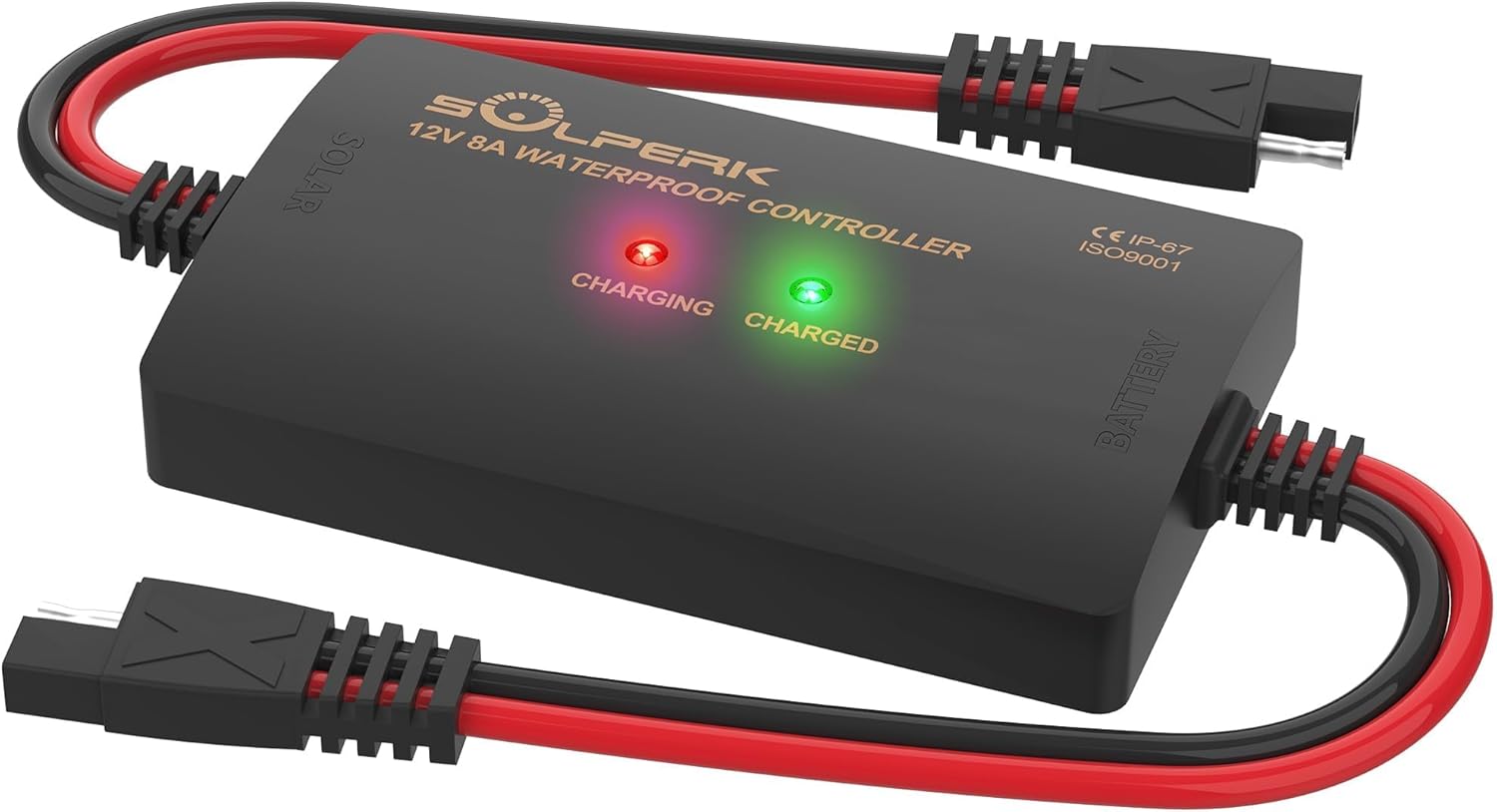
This SOLPERK 8A 12V solar charge controller is a compact PWM regulator designed to manage power from 12V solar panels to batteries, making it a smart choice for gardeners powering off-grid features like pathway lights, birdbath fountains, or small pond pumps in backyards.
It suits beginner to intermediate gardeners with modest solar needs, such as illuminating raised beds or running automated drip irrigation without grid reliance. Key features include six safety protections against overcharge, short circuits, and reverse polarity, ensuring safe operation in real-world garden environments exposed to moisture and varying sunlight.
Build quality shines with an IP67 waterproof seal that handles rain, snow, and dust common in outdoor settings, while the plastic body keeps it lightweight at just 0.12kg for easy mounting near garden sheds or pergolas. The LED display provides clear status updates, and zero consumption from the battery at night means more efficient power for your plants and lights.
Limitations include its 8A max current, so it's not for large arrays powering extensive lawn irrigation systems. Overall, it's a reliable, user-friendly pick for small-scale solar gardening; pair it with a 50-100W panel for consistent backyard performance.
Start by matching a 12V solar panel up to 100W with this controller for garden lights or pumps. Connect the SAE red wire to battery positive and black to negative, then link the panel similarly.
- Position panels south-facing for max sunlight in your yard.
- Mount controller in a shaded spot near the battery to avoid overheating.
- Use for low-draw items like 12V LED strips along garden paths or small aerators.
Test connections during peak sun to confirm LED charging light activates.
Works seamlessly with 12V AGM, GEL, lead-acid, and LiFePO4 batteries ideal for garden solar storage. Avoid mixing types for best results.
- AGM/GEL: Great for deep-cycle use in fountain pumps.
- LiFePO4: Lightweight option for portable garden carts or lights.
- Size battery at 20-50Ah for overnight garden feature runtime.
Monitor via LED: Green for full charge, flashing for active charging.
Built-in protections cover reverse current, overheating, and more, preventing damage to your garden setup.
- If no LED light: Check polarity and clean connections.
- Overheat? Ensure airflow around controller in hot sheds.
- No charge? Verify panel voltage exceeds 15V in sun.
Contact support for persistent issues; one-year warranty included.

Pros
- Automatic light control simplifies nighttime garden illumination without timers or apps.
- Multiple protections extend battery life for consistent performance year-round.
- Small size fits neatly into custom solar fixtures for clean backyard installs.
- Handles up to 1000mA output, supporting brighter LEDs for larger garden areas.
Cons
- Requires precise wiring and voltage matching, not beginner-friendly without checking instructions.
- Limited to 3.7V batteries and 5-7V panels, so not versatile for all solar setups.
- Some users report receiving fewer boards than advertised, check packaging carefully.
This HiLetgo solar panel control switch is a tiny circuit board pack designed to automate 3.7V LED lights powered by solar panels. It suits DIY gardeners and homeowners crafting custom pathway lights, accent fixtures, or courtyard lamps for backyards. With only a few components needed, it's great for adding low-maintenance glow to patios or garden borders without complex wiring.
Key features include automatic dusk-to-dawn switching, constant current LED drive, and protections against overcharge (4.25V cutoff), overdischarge (2.9V), and shorts. In real-world garden use, it reliably charges during the day and lights up reliably at night, even in partially shaded yards. Users praise its control over solar panels and LEDs for steady performance in outdoor setups.
Build quality is solid for the price, with a lightweight board that withstands weather when housed properly in fixtures. It's not fully waterproof alone, so enclose it in garden light housings for durability through rain or frost. Heat dissipation matters for high-output LEDs, so pair with adequate cooling.
Limitations include strict voltage requirements: use only 5-7V panels under 25W and 3.7V lithium batteries at 3.5-4.2V. Reverse polarity can damage it, so double-check connections. It's not for larger systems or non-LED loads.
Overall, a smart pick for small-scale solar garden lighting projects. If you're tinkering with backyard LEDs, grab a pack to test; it delivers dependable automation for thriving outdoor spaces.
Follow these steps for safe setup in your backyard:
- Measure battery voltage (3.5-4.2V) before connecting; reverse polarity risks damage.
- Wire solar panel (5-7V) to input, battery to battery terminals, and LED (positive/negative noted) to output.
- Test: Lights should activate in low light after battery connection.
- Mount in a weatherproof enclosure for garden fixtures, ensuring ventilation for LEDs.
- Use current-limiting resistor if LED draw is under 1000mA to avoid overload.
Ideal for pathway lights or raised bed accents; strengthens garden safety and ambiance.
Pair with these for best backyard results:
- Solar Panels: 6V, under 25W open-circuit voltage 5-7V.
- Batteries: 3.7V lithium (fully charged 4.2V max).
- LEDs: 3V boards over 1000mA draw; add resistor for lower currents.
Pro Tip: Position panels south-facing for max charge in U.S. yards. Monitor first week for proper cycling to ensure long-term reliability in garden lighting.
Common issues and fixes for garden setups:
- No light: Check battery voltage, polarity, and LED current match.
- Short runtime: Verify panel voltage/output; clean for better sunlight exposure.
- Overheating: Improve LED heat sinking and ensure airflow in fixture.
- Erratic switching: Shield from stray light or adjust enclosure.
Regular checks keep your solar garden lights shining bright through seasons.

Pros
- Superior MPPT charging efficiency outperforms standard solar lights for longer runtime
- Versatile app features like presets, timers, and scenes make customization effortless
- Easy wireless install on walls or ground suits various yard layouts
- Durable ABS plastic and monocrystalline panel resist weather and fading
- Bright 150 lumens spotlight key areas like pathways or plants effectively
Cons
- Voice control requires separate Bluetooth Mesh Hub purchase
- Optimal performance needs 6-8 hours direct sun and initial 48-hour charge
- App setup may take time for beginners unfamiliar with smart home tech
Linkind SL5C Smart Solar Spot Lights are innovative, wireless spotlights perfect for gardeners who want vibrant, customizable outdoor lighting without the hassle of cords or outlets. This 2-pack suits homeowners with yards, pathways, or patios, from beginners adding ambiance to experienced landscapers highlighting features.
Key strengths shine in real-world use: MPPT technology boosts charging by up to 23.5%, delivering 14 hours of light from 6-8 hours of sun. Control via AiDot app offers 16 million colors, brightness adjustments, tunable whites, music sync, and light shows for holidays or events. Luminance detection auto-activates at dusk, while schedules ensure lights stay on when needed.
Build quality impresses with IP67 waterproofing, high-impact ABS plastic, and a durable monocrystalline solar panel that resists yellowing. Mount on walls or stake in ground with full adjustability for precise aiming at trees, fences, or walkways. They handle weather well but thrive in sunny spots.
Limitations include dependency on sunlight, so shaded areas underperform, and voice control needs an extra hub. Overall, these are a smart pick for effortless, festive garden lighting; install a pair along your path for instant upgrade.
Position solar panels in full sun, tilting to your latitude in the Northern Hemisphere for max charge. Space lights 5-7 feet from targets and 7 feet apart for paths.
- Wall mount on fences or houses for entrances; ground stake for yards or gardens.
- Charge 48 hours initially with lights off, no shadows.
- Avoid trees or buildings shading panels during day.
Wireless setup takes minutes: insert stake or use anchors, then pair via AiDot app.
Download AiDot app to unlock full potential: group up to 32 lights, set timers, and choose presets.
- Colors & Scenes: 16M RGB options, tunable white for moods.
- Dynamic Effects: Light shows, music sync for parties.
- Schedules: Dusk-to-dawn auto or custom timers.
- Button control for basics if app unavailable.
Voice works with Alexa/Google via separate hub.
Uplight trees or shrubs for drama, line pathways for safety, or accent patios for evenings.
- Green for Easter gardens, multicolor for holidays.
- Sync to music at barbecues.
- White beams on fences or pools.
Stagger along walks for even glow, enhancing backyard living year-round.

Pros
- Ultra-simple programming sets up in minutes, as praised by users for quick garden automation.
- Dual solar and Type-C charging eliminates battery hassles, reliable even in cloudy weather.
- Clear LCD screen shows next watering time and battery status at a glance.
- IPX5 waterproof build with UV protection stands up to outdoor elements year-round.
- Rain delay feature saves water bills and avoids overwatering, a favorite in user feedback.
Cons
- Best for single-zone hose watering, not ideal for large properties needing multiple timers.
- Solar charging depends on sunlight exposure; Type-C backup needed in prolonged shade.
- Initial programming may require a quick read of instructions for beginners.
This AnseTo solar sprinkler timer connects between your garden hose and faucet to automate watering for lawns, yards, flower beds, or veggie patches. It's perfect for U.S. homeowners from beginners to pros who want hands-off irrigation without the fuss of batteries or complex setups.
Key features shine in real gardens: dual solar and Type-C powering keeps it running strong, with adjustable panel soaking up sun from 0-120 degrees. Program cycles from 1 minute to nearly 4 hours, every 1-12 hours or 1-7 days. Users love the rain delay (24/48/72 hours) that pauses during showers, and manual mode for instant use. In practice, it delivers precise watering, helping plants thrive while you focus on enjoying your outdoor space.
Build quality impresses with heavy-duty ABS plastic, UV-resistant coating, and IPX5 waterproofing. It handles 7.25-116 psi pressure without leaks, reinforced inlet included. The large LCD and simple buttons make it user-friendly outdoors.
Limitations include single-hose use only, so pair with manifolds for bigger areas. Solar works best with some daily light, but Type-C ensures no downtime.
Overall, this timer earns high marks for reliability and ease. Grab it if you want smarter, greener garden watering that fits busy lifestyles.
Tailor schedules to your garden's needs with this hose timer. For lawns: Set 20-30 minute sessions every 2-3 days in summer.
- Vegetable gardens: Water 45 minutes daily at dawn to reach roots deeply.
- Flower beds: 15-20 minutes every other day, using rain delay for wet spells.
- New plants or seedlings: Short 5-10 minute bursts twice daily until established.
Adjust based on soil moisture and weather for thriving results without waste.
Keep your timer performing like new with simple care. Wipe clean after use, avoiding harsh chemicals. Check solar panel for debris monthly.
- Store indoors during winter freezes: Disconnect hose, charge via Type-C, and keep dry.
- Inspect seals yearly for wear; rinse with fresh water post-season.
- For longevity, position away from direct soil splash.
Users report years of service with basic upkeep, making it a smart long-term investment.
Maximize this timer's potential in your backyard. Connect to oscillating sprinklers for even lawn coverage or soaker hoses for targeted beds.
- Poolside or greenhouse: Time short cycles to maintain humidity without overflow.
- Yard zones: Use Y-splitters for two areas, syncing with one timer.
- Balcony pots: Pair with drip emitters for precise, low-flow watering.
Experiment with settings to match your space, creating efficient, low-maintenance oases.
Buying Guide for Best Solar Controllers For Small Gardens
Controller Type: PWM vs MPPT
For small gardens, choosing between PWM (Pulse Width Modulation) and MPPT (Maximum Power Point Tracking) boils down to your panel size and sunlight exposure. PWM controllers are simpler and cheaper, ideal for basic setups like garden lights or small timers where panels match battery voltage closely. They work well in consistent sun but lose efficiency in shade or clouds, common in backyard nooks.
MPPT shines for slightly larger small garden systems, squeezing up to 30% more power from panels by optimizing voltage. Think powering a fountain pump or multiple pathway lights. Products like the Renogy Rover 40A MPPT excel here with 99% tracking efficiency, perfect if your garden gets partial shade from trees or fences.
| PWM | MPPT |
|---|---|
| Best for tiny, direct-sun setups | Best for variable light, higher yield |
| Lower cost, simpler | Higher efficiency, worth it for growth |
Battery Compatibility
Your garden’s solar setup lives or dies by battery match. Most Best Solar Controllers for Small Gardens handle lead-acid (AGM, Gel, Flooded), but lithium like LiFePO4 is gardener gold for longevity and deep discharges. Check for auto-detection of 12V/24V systems, as in the Renogy Wanderer 10A, which supports multiple types with manual lithium activation.
For small gardens, prioritize controllers reviving dead batteries, like Renogy models with 0V activation. Pair with deep-cycle batteries for seasonal use, avoiding sulfation from undercharging during dormant months. Always match solar input voltage to prevent mismatches that fry components.
Amperage and Garden Scale
Match amps to your load: 10A suits lights and timers under 100W panels, while 40A handles pumps or expansions. The TOPENS TCS3 at suitable amps manages 240W 24V panels, great for gate openers or farm lights in larger small gardens. Undersize and you’ll bottleneck power; oversize wastes money.
Gardener tip: Calculate total watts (panels x hours) divided by battery voltage for needed amps. Start small with Acxico boards for DIY lights, scaling to ATEM POWER 10A MPPT as your herb garden grows.
Weather Resistance and Durability
Outdoor controllers face rain, heat, and dust, so IP67 waterproofing like SOLPERK’s is essential for patios. Look for aluminum heatsinks over fans for silent, reliable cooling, as in Renogy Rovers. Rubber seals and negative ground designs boost longevity in humid gardens.
Pro advice: Mount in shaded spots near solar panels, using corrosion-proof wiring. Models like HiLetgo withstand harsh conditions for yard lamps year-round.
Monitoring and Smart Features
LCD displays and Bluetooth, like Renogy BT-2 modules, let you track voltage and errors from your phone, spotting issues before plants suffer. Load timers prevent nighttime drain on garden lights, while auto ON/OFF suits dusk-to-dawn operation.
For tech-savvy gardeners, Linkind SL5C offers app control and music sync, turning pathways festive. USB ports charge tools on-site, a boon during weeding sessions.
Installation and Load Management
Easy SAE plugs or Anderson connectors speed setup for DIYers. Direct DC load terminals power pumps or fans, with modes for timed watering via AnseTo timers. Secure with solar mounting brackets for stability.
Tip: Use extension cables like those in our solar extension guide for flexible panel placement, optimizing sun for small plots.
Why You Should Trust Us
At New York Garden, we dive deep into specs, user patterns, and gardening needs to bring you honest reviews. Our team analyzes efficiency ratings, protection features, and real-world fit for U.S. backyards, focusing on what keeps your lawn lush without gimmicks. We prioritize transparency, drawing from product data across 10 options in categories like Solar & Wind Power.
You get practical advice from gardeners for gardeners, helping you pair controllers with panels and accessories for seamless setups. No fluff, just tools to power your patio paradise reliably.
Final Thoughts
After reviewing these 10 Best Solar Controllers For Small Gardens, the Renogy Solar Charge Controller Rover 40A stands out as best overall for small gardens. Its MPPT tech, lithium recovery, and storm protection make it ideal for powering lights, pumps, or timers efficiently, even in cloudy October weather. Gardeners love the LCD monitoring for quick checks during busy days.
For best value, go with the Renogy 10 Amp 12V/24V PWM Wanderer 10A. Compact, versatile battery support, and low self-consumption suit basic lawn lighting or sprinkler controls without breaking the bank. It’s a workhorse for starters expanding their setups.
Best for ultra-small gardens or DIY lights, the Acxico 3Pcs Solar Charge Controller Board offers auto light control for pathways at minimal footprint. Perfect for lithium strings in tight spots, keeping your borders glowing effortlessly. Check our Renewable Energy Controllers page for more.
FAQs
What is a solar controller and why do small gardens need one in 2026?
A solar controller regulates power from panels to batteries, preventing overcharge or damage. In small gardens, it optimizes limited sunlight for lights or timers, extending battery life through seasons and saving you replacement costs.
PWM or MPPT for Best Solar Controllers for Small Gardens?
PWM fits budget direct-sun setups under 100W; MPPT for max efficiency in shade. For most small gardens, MPPT like Renogy Rovers pays off long-term with better yields.
Can Best Solar Controllers for Small Gardens handle garden lights and timers?
Yes, many like HiLetgo or AnseTo Solar Sprinkler Timer feature auto ON/OFF and load control, perfect for dusk-to-dawn operation without draining batteries overnight.
Are these controllers waterproof for outdoor use?
Top picks boast IP67 ratings, like SOLPERK and TOPENS, enduring rain and splashes. Mount shaded and use sealed connectors for years of service.
How to install a solar controller in my backyard?
Connect solar positive/negative first, then battery, finally loads. Use MC4 connectors from our MC4 guide. Most are plug-and-play, taking minutes for gardeners.



Write Your Review
No reviews yet. Be the first to share your experience!