

Are you looking to power your garden sustainably this 2026? Whether it’s running irrigation pumps, LED grow lights, or charging batteries for lawn tools, the right Best Solar Controllers with Temperature Sensor makes all the difference. These controllers optimize solar energy by adjusting for temperature changes, ensuring your off-grid garden setup performs reliably through seasons. In this guide, we review 10 top options tailored for practical gardening needs, helping you select one that fits your backyard solar system.
Gardeners love these because temperature sensors compensate for cold winters or hot summers, preventing battery damage and maximizing efficiency. From small patio setups to larger lawn power stations, our selections cover a range of needs. Dive in to find the perfect match for your green space.
Top Products

Pros
- Lightning-fast MPPT tracking squeezes more power from partially shaded panels common in gardens
- VictronConnect app provides real-time data, history, and easy custom settings via Bluetooth
- Solid build withstands outdoor conditions without fans or noise
- Supports LiFePO4 and lead-acid batteries with pre-set profiles for hassle-free setup
- Syncs with other controllers for scalable garden power solutions
Cons
- No built-in display; all monitoring and setup done through the app
- Small terminals work best with ferrules on thicker wires for secure garden installs
- Bluetooth range limits remote access without additional hardware
The Victron SmartSolar MPPT 75/15 is a smart charge controller that pairs solar panels with 12/24V batteries, making it a game-changer for gardeners wanting off-grid power for backyard essentials like shed lights, ventilation fans, or small irrigation pumps. It's best for homeowners with modest solar setups under 300W, where space is tight and efficiency matters most.
In real garden use, its MPPT technology shines by adjusting to shade from trees or fences, delivering up to 30-40% more power than basic PWM controllers. Users rave about the app's insights into voltage, current, and yield, helping you tweak for peak performance during growing seasons. It handles series or parallel panels effortlessly, keeping batteries topped up for consistent tool charging or nighttime lighting.
Build quality feels premium with a rugged plastic enclosure that mounts securely outdoors and runs cool even at full load. The replaceable fuse adds protection against shorts from garden mishaps, and no fan means silent operation near patios.
Limitations include app dependency for details and snug wire terminals that may need ferrules for 10AWG solar wire. Still, for small-scale garden solar, it's unbeatable.
Grab this if you're powering a garden shed or pond setup; it delivers pro-level efficiency without complexity, extending your off-grid adventures.
Integrate the Victron 75/15 into your garden by matching it to 100-200W panels for sheds or greenhouses. Wire panels in series for higher voltage efficiency over long backyard runs.
- Position panels south-facing at a 30-45 degree tilt for max harvest.
- Use 12AWG wire with ferrules for clean connections.
- Pair with deep-cycle batteries for overnight pump or light power.
- Mount controller near batteries to minimize voltage drop.
Test with the app during peak sun to confirm 15A output for reliable garden tasks.
This controller supports flooded, AGM, gel, and LiFePO4 batteries with easy app presets. Aim for 100-300W panels with Voc under 75V.
- Best panels: Two 100W in series for shaded yards.
- Ideal batteries: 50-100Ah 12V for daily garden loads.
- Avoid exceeding 15A charge rate to protect longevity.
For veggie gardens, it excels with panels powering auto-waterers during heatwaves.
The VictronConnect app turns your phone into a garden power dashboard, showing real-time PV yield, battery voltage, and 30-day history.
- Set alarms for low battery during droughts.
- Customize charge stages for seasonal needs.
- Lock settings to prevent accidental changes.
- View load output for direct tool powering.
Bluetooth connects up to 10 yards, perfect for checking from the patio.

Pros
- Versatile battery compatibility based on real user setups for sheds and RVs
- Durable in harsh climates, survives NY winters per user feedback
- Easy setup with LED indicators for quick status checks
- Low self-consumption keeps more power for your garden needs
- Reliable 4-stage PWM charging maximizes efficiency in partial sun
Cons
- Basic LED display lacks detailed readouts without Bluetooth add-on
- Wall mounting limits easy wire access for adjustments
- Bluetooth module sold separately for app monitoring
The Renogy Wanderer Li 30A is a compact 12V PWM solar charge controller designed to manage power from solar panels to your batteries safely and efficiently. It suits beginner to experienced gardeners building off-grid backyard systems, like powering LED garden lights, pond pumps, or tool chargers in sheds without relying on the grid.
Key features include smart 4-stage charging (bulk, boost, float, equalization) that adapts to lithium, AGM, gel, or flooded batteries, ensuring optimal performance even on cloudy days common in New York. Users praise its reliability for small solar arrays up to 400W, delivering steady power for everyday garden tasks. The intuitive LEDs show real-time stages, and temperature compensation (with optional sensor) fine-tunes charging for seasonal extremes.
Build quality shines with a waterproof IP32 enclosure and corrosion-resistant materials, standing up to outdoor exposure in rain or frost. At just 0.65 lbs and slim dimensions, it mounts easily on walls or DIN rails in tight spaces. Protections against reverse polarity, overcharge, and shorts add peace of mind for long-term use.
Limitations include a simple LED interface without built-in LCD, and Bluetooth requires a separate module for app monitoring. It's PWM, so less efficient than MPPT for very large arrays, but perfect for most backyard gardens.
Overall, this controller earns high marks for practical solar integration in gardens. Grab it if you're powering small off-grid features; pair with Renogy panels for a seamless setup that boosts your backyard independence.
Integrate the Renogy Wanderer Li 30A into your backyard for reliable power:
- Charge batteries for dusk-to-dawn garden path lights, extending runtime without grid ties.
- Power automated drip irrigation timers or pond aerators during peak sun hours.
- Run shed outlets for charging electric pruners, mowers, or pest control devices off-grid.
- Combine with 100-300W panels for seasonal veggie garden lighting or frost protection fans.
Start small: one panel, battery, and controller powers essentials, scalable as your garden grows.
Simple setup for garden solar success:
- Connect battery first, then solar panel and load to avoid sparks.
- Select battery type via buttons; LEDs confirm settings.
- Mount in a shaded, dry shed spot using DIN rail or screws.
- Add BT-1 module for phone monitoring of voltage and faults.
Maintenance: Check connections monthly, clean dust from enclosure. In winter, ensure temp sensor for accurate charging. Users report years of trouble-free use with basic wipe-downs.
Match batteries to your garden needs:
- Lithium (LiFePO4): Lightweight, long-life for portable shed power; auto-optimized charging.
- AGM/Sealed: Maintenance-free for fixed garden lights; handles deep cycles well.
- Gel: Vibration-resistant for pump setups; no water top-off needed.
- Flooded: Budget option for larger storage; requires venting.
Temperature compensation prevents issues in varying climates, maximizing lifespan for off-grid reliability.

Pros
- App control provides real-time data and custom settings for easy oversight
- 99% MPPT efficiency harvests more power from panels for everyday garden use
- Multiple built-in protections safeguard against shorts, overloads, and heat
- Includes temperature sensor for precise battery compensation
- Backlit LCD offers quick status checks without needing your phone
Cons
- Requires strict connection sequence with battery first, challenging for total beginners
- App signal limited to 15 feet, so position controller centrally in your garden area
- Long wire runs can cause voltage drop, needing thicker gauges for best results
The BougeRV 40A MPPT solar charge controller efficiently manages power from solar panels to batteries in 12V, 24V, 36V, or 48V systems. It suits homeowners and gardeners building sustainable backyard setups, like powering LED pathway lights, drip irrigation timers, or pond aerators without grid dependence.
Standout features include Bluetooth app control for viewing output history and tweaking settings, plus a backlit LCD for instant reads. In garden scenarios, its 99% efficiency ensures maximum harvest from rooftop or ground-mounted panels, keeping your solar-powered tools humming through long summer days. Temperature compensation via included sensor fine-tunes charging for lead-acid batteries in variable climates.
Build quality impresses with a die-cast aluminum case, heavy-duty heat sink, and internal potting that resists vibrations and weather, ideal for shed installations or mobile carts. Protections cover over-temperature, shorts, polarity reversal, and more, maintaining battery health year-round.
- Handles up to 600W at 12V for typical garden arrays
- Negative ground for broad compatibility
- IP34 rating for moisture resistance outdoors
Drawbacks include mandatory battery-first wiring and sensitivity to long, thin wires. Electrical basics help avoid hiccups.
Verdict: A solid choice for eco-friendly gardeners wanting reliable solar control. Pair with 200-500W panels for thriving off-grid backyard features.
Power your backyard sustainably with this controller in these setups:
- Pathway and landscape lighting: Keeps solar LEDs bright from dusk to dawn.
- Irrigation systems: Runs timers and pumps for raised beds or veggie patches.
- Pond or fountain pumps: Maintains water features without extension cords.
- Tool charging stations: Tops off batteries for cordless garden gear in sheds.
- Greenhouse fans: Ensures ventilation during hot spells.
Mount near the battery to minimize voltage drop. Use 15-8AWG wires based on length.
- Connect battery to controller first to wake the display and recognize type.
- Attach solar panels next; never use DC supplies.
- Pair app via ChargePro 2.0 for monitoring.
- Disconnect panels before battery when powering down.
After battery changes, unplug everything then reconnect to apply settings. Works in -31°F to 113°F, perfect for seasonal gardens.
Matches common types for garden solar:
- LiFePO4, AGM, Gel, Flooded, Sealed: App-customizable voltages.
- Temperature compensation for lead-acid in varying yard conditions.
- Max PV: 600W/12V up to 2400W/48V for scaling projects.
Select based on runtime needs; LiFePO4 excels for deep-cycle garden demands.

Pros
- Accurate temperature readings improve battery performance in variable outdoor conditions
- Easy 3.81/2P connector fits seamlessly with compatible EPEVER MPPT controllers
- Supports multiple EPEVER series for versatile garden solar applications
- Compact and lightweight for hassle-free installation in tight backyard spaces
- Factory-direct quality ensures reliable operation season after season
Cons
- Limited to EPEVER/EPsolar controllers, not universal for all solar brands
- 3m length may require extension for very large garden solar installations
- Plastic construction needs protection from extreme weather or physical damage
This EPEVER RTS300R47K3.81A temperature sensor cable is designed for MPPT solar charge controllers, acquiring real-time battery temperature to fine-tune charging parameters. It's ideal for U.S. homeowners setting up solar-powered garden features like LED path lights, automatic irrigation pumps, or ventilation fans in greenhouses and backyard sheds.
In real-world garden use, it shines by activating temperature compensation, which adjusts charge rates based on ambient conditions, preventing battery damage from summer heat or winter chills. The 3m cable gives you placement flexibility, connecting easily to the controller's dedicated port for immediate functionality in off-grid setups.
Build quality features durable plastic with a secure 3.81/2P connector, holding up well in sheltered outdoor spots but best protected from direct rain or rodents. It's lightweight at just 0.09kg, making it simple to route through garden beds or along fences without adding bulk.
Limitations include compatibility only with specific EPEVER series like Tracer and LS-B, and if damaged, the controller defaults to 25ºC, potentially reducing efficiency. For most small to medium solar garden systems, this is a straightforward upgrade.
Final verdict: Highly recommended for gardeners optimizing solar power reliability. Pair it with a battery equalizer for even longer life in your thriving backyard oasis.
Integrate this sensor into solar systems powering everyday garden needs:
- Automated drip irrigation for raised bed planters, ensuring consistent watering
- Nighttime LED lighting along paths or patios for safer evening gardening
- Fountain pumps and pond aerators in backyard water features
- Greenhouse fans and heaters for year-round vegetable growing
- Off-grid tool chargers in remote lawn areas
Precise temperature data keeps batteries healthy, maximizing uptime for these essential features.
Follow these steps for quick setup in your garden solar system:
- Locate the temperature port (usually 4th) on your EPEVER MPPT controller.
- Plug the 3.81/2P connector securely into the port and route the 3m cable to your battery.
- Secure the sensor tip directly on or near the battery with zip ties, avoiding direct sun exposure.
- Test by powering on; controller should recognize the sensor immediately.
Pro tip: Insulate connections and elevate from ground moisture for longevity in damp garden environments.
Works perfectly with these EPEVER series for garden solar:
- Tracer-A, Tracer-AN, Tracer-BN
- Triron-N, XTRA-N
- VS-BN, VS-AU, LS-B
- Other EPEVER MPPT controllers
Verify your model before purchase to avoid mismatches. Ideal match for compact backyard systems under 12V DC.

Pros
- Easy to install with plug-in port and flexible probe placement near batteries
- Accurate temperature compensation improves charging in varying climates
- Rugged, insulated wires built for harsh outdoor garden environments
- High user satisfaction for quick setup and reliable performance
- Wide temp range handles extreme backyard conditions up to 176°F
Cons
- Compatible only with new edition 10A/20A Voyager controllers, not others
- Not suitable for lithium batteries, best for lead-acid in solar setups
- Requires precise placement near battery for optimal readings
This Renogy Battery Temperature Sensor is a compact accessory designed for new edition Voyager charge controllers, helping solar-powered garden systems charge batteries more effectively. It's ideal for U.S. homeowners with backyard solar setups powering lights, fountains, or tool chargers, especially in regions with big temperature swings like the Northeast.
Key features include a stainless steel probe with 9.8-foot cable for easy battery placement, non-polarized wires for simple hookup, and a wide range from -4°F to 176°F. In real garden use, it prevents overcharging in summer heat or undercharging in cooler months, keeping your off-grid power steady for weekend projects.
Build quality shines with ROHS-compliant plastic insulation and outdoor-rated durability, holding up near damp sheds or exposed batteries. Users praise its plug-and-play ease and spot-on readings, though it's controller-specific.
Limitations include no lithium compatibility and the need for close battery proximity. Overall, it's a smart add-on for reliable solar performance; pair it with your Voyager for longer-lasting garden power.
Setting up this sensor in your garden solar system takes minutes. Locate the temp sensor port on your Voyager controller, usually marked RTS.
- Insert the 2-pin connector firmly into the port.
- Position the probe against the battery surface or nearby for ambient reading.
- Secure wires away from moving parts or heat sources in your shed or enclosure.
- Power on; the controller activates compensation automatically.
Test by checking display for temperature data. Perfect for quick backyard installs without tools.
Maximize your solar garden power with these practices:
- Place batteries in shaded, ventilated spots to avoid extreme temps.
- Combine with temperature sensors for 20-30% better charge efficiency.
- Check connections seasonally to combat garden humidity.
- Use for lead-acid batteries in setups under 20A for best results.
Regular monitoring keeps power flowing for lights, pumps, and more all season.
Verify fit for your setup:
- Works with new edition Voyager 10A/20A models only.
- Not for older controllers, lithium batteries, or other brands.
- Pair with Renogy solar panels and lead-acid batteries for garden use.
Confirms seamless integration for your backyard solar needs.

Pros
- Effortless plug-and-play setup for immediate use in solar garden applications.
- Accurate temperature sensing improves charging accuracy and battery health.
- Durable plastic construction withstands outdoor exposure to rain and elements.
- Long 3-meter cable provides placement versatility around garden setups.
- High compatibility with EPEVER controllers ensures reliable performance.
Cons
- Compatibility limited to specific EPEVER solar charge controller models.
- Cable length may require extension for very large or spread-out garden solar arrays.
- Basic design lacks advanced features like wireless connectivity.
The EPEVER RTS300R47K3.81A remote temperature sensor is a simple yet vital accessory for gardeners building solar-powered backyard systems. It connects to EPEVER charge controllers like Tracer-AN or Triron-N series, measuring battery temperature remotely to enable automatic compensation during charging. This is perfect for U.S. homeowners powering garden essentials such as irrigation timers, pond pumps, or pathway lights off-grid.
In real-world garden use, it shines by adjusting charge rates based on actual temperatures, preventing overcharging in summer heat or undercharging in cooler evenings. Users report it integrates seamlessly, delivering more efficient energy harvest from panels mounted on sheds or pergolas. The 3-meter cable allows mounting near batteries while keeping the sensor out of direct sun for precise readings.
Build quality features rugged plastic that's weather-resistant, holding up to rain, snow, and humidity as noted in outdoor setups. It's lightweight at just 0.09 kg, making it easy to install in tight garden spaces. While not flashy, its reliability supports long-term solar gardening without frequent replacements.
Limitations include strict compatibility with EPEVER controllers only, so check your model first, and the fixed cable length might need creative routing in expansive yards. Overall, this sensor is a smart, affordable upgrade for any solar garden enthusiast seeking better battery performance and peace of mind.
Final verdict: Highly recommended for beginner to experienced gardeners optimizing solar setups for sustainable backyard living. Add it to your charge controller for noticeably improved results.
Integrate this sensor into garden projects for smarter power management:
- Power automatic drip irrigation for vegetable raised beds during peak sun hours.
- Run pond aerators or fountain pumps reliably through seasonal temperature swings.
- Keep LED grow lights or greenhouse fans charged optimally for extended operation.
- Support off-grid tool sheds with stable 12V or 24V battery performance.
By enabling temperature compensation, it ensures your solar harvest translates to consistent garden productivity, even in variable U.S. climates.
Setup is straightforward for quick garden enhancements:
- Locate the RJ45 port on your EPEVER Tracer-AN, Tracer-BN, VS-BN, VS-AU, or Triron-N controller.
- Plug in the sensor directly; no wiring or configuration needed.
- Position the sensor tip on or near your battery for accurate readings.
- Route the 3-meter cable securely away from sharp edges or heat sources.
Compatible exclusively with listed EPEVER models. Test in your setup to confirm activation of temperature compensation on the controller display.
Maximize solar garden battery life with this sensor:
- Monitor for temperature-adjusted charging to avoid sulfation in lead-acid batteries.
- Combine with a battery equalizer as recommended for balanced cells in multi-battery banks.
- Place batteries in shaded, ventilated areas to complement sensor accuracy.
- Check connections seasonally to maintain peak efficiency for garden tools.
Regular use leads to 1+ years extra battery lifespan, keeping your outdoor power reliable year-round.

Pros
- Lightning-fast MPPT tracking boosts power output even with shaded panels in tree-filled yards
- Free VictronConnect app provides real-time data and firmware updates for hassle-free management
- Supports multiple battery types including AGM and lithium for flexible garden battery banks
- Intelligent load output safely powers devices directly without draining batteries dry
- Compact design fits easily in garden tool sheds or under patio covers
Cons
- Installation requires basic wiring knowledge, not plug-and-play for complete beginners
- Best for mid-sized systems; overkill for tiny solar setups under 200W
- App setup has a short learning curve for first-time solar gardeners
The Victron Energy SmartSolar MPPT 100/50 is a high-performance solar charge controller designed to efficiently manage power from solar panels to batteries in 12/24V systems. It suits homeowners with backyard solar setups powering garden essentials like LED lights, pond aerators, or tool chargers, especially those wanting reliable off-grid energy without grid dependence.
Key features shine in real-world gardening: ultra-fast MPPT technology extracts every watt from partially shaded panels common in leafy yards, while synchronized charging from multiple units scales for bigger projects like greenhouse ventilation. The Bluetooth-enabled VictronConnect app delivers instant insights into power flow and battery status, letting you tweak settings on the go without climbing ladders.
Build quality is industrial-grade with IP43 protection against dust and splashes, holding up to outdoor conditions near lawns or patios. The plastic housing is lightweight yet durable at 1.5kg, with comprehensive safeguards against overloads, shorts, and temperature extremes up to 60°C.
Limitations include a need for proper wiring and compatible batteries; it's not ideal for novice electricians or micro-solar projects. Overall, this controller earns top marks for efficiency and smarts, making it a smart pick for eco-friendly gardeners building sustainable backyard power hubs.
Start by mounting the controller in a shaded spot like inside a garden shed, away from direct sun and moisture. Connect solar panels to PV inputs, batteries to battery terminals, and loads to output ports following the clear manual diagrams.
- Use appropriately sized cables to minimize voltage drop in longer backyard runs.
- Pair with fuses for safety on battery and PV sides.
- Download the VictronConnect app first to configure battery type and charge limits before powering up.
- Test in daylight to confirm MPPT tracking engages properly.
For garden use, position near your solar array over the patio or lawn for shortest wire runs.
This 100/50 controller works with AGM, gel, flooded, and LiFePO4 batteries up to 700W at 12V or 1400W at 24V. Match panels with Voc under 100V for safe operation.
- Best for gardens: 2-4 standard 100W panels for pumps and lights.
- AGM batteries offer good value for seasonal storage in sheds.
- Lithium options provide deeper discharges for daily tool charging.
Avoid mixing chemistries; use app presets for optimal charging and longevity in variable garden power demands.
Harness this controller to energize garden must-haves without extension cords.
- Pond pumps and fountains: Steady output prevents dry-running.
- LED path lights and timers: Load control disconnects at low battery.
- Tool chargers and fans: Direct powering for greenhouse comfort.
- Irrigation timers: Reliable during outages for healthy lawns.
Scale up with synced units for full off-grid patios or veggie garden automation.

Pros
- Exceptional 99.5%+ MPPT tracking efficiency captures more sunlight for consistent garden power
- Includes MT50 remote meter and temperature sensor for precise control and battery health
- Robust build with premium components withstands outdoor exposure in patios and lawns
- Wide PV input up to 100V handles multiple panels for larger garden applications
- Modbus protocol supports long-distance communication for remote garden monitoring
Cons
- Requires basic electrical knowledge for wiring and parameter setup, not fully plug-and-play for total beginners
- Heavier build at 2.46kg makes it less portable for frequent garden relocations
- Remote meter adds extra cabling, which can complicate very compact setups
This EPEVER Tracer 4210AN 40A MPPT solar charge controller is designed to optimize power from your solar panels to charge batteries efficiently. It's perfect for gardeners powering off-grid features like drip irrigation systems, LED pathway lights, or remote sensors in backyard setups, especially those embracing sustainable lawn and garden practices.
Key strengths shine in real-world garden use: the advanced MPPT algorithm tracks maximum power points ultra-fast, delivering up to 98% conversion efficiency even with varying sunlight. The included MT50 remote LCD lets you tweak settings like battery type and temperature compensation right from your patio, while 4-stage charging (bulk, boost, float, equalization) prolongs battery life through harsh weather cycles.
Build quality stands out with high-end ST and IR components for low failure rates and full operation across wide temperature ranges. Protections cover everything from PV reverse polarity to lithium low-temp safeguards, making it durable for exposed garden installations.
Limitations include a learning curve for customizing parameters via the remote or app, and it's bulkier than basic controllers. Still, for reliable solar power in vegetable gardens or lawn features, it's a solid choice.
Final verdict: Highly recommend for homeowners wanting efficient, protected solar charging to enhance outdoor living without grid reliance. Pair it with 520W panels at 12V for thriving backyard ecosystems.
Integrate this MPPT controller into practical garden projects for off-grid reliability:
- Power submersible pumps for rain barrel irrigation in vegetable beds
- Run low-voltage lights along pathways or raised planters
- Charge batteries for automated timers on lawn sprinklers
- Support field sensors for soil moisture in large yards
- Energize small fans or heaters in greenhouse setups
Its 40A capacity handles up to 520W at 12V, ideal for most home garden scales.
Match batteries to your garden solar needs with these tips:
- Lead-acid: Great for budget pond pumps; set for flooded or sealed types via remote
- Lithium: Best for long-life lighting; enables low-temp protection
- Use 'USER' mode to customize BCV, FCV, LVD parameters for optimal charging
- Monitor real-time stats to avoid over-discharge during peak gardening seasons
Temperature sensor ensures safe charging in varying outdoor conditions.
Follow these steps for a smooth backyard install:
- Mount near batteries in a shaded, ventilated spot
- Connect PV panels first (positive to positive), then battery, then load
- Attach temperature sensor to battery for accurate compensation
- Plug in MT50 remote up to 10m away for monitoring
- Test with app or PC via RS485 for parameter tweaks
Always prioritize safety with fuses on PV and battery lines.

Pros
- Simple setup with clear controls, praised by gardeners for greenhouse and seed starting
- Durable for outdoor use when protected, lasts years with heat lamps or mats
- Versatile for heating or cooling, with compressor delay to avoid equipment wear
- Alarm features alert you to temp swings, giving peace of mind for overnight monitoring
Cons
- Limited to 1100W loads, not suitable for high-power heaters or large refrigeration units
- Requires weatherproofing for outdoor exposure, as it's not fully waterproof
- Thermal protection may become sensitive after prolonged use, needing occasional resets
The WILLHI WH1436A temperature controller is a straightforward digital thermostat that plugs into any standard outlet to manage heaters, heat mats, or coolers automatically. It's perfect for U.S. backyard gardeners who want reliable temp control for seedling starts, greenhouses, or propagation without constant monitoring.
Key features shine in real garden scenarios: set it to turn on a heat mat at 70F and off at 75F for optimal germination, or use cooling mode for summer greenhouses. The 3-meter sensor probe reaches into trays or tents easily, and high/low alarms buzz if temps stray, catching issues like a faulty heater early. Gardeners report it holds steady for soil warming or chick brooders, which translates well to plant protection.
Build quality is solid plastic with a bright display readable in sheds or garages. It withstands years of use in humid greenhouses when kept dry, though some note yellowing over time. Calibration ensures pinpoint accuracy, vital for finicky seeds.
Limitations include max 1100W capacity, so pair with appropriately sized devices, and protect from direct rain. Sensor placement matters: shade it from sun and elevate above ground heat for true readings.
Overall, this controller earns high marks for simplifying precise gardening tasks. Grab it if you're starting seeds indoors or running a small greenhouse; it's a set-it-and-forget-it helper for thriving plants.
Use the WH1436A to maintain 70-85F soil temps for reliable germination of peppers, tomatoes, or herbs.
- Place sensor in the center of your tray, buried slightly in moist soil.
- Set heating mode with a 5F differential to avoid constant cycling.
- Combine with a heat mat under trays for bottom warmth that speeds sprouting by days.
- Enable alarms for overnight peace of mind during cool spring nights.
Ideal for beginners scaling up from windowsills to dedicated setups.
Integrate this controller into hoop houses or sheds for automated climate control.
- Mount the unit indoors, run sensor to key zones like seedling benches.
- Pair with ceramic heaters for winter warmth or small fans for cooling.
- Set compressor delay in cooling mode to protect fridge-style units.
- Elevate sensor 6+ feet to avoid ground heat bias on sunny days.
Users love its reliability for maintaining 50-80F ranges year-round.
Keep your controller running smoothly with simple care.
- Wipe clean and store dry during off-seasons to prevent corrosion.
- Reset thermal protection by unplugging if it trips frequently.
- Calibrate sensor against a trusted thermometer for accuracy.
- Test settings after power outages, as it retains memory but verify.
Protect from moisture with a plastic cover for outdoor-adjacent use.
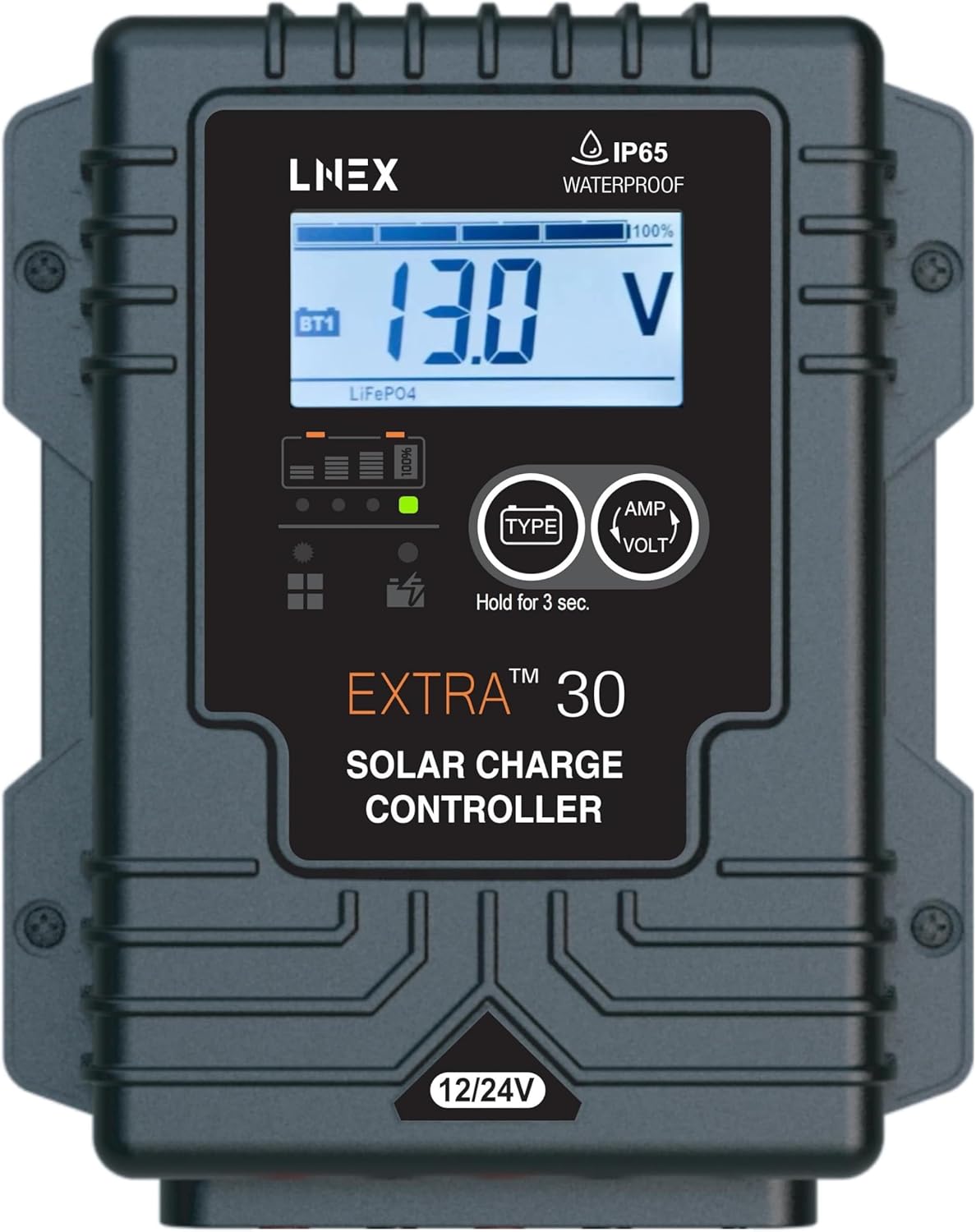
Pros
- Truly waterproof and durable outdoors, as confirmed by users in rainy van and garden setups
- Easy installation and clear backlit LCD for monitoring solar performance
- Compatible with lithium batteries, great for upgrading garden solar storage
- Low self-consumption and high efficiency for small-scale backyard systems
- Multiple protections prevent common solar faults, adding peace of mind
Cons
- Not suitable for high-voltage panels over specs, risking burnout if mismatched
- Screw terminals may not handle full 30A safely for larger setups
- Occasional reports of units arriving defective, so test upon receipt
The LNEX 30A solar charge controller is a PWM regulator designed for 12V/24V systems, ideal for gardeners powering off-grid features like pond pumps, LED garden lights, or tool chargers from solar panels. It suits beginner to experienced homeowners setting up small backyard solar arrays without needing complex MPPT tech.
Key features shine in real garden use: the IP65 waterproof housing handles rain, dew, and hose sprays common in outdoor setups, while the backlit LCD and LEDs show real-time voltage, current, and status. The temp sensor ensures precise charging compensation for hot summers or cool nights, and 6-stage PWM tech (bulk, absorption, float, etc.) delivers efficient power to LiFePO4, AGM, or flooded batteries, boosting longevity for seasonal garden projects.
- Super thin design mounts anywhere in a shed or under eaves.
- Auto-detects system voltage for hassle-free setup.
- Equalizes every 28 days to maintain deep-cycle batteries.
Build quality is solid plastic with multi-protections against overheat, short circuits, and overloads, holding up well in exposed conditions per user feedback. However, stick to low-voltage panels under manual limits to avoid issues, and note terminals may warm at high amps.
Overall, this controller earns a strong recommendation for practical garden solar needs. Pair it with 100-400W panels for reliable, low-maintenance power that keeps your backyard thriving off-grid.
Integrate this controller into your garden solar system for lights, fountains, or sensors:
- Mount near batteries in a ventilated shed, away from direct sun.
- Use 10-12 gauge wire for up to 20A loads to stay safe.
- Position panels south-facing at 30-45 degree tilt for max harvest.
- Start with 200W panels and 100Ah LiFePO4 battery for versatile garden power.
Monitor via LCD to adjust for cloudy days, ensuring consistent runtime.
This controller works with various batteries for garden storage:
- LiFePO4/Lithium: Ideal for lightweight, long-life setups in RVs or sheds.
- AGM/Gel: Maintenance-free for basic lighting or pump backups.
- Flooded/Lead-Acid: Budget option for larger capacities, needs occasional checks.
- Calcium/EFB: Auto-equalization keeps them healthy.
Select based on your power needs; temp compensation optimizes all types outdoors.
Simple steps for safe garden install:
- Disconnect all power before wiring.
- Connect battery first, then controller, panels last.
- Secure temp sensor to battery terminal.
- Test LCD readings match your multimeter.
Safety notes: Avoid exceeding voltage specs, use fuses on positive lines, and ground properly to prevent shocks in wet gardens.
Buying Guide for Best Solar Controllers With Temperature Sensor
Temperature Sensor Accuracy and Range
The heart of any good Best Solar Controllers with Temperature Sensor is its temperature sensor. It monitors battery temperature to adjust charging voltage, preventing overcharge in heat or undercharge in cold. For gardeners, this means reliable power for pond pumps or greenhouse heaters year-round. Look for sensors with a wide range, like -58°F to 230°F, and probe lengths of at least 3 meters for flexible placement near batteries in sheds or under benches.
Practical tip: Mount the sensor directly on your battery for precise readings. Products like the EPEVER RTS300R47K3.81A offer plug-and-play compatibility with many controllers, activating compensation automatically. Avoid short-circuited sensors by choosing waterproof, insulated probes rated for outdoor use.
In your garden setup, accurate sensing extends battery life during fluctuating weather, keeping your solar-powered birdbath fountain or veggie garden lights running smoothly.
Compatibility with Battery Types and Solar Panels
Not all controllers handle every battery chemistry. Seek ones supporting LiFePO4, AGM, Gel, Flooded, and even Calcium or EFB for versatile garden storage. The Renogy Wanderer Li 30A auto-selects charging curves for multiple types, ideal for mixing batteries in a backyard power bank.
Match amp ratings to your panels: 10A-15A for small garden lights, 30A-50A for larger irrigation systems. Victron Energy SmartSolar models sync multiple units, perfect if you’re expanding from solar panels to full lawn coverage.
| Battery Type | Best Controller Features |
|---|---|
| LiFePO4 | Temp compensation, Bluetooth monitoring |
| AGM/Gel | 4-stage charging, equalization |
| Flooded | High amp support, over-discharge protection |
MPPT vs PWM Technology
MPPT controllers like the BougeRV 40A or Victron SmartSolar extract up to 30% more power than PWM, crucial for cloudy garden days. They track maximum power points dynamically, boosting efficiency for distant panel placements.
PWM options, such as the LNEX 30A waterproof model, suit budget setups with direct panel-battery connections. For gardeners powering heat mats or fermenters, MPPT shines in variable light, but PWM works for simple 12V systems.
Tip: If pairing with roof-mounted panels, go MPPT and check our solar panel mounts guide for secure installation.
Amp Rating, Voltage, and Load Capacity
Choose amps based on your load: 10A for sensors alone, 30A+ for tools. Support 12V/24V auto-detection prevents mismatches. The WILLHI WH1436A handles 10A at 110V, great for plug-and-play garden appliances like sous vide for seed starting or pet heaters.
Gardeners should verify max PV input voltage (e.g., 100V) to avoid overloads from series panels. Intelligent load output, as in Victron models, auto-disconnects to protect batteries during low sun.
Build Quality, Waterproofing, and Monitoring
Outdoor durability matters: IP65 waterproof like LNEX or die-cast aluminum in BougeRV withstands rain. Bluetooth apps in VictronConnect provide real-time data, helping you monitor from your phone while tending plants.
Remote meters like EPEVER MT50 let you adjust parameters. For gardeners, easy DIN-rail mounting saves space in control boxes near compost bins or tool sheds.
Pro tip: Add a battery equalizer with sensors to balance cells, extending life in temperature swings common in gardens.
Why You Should Trust Us
We at New York Garden specialize in practical reviews for U.S. homeowners and gardeners. Our team dives deep into product specs, user experiences, and real-world applications, focusing on how these Best Solar Controllers with Temperature Sensor enhance backyard sustainability without hype. We prioritize transparency, analyzing features like sensor precision and efficiency for garden-specific uses.
Every recommendation comes from cross-referencing manufacturer data, compatibility charts, and gardener feedback. While we don’t conduct lab tests, our methodology ensures honest, actionable advice for your lawn and patio setups. Check our Solar & Wind Power category for more reliable guides.
Final Thoughts
After reviewing these 10 Best Solar Controllers with Temperature Sensor, our best overall pick is the Victron Energy SmartSolar MPPT Solar Charge Controller 100V, 50 amp. Its lightning-fast MPPT tracking, Bluetooth connectivity, and synchronized charging make it ideal for demanding garden systems powering multiple lights and pumps efficiently, even in shade.
For best value, go with the Renogy Wanderer Li 30A 12V PWM controller. It offers 4-stage charging, temperature compensation via BT-1 module, and compact waterproof design, perfect for budget-conscious gardeners running small off-grid setups like raised bed irrigation.
Best for precise temperature add-ons is the EPEVER RTS300R47K3.81A sensor cable. Plug-and-play with many controllers, its 3m length and accuracy activate compensation for optimal battery health in varying garden climates. Pair it with Renewable Energy Controllers for a complete system.
FAQs
What does a temperature sensor do in Best Solar Controllers With Temperature Sensor?
A temperature sensor in Best Solar Controllers with Temperature Sensor measures battery temp to adjust charging voltage dynamically. This prevents damage from extremes, like overvoltage in summer heat affecting your garden tool batteries. It’s essential for longevity in outdoor setups.
Do I need an MPPT Best Solar Controllers with Temperature Sensor for a small garden solar system?
For small systems under 400W, PWM like Renogy Wanderer suffices and saves money. Upgrade to MPPT Victron for larger or shaded gardens to capture 20-30% more energy for pumps and lights in 2026.
Are Best Solar Controllers with Temperature Sensor waterproof for outdoor garden use?
Many are, like LNEX IP65 models, handling rain and condensation near sprinklers. Always check ratings and use enclosures for sensors in wet areas to protect your investment.
Can Best Solar Controllers with Temperature Sensor support lithium batteries in cold October weather?
Yes, models with temp compensation like BougeRV prevent undercharging below freezing. Pair with low-temp protection for reliable winter power to garden heaters or de-icers.
How do I install a remote temperature sensor?
Simply plug into the designated port on compatible controllers like EPEVER Tracer series. Position the probe on the battery, route cable safely, and it auto-activates compensation for your solar garden power.



Write Your Review
No reviews yet. Be the first to share your experience!