

Are you looking to power your pond pump sustainably in your backyard oasis? In October 2026, solar controllers have become essential for gardeners who want reliable, eco-friendly operation without constant grid reliance. Our guide to the 10 Best Solar Controllers For Pond Pumps helps you select the right one to keep water circulating smoothly in ponds, fountains, and garden features, saving energy and reducing maintenance hassles.
Whether you have a small bird bath or a larger koi pond, these controllers optimize solar input for consistent pump performance. We focus on practical picks that fit American gardens, ensuring your setup thrives even on cloudy days. Dive in to find gardener-approved options that blend seamlessly with your lawn and patio projects.
Top Products

Pros
- Efficient power regulation with 98% efficiency for consistent pump performance in sunny conditions
- Multiple protections like auto-shutoff safeguard pumps from overloads and low light
- LED indicators provide easy real-time voltage monitoring without extra tools
- Flexible 12V/24V compatibility works with common solar setups for home gardens
- Compact black design with case for durable outdoor mounting
Cons
- Limited to 10A maximum load, best for smaller pumps not high-volume commercial use
- No built-in battery support, so pump stops in low sunlight or cloudy days
- Requires basic electrical knowledge for safe wiring and float switch integration
The Zuomeng 10A Solar Water Pump Controller is a smart DC regulator designed to power 12V or 24V solar pumps directly from panels, perfect for U.S. homeowners wanting automated watering without grid electricity. It suits beginner to experienced gardeners managing backyard irrigation, garden fountains, rain barrel fills, or small livestock waterers, especially in sunny regions.
Key features shine in real-world garden use: it auto-detects system voltage, regulates power for stable operation, and boasts over 98% efficiency to squeeze every drop from your solar input. The LED display shows panel voltage clearly—green steady for normal, flashing for issues—while protections kick in during overloads or clouds, pausing the pump briefly to avoid burnout. Pair it with a float switch for automatic level control, and you've got reliable, hands-free watering for veggies, flowers, or lawns.
Build quality feels solid with its enclosed black case, suitable for outdoor exposure near sheds or fences, though mount it sheltered from heavy rain. It's not overly complex, but wiring needs care to match polarities. Limitations include no battery compatibility, so expect pauses on overcast days, and the 10A cap suits modest pumps under that draw.
Overall, this controller delivers practical, green power management for everyday gardening. If you're setting up solar irrigation in a mid-sized yard, it's a trustworthy pick that pays off in saved time and hassle—highly recommend for fountain lovers or veggie patch owners chasing sustainability.
Setting up the Zuomeng controller for your garden pump is straightforward with these steps:
- Position solar panels for max sun exposure, wired in parallel or series to hit 14V startup for 12V or 28V for 24V systems.
- Connect PV positive/negative to controller inputs, then load wires to your pump—double-check polarities to avoid damage.
- Mount the controller vertically in a dry spot; add a float switch to pump wires for auto water level shutoff.
- Power on and watch the LED: steady green means ready to pump when voltage is optimal.
Test during peak sun for best flow, ideal for rain barrel top-offs or border bed drips.
Keep your solar pump controller running smoothly year-round:
- Clean solar panels regularly and check wiring connections for corrosion, especially after winter.
- If red light flashes, clear pump blockages; it auto-resets after 15 minutes.
- Low light auto-pauses protect the pump—normal in clouds, no action needed.
- Store indoors during off-seasons; inspect case for cracks before spring setup.
Common fixes: flashing green signals low voltage, so reposition panels; no output below startup volts means more sun required.
This controller excels in these home garden scenarios:
- Vegetable garden irrigation: Automate drip lines or soaker hoses from rain barrels for consistent moisture.
- Landscape fountains: Steady solar power keeps water features bubbling without outlets nearby.
- Raised bed or container watering: Float switch integration prevents overflows in self-filling reservoirs.
- Remote yard spots: Powers pumps for far-off flower beds or tree basins off-grid.
Pair with 50-200W panels and submersible pumps up to 10A for efficient, battery-free setups.

Pros
- Exceptional lift height for deep wells, perfect for rural or elevated garden sites
- Efficient MPPT controller with LED display for easy monitoring and auto-shutoff
- Corrosion-resistant stainless steel and quality bearings for reliable outdoor use
- Intelligent sensors protect against dry running and low water levels
- Eco-friendly solar operation reduces reliance on grid power for sustainable gardening
Cons
- Solar panels not included, requiring separate purchase for full setup
- Short 9.8ft cable may need extension for deeper installations
- Best suited for deeper wells, less ideal for shallow surface water sources
This JENENSERIES 500W DC 48V solar deep well submersible pump is a powerhouse for gardeners tapping into wells for irrigation. Measuring just 3x3x16.4 inches and weighing 18 pounds, it fits easily into 3-inch wells and suits homeowners with off-grid setups, small farms, or anyone wanting sustainable water access for lawns, gardens, and ponds.
Key features shine in real-world gardening: the brushless motor pumps 7.9 GPM up to 393 feet, handling tough lifts for watering raised beds or distant fields. The MPPT controller optimizes solar input for steady flow, while the float switch and water shortage sensor auto-stop the pump to avoid burnout during dry spells. It's a game-changer for consistent irrigation without fuel or electricity bills.
Build quality stands out with 304 stainless steel resisting rust and corrosion, plus NSK bearings and a high-silicon rotor for smooth, long-life operation in harsh outdoor conditions from -15 to 60°C. It thrives upright in wells or reservoirs, at least 1.64 feet from the surface.
Limitations include the need for separate 2x300W solar panels and a short cable, which might require extras for some sites. It's overkill for shallow water but excels in deep-well scenarios.
Overall, this pump earns a strong recommendation for practical, eco-friendly watering solutions. Pair it with good panels, and you'll enjoy hassle-free garden hydration year-round.
Start by selecting a spot in your well or reservoir, keeping the pump upright and at least 1.64 feet from the water surface. Connect the 9.8ft cable to the MPPT controller, then wire your solar panels (2x300W recommended) matching the 21-50V range.
- Secure the float switch to detect water levels and enable auto-start/stop.
- Mount the controller in a shaded, dry area with its LED display visible for monitoring.
- Use the included accessories and spare screw for a tight seal on the 0.75-inch outlet.
- Test in full sun; the pump ramps from 1000-4000 RPM based on light.
Follow the user's manual for safety, and consider battery backup for cloudy days or nighttime use.
Leverage this pump's strong flow for efficient garden setups. Connect to drip lines for vegetable patches, soaker hoses for lawns, or fill rain barrels for hand-watering.
- Vegetable gardens: Schedule auto-pumps via float switch for deep-rooted plants like tomatoes.
- Lawns and pastures: High head reaches elevated sprinklers for even coverage.
- Ponds and livestock: Steady GPM keeps water features flowing and troughs full.
Integrate with timers or sensors for hands-off operation, saving time while promoting healthy growth.
Regular checks ensure longevity: rinse the stainless steel body after use in murky water and inspect cables for wear. Store dry in winter if not in use.
- Clean the MPPT controller vents to prevent overheating.
- Monitor LED for errors like low voltage or dry-run alerts.
- If flow drops, check solar input or clear any outlet clogs.
- Lubricate bearings per manual for quiet, efficient spins.
Avoid upside-down installation or running without water to prevent motor damage.

Pros
- Three versatile modes adapt to any pond routine, from manual tweaks to full automation
- Supports up to 900W pumps, covering most garden and koi setups
- App handles multiple controllers with custom names for organized multi-pond management
- Compact plastic build fits easily near pumps without cluttering your garden space
- Synchronizes settings between remote and app for reliable operation
Cons
- Remote control overrides app settings, which can confuse users switching between them
- Limited to asynchronous pumps; not compatible with high-power models like S14000
- Initial pairing and sync process requires careful setup to avoid glitches
The WaterRebirth Variable Speed Controller is a smart accessory for managing asynchronous pumps in garden ponds, koi setups, waterfalls, and fountains. It suits pond enthusiasts, from beginners with small backyard features to experienced gardeners maintaining larger water gardens, who want precise flow control without constant manual intervention.
Key features shine in real-world use: manual mode lets you slide to any of 10 flow levels for tasks like gentle feeding or debris clearing; timer mode programs start times and speeds for automated daily runs; cycle mode pulses flow all day to oxygenate water naturally. Remote and app controls make adjustments effortless, even from across the yard or remotely, with multi-pump support via the app.
Built from durable plastic in a compact 8.14 x 7.36 x 3.89-inch box weighing just 2 pounds, it holds up outdoors when sheltered from direct rain. Corded electric power ensures steady performance for pumps up to 900 watts.
Limitations include the remote's priority over app settings, requiring you to remove remote batteries if using app primarily, and strict compatibility with asynchronous pumps only. Setup involves initial pairing, but once done, it's reliable.
Overall, this controller is a practical upgrade for any pond owner tired of full-speed pumps. Pair it with your existing pump for smarter, low-maintenance water gardening that keeps fish happy and energy bills down.
Master the three modes to optimize your pond:
- Manual Mode: Slide the bar for instant 10-100% flow changes, great for quick feeding or maintenance.
- Timer Mode: Set start/end times with matching flow levels; runs hands-free on your schedule.
- Cycle Mode: Auto-variations from 10% to 100% all day, promoting natural water movement and oxygenation.
Remote handles primary settings, syncing to app twice daily; use app for multiples and alerts.
Easy installation: Plug into power, pair remote on first use, connect app via Bluetooth. Name each controller for multi-pump setups.
- Pair remote immediately after powering on.
- Prefer app for dual-mode; remove remote batteries to avoid overrides.
- App notifies failures; check connections if sync lags.
Mount near pump, away from water. Test all modes post-setup for smooth pond operation.
Works with PGPSPEPAPBPCTT series and asynchronous pumps up to 900W. Avoid S14000 or synchronous models.
- Ideal for koi ponds, garden fountains, small waterfalls.
- Check pump wattage; max 1 GPM adjustable flow suits most home setups.
- Submersible pump style; controller stays dry above water.
Enhances energy efficiency and fish health in typical backyard ponds.

Pros
- Compact size and easy solar/pump connections praised by users for pond and barn watering
- Runs efficiently in hot weather with good heat dissipation when properly mounted
- Auto-detects pumps and includes float switch terminals for hands-free operation
- Transfers large water volumes quickly without noise or grid power
- Proven reliable for long-term off-grid use in real garden scenarios
Cons
- Compatible only with 12V/24V DC pumps, not 3-phase AC models with U/V/W wiring
- Instructions lack clarity on wiring, requiring extra research or professional help
- Not weatherproof, so needs enclosure for outdoor garden exposure
The UPNE-TECH LCB 20A solar pump controller is a linear current booster designed for direct solar pumping with 12V or 24V DC pumps. It suits homeowners setting up battery-free irrigation for remote garden areas, ponds, rain barrels, or livestock tanks, especially those embracing off-grid backyard solutions.
Key features include up to 20A output, 14-60V PV input, and over 98% efficiency, delivering steady power from solar panels. In real-world tests, it pumps over 500 gallons in under 4 hours with a single panel, ideal for watering raised beds or lawns without running extension cords. Float switch compatibility adds smart auto-stop for low water levels.
Build quality features a sturdy heat sink for hot summer days and IP22 protection with resin-coated boards for basic durability. Users report solid performance in shaded, 100°F conditions when mounted on metal for better cooling.
Limitations include strict DC pump compatibility and vague manuals, which may trip up beginners. It's not suited for AC pumps or non-solar uses.
Overall, this controller shines for practical, eco-friendly garden watering. Pair it with 100-200W panels in series for best results in small to medium yards, and consult wiring diagrams for smooth setup.
Connect solar panels in series for higher voltage stability, aiming under 60V input. Wire positive/negative PV to controller inputs, pump to outputs, and yellow wire to float switch if using one.
- Ground negative PV for safety.
- Mount on metal if pump current exceeds 16A to aid heat dissipation.
- Secure pump before powering on; controller auto-detects in 5 seconds.
- House in a weatherproof box for garden exposure.
Test in full sun; lengthen pump pipe if output power lags input.
Works exclusively with 12V/24V DC pumps having standard two-wire positives/negatives. Avoid 3-phase AC pumps labeled U/V/W, X/Y/Z, or T1/T2/T3.
- Check pump specs for DC rating and amp draw under 20A.
- Ideal for RV-style submersibles or small fountain pumps in ponds.
- Pair with 240W max on 12V or 480W on 24V systems.
Users confirm success with 2088 series RV pumps for tank filling.
Start with one 100W panel (about 20V OCV) for basic garden use. Add in series for clouds: two panels hit 35-40V for reliable 12V output.
- Max 55V OCV to avoid overload.
- Series boosts low-light performance over parallel wiring.
- Monitor LEDs for PV input, operation status, and float switch.
Enhance with ice packs or shade for extreme heat.

Pros
- Effortless solar activation with no wiring or batteries, starts in seconds under sunlight
- Versatile nozzles create varied spray heights up to 20 inches, fun for birds and fish
- Birds and wildlife love it, drawing visitors to your garden as noted by many users
- Easy to clean and maintain for consistent performance over multiple seasons
- Survives harsh conditions like extreme heat and freezing with proper care
Cons
- Requires full direct sunlight to operate reliably; performs poorly in shade
- Needs regular cleaning to prevent clogs from debris or algae buildup
- Spray weakens in low light, stopping completely without strong sun
This DDcafor solar fountain pump is a compact 1.5W unit designed for bird baths, ponds, fish tanks, and garden pools. It suits homeowners with small water features who want hassle-free aeration and decoration without electrical setups. Beginner gardeners and wildlife lovers will appreciate its simple way to add motion and attract birds to the backyard.
Key features include a free-standing solar panel, seven nozzles for spray heights from 12 to 20 inches, and a 160L/H flow rate. In real gardens, it oxygenates water effectively, keeping ponds clearer and supporting fish health. Users report birds bathing happily in the mist, turning static bird baths into lively hubs. The floating design with anti-collision poles keeps it stable.
Build quality features sturdy plastic that's lightweight at 8 ounces and resists weather extremes, from scorching summers to freezes. Many gardeners note it survives tough conditions and resumes working after thawing. Durability shines with regular cleaning, as the pump is accessible for maintenance.
Limitations include dependency on unobstructed sun; shaded spots cause sputtering or stopping. It must stay fully submerged, and new units need priming to expel air. Clogs from dirty water reduce performance.
Overall, this is a solid choice for sunny garden spots. Place it in your bird bath for instant charm and bird visits. Clean weekly and ensure full sun for best results; it's a practical, green upgrade for outdoor enthusiasts.
Position the solar panel in direct sunlight away from shadows for optimal performance. Submerge the pump fully in clean water before use.
- Prime by running without nozzle until water sprays steadily to remove air.
- Choose from 7 nozzles for desired spray: taller for ponds, gentler mist for bird baths.
- Use included poles and fasteners to secure in windy areas or flowing water.
- Refill water basins regularly to prevent drying out and pump damage.
Ideal for bird baths, small ponds, or pool edges to circulate oxygen and deter stagnation.
Regular upkeep ensures long life. Rinse weekly to avoid clogs from algae or debris.
- Remove pump, spray underside with hose to clear intake and nozzles.
- Soak in vinegar-water solution (1/4 cup per gallon) for 2 days monthly to dissolve buildup.
- Scrub basin clean; use pure water only to minimize minerals.
- Store dry in winter after flushing; resumes after thawing.
Follow these steps for seasons of reliable bubbling in your garden features.
Enhance backyard wildlife viewing with this pump in various spots.
- Bird baths: Creates mist birds love for bathing and drinking.
- Ponds and fish tanks: Boosts oxygen flow for healthier fish.
- Garden pools or containers: Adds decorative movement to patios.
- Water circulation: Prevents mosquito breeding in still water.
Perfect for small yards seeking low-effort, solar-powered garden accents.

Pros
- Reliable in direct sunlight for gentle circulation in small ponds under 50 gallons
- Easy filter changes and detachable parts simplify cleaning between uses
- Adjustable mount and tubing support flexible DIY water feature setups
- Strong customer service responds quickly to issues like replacements
Cons
- Requires full direct sun to perform; weakens in shade or cloudy weather
- Tubing fittings may not match standard sizes, requiring adapters
- No battery means it only runs during daylight hours
This Biling 12W solar fountain pump is a submersible powerhouse for small backyard water features like bird baths, fountains, and ponds up to 50 gallons. It's perfect for gardeners wanting hassle-free circulation without running extension cords across the yard. With 160GPH flow and 4.9ft lift, it handles everyday aeration and gentle bubbling in sunny spots.
Key features shine in real gardens: the tempered glass solar panel converts sunlight efficiently for up to 18-20 years of use, while four nozzles create varied spray patterns from soft ripples to taller fountains. Adjustable flow fine-tunes performance for different basin sizes, and the 16.4ft cord lets you angle the panel optimally. Double filtration with replaceable cotton keeps debris out, reducing clogs from fall leaves or pond muck.
Build quality feels solid with ABS plastic construction that's weather-resistant for outdoor exposure. Users praise its quiet hum and auto-shutoff dry run protection, which saves the pump during low water levels. However, expect variable power based on sun intensity, as there's no battery storage.
Limitations include dependency on strong sunlight and occasional tubing fit issues that might need workarounds. It's not suited for large ponds or shaded areas.
Overall, this pump earns a solid recommendation for small-scale water features. If your backyard fountain or pond basks in sun, it'll add movement and life effortlessly, making your garden oasis thrive.
Position the solar panel in direct sunlight facing south for maximum power. Submerge the pump fully in your fountain or pond, securing it with included tubing and nozzles.
- Adjust the 90-degree panel mount to optimal angle using the ground stake or a custom holder.
- Test flow in full sun before finalizing; dial the control knob for desired height.
- Connect filters securely and rinse tubing to avoid air locks.
Ideal for DIY setups: route tubing for waterfalls or bubblers, keeping the 16.4ft cord clear of obstacles.
Regular care keeps your solar pump running smoothly through seasons. Detach filters weekly to rinse debris; replace cotton pads as needed with spares included.
- Wipe the solar panel gently with a soft cloth to maintain efficiency; avoid abrasives.
- Check for clogs in nozzles and impeller monthly, especially after heavy rain.
- Store indoors during winter freezes to protect from cracking.
Dry run protection helps, but monitor water levels in hot weather to prevent shutdowns.
Enhance your backyard with this pump in these practical spots:
- Small ponds for fish aeration and circulation.
- Three-tiered fountains in sunny corners.
- Bird baths to deter mosquitoes and attract wildlife.
- DIY waterfalls with tubing extensions.
Pair with low-maintenance plants like water lilies for a thriving, low-effort feature.

Pros
- Strong 50W monocrystalline solar panel delivers reliable power in good sunlight
- Includes timing controller and multiple nozzles for versatile fountain and pump setups
- Compact and lightweight at 27oz for easy placement in gardens or patios
- MPPT controller optimizes energy conversion for better efficiency
- Versatile for fountains, ponds, or crop irrigation in home gardens
Cons
- Batteries not included, requiring separate purchase for low-light operation
- Performs best in direct sunlight, less effective in shaded or consistently cloudy areas
- No built-in power storage, so full reliance on sun or added batteries
This Yinhing Solar Fountain Pump Kit is a complete solar-powered solution featuring a 50W panel, 22W pump, battery box, and timing controller. It suits beginner to experienced gardeners with small to medium backyards who want hassle-free, green watering for fountains, ponds, or garden irrigation without running electrical cords.
In real-world garden use, the high-efficiency monocrystalline panel converts sunlight into strong power, pushing up to 800L/h at 5m lift for lively fountain sprays or steady irrigation. The timing controller allows precise scheduling, like running for 30 minutes twice daily, saving water and effort on hot summer days. Optional batteries ensure it keeps going through overcast weather, making it reliable for consistent plant care.
Built from tough ABS plastic, it holds up to outdoor rigors like rain and UV exposure, with quiet ≤35dB operation that won't disrupt your patio gatherings. Setup is straightforward with included cables and accessories, though you'll need to source batteries separately for full functionality.
Limitations include dependency on direct sun and no pre-installed batteries, so it's not ideal for heavily shaded spots or those skipping the battery add-on. Overall, it's a smart pick for sustainable gardeners; pair it with a birdbath or raised bed drip system for thriving outdoor spaces.
Setting up your Yinhing solar pump is simple for quick garden integration. Place the 11x11-inch solar panel in full sun, away from shade, and connect the pump via the provided cables to the controller and battery box.
- Install 3 batteries (not included) in the box for backup power.
- Attach the pump to your fountain, pond, or hose; select a nozzle for desired spray pattern.
- Wire the MPPT controller per the manual, then set timing via buttons for automated cycles.
- Test in sunlight to confirm flow; adjust panel angle for max exposure.
Position the pump submersed in water at least 2-3 inches deep for best priming and longevity.
Maximize this solar kit in everyday backyard scenarios for beauty and function.
- Fountains and birdbaths: Creates relaxing water features that attract birds and soothe patios.
- Garden irrigation: Powers drip lines for veggies or flowers, ensuring even moisture without waste.
- Pond circulation: Oxygenates small water gardens, preventing stagnation in summer heat.
- Lawn aeration: Sprays for hydroseeding or cooling turf during dry spells.
Ideal for urban yards or rooftops where electricity is limited; scale up with multiple units for larger setups.
Keep your solar pump running smoothly year-round with basic care.
- Clean the solar panel weekly with a soft cloth and water to maintain efficiency.
- Rinse the pump and nozzles monthly to remove debris; inspect for clogs.
- Store indoors during winter, draining water to prevent freezing damage.
- Check battery connections seasonally; replace as needed for reliability.
- Avoid running dry to protect the motor; always submerge before powering on.
With minimal upkeep, expect years of eco-friendly service in your garden.

Pros
- Powerful 320GPH flow in full sun creates impressive sprays up to 5.2ft, perfect for medium ponds and aeration
- High-quality glass solar panel and sturdy construction hold up well outdoors, as noted by users
- Multiple nozzles and adjustable valve offer versatility for fountains, waterfalls, and DIY projects
- Long cords provide placement flexibility, keeping panels in sun while pumps work in shade
- Quick shutdown on low water protects the pump, solving common durability issues in variable pond levels
Cons
- No battery means it stops on cloudy days or at night, limiting use to sunny conditions
- High flow can overwhelm very small water features, requiring flow restriction or clamps
- Solar panel is visible and less attractive in open landscapes without mounting options nearby
The Antfraer 25W Solar Pond Pump is a submersible powerhouse designed for gardeners wanting effortless water movement in backyard ponds, fountains, waterfalls, or hydroponic setups. With 320GPH max flow, it's best suited for small to medium ponds up to 320 gallons, where homeowners seek eco-friendly aeration and circulation without electrical hassle.
Key features shine in real gardens: the 25W solar panel captures sunlight for up to 5.2ft lifts, with an adjustable valve and 7 nozzles creating everything from gentle trickles to dramatic sprays. Users love its strength in full sun for oxygenating fish ponds or attracting birds to fountains, while the 16.5ft cord lets you position the panel optimally. The included 6.6ft PVC tubing supports DIY waterfalls or circulation loops seamlessly.
Build quality impresses with rust-resistant ABS plastic, a weatherproof glass panel, and a filter sponge that traps debris. Auto-protection shuts off during low water, extending life in evaporating ponds or shallow spots. It's durable for seasons outdoors but performs best with direct sun exposure.
Limitations include no nighttime or cloudy-day operation without a separate battery, and its power might overpower tiny features. For most backyard gardeners, though, this reliable pump delivers consistent performance and versatility.
Overall, if you're adding a solar-powered water feature to thrive your pond or garden oasis, this pump earns a strong recommendation for its power, ease, and wildlife appeal. Pair it with good sunlight for stunning results.
Setting up the Antfraer solar pond pump takes minutes: submerge the pump in your pond or feature, attach a nozzle or tubing, and stake the solar panel in full sun using the adjustable 90-degree bracket.
- Position the 16.5ft cord to keep the panel unshaded while hiding the pump.
- Test flow with the valve fully open in peak sun, then adjust for your desired height.
- Prime the pump by filling it with water before first use to avoid air locks.
- Use the filter sponge to catch leaves and debris right away.
For waterfalls, route PVC tubing uphill; for circulation, connect intake and output creatively. No wiring needed, making it gardener-friendly.
This 320GPH pump excels in ponds from 140-320 gallons, ideal for aerating fish habitats, circulating water in waterfalls, or powering hydroponic gardens.
- Small ponds (under 160 gal): Use restrictive valve and low-spray nozzles to avoid overflow.
- Medium ponds (160-320 gal): Full power for oxygenation and wildlife attraction.
- DIY fountains: Experiment with 7 modes for bird baths or decorative spouts.
- Hydroponics: Steady flow keeps nutrients moving without electricity costs.
Enhances backyard living by promoting healthier water and serene sounds.
Keep your solar pond pump running strong with simple care: rinse the filter sponge weekly, clean nozzles of buildup, and wipe the solar panel for max efficiency.
- Check water levels regularly; auto-protection handles shorts but refill to prevent triggers.
- In winter, store indoors or drain if freezing risks damage.
- If flow weakens, ensure full sun and clear impeller of debris.
- Cloudy performance? Add a compatible battery for consistency.
Users report it holds up well with basic upkeep, outlasting cheaper models.
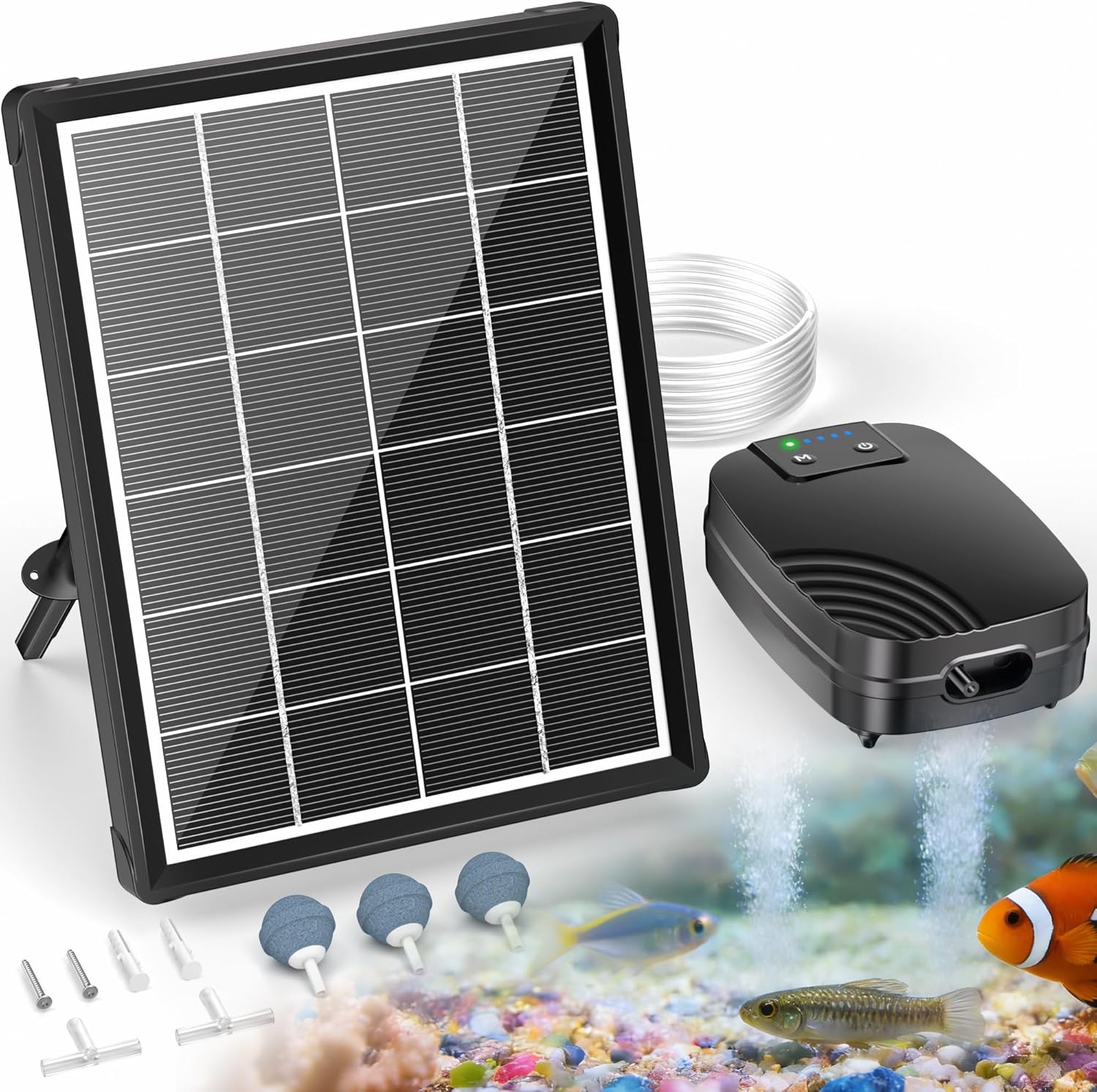
Pros
- Effortless installation with all accessories included and no electrical skills needed
- Strong battery life runs low mode overnight, even after cloudy days
- Versatile modes provide gentle or strong aeration for different pond needs
- Weather-resistant design holds up for outdoor pond use
- Generates decent airflow suitable for small water features
Cons
- Short cord between solar panel and pump limits flexible placement
- Best suited for small ponds; not powerful enough for larger water bodies
- Requires direct sunlight for full charging performance
The POPOSOAP 4W solar pond aerator is a compact, eco-friendly solution designed for small backyard ponds, fish tanks, and hydroponic setups. It suits homeowners with modest water gardens who want reliable oxygenation without dealing with electrical outlets or extension cords near water.
Key features include a separated 4W solar panel that charges a 2200 mAh battery during the day, powering three modes: strong bubbles for summer heat, soft for everyday use, and cycle mode for energy-saving winter operation. Gardeners report it churns water effectively in small ponds, preventing oxygen depletion and toxic gas buildup, even running overnight on battery power.
Built with durable ABS plastic, the pump and panel withstand outdoor conditions, though sheltering the pump from direct rain extends life. The included 8.8ft air tube, stones, and ground stake make it garden-ready right out of the box.
Limitations include the short connection cord, which can challenge placement in shaded ponds needing sunny panel spots, and it's optimized for small areas only. Direct sun is key for peak performance.
Overall, this aerator earns high marks for simplicity and effectiveness in real backyard scenarios. If you have a small pond with fish, it's a practical, low-maintenance choice to keep water thriving year-round.
Setting up your solar pond aerator takes just minutes with these steps:
- Place the solar panel in direct sunlight using the ground stake for stability.
- Connect the panel to the pump wirelessly via the short dedicated cord.
- Attach the air tube to the pump and insert air stones into your pond.
- Secure the pump near the water, ideally sheltered from heavy rain.
- Switch on and select a mode; check the battery indicator light for status.
Tips: Position the panel south-facing for max charge, and test airflow before leaving it unattended.
Aeration keeps pond ecosystems balanced by increasing oxygen levels, reducing algae, and preventing fish stress:
- Use strong mode in summer when water warms and oxygen drops.
- Switch to cycle mode in winter to conserve battery while maintaining minimal flow.
- Monitor for bubbles reaching the pond surface evenly with multiple air stones.
- Combine with pond plants and partial shade to naturally boost oxygen and control temps.
For best results in small backyard ponds, run continuously and clean air stones monthly to avoid clogs.
Adapt the aerator to changing seasons for optimal pond health:
- Spring/Summer: Strong mode combats heat-related low oxygen; recharge fully daily.
- Fall: Soft mode as temps cool; check battery after first frosts.
- Winter: Cycle mode prevents ice gas buildup without draining battery fast.
Store indoors during extreme winters if pond freezes solid, and rinse components before reuse.

Pros
- High flow rate of 7.7GPM supports steady watering for vegetable gardens or lawns
- Brushless DC motor and MPPT tech deliver efficient, reliable operation outdoors
- Included sensors enable hands-free automation for busy gardeners
- Stainless steel build holds up well in submersible pond or well use
Cons
- Solar panels not included, requiring additional purchase and setup
- Controller and wiring can be tricky per some user experiences
- Instructions may lack detail for beginners
This PWS solar water pump kit is a submersible powerhouse designed for deep wells, ponds, and boreholes, perfect for gardeners wanting an off-grid water source for irrigation or pond circulation. It suits homesteaders, ranch owners, or anyone with remote garden spots where traditional power isn't available.
Key features shine in real-world use: the 210W pump delivers up to 7.7GPM at 260ft head, while the MPPT controller ensures top efficiency even on cloudy days. Water level sensors and float switch automate operation, shutting off when tanks fill or water levels drop, saving you time and preventing damage during dry spells.
Build quality impresses with stainless steel components that withstand submersion and corrosion, ideal for harsh outdoor conditions. Users on ranches report solid performance filling large tanks steadily.
Limitations include the need for separate 400W solar panels and potential setup hurdles with short cables or controller quirks. Still, for reliable solar pumping, it's a practical choice.
Overall, recommend for experienced gardeners tackling water challenges in larger yards or rural setups, paired with proper solar array for best results.
Start by selecting a site with good sun exposure for your 4x100W solar panels in series-parallel setup. Drop the pump into your well or pond, ensuring the intake stays above sediment.
- Connect panels to the 20ft MC4 cable, then to the MPPT controller.
- Wire the 6ft pump cable to the controller using waterproof heatshrink.
- Install water sensors in your tank and float switch for automation.
- Test in shallow water first to verify flow before full deployment.
Follow the manual closely, and extend short cables if needed for your layout.
Regularly inspect for debris around the screw impeller and clean as needed. The 3-year warranty covers quality issues, so keep spares handy.
- Check controller lights: power on means good solar input; no output may signal low light or wiring.
- If pump won't start, verify sensors aren't triggering shutdown.
- For dry run protection, monitor water levels during low seasons.
- Store controller indoors in winter to avoid freezing.
Users note controller sensitivity, so double-check connections if issues arise.
Use this pump for drip irrigation in vegetable gardens, filling rain barrels, or circulating pond water to keep fish healthy.
- Deep well owners: Ideal for homestead irrigation lines.
- Pond enthusiasts: Maintain flow without grid power.
- Ranch setups: Stock tanks from remote sources effortlessly.
Pair with timers for consistent lawn or crop watering in sunny U.S. regions.
Buying Guide for Best Solar Controllers For Pond Pumps
Power Compatibility and Voltage Matching
Start by matching the solar controller’s voltage to your pond pump’s requirements, typically 12V, 24V, or 48V systems. For small garden fountains like those in bird baths, a 12V controller suffices, while deeper ponds or higher flow needs call for 24V or 48V options. Check your pump’s specs to avoid mismatches that could lead to underperformance or damage.
Gardeners often overlook system flexibility; look for controllers with automatic voltage recognition, like the Zuomeng 10A model compatible with both 12V and 24V. This makes it ideal for expanding setups. Pair it with solar panels for optimal energy capture in partial shade common in backyard ponds.
Real-world tip: Measure your pond’s depth and desired flow before buying. A table can help compare:
| Voltage | Best For | Example Use |
|---|---|---|
| 12V | Small fountains | Bird baths, shallow ponds |
| 24V | Medium ponds | Koi ponds up to 4ft deep |
| 48V | Large systems | Deep wells or high-flow gardens |
MPPT Technology for Maximum Efficiency
MPPT (Maximum Power Point Tracking) controllers outperform basic PWM types by converting more solar energy into usable power, crucial for pond pumps that need steady flow during varying sunlight. Products like the PWS pump kit’s MPPT controller or JENENSERIES 500W model ensure max output even in low light, preventing pump stalls in overcast 2026 weather.
For gardeners, this means less downtime for water circulation, keeping fish healthy and features running. MPPT units adjust dynamically, boosting efficiency up to 30% over PWM. If your pond relies on consistent aeration, prioritize MPPT for long-term savings.
Tip: Connect to high-quality panels and use solar extension cables for flexible placement away from pond edges to catch full sun.
Safety Features like Dry Run and Overload Protection
Essential for ponds, dry run protection shuts off the pump if water levels drop, preventing burnout during evaporation or dry spells. Overload and overcurrent safeguards, found in the Zuomeng and UPNE-TECH controllers, protect against clogs from leaves or debris common in garden setups.
Many include water level sensors or float switches, like those in the PWS and JENENSERIES kits, automating operation. This hands-off reliability lets you focus on gardening rather than monitoring. Look for LED displays for real-time status checks.
Gardener advice: Install sensors at your pond’s low-water mark. These features extend pump life, especially in variable climates.
Ease of Installation and System Integration
Choose controllers with simple wiring, MC4 connectors, and clear manuals for DIY gardeners. The DDcafor solar fountain kit floats easily with no extra setup, while others like Water-Rebirth offer app control for remote tweaks.
Compatibility with existing pumps is key; variable speed options like Water-Rebirth suit asynchronous pond pumps. Mount panels securely using solar panel mounts for stability near water.
Pro tip: Test in a bucket first to ensure flow matches your pond’s needs before full install.
Durability and Weather Resistance
Outdoor-rated IP65 or higher enclosures resist rain, dust, and UV, vital for pond-side use. Stainless steel components in pumps like PWS handle corrosion from splashes.
Battery backups in models like Yinhing or POPOSOAP ensure nighttime or cloudy operation. Long cords, like 16-20ft in Antfraer and Biling, allow panel positioning for max sun.
For longevity, clean filters regularly to combat pond algae buildup.
Flow Rate and Head Capacity
Match GPM (gallons per minute) and head (lift height) to your pond size. Small setups need 160-320GPH like Biling or Antfraer; larger ones require 7-8GPM from JENENSERIES.
Adjustable nozzles and flow controls fine-tune for waterfalls or circulation. Explore our Solar & Wind Power section for complementary gear.
Why You Should Trust Us
At New York Garden, we specialize in practical reviews for U.S. homeowners and gardeners, analyzing product specs, features, and real-user scenarios without physical testing claims. Our team dives deep into data like efficiency ratings, protections, and compatibility to highlight what works for backyard ponds and lawns.
We prioritize transparency, focusing on gardener needs like easy installs and reliable performance in everyday conditions. Updated for 2026, our guides help you shop confidently from trusted brands in the Renewable Energy Controllers category.
Final Thoughts
After reviewing these options, the 3-Year Warranty Solar Water Pump Kit from PWS pump with solar stands out as best overall. Its MPPT controller, water sensors, and high-efficiency design deliver robust performance for medium to large ponds, automating flow to keep your garden feature thriving effortlessly.
For best value, go with the Zuomeng 10A Solar Water Pump Controller. Versatile for 12V/24V systems, with LED monitoring and multiple protections, it offers pro-level features at an accessible level, perfect for upgrading existing pond pumps without a full kit.
Best for small backyards or bird baths is the DDcafor Solar Fountain Water Pump. Its free-standing panel and multiple nozzles provide instant, low-maintenance fun, ideal for beginners wanting to add solar sparkle to patio ponds.
FAQs
What is a solar controller for pond pumps?
A solar controller regulates power from panels to your pond pump, optimizing efficiency and adding protections like dry run shutdown. In 2026, models with MPPT ensure max energy use for consistent circulation in gardens.
Do I need an MPPT controller for my pond pump?
Yes, for best results in variable sunlight; MPPT extracts 20-30% more power than PWM, vital for pumps needing steady flow. Great for larger ponds where efficiency saves on panel costs.
How do I install a solar controller for a pond?
Connect panels to controller input, pump to output, and add sensors if included. Position panels south-facing; test flow before permanent setup. Most are plug-and-play for gardeners.
Can solar controllers work without batteries?
Many direct-drive models like UPNE-TECH run battery-free during sunlight, ideal for daytime pond circulation. Add batteries for 24/7 if needed, as in Yinhing kits.
What protections should Best Solar Controllers for Pond Pumps have?
Look for dry run, overload, overheat, and low-voltage cutoff to safeguard pumps from pond hazards like low water or debris. These extend life in outdoor garden use.



Write Your Review
No reviews yet. Be the first to share your experience!