

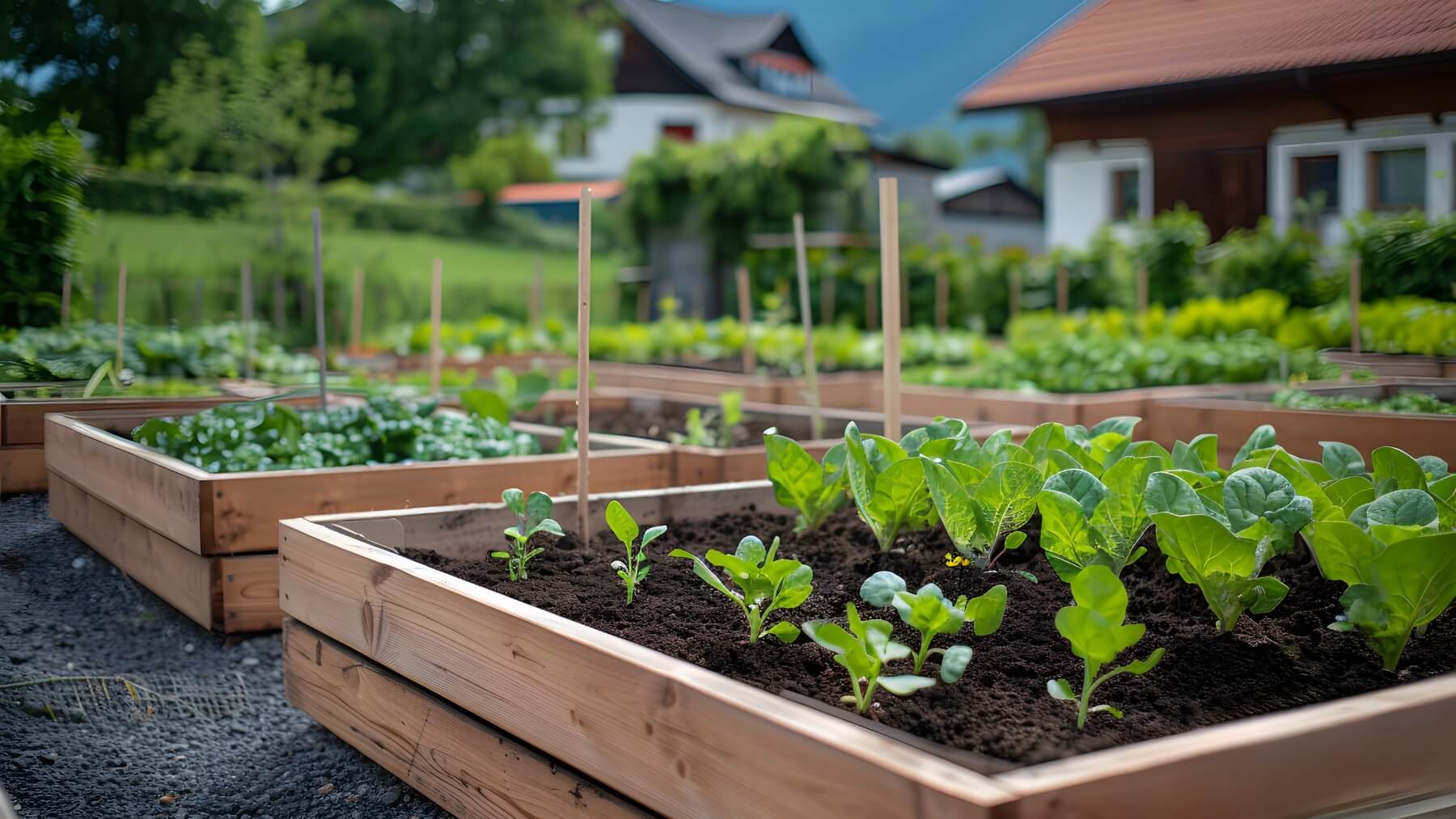
Looking to cultivate fresh vegetables and flowers but lacking ample space? Discover how to build your raised garden beds with this do-it-yourself guide. Building a raised garden bed will enable you to optimize your backyard garden space, allow for better soil control, decrease soil compaction, and simplify plant maintenance.
Making a raised bed is an ideal do-it-yourself project, and we’re here to assist you in getting started with our comprehensive, step-by-step guide on how to build raised beds from scratch. No advanced abilities are required! Our guide covers everything from the kind of wood or material to use to the appropriate size of a raised bed, as well as how to clear the site and construct the bed. We also provide guidance on filling the raised bed and the proper soil mix to use.
Why Build Raised Garden Beds?
Raised beds are an excellent choice for gardening for several reasons:
- Promote proper drainage and help prevent erosion.
- Warm up quicker in the spring and provide a longer growing season due to the raised soil being above ground level.
- Provide greater control over the soil, which allows for intensive planting of crops in close proximity, resulting in faster maturation.
- Prevent soil compaction, which eliminates the need for laborious digging each year.
- Ideal for small spaces where a conventional garden might be too cumbersome, and they make it easier to separate and rotate crops each year.

How to Build Raised Garden Beds?
Step 1:
Choose the right position for your raised garden bed. To promote optimal growth, it’s best to position your garden in the sunniest part of your yard. Avoid damp, low-lying areas that may cause the soil to remain saturated. Since the garden will require regular watering during the growing season, it’s preferable to have convenient access to a hose.
Step 2:
To create a raised garden bed, you will require various materials for the construction process. These include timber options like reclaimed hardwood or softwood sleepers, a spirit level for measuring accuracy, a measuring tape to determine the correct dimensions, a rubber mallet and small trowel for detailed work, an electric drill and coach screws for assembly, and bricks, rubble, and mortar mix to enhance stability and support.
Step 3:
To make room for the timbers, dig out strips of turf that are wide enough to fit them. For a cost-effective alternative to hardwoods like oak, pressure-treated softwood sleepers can be utilized.
Step 4:
Place the timbers in the desired location and utilize a spirit level to confirm that they are level. It’s important to check the levels diagonally between timbers in addition to their length.
Step 5:
To confirm that the corners are at right angles, double-check that the diagonals are of equal length. If you desire a rectangular or square-shaped bed, it may be beneficial to have the timbers pre-cut to size during purchase to ensure a perfect fit.

Step 6:
With the aid of a rubber mallet, tap the wood to ensure that it is flush with the adjacent piece. The wood should stand vertically and in perfect level alignment with the readings on the spirit level.
Step 7:
Using an electric drill, make holes through the end timbers into the adjacent pieces at both the top and bottom to fit two long, heavy-duty coach screws. Fasten the screws tightly into place to secure the base, preparing it for the subsequent level of construction.
Step 8:
Arrange the next set of timbers, ensuring that they overlap the joints beneath to provide the structure with additional strength. Prior to fastening the final set of fixings, as in step 7, confirm the level with a spirit level.
Step 9:
For plants that require excellent drainage, such as alpines, fill the base of the bed with builders’ rubble or chippings. Then, fill the bed almost to the top with a mixture of topsoil and compost.
Conclusion
By following these steps, you can create a raised garden bed that will not only boost your curb appeal but also give you a bountiful harvest of homegrown fruits and vegetables. Raised beds are perfect for gardeners who want to maximize their gardening space, have greater control over their soil, and simplify their gardening chores. With a little bit of effort, you can construct a beautiful and productive garden that will provide healthy, fresh produce for you and your family. So, grab your tools and start building your raised garden bed today!








Write Your Review
No reviews yet. Be the first to share your experience!