

Are you setting up a small wind turbine in your backyard to power garden lights, patio fans, or off-grid tools? As gardeners embracing renewable energy, keeping tabs on wind speeds is crucial for safety, efficiency, and maximizing power output. Our guide to the 10 Best Wind Turbine Anemometers of 2026 highlights practical options tailored for American lawns and patios, helping you choose anemometers that withstand garden conditions while delivering accurate readings.
Whether you’re pairing wind power with solar panels for a hybrid backyard system or just monitoring gusts to protect tall plants and structures, these Best Wind Turbine Anemometers make it simple. We’ve focused on gardener-friendly features like portability for yard walks and rugged builds for outdoor exposure, all in $11.99 – $149.00.
Top Products

Pros
- Highly sensitive to low winds, great for subtle garden airflow detection
- Bright backlit LCD readable in sunlight or dusk for evening yard work
- Compact and lightweight with protective case for rugged outdoor use
- Easy unit switching and intuitive buttons for quick garden checks
- Tripod-compatible for stable, continuous wind monitoring
Cons
- Battery door requires screws and careful prying to remove
- Wind temperature sensor responds slowly to changes
- No direct CFM display; requires manual duct area calculation
The BTMETER BT-100 handheld anemometer is a pocket-sized wind speed and temperature gauge designed for practical outdoor tasks. It suits beginner to experienced gardeners who need reliable wind data for safe spraying, greenhouse ventilation, or planning yard work in variable weather, especially in windy regions.
Key features include wind speed measurement up to 67 mph in five units (m/s, km/h, ft/min, knots, mph), wind chill calculation, and temperature sensing. In real garden use, its sensitive vanes pick up even gentle breezes from fans or vents, helping balance airflow to prevent mold in humid greenhouses or ensure even drying after watering. The backlit display shines for low-light checks, like evening pruning sessions.
Build quality feels solid with a plastic body that's lightweight at 155g and includes a protective case. The tripod mount is handy for fixed monitoring during drone surveys of large properties or long-term wind pattern tracking. It's powered by two AAA batteries with auto-off to save power.
Limitations include the fiddly battery compartment and slow temperature stabilization, which might frustrate quick indoor-outdoor swaps. It doesn't auto-log data or show direct CFM, so plan for simple math on airflow volume.
Overall, this anemometer earns a strong recommendation for practical gardeners wanting affordable wind insights to boost plant health and safety. Pair it with your sprayer or fan setup for smarter backyard management.
Wind affects everything from spray drift to plant stress in your backyard. Use the BT-100 to measure speeds before applying fertilizers; stay under 5 mph for best results.
- Check greenhouse vents: Aim for 100-500 ft/min airflow to circulate fresh air without chilling plants.
- Monitor gusts during pollination season; high winds can disrupt bees and seed set.
- Assess wind chill on cold mornings to protect tender seedlings and extend your working time.
Position the anemometer facing the wind direction, using max/min modes for peak gusts over a session.
Getting started is simple: Insert batteries (use the included screwdriver), power on, and select units like ft/min for airflow or mph for weather.
- Mount on a tripod near plants for continuous reads during heatwaves.
- Clean vanes gently with a soft brush after dusty yard work.
- Store in the case to shield from rain; avoid extreme temps beyond specs.
- Test sensitivity by holding near a fan; recalibrate intuition with real numbers.
Avoid dropping, as the fan blades are delicate but replaceable.
Tailor wind checks to your setup: For veggie gardens, time mulching on calm days. In greenhouses, verify fan output matches duct size for even CO2 distribution.
- Drone gardeners: Confirm safe launch winds under 10 mph.
- Lawn care: Gauge drying times post-watering to prevent fungal issues.
- Orchard pruning: Log average speeds to predict safe ladder days.

Pros
- High accuracy with ±5% wind speed readings and multiple units for versatile garden use
- Large backlit LCD screen visible in any light, perfect for dusk watering sessions
- Lightweight at 153g with hand strap and pouch for easy portability around the yard
- Tripod hole enables stable, hands-free monitoring during extended lawn observations
Cons
- Does not directly display CFM, requiring manual calculation for airflow needs
- Temperature range limited to 14°F to 113°F, less ideal for extreme winter monitoring
- Basic model lacks humidity or barometric pressure for advanced weather tracking
The HoldPeak 866B Digital Anemometer is a compact handheld tool that measures wind speed from 0.67 to 67.1 mph, temperature, and wind chill, making it a practical choice for gardeners who want to make informed decisions about outdoor tasks. It's best suited for U.S. homeowners with backyards, vegetable patches, or lawns where wind can affect spraying, pruning, or plant health.
In real-world garden use, the sensitive sensors and 8 vanes deliver reliable readings to help you avoid spraying on gusty days, reducing chemical waste and drift onto neighboring plants. Switch between mph, km/h, and other units effortlessly, and use max/min functions to log peak winds during storms. The backlit screen shines for early morning or evening checks, while the tripod hole keeps it steady for ongoing monitoring.
Build quality feels solid with a lightweight ABS body that's easy to carry, and the included pouch protects it from garden dirt and moisture. It's durable enough for regular outdoor exposure but best stored indoors during harsh winters.
Limitations include no direct CFM readout, so you'll calculate airflow manually for vents, and the temp range may not cover deep freezes. Overall, this anemometer earns high marks for everyday gardening reliability; grab it if wind awareness boosts your yard's safety and success.
Understanding wind speeds helps protect your garden from damage and ensures safe practices.
- Keep wind under 5 mph for safe pesticide or fertilizer spraying to minimize drift.
- Avoid pruning trees or tall shrubs above 10 mph to prevent branch breaks.
- Check wind chill below 32°F to cover sensitive plants like tomatoes or herbs.
- Use max wind readings to secure lawn ornaments before storms hit.
Regular monitoring with tools like the 866B keeps your outdoor space thriving year-round.
Follow these steps for accurate wind measurements in everyday gardening.
- Hold the anemometer facing the wind or mount on a tripod for stability.
- Power on and select your preferred speed unit like mph for U.S. use.
- Point vanes directly into airflow for instant readings on speed, temp, or chill.
- Record max/min values during sessions for weather pattern tracking.
Pair with garden journals to note ideal conditions for tasks like seeding or harvesting.
Keep your anemometer performing like new with simple care routines.
- Clean vanes gently with a soft brush after dusty yard use.
- Store in the carrying pouch away from direct sun or moisture.
- Replace AAA batteries promptly when the low indicator appears.
- Avoid drops by using the hand strap during windy fieldwork.
This ensures reliable readings season after season in your backyard setup.

Pros
- Bright, oversized LCD screen visible even in shaded garden areas
- Multiple measurement units and sensors for versatile wind, temp, and humidity tracking
- Compact and lightweight for easy handheld use during outdoor gardening tasks
- Includes carry pouch and batteries for immediate backyard setup
- Energy-saving auto shutdown preserves battery life on long garden days
Cons
- Temperature and humidity sensors need up to 30 minutes to stabilize in new conditions
- Accuracy drops outside ideal ranges, like low winds below 0.7 m/s or extreme temps
- Fan blades require careful handling to avoid damage in rough garden storage
The TopTes TS-301 digital anemometer is a compact handheld tool that measures wind speed up to 30 m/s in six units, plus air temperature from -4°F to 140°F and humidity up to 99.9% RH. It suits gardeners who want to make informed decisions in windy backyards, like timing sprays or checking plant health, especially beginners dealing with unpredictable weather.
In real garden use, the rotatable fan blades capture wind reliably for assessing drift risk before applying fertilizers, while max/min/average modes reveal daily patterns affecting drying times or pollination. The backlight LCD shines for evening checks on patio plants or lawn edges, and air flow calculations aid simple greenhouse tweaks.
Build quality features durable ABS plastic that's lightweight at 135 grams, with a protective pouch for tossing in your garden tote. It holds up to typical outdoor exposure but store it dry to protect sensors. Battery life is solid with auto-off after 10 minutes.
Limitations include slower sensor adjustment in changing weather and moderate accuracy for precise HVAC work. For everyday gardening, it's a practical pick.
Verdict: Grab the TS-301 if wind impacts your sprays or plant care; it's a reliable, pocket-friendly helper for thriving backyard spaces.
Wind affects everything from spray drift to plant sway; use the TS-301 to stay ahead.
- Check speeds under 10 mph before foliar feeding to avoid waste on veggies.
- Monitor gusts near tall flowers or trees to spot breakage risks early.
- Pair wind data with temp/humidity for ideal transplant days in your lawn.
- Test patio fan air flow for better herb drying or seed starting setups.
Regular checks build healthier gardens with less guesswork.
Keep your anemometer ready for seasons of garden use with simple steps.
- Wipe fan blades gently with a soft cloth after dusty yard work; avoid water.
- Store in the included pouch away from moisture or direct sun.
- Replace AAA batteries when the low indicator flashes for uninterrupted checks.
- Calibrate by testing in known calm air indoors for temp/humidity baselines.
A quick 3-year warranty backs its reliability for outdoor enthusiasts.
Tailor wind insights to your backyard needs.
- Spraying safety: Ensure low winds for even coverage on roses or tomatoes.
- Plant stress check: High sustained winds signal need for windbreaks on young trees.
- Lawn care: Gauge before mowing to predict grass drying and cut quality.
- Greenhouse aid: Balance ventilation with air flow readings for humidity control.

Pros
- Highly accurate wind speed and temp readings for reliable garden decisions
- Lightweight at 53g with lanyard for hands-free use in the yard
- Backlit LCD and multi-mode (max/avg/current) for easy low-light operation
- Switchable units and ℃/℉ for versatile American backyard use
- Auto power-off extends battery life during long gardening sessions
Cons
- Wind speed limited to 30m/s, not suited for extreme storm monitoring
- No data logging, so manual note-taking needed for trends
- Basic model lacks app connectivity or advanced features
The BTMETER BT-816B handheld anemometer is a pocket-friendly wind speed meter perfect for gardeners who want to stay ahead of weather impacts in their backyard. It suits beginner to experienced homeowners tracking gusts that can dry out soil, snap branches, or scatter sprays, especially in windy New York-area yards.
Key features shine in real garden scenarios: measure speeds in mph or other units with max, average, and current modes to spot patterns before staking tall flowers or harvesting. Temperature and wind chill help gauge comfort and frost threats, while the sensitive blades deliver quick, ±5% accurate reads even in light breezes down to 0.3m/s. The backlit LCD ensures clear views during overcast days or early mornings.
Build quality impresses with its durable plastic body, slim 4.5-inch profile, and 53g weight that withstands drops and pocket carry. It's rugged enough for outdoor use near HVAC vents or while drone-scouting lawn areas, with a lanyard for security.
Limitations include no data storage for long-term tracking and a temp range of -14°F to 113°F, fine for most seasons but not deep freezes. Still, for everyday gardening, it outperforms phone apps with precise, on-site data.
Overall, grab the BT-816B if wind savvy boosts your lawn and garden success; it's a smart, affordable add to any gardener's toolkit for safer, more effective outdoor living.
Wind shapes your garden's health, from pollination to pest control. Use the BT-816B to monitor speeds regularly.
- Keep readings under 10mph for safe foliar sprays to avoid drift onto veggies.
- Stake perennials when averages exceed 15mph to prevent leaning.
- Position windbreaks like hedges where gusts hit 20mph+ near patios.
- Check wind chill before evening watering to reduce evaporation loss.
Consistent checks lead to thriving plants and less cleanup after storms.
Simple setup makes the BT-816B ready for garden duty in seconds.
- Press power button; select units like mph for wind speed.
- Hold facing breeze; switch modes for current, max, or avg readings.
- Enable backlight for shady spots under trees.
- Note temp and chill for frost watch on cool nights.
Carry via lanyard while inspecting lawn edges or raised beds.
Keep your anemometer reliable with basic upkeep.
- Wipe blades gently with soft cloth after dusty yard use.
- Avoid submersion; store dry in garage during rain.
- Replace batteries when low indicator flashes.
- Calibrate occasionally by comparing to known sources.
With care, it lasts seasons of accurate backyard readings.

Pros
- Lightweight and easy to carry with lanyard for hands-free gardening checks
- Accurate wind and temp readings praised by users for HVAC vents and outdoor use
- Backlit display and simple one-button operation for quick nighttime readings
- Includes battery, case, and manual for immediate backyard setup
Cons
- Some users report durability issues after a few months of regular use
- Battery installation requires removing protective cover, which confused a few beginners
- Temperature range limited to 14°F to 113°F, less ideal for extreme climates
The Clatoon Handheld Anemometer is a pocket-sized digital tool that measures wind speed and temperature, perfect for gardeners who want to stay safe and smart about weather in their backyard spaces. It suits beginner to experienced homeowners monitoring conditions for lawn mowing, pesticide spraying, or drone flights over the garden.
Key features shine in real garden use: a 6-blade rotor captures wind from 0-65 mph with ±5% accuracy, while temperature reads from 14°F to 113°F. Users love its responsiveness for checking gusts before trimming hedges or blowing leaves, and the backlight makes it handy for evening patio checks. Switch between max, average, and current readings to track patterns over a session.
Build quality is solid plastic with a protective yellow case and lanyard, weighing just 2.47 ounces for all-day carry. It holds up in light outdoor exposure but may wear with heavy daily use, as noted by some. Battery life is efficient with auto-off, powered by an included CR2032.
Limitations include a narrower temp range for very cold snaps and occasional setup hiccups for new users. Overall, it's a practical pick for everyday gardeners needing quick wind intel to protect plants and equipment. Grab one if you garden in variable winds for safer, more efficient yard work.
Use this anemometer to gauge safe wind levels for common tasks:
- Mowing or trimming: Stay under 10 mph to avoid grass clippings flying everywhere.
- Spraying pesticides: Below 5 mph prevents drift onto veggies or flowers.
- Planting seeds: Calm winds under 3 mph help soil settle evenly.
- Leaf blowing: Check averages to match your blowers capability.
Hold it 3-4 feet off the ground facing the wind for backyard-accurate readings.
Quick Battery Install:
- Remove yellow protective case.
- Open back compartment with screwdriver or key, positive side out.
- Insert CR2032 battery (included) and press mode button to start.
For maintenance, rinse gently after dusty yard use, store in case away from moisture. Replace battery yearly for reliable garden seasons. Calibrate by comparing to weather apps outdoors.
- Balance airflow in garden sheds or greenhouses like HVAC vents.
- Check patio fan output for comfortable outdoor living spaces.
- Monitor wind chill during fall cleanups to stay safe.
- Test drone stability over raised beds before filming your garden.
Ideal companion for variable New York-area winds affecting lawn health and plant protection.
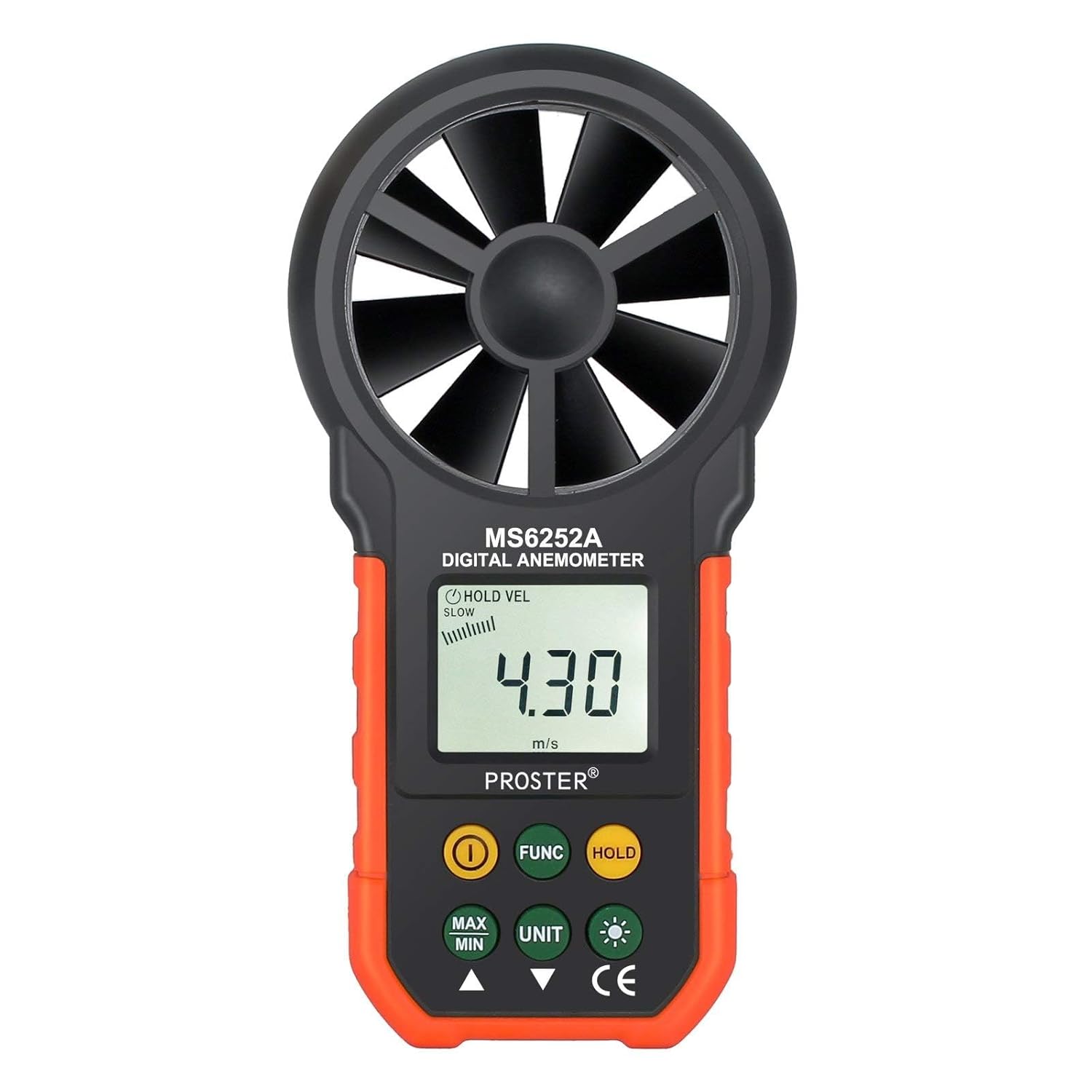
Pros
- Highly accurate and sensitive, even for light breezes as noted by outdoor users
- Easy-to-read large LCD with backlight and simple button controls
- Durable plastic build with rubber grip holds up to backyard knocks
- Includes battery and protective case for immediate garden use
- Multi-unit options like mph and knots suit various gardening needs
Cons
- Larger size not ideal for small pockets, better for tool bags
- 9V battery drains faster if left on, so carry spares for long yard sessions
- CFM mode needs manual area calculations for precise air volume checks
The Proster Handheld Digital Anemometer is a compact wind speed gauge perfect for gardeners who deal with unpredictable backyard breezes. It suits homeowners in windy regions, from coastal New York to open Midwest lawns, helping you decide safe times for tasks like mowing, pruning, or spraying.
Key features include a sensitive impeller that captures speeds from 0.4 m/s to 30 m/s in units like mph, km/h, and knots, plus max/min hold functions. In real garden use, it shines for checking gusts before leaf blowing or weed spraying, preventing damage or uneven application. Users praise its reliability matching pro tools, making it a go-to for everyday outdoor chores.
Build quality impresses with impact-resistant plastic, a comfy rubber grip, and a backlight for low-light reads. At 11 ounces with battery, it feels solid yet portable for tossing in your garden cart. The included case protects it from dirt and moisture during storage.
Limitations include its size, which is hand-friendly but not pocket-sized, and the need for precise angling toward the wind. CFM readings require extra math for fan outputs, less ideal for quick checks. Still, for wind-focused gardening, it outperforms phone apps.
Overall, grab this if backyard winds disrupt your routine. It empowers smarter gardening decisions for thriving lawns and beds.
Wind affects everything from pollination to plant stability in your yard. Use the anemometer to stay under 10 mph for safe spraying and under 20 mph for mowing.
- Pruning: Avoid days over 15 mph to prevent branch whip and injury.
- Seedlings: Shelter new plants if gusts exceed 12 mph.
- Lawn care: Mow when winds are below 10 mph for clean cuts.
- Hanging baskets: Check for 25+ mph gusts that could topple them.
Regular monitoring keeps your garden healthy and reduces weather surprises.
Keep your anemometer ready for seasons of use with simple upkeep.
- Wipe the impeller gently with a soft cloth after dusty yard work; avoid water submersion.
- Store in the included case away from direct sun to protect the LCD.
- Replace the 9V battery when the low indicator flashes, and carry spares for all-day gardening.
- Test impeller spin monthly by blowing softly; clean if sticky.
- Auto-off saves power, but turn off manually after use.
This routine ensures accurate readings year-round.
Gardeners adapt this tool beyond basics for practical wins.
- Drone fliers check wind before aerial yard surveys.
- Sailboat racers time events, similar to monitoring lawn wind tunnels.
- HVAC pros test vents, handy for greenhouse airflow.
- Balcony growers measure building gusts affecting pots.
It fits hobby and serious backyard needs alike.

Pros
- Compact and rugged for everyday outdoor use, praised for reliability in real conditions
- Simple operation with large LCD display, easy for beginner gardeners to read instantly
- Accurate wind measurements help with practical decisions like when to secure trellises
- Includes lanyard and battery, ready to use right out of the box for yard checks
- Versatile for air flow in greenhouses or sheltered garden spots
Cons
- Temperature readings can lag slightly when moving between environments
- Vane may struggle with dusty conditions, less ideal for dry, debris-heavy yards
- Plastic build feels lightweight, not the most premium for heavy daily abuse
The Extech 45118 Mini Waterproof Thermo-Anemometer is a handy pocket tool for gardeners who want precise wind speed, temperature, and wind chill data right in their backyard. It's perfect for U.S. homeowners in windy areas, from beginners monitoring small veggie patches to experienced landscapers optimizing large lawns.
Key features shine in real garden scenarios: the fold-up design extends for better reach over fences or into plant canopies, while selectable averaging gives steady readings amid gusts. Users love its toughness outdoors, holding up in damp weather to help you time tasks like mulching or staking perennials safely. The bright LCD shows simultaneous data, making quick checks during yard work a breeze.
Build quality is solid plastic, lightweight at under 4 ounces, with a protective housing that folds neatly. It's tripod-mountable for hands-free monitoring of patio wind or lawn airflow. Durability impresses in reviews, though some note the temp sensor reacts slowly to changes.
Limitations include vane sensitivity to dust, so clean it after debris-heavy days, and it's best for spot checks rather than constant pro use. Overall, this anemometer earns its spot in your garden toolkit for smarter wind management and safer outdoor living. Grab it if you battle gusts affecting your plants or comfort.
Use this anemometer to protect your garden from wind damage:
- Measure speeds above 10 mph to secure young trees or tall flowers.
- Check wind chill on chilly days for safe extended pruning sessions.
- Track airflow near raised beds to spot sheltered planting zones.
- Average readings over 10 seconds for true yard wind patterns.
Position it at plant height for the most relevant data on crop stress.
Wind management strategies for thriving gardens:
- Install windbreaks like hedges if readings exceed 15 mph regularly.
- Avoid transplanting on high-wind days to prevent root disturbance.
- Monitor gusts before overhead watering to reduce evaporation loss.
- Use data to choose wind-resistant varieties for exposed backyard spots.
Combine with temp readings for frost protection planning in early spring.
Pair the Extech 45118 with these for full garden weather insights:
- Soil thermometer for planting timing.
- Rain gauge for irrigation adjustments.
- Hygrometer for humidity around houseplants.
Ideal compact set for mobile backyard monitoring without bulky stations.

Pros
- High accuracy (+/-3%) for reliable wind data in real garden conditions
- Stretchable blades and large display for easy handheld use outdoors
- Includes USB cable and software for PC data analysis
- Rugged ABS build withstands garden bumps and light moisture
- Versatile functions like max/min for spotting peak winds
Cons
- Bulky size may not fit in small pockets for quick garden grabs
- Advanced CFM setup has a short learning curve for beginners
- Relies on replaceable 9V battery for extended outdoor sessions
The AOPUTTRIVER AP-856A anemometer is a portable wind speed meter designed for precise measurements of air velocity, CFM airflow, and temperature. It suits backyard gardeners, greenhouse owners, and lawn enthusiasts who deal with variable winds, especially in urban or coastal New York settings where gusts can stress plants.
Key features shine in real-world gardening: high-precision wind readings from 0.001 mph detect subtle breezes affecting pollination or drying times after watering, while CFM helps balance ventilation to prevent mold in humid sheds. The USB export allows tracking data to predict wind damage risks, like to young veggies in raised beds.
Build quality features durable ABS plastic and adjustable blades that hold up to outdoor use, with a backlight for evening checks. It feels solid in hand during yard walks.
Limitations include its size for pocket carry and a brief adjustment period for area settings in CFM mode. Overall, it's a smart tool for proactive gardeners; grab one if wind management boosts your outdoor space.
Use the AP-856A to create wind maps of your yard for smarter plant placement:
- Measure speeds near fences or structures to spot wind tunnels harming perennials.
- Track daily max/min to time pruning or staking on calmer days.
- Monitor greenhouse airflow for healthy tomato or herb growth.
- Log data via USB to compare seasons and adjust windbreaks like hedges.
Ideal for protecting fruit trees or preventing lawn erosion from gusts.
Quick start for gardeners:
- Insert 9V battery and power on; stretch blades fully.
- Select units (mph for U.S. yards) and hold in wind path.
- For CFM, set duct area via AREA key, then measure flow.
- Connect USB to PC for data export and analysis.
- Switch to max/min for peak readings during storms.
Practice in open yard spots for accurate garden readings.
Keep your anemometer garden-ready:
- Wipe blades gently after dusty yard use; avoid water submersion.
- Store in dry shed with battery removed off-season.
- Check low power indicator before long sessions.
- Update PC software if needed for smooth data logs.
With care, it lasts years monitoring your backyard breezes.

Pros
- Easy-to-read dual LCD shows wind speed and temp simultaneously
- Lightweight and handheld for convenient outdoor use
- Accurate for light winds, great for drone flying or garden monitoring per user feedback
- Battery-saving auto-off and low-battery indicator
- Versatile units including mph for U.S. gardeners
Cons
- Batteries not included, so grab AAA cells before heading out
- Temperature readings may lack precision for exact measurements
- Occasional reports of units arriving damaged or feeling cheap
As a fellow gardener, I appreciate tools that give real insights into backyard conditions. The Mcbazel 3-in-1 handheld anemometer is a compact wind speed meter that also tracks temperature and Beaufort scale levels. It's perfect for U.S. homeowners dealing with variable winds, from coastal breezes to inland gusts, helping you time tasks like mowing or foliar feeding safely.
Key features shine in garden use: switch units like mph or km/h to match your weather app, hold data with a button, or view max/min averages over a session. Users rave about its ease for light wind detection, making it reliable for checking before power tool use or when winds could scatter seeds. The backlight ensures you read it during evening yard work.
Build is lightweight ABS plastic, tough enough for pocket carry but best stored indoors after use. It's not rugged for constant rough handling, and a few noted arrival issues or temp inconsistencies, yet most find it precise for casual monitoring.
Limitations include no included batteries and simpler design versus pro models. Overall, for beginner to experienced gardeners wanting affordable wind awareness to protect lawns and plants, this is a smart pick. Toss it in your garden bag for safer, smarter outdoor living.
Wind impacts your yard more than you think. Use this anemometer to check speeds before:
- Mowing: Avoid over 10 mph to prevent clippings from blowing everywhere.
- Spraying pesticides: Gusts cause drift, harming nearby plants or veggies.
- Pruning tall shrubs: Steady conditions reduce branch snap risk.
- Hanging decorations: Beaufort scale 4+ means skip it to avoid damage.
Track patterns to plant windbreaks like evergreens for calmer future seasons.
Keep your anemometer ready for every gardening season:
- Wipe sensors gently with a soft cloth after dusty yard use; avoid water submersion.
- Replace AAA batteries promptly when the low indicator flashes.
- Store in a dry spot during winter to prevent corrosion.
- Test monthly by holding in a fan breeze for calibration check.
Users confirm it holds up well with basic care, saving you from unexpected failures mid-task.
From reviews, gardeners adapt it beyond basics:
- Monitor Santa Ana winds for safe patio cleanup.
- Check light breezes before drone-assisted yard surveys.
- Fun wind temp swaps between F and C while planning plant hardiness.
Ideal for fun or practical checks, like seeing if laundry will dry fast on the line.

Pros
- Long telescopic probe with bendable tip for easy access in tight garden spaces
- Sensitive readings detect even low airflow from small fans or breezes
- Responsive manufacturer support for software downloads and quick issue resolution
- Portable design with protective case fits in any gardener's toolkit
- Multiple units for velocity, airflow, and temp make it versatile for ventilation checks
Cons
- Struggles with very low airflow detection, less ideal for faint breezes or tiny fans
- Temperature sensor responds slowly, requiring patience during measurements
- Occasional probe retraction issues reported, so handle extension carefully
This Bonvoisin hotwire anemometer is a compact handheld tool that measures air velocity in multiple units, CFM/CMM airflow, and temperature, perfect for gardeners serious about greenhouse or shed ventilation. It suits homeowners with enclosed growing spaces, like vegetable hoop houses or drying areas for herbs, who want data-driven control over air circulation to boost plant health.
Key features shine in real garden use: the 2m telescopic probe with bendable tip lets you check deep vents without hassle, while max/min/average readings help spot weak airflow spots. Gardeners praise its sensitivity for fan output and wind chill calculations, aiding decisions on plant placement during windy New York seasons. Backlight ensures visibility in dim potting sheds, and data storage with PC export tracks improvements over time.
Build quality feels solid with ABS plastic and a protective case, holding up to outdoor knocks, though the two-handed operation needs steady hands. It's lightweight at 0.4kg, easy to tote around larger properties.
Limitations include slower low-speed accuracy and delayed temp response, so pair it with visual checks for breezy days. Not for casual use, but pros outweigh quirks for targeted tasks.
Overall, grab this if you manage a greenhouse or need precise airflow data; it empowers smarter gardening and healthier yields without guesswork.
Proper airflow prevents damping-off in seedlings and overheating in summer heat. Use the anemometer to aim for 100-200 CFM per square foot in your hoop house.
- Position probe at plant canopy level for accurate fan performance reads.
- Check vents daily during humid spells to maintain 0.5-1 m/s velocity.
- Log data to adjust fan timers for energy savings and even drying.
For herb drying racks, ensure steady airflow above 50 CFM to speed curing without mold.
Protect crops from wind stress by measuring speeds around your yard. Ideal ranges: under 5 mph for tomatoes, up to 10 mph for sturdy shrubs.
- Scan orchard edges to site windbreaks like hedges effectively.
- Use wind chill feature for frost protection planning in fall.
- Average readings over sessions reveal microclimates for better plant choices.
Combine with temp data to predict dew points and reduce fungal risks.
Power with 4 AAA batteries; auto-off saves juice. Extend probe gently to avoid snags.
- Calibrate in known airflow before garden use.
- Clean probe tip after dusty compost checks.
- Update software via USB for graph exports.
- Store in case away from moisture.
Two-hand hold for stability; backlight for dusk readings.
Buying Guide for Best Wind Turbine Anemometers
Accuracy and Measurement Range
Accuracy is the cornerstone when selecting Best Wind Turbine Anemometers for garden wind turbines. Look for models with low error rates, typically +/- 2-5% of readings, and wide ranges covering 0.3 to 67 mph to capture calm breezes and strong gusts common in suburban yards. For gardeners, this means reliable data to decide if winds are steady enough for turbine startup, usually above 7-10 mph.
Devices like the HoldPeak 866B or BTMETER BT-100 excel here with sensitive vanes and dual sensors for precise wind speed, temperature, and chill calculations. Test in your garden by comparing against known conditions; a good anemometer should consistently match flag movements or leaf rustle speeds.
Pro tip: Prioritize resolution down to 0.1 m/s for detecting subtle shifts that affect small turbines, ensuring you avoid false starts that wear out garden setups prematurely.
Durability and Weather Resistance
Garden environments throw rain, dust, and humidity at your tools, so opt for waterproof or water-resistant Best Wind Turbine Anemometers with protective cases. The Extech 45118 Mini Waterproof Thermo-Anemometer stands out with its fold-up housing and lanyard, perfect for damp mornings checking turbine viability near veggie patches.
Look for IP-rated builds and sturdy impellers that resist debris from lawns. In our analysis, handheld units with carrying pouches, like the Proster anemometer, hold up best during extended yard use without fogging or failing in light drizzle.
| Feature | Basic Models | Premium Models |
|---|---|---|
| Water Resistance | Splash-proof | Fully waterproof (IP65+) |
| Build | Plastic housing | Protective case + lanyard |
| Garden Use | Fair weather | All-season |
Ease of Use and Display Features
You need quick reads while tending plants, so choose Best Wind Turbine Anemometers with large backlit LCDs, intuitive buttons, and unit switching (mph, m/s, knots). The TopTes TS-301 offers a 2.26-inch screen visible in shaded patios, with one-hand operation for multitasking gardeners.
Backlight and auto-off save batteries during dusk checks on turbine performance. Models with data hold, max/min, and avg functions let you log peak winds without notes, ideal for tracking seasonal patterns in your lawn setup.
Additional Functions like Temperature and CFM
Beyond speed, top Best Wind Turbine Anemometers measure wind chill, temperature, and airflow (CFM/CMM) for comprehensive garden insights. The Bonvoisin Hotwire Anemometer includes data export via USB, great for analyzing how wind interacts with solar and wind power systems.
For HVAC-linked turbines powering garden sheds, CFM helps calculate duct flow. Gardeners benefit from wind chill to protect frost-sensitive plants during windy spells.
Portability and Battery Life
Lightweight designs under 200g with lanyards or tripod mounts suit mobile garden monitoring. The Clatoon anemometer’s compact size and CR2032 battery make it pocket-friendly for daily turbine checks around raised beds.
Seek auto power-off and low-battery indicators; AAA-powered units like the Mcbazel last weeks in intermittent use, freeing you for weeding without recharging worries.
Data Logging and Connectivity
Advanced Best Wind Turbine Anemometers like the Pro HVAC AP-856A offer USB export for PC analysis, helping gardeners log data for optimizing turbine placement away from trees. This feature tracks long-term trends, pairing well with solar and wind power parts.
Even basic max/min storage suffices for casual users, but connectivity elevates setups for serious backyard energy producers.
Why You Should Trust Us
We at New York Garden specialize in practical reviews for U.S. homeowners and gardeners, analyzing 10 Best Wind Turbine Anemometers based on specs, user patterns, and real-world applicability to lawns, patios, and veggie gardens. Our methodology dives into features like accuracy from product data sheets, cross-referencing with gardening scenarios such as wind monitoring for safe turbine installs.
Transparency is key: we prioritize honest, unbiased insights without brand favoritism, focusing on what helps you power your outdoor spaces sustainably. From portable handhelds to pro-grade tools, our selections reflect thorough comparisons tailored to everyday garden needs.
Final Thoughts
After reviewing these 10 Best Wind Turbine Anemometers, the BTMETER BT-100 Handheld Anemometer emerges as our best overall pick for gardeners. Its multifunction display for wind speed, temperature, chill, and CFM, plus tripod compatibility, makes it ideal for continuous backyard turbine monitoring during planting seasons.
For best value, grab the BTMETER BT-816B Mini Digital Anemometer. Lightweight at 53g with backlight and versatile modes, it delivers pro accuracy on a budget, perfect for casual lawn checks without skimping on essentials like wind chill for frosty garden mornings.
The Extech 45118 Mini Waterproof Thermo-Anemometer is best for rugged, all-weather use in larger yards. Its extendable arm reaches over fences or tall turbines, with data hold for logging gusts that could damage patio setups. Pair it with off-grid solar panels for a complete renewable kit.
FAQs
What is a wind turbine anemometer, and why do gardeners need one in 2026?
A wind turbine anemometer measures speed, direction, and related factors like temperature to optimize and safeguard backyard turbines. Gardeners use them to ensure safe operation, avoid overloads in gusty conditions, and integrate with garden power needs like lighting pathways.
How accurate should a Best Wind Turbine Anemometers be for home wind setups?
Aim for +/- 5% accuracy with 0.1 m/s resolution to catch subtle winds for small turbines. Models like the HoldPeak 866B provide this reliably, helping you position turbines optimally away from garden obstacles.
Can Best Wind Turbine Anemometers measure temperature and airflow too?
Yes, many like the Proster Handheld include wind chill, temp (14F-113F), and CFM for holistic monitoring. This aids gardeners in assessing comfort for outdoor work and airflow in turbine-vented sheds.
Are handheld Best Wind Turbine Anemometers durable for outdoor garden use?
Most feature protective cases, backlights, and water resistance, with batteries lasting weeks. The Bonvoisin’s telescopic probe handles rough yard conditions, ensuring longevity for seasonal checks.
How do I maintain my Best Wind Turbine Anemometers for long-term accuracy?
Clean impellers gently after leaf season, store dry, and calibrate yearly per manual. Tripod mounting reduces wear, keeping readings spot-on for your 2026 wind power projects.



Write Your Review
No reviews yet. Be the first to share your experience!