

Are you looking to power your garden lights, pond pumps, or automated irrigation systems without relying on the grid? In 2026, Best Solar Wind Charge Controllers are game-changers for gardeners embracing sustainable energy. These controllers manage power from both solar panels and wind turbines, ensuring your batteries stay charged even on cloudy or calm days. With 10 standout options spanning $116.59 – $188.99, we’ve reviewed the best fits for backyard setups, helping you harvest reliable, eco-friendly power right from your lawn or patio.
Whether you’re running low-voltage garden lights or a small off-grid system for your vegetable patch, a quality solar wind charge controller maximizes efficiency and protects your investment. Our guide dives into practical picks that suit American gardeners, from urban patios to sprawling lawns, so you can focus on growing, not worrying about power outages.
Top Products

Pros
- Lightning-fast MPPT tracking squeezes more power from partially shaded panels common in gardens
- VictronConnect app provides real-time data, history, and easy custom settings via Bluetooth
- Solid build withstands outdoor conditions without fans or noise
- Supports LiFePO4 and lead-acid batteries with pre-set profiles for hassle-free setup
- Syncs with other controllers for scalable garden power solutions
Cons
- No built-in display; all monitoring and setup done through the app
- Small terminals work best with ferrules on thicker wires for secure garden installs
- Bluetooth range limits remote access without additional hardware
The Victron SmartSolar MPPT 75/15 is a smart charge controller that pairs solar panels with 12/24V batteries, making it a game-changer for gardeners wanting off-grid power for backyard essentials like shed lights, ventilation fans, or small irrigation pumps. It's best for homeowners with modest solar setups under 300W, where space is tight and efficiency matters most.
In real garden use, its MPPT technology shines by adjusting to shade from trees or fences, delivering up to 30-40% more power than basic PWM controllers. Users rave about the app's insights into voltage, current, and yield, helping you tweak for peak performance during growing seasons. It handles series or parallel panels effortlessly, keeping batteries topped up for consistent tool charging or nighttime lighting.
Build quality feels premium with a rugged plastic enclosure that mounts securely outdoors and runs cool even at full load. The replaceable fuse adds protection against shorts from garden mishaps, and no fan means silent operation near patios.
Limitations include app dependency for details and snug wire terminals that may need ferrules for 10AWG solar wire. Still, for small-scale garden solar, it's unbeatable.
Grab this if you're powering a garden shed or pond setup; it delivers pro-level efficiency without complexity, extending your off-grid adventures.
Integrate the Victron 75/15 into your garden by matching it to 100-200W panels for sheds or greenhouses. Wire panels in series for higher voltage efficiency over long backyard runs.
- Position panels south-facing at a 30-45 degree tilt for max harvest.
- Use 12AWG wire with ferrules for clean connections.
- Pair with deep-cycle batteries for overnight pump or light power.
- Mount controller near batteries to minimize voltage drop.
Test with the app during peak sun to confirm 15A output for reliable garden tasks.
This controller supports flooded, AGM, gel, and LiFePO4 batteries with easy app presets. Aim for 100-300W panels with Voc under 75V.
- Best panels: Two 100W in series for shaded yards.
- Ideal batteries: 50-100Ah 12V for daily garden loads.
- Avoid exceeding 15A charge rate to protect longevity.
For veggie gardens, it excels with panels powering auto-waterers during heatwaves.
The VictronConnect app turns your phone into a garden power dashboard, showing real-time PV yield, battery voltage, and 30-day history.
- Set alarms for low battery during droughts.
- Customize charge stages for seasonal needs.
- Lock settings to prevent accidental changes.
- View load output for direct tool powering.
Bluetooth connects up to 10 yards, perfect for checking from the patio.

Pros
- Lightning-fast MPPT tracking boosts power output even with shaded panels in tree-filled yards
- Free VictronConnect app provides real-time data and firmware updates for hassle-free management
- Supports multiple battery types including AGM and lithium for flexible garden battery banks
- Intelligent load output safely powers devices directly without draining batteries dry
- Compact design fits easily in garden tool sheds or under patio covers
Cons
- Installation requires basic wiring knowledge, not plug-and-play for complete beginners
- Best for mid-sized systems; overkill for tiny solar setups under 200W
- App setup has a short learning curve for first-time solar gardeners
The Victron Energy SmartSolar MPPT 100/50 is a high-performance solar charge controller designed to efficiently manage power from solar panels to batteries in 12/24V systems. It suits homeowners with backyard solar setups powering garden essentials like LED lights, pond aerators, or tool chargers, especially those wanting reliable off-grid energy without grid dependence.
Key features shine in real-world gardening: ultra-fast MPPT technology extracts every watt from partially shaded panels common in leafy yards, while synchronized charging from multiple units scales for bigger projects like greenhouse ventilation. The Bluetooth-enabled VictronConnect app delivers instant insights into power flow and battery status, letting you tweak settings on the go without climbing ladders.
Build quality is industrial-grade with IP43 protection against dust and splashes, holding up to outdoor conditions near lawns or patios. The plastic housing is lightweight yet durable at 1.5kg, with comprehensive safeguards against overloads, shorts, and temperature extremes up to 60°C.
Limitations include a need for proper wiring and compatible batteries; it's not ideal for novice electricians or micro-solar projects. Overall, this controller earns top marks for efficiency and smarts, making it a smart pick for eco-friendly gardeners building sustainable backyard power hubs.
Start by mounting the controller in a shaded spot like inside a garden shed, away from direct sun and moisture. Connect solar panels to PV inputs, batteries to battery terminals, and loads to output ports following the clear manual diagrams.
- Use appropriately sized cables to minimize voltage drop in longer backyard runs.
- Pair with fuses for safety on battery and PV sides.
- Download the VictronConnect app first to configure battery type and charge limits before powering up.
- Test in daylight to confirm MPPT tracking engages properly.
For garden use, position near your solar array over the patio or lawn for shortest wire runs.
This 100/50 controller works with AGM, gel, flooded, and LiFePO4 batteries up to 700W at 12V or 1400W at 24V. Match panels with Voc under 100V for safe operation.
- Best for gardens: 2-4 standard 100W panels for pumps and lights.
- AGM batteries offer good value for seasonal storage in sheds.
- Lithium options provide deeper discharges for daily tool charging.
Avoid mixing chemistries; use app presets for optimal charging and longevity in variable garden power demands.
Harness this controller to energize garden must-haves without extension cords.
- Pond pumps and fountains: Steady output prevents dry-running.
- LED path lights and timers: Load control disconnects at low battery.
- Tool chargers and fans: Direct powering for greenhouse comfort.
- Irrigation timers: Reliable during outages for healthy lawns.
Scale up with synced units for full off-grid patios or veggie garden automation.

Pros
- Clear LCD display for easy monitoring of wind, solar, and battery levels
- Automatic voltage detection simplifies setup for beginners
- Versatile battery compatibility including lead-acid and lithium options
- Built-in protections prevent common off-grid charging issues
Cons
- No paper manual included; requires scanning QR code for instructions
- Some users report display or unit failure after a few months of use
- Strict installation order needed to avoid damage, not beginner-proof
This iSunergy 1000W wind solar hybrid charge controller is a smart choice for gardeners wanting off-grid power for backyard lights, fountains, or tool sheds. It handles up to 600W from wind turbines and 400W solar panels, automatically switching between 12V and 24V systems, making it perfect for small to medium garden setups where reliability matters.
Key features like PWM charging with boost technology ensure you get the most from variable wind and sun in your yard. The LCD screen displays real-time voltage and battery status, helping you track performance during long summer days or windy storms. Users praise its easy operation with simple buttons for settings and load control.
Build quality uses quality components for outdoor durability, but real-world feedback notes occasional early failures, so proper installation is key. It mounts compactly with good heat dissipation, though ambient temps over 55°C can be an issue in hot sheds.
Limitations include the digital-only manual and sensitivity to wiring errors, which can damage the unit if batteries aren't connected first. Overall, it's a solid pick for experienced gardeners building sustainable power systems; pair it with matching panels and turbines for hassle-free garden energy.
Follow these steps for safe setup in your garden power system:
- Connect the battery first to the rear panel terminals using multi-strand copper wire under 1M long and 4mm² max.
- Shadow solar panels, then connect their positive and negative to the solar inputs.
- Attach wind turbine output to wind terminals while stationary or at low speed; no polarity for three-phase fans.
- Mount in a cool, ventilated spot below 55°C operating temp for longevity.
- Scan the top QR sticker for the full electronic manual with settings.
Always prioritize battery connection to prevent irreversible damage.
Ideal for practical backyard uses like:
- Garden lighting systems that run dusk to dawn without grid power.
- Solar-powered pumps for rain barrels or small ponds.
- Off-grid sheds charging tools for lawn maintenance.
- RV or cabin extensions for remote garden plots.
- Street light-style path markers around vegetable beds or patios.
Its hybrid design maximizes energy from sun and wind, perfect for variable New York weather.
Supports lead-acid, LiFePO4, ternary lithium, and custom types. Key specs:
- 12V system: Max 200W solar, 300W wind, 27.6V PV open circuit.
- 24V system: Max 400W solar, 600W wind, 55.2V PV open circuit.
- Three-stage charging (CC, boost, float) for optimal life.
Load outputs allow timed power control for garden devices. Always match your turbine and panels to rated inputs.

Pros
- Efficient MPPT boost works well with 800W turbines as noted by users
- Clear LCD and buttons make monitoring and settings user-friendly
- Strong protections including lightning and overload for outdoor durability
- Includes dump load resistor for immediate safe operation
- Handles lithium batteries, versatile for modern garden energy storage
Cons
- Dump load resistor generates significant heat, requiring careful mounting away from wood
- Voltage matching is critical; mismatches lead to issues as some users experienced
- Occasional reports of defective units upon arrival
This VNATWGOO hybrid charge controller acts as the smart hub between your wind turbine, solar panels, and batteries in off-grid garden systems. It suits homeowners with small to medium backyards aiming for sustainable power to run lights, pumps, or sensors without relying on the grid, especially in areas with variable wind.
Key features like MPPT boost charging pull maximum energy from wind even at low speeds, while PWM unloading safely diverts excess power. In real garden use, it keeps batteries topped up reliably, powering dusk-to-dawn path lights or irrigation timers through seasons. The LCD screen displays voltage, current, and status clearly, letting you tweak settings on the fly.
Build quality includes durable plastic or metal construction with good heat dissipation slots and same-side terminals for straightforward wiring. Users praise wide terminals for thick cables, though the hot dump load needs a standoff mount outdoors.
Limitations include the need for exact voltage matching and potential heat management. Overall, it's a solid choice for eco-conscious gardeners; pair it with a small turbine and panels for dependable backyard power that cuts energy bills and boosts self-sufficiency.
Mount the controller in a shaded, ventilated spot near your battery bank to avoid direct sun exposure in the garden.
- Connect wind turbine to input first, then solar panels, batteries last to prevent sparks.
- Use at least 2-gauge wire for high-power setups to minimize voltage drop.
- Attach the dump load resistor securely with a metal standoff to handle heat safely.
- Set battery type via LCD buttons before powering on; auto-detect works for 12V/24V.
Test light control modes for garden path lights: pure light or light plus time delay.
Built-in safeguards include reverse polarity, overvoltage, overload, and lightning protection, ideal for stormy garden environments.
- Check LCD daily for error codes; clean terminals monthly to prevent corrosion.
- Monitor dump load heat during high winds; ensure good airflow.
- Update settings seasonally for battery type changes, like switching to lithium for deeper discharges.
- Avoid submersion; use in dry enclosures for wet climates.
Regular firmware checks via manual ensure optimal performance year-round.
Integrate this controller into garden projects for self-powered bliss.
- Power LED path lights with wind-solar combo for chemical-free evenings.
- Run a small fountain pump off-grid, saving on electricity for water features.
- Charge batteries for tool shed outlets, keeping pruners and mowers ready.
- Pair with monitoring loads for 24/7 wildlife cams around veggie beds.
Start small with 400W panels and 800W turbine for most home gardens.

Pros
- Bluetooth connectivity provides real-time data, graphs, and easy firmware updates via app
- Runs cool without a fan, perfect for unattended garden installations
- Lightning-fast MPPT optimizes output, praised for fast charging in user setups
- Syncs with other controllers for balanced charging in multi-panel backyard arrays
- Durable build handles off-grid demands like marine or ranch solar projects
Cons
- No built-in display; requires smartphone app for monitoring and setup
- Small cable terminals can be tricky for thicker wires in permanent installs
- Accessories like cables add extra cost for full garden solar systems
The Victron Energy SmartSolar MPPT 100/20 is a compact solar charge controller designed to maximize energy from your backyard solar panels into batteries. It suits homeowners adding sustainable power to gardens, like running LED pathway lights, pond aerators, or small irrigation pumps without grid reliance. Beginner gardeners with limited panels or experienced off-grid enthusiasts expanding lawn setups will appreciate its plug-and-play versatility for 12V to 48V systems.
Key strengths shine in real garden scenarios: lightning-fast MPPT tracking pulls maximum power even from shaded panels common under trees or near fences. The VictronConnect app delivers live stats, 30-day history, and customizable alarms, so you can check battery health mid-watering without climbing ladders. Users rave about its quick charging for lithium or AGM batteries, keeping garden tools powered all season.
Build quality impresses with a rugged plastic enclosure that stays cool naturally, ideal for humid patios or exposed sheds. It handles up to 100V input and 20A output, syncing seamlessly with others for bigger arrays powering greenhouses or workshops.
Limitations include app dependency for details, no onboard screen, and snug terminals that may need ferrules for heavy wire. Still, for most backyard solar, it's rock-solid.
Verdict: Grab this if you're powering garden essentials off solar. Pair with 400-800W panels for dependable, low-maintenance energy that boosts your outdoor living.
Power your backyard sustainably with the Victron 100/20 in these practical setups:
- Illuminate pathways and patios with 12V LED strips or spotlights from 200-400W panels.
- Run pond pumps or aerators off a deep-cycle battery for fish ponds and water features.
- Automate drip irrigation timers and valves for veggie gardens or raised beds.
- Charge cordless tools and batteries in a shed workshop during peak sun.
- Expand to greenhouse fans or heaters with synced controllers for year-round growing.
Start small: one panel charges a battery to keep essentials humming dusk to dawn.
The free VictronConnect app makes monitoring effortless:
- Pair via Bluetooth for instant real-time voltage, current, and power yield.
- Set battery presets for lithium, AGM, or gel to match your garden storage.
- View 30-day graphs to spot peak harvest times for optimal panel placement.
- Configure load disconnects to protect batteries from over-drain at night.
- Update firmware offline and enable alarms for low voltage during storms.
Users love carrying the 'display' in their pocket, perfect for on-the-go garden checks.
Key specs for seamless garden integration:
- Max PV input: 100V, 20A (up to 90W at 12V, scalable to 48V).
- Battery auto-detect: 12/24/48V systems.
- Load output with programmable timers or low-voltage cutoffs.
- Works with major panels from 100-500W; excels with partial shade.
Pair with LiFePO4 for lightweight longevity or AGM for budget garden banks. Avoid exceeding 100V open-circuit voltage.
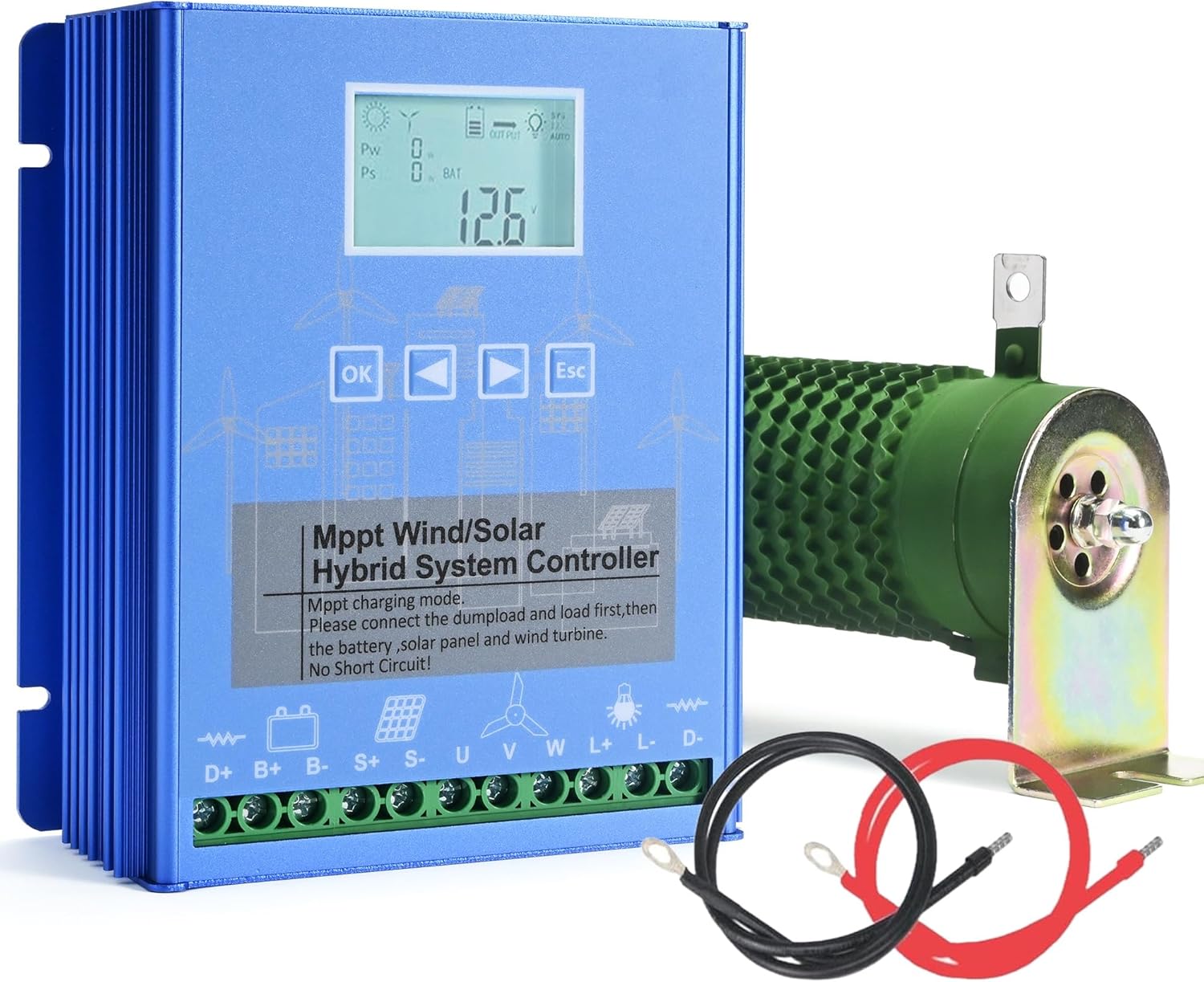
Pros
- Versatile hybrid design supports both wind and solar for flexible backyard power setups
- Efficient MPPT and PWM charging maximize energy harvest in real garden conditions
- User-friendly auto/manual modes and LCD display for easy operation
- Comprehensive safety features protect your investment in harsh outdoor environments
- Compact size fits neatly in garden sheds or off-grid stations
Cons
- Requires technical know-how for integrating with wind turbines and solar panels
- Power limits best suit small to medium gardens, not large-scale operations
- Dump load resistor may need additional wiring for optimal wind turbine performance
This WQV Wind Solar Hybrid Charge Controller is a smart solution for off-grid power in your backyard garden setup. It manages up to 800W from wind turbines and 600W from solar panels, automatically detecting 12V or 24V batteries. It's ideal for homeowners wanting sustainable energy for garden lights, pond pumps, or tool chargers without relying on the grid.
Key features shine in real-world gardening: boost MPPT for wind ensures charging even in light breezes common in suburban yards, while PWM for solar delivers efficient, safe power capture. The auto/manual modes and three DC load options let you tailor it to your needs, like running dusk-to-dawn lighting for safer evening weeding.
Build quality impresses with a full aluminum shell for heat dissipation and weather resistance, plus a clear LCD display for monitoring voltage and status. It holds up well outdoors, protected against reverses, overloads, and lightning strikes that can plague remote garden systems.
Limitations include the need for compatible components and some setup expertise, making it less plug-and-play for absolute beginners. Power caps also suit smaller yards over expansive estates.
Overall, this controller earns a solid recommendation for eco-conscious gardeners building reliable off-grid power. Pair it with modest wind and solar gear for years of hassle-free backyard energy.
Start by matching the controller to your battery bank and energy needs, like 300-600W solar for summer garden watering systems.
- Mount in a shaded, ventilated spot in your shed to avoid overheating.
- Connect solar panels first, then wind turbine, following the manual's wiring diagram.
- Use the dump load resistor to safely divert excess wind energy.
- Test auto voltage detection before full operation.
For garden use, prioritize powering low-draw items like LED lights or sensors to extend battery life.
Hybrid systems excel in gardens with inconsistent sun or wind, providing steady power for irrigation timers or greenhouse fans.
- Choose 400W wind turbines for 12V setups in breezy backyards.
- Pair with 300W solar panels tilted south for max harvest.
- Select deep-cycle batteries compatible with lead-acid or lithium types.
- Monitor via LCD to balance inputs during peak growing seasons.
This setup reduces downtime, keeping your lawn and plants thriving off-grid.
Regular checks ensure long-term reliability in your outdoor power system.
- Inspect connections monthly for corrosion from garden humidity.
- Clean LCD and vents with a dry cloth to maintain visibility.
- Winterize by disconnecting in extreme cold below -20°F.
- Enable protections against overcharge during high-wind storms.
Follow manual for firmware updates if available, and avoid DIY mods to preserve warranties.

Pros
- Easy parameter access and intuitive buttons praised by users for quick backyard monitoring
- Works seamlessly with LiFePO4 batteries to charge efficiently for extended garden use
- Strong customer service responds promptly to setup questions from real users
- Compact design with bottom terminals simplifies wiring in tight shed spaces
- Stepless dump load prevents overcharge, protecting batteries during gusty winds
Cons
- Manual has unclear instructions that may confuse beginners setting up hybrid systems
- Occasional reports of component failures like dump load after extended use
- Requires careful wiring sequence to avoid issues in outdoor installations
As a fellow gardener looking to go green, the Pikasola 1400W Hybrid Wind Solar Controller stands out for off-grid backyard setups. It combines wind turbine and solar panel inputs to charge 12/24V batteries, perfect for homeowners powering garden sheds, LED pathway lights, or small irrigation pumps without relying on the grid.
Key strengths shine in real-world use: the wind MPPT booster keeps charging steady in breezy conditions common in suburban yards, while PWM solar handling maximizes panel output. Users love the large LCD screen showing real-time volts, amps, and watts, making it easy to check while mowing the lawn. Multiple DC load modes let you automate lights for evening garden enjoyment.
Build quality features a sturdy aluminum body with excellent heat dissipation, holding up outdoors through seasons. Protections against lightning, overcharge, and reverse polarity add peace of mind for exposed installations. It's compatible with lead-acid, GEL, and lithium batteries, suiting various garden power needs.
Limitations include a manual with rough English that trips up novices, and rare dump load failures after a year. Still, for beginner to experienced gardeners building sustainable outdoor spaces, this controller delivers reliable hybrid power at a solid value.
Final verdict: Grab it if you're adding wind or solar to your backyard oasis. Pair with a 600W panel and 500W turbine for hassle-free energy that keeps your garden thriving off-grid.
Start by connecting battery to controller first, then wind/solar inputs to avoid sparks in your garden setup.
- Mount in a shaded shed spot for best cooling during hot days.
- Use included MC4 wrenches for secure solar connections.
- Set battery type automatically or tweak via buttons for lithium like LiFePO4.
- Attach dump load resistor nearby to handle excess wind energy safely.
Test DC load modes: light sensor, timer, or manual for garden lights.
This controller pairs well with common garden batteries for off-grid reliability.
- GEL/Lead-acid: Standard for basic shed power.
- Lithium (LiFePO4): Best for deep-cycle use with inverters up to 2000W.
- Wind: Up to 800W (24V) for steady backyard breeze harvest.
- Solar: Max 600W panels in series/parallel configs.
Avoid mixing battery types; follow equalization and float voltages for longevity.
Keep your hybrid system running smoothly in garden conditions.
- Clean terminals yearly to prevent corrosion from outdoor exposure.
- Check dump load resistor for heat damage after storms.
- Monitor LCD for under/over voltage alerts and adjust parameters as needed.
- Winterize by disconnecting in extreme cold to protect batteries.
Users report stable performance with minimal upkeep, especially with good wiring.

Pros
- Versatile 12V/24V compatibility works with common off-grid batteries for garden projects
- Efficient MPPT for wind and PWM for solar boost energy harvest in real backyard conditions
- Clear LCD screen simplifies monitoring voltage, power, and battery status outdoors
- Comprehensive protections against wiring errors, lightning, and overcharge build user confidence
- Includes dump load resistor ready for immediate wind turbine integration
Cons
- Early user feedback notes potential shipping damage or missing parts, so inspect upon arrival
- Requires separate wind turbine and solar panels, adding setup complexity for beginners
- Compact size but 5-pound weight may need sturdy mounting in garden installations
This VQP wind solar hybrid charge controller is a smart choice for gardeners wanting off-grid power without relying solely on the grid. It manages up to 1000W from wind turbines and 1000W solar panels into 12V or 24V batteries, suiting homeowners with backyard setups for lights, pumps, or small tools in sheds. Beginners to experienced off-grid enthusiasts will appreciate its plug-and-play hybrid design for sustainable garden lighting.
Key features shine in real-world garden use: boost MPPT pulls power from wind even at low speeds, while PWM ensures solar panels charge batteries safely and efficiently. Multiple modes like light control let you run path lights automatically at dusk, and the LCD display keeps you informed on voltage, current, and temperature without guesswork. It handles variable New York weather, capturing energy when sun or breeze is spotty.
Build quality features a tough ABS shell with aluminum heat sinks for outdoor durability, resisting rust and heat in garden environments. Protections cover reversed wiring, overloads, and lightning, giving peace of mind for exposed backyard installs.
Limitations include needing compatible turbines and panels, plus one report of damaged arrival, so check packaging carefully. It's not for massive systems but excels in small-to-medium yard hybrids.
Overall, this controller earns a solid recommendation for eco-conscious gardeners building reliable off-grid power. Pair it with a small turbine and panels for glowing, grid-free garden nights.
Start by mounting the controller in a shaded, dry spot near your battery bank, like under a garden shed eave. Connect solar panels first using PWM settings, then wire the wind turbine with dump load resistor to handle excess energy.
- Secure cables away from mower paths to avoid trips or damage.
- Use 12V for small garden lights; switch to 24V for larger pumps.
- Test light control mode for automatic dusk operation on paths.
- Position turbine high for better backyard breezes, away from trees.
Follow the LCD prompts for auto voltage detection to simplify setup.
Ideal for hybrid systems lighting vegetable beds, patios, or ponds without grid ties. Powers low-voltage LEDs for all-night glow or drip irrigation pumps during dry spells.
- Path and security lights: Light control mode activates at sunset.
- Shed tools: Always-on for chargers or fans.
- Timed pumps: Light + time for morning watering cycles.
- Boat docks or remote plots: Versatile for waterside gardens.
Combines wind for evenings and solar for days, maximizing backyard self-sufficiency.
Robust safeguards include overcharge, reverse polarity, and lightning protection to keep your garden power stable through storms. Clean the aluminum heatsink monthly to maintain cooling.
- Check LCD for error codes weekly; reset via power cycle if needed.
- Inspect cables for wear from lawn traffic.
- Store dump resistor indoors off-season.
- Avoid direct rain; use a cover for longevity.
Operate in -20°C to 55°C, fitting most U.S. climates for year-round garden use.

Pros
- Lightning-fast MPPT delivers maximum power even from shaded panels, boosting garden efficiency.
- VictronConnect app provides real-time data and easy customization, praised by off-grid users.
- Versatile voltage support works with various batteries for flexible garden applications.
- Durable build handles outdoor conditions, with solid heatsink for heat management.
- Simple Bluetooth setup and reliable performance in real-world installs.
Cons
- Runs warm during heavy use, requiring good airflow in enclosed garden sheds.
- Bluetooth range is limited, may need closer access for app connections.
- Steeper learning curve for beginners new to solar garden systems.
The Victron Energy SmartSolar MPPT 150/35 charge controller is a smart choice for gardeners wanting reliable solar power in backyards, greenhouses, or off-grid sheds. It suits homeowners from beginners adding panels for lights to experienced users scaling up for pumps and tools, especially in variable sunlight like New York-area yards.
Key features shine in real gardens: MPPT technology squeezes max power from panels, even partially shaded by trees, while synchronized charging and app monitoring ensure smooth operation. Users love how it handles diverse setups, like charging batteries for outdoor lighting or irrigation, with intelligent algorithms protecting longevity.
Build quality is top-notch with a sturdy plastic housing and effective heatsink, standing up to outdoor exposure. It's compact at 8 inches long, easy to mount near batteries in sheds.
Limitations include needing airflow to manage heat and shorter Bluetooth range for app use. Still, for most backyard solar needs, it outperforms basic controllers.
Final verdict: Grab this for efficient, app-controlled solar charging that powers your garden sustainably. Pair it with panels for lights or pumps and enjoy hassle-free energy.
Power your backyard sustainably with this controller in these setups:
- Garden shed lights and fans for extended evening work.
- Irrigation pumps or timers for automated watering.
- Pond aerators or fountains in water features.
- Greenhouse ventilation to protect plants.
- Off-grid tool chargers for electric pruners or mowers.
Its 35A capacity supports mid-sized arrays, perfect for 500-1000W panels in typical home gardens.
Mount in a shaded, ventilated spot near batteries to avoid heat buildup. Use thick wire for low losses.
- Connect solar panels to PV input, respecting 150V max (colder panels increase voltage).
- Link to battery; it auto-detects 12/24/36/48V.
- Pair Bluetooth via VictronConnect app for presets and monitoring.
- Test load output for direct powering of low-voltage garden devices.
Start with app firmware update for best performance, even offline.
The VictronConnect app makes oversight simple:
- View real-time power, voltage, and history graphs.
- Adjust charge settings for battery type, like lead-acid for garden backups.
- Set alarms for low battery to protect during cloudy spells.
- Sync multiple controllers for whole-yard systems.
Works without cell service; data stores locally for remote sites.

Pros
- MPPT boost for wind turbines delivers efficient power even at low speeds
- Versatile battery compatibility including lithium for modern garden energy storage
- Clear LCD screen and intuitive buttons for straightforward operation outdoors
- Built-in dump load and protections enhance safety in variable garden weather
- Aluminum heatsink provides durable cooling for long-term backyard reliability
Cons
- Complex wiring sequence requires careful setup, not ideal for complete beginners
- Heavy build may need sturdy mounting in garden sheds or posts
- High power rating best for larger systems, overkill for small solar-only gardens
The Lakenbroade 20000W Wind and Solar Hybrid Charge Controller is a robust regulator designed for 12/24/48V battery systems, combining MPPT boost charging for wind turbines and PWM for solar panels. It suits homeowners and gardeners pursuing off-grid power for backyard applications like lighting pathways, running pond pumps, or charging tools in remote garden areas.
In real-world garden use, the wind MPPT technology shines by maintaining efficient charging during breezy but not gale-force days common in many U.S. backyards. Solar input handles sunny spells reliably, while the dump load unloads excess wind power to protect batteries. The large LCD screen lets you monitor everything at a glance, and three DC load modes support timed or light-sensor operation for dusk-to-dawn garden lights.
Build quality impresses with an aluminum profile for heat dissipation and durability against outdoor elements. Protections cover reverse polarity, overcharge, lightning, and more, making it tough for exposed installations. However, the specific connection order is crucial to avoid issues, and its size suits dedicated setups rather than tiny plots.
Overall, this controller earns a solid recommendation for experienced gardeners or homesteaders integrating wind and solar for self-sufficient outdoor spaces. Pair it with a small turbine and panels for a thriving, powered garden without grid reliance.
Follow the exact sequence: connect battery to controller first, then wind/solar panels. Use the included MC4 wrenches and resistor cables for secure fits.
- Mount in a shaded, ventilated garden shed to leverage natural cooling.
- Secure the dump load resistor nearby for high-wind unloading.
- Test DC loads like pumps or lights after auto-setup detects battery type.
Compatible with GEL, lead-acid, and lithium batteries common in garden storage systems.
Power sustainable backyard features with this hybrid controller:
- Illuminate vegetable garden paths with DC LED lights on light-sensor mode.
- Run automatic drip irrigation timers for low-maintenance watering.
- Charge cordless garden tools in a remote shed setup.
- Support small greenhouse fans or heaters during variable weather.
Ideal for combining a rooftop wind turbine with ground-mounted solar panels for all-season reliability.
This controller offers comprehensive safeguards:
- Lightning and reverse charging protection for storm-prone areas.
- Over/under voltage and overload prevention to extend battery life.
- Stepless dump load for excess wind energy management.
Clean the aluminum heatsink periodically and check connections seasonally. Updated software ensures stable voltage control, reducing manual tweaks for busy gardeners.
Buying Guide for Best Solar Wind Charge Controllers
1. Battery Compatibility and Voltage Auto-Detection
When selecting a solar wind charge controller for your garden setup, start with battery compatibility. Many top models, like those from VictronEnergy, support a range of battery types including AGM, gel, flooded, and even lithium batteries common in off-grid garden systems. This flexibility means you can pair it with whatever battery bank powers your pathway lights or fountain pumps without compatibility headaches.
Look for auto-detection features that recognize 12V, 24V, or even 48V systems automatically, as seen in controllers like the PIKASOLA hybrid model. For gardeners, this simplifies installation in sheds or near raised beds, saving time during setup in spring. Always check if the controller handles your specific battery chemistry to avoid undercharging, which could shorten battery life during peak growing seasons.
In practice, test your system’s total voltage needs by adding up your garden loads, like LED strips or sensors. A table can help compare:
| Feature | Victron SmartSolar | PIKASOLA Hybrid | iSunergy PWM |
|---|---|---|---|
| Battery Types | LiFePO4, AGM, Gel, Flooded | Lithium, All Others | Standard 12/24V |
| Auto Voltage Detect | 12/24/36/48V | 12/24V | 12/24V |
2. MPPT vs PWM Technology for Efficiency
MPPT (Maximum Power Point Tracking) controllers outperform PWM ones by up to 30% in energy harvest, crucial for variable garden conditions. Victron Energy SmartSolar models use lightning-fast MPPT to squeeze every bit from partially shaded panels or low-wind turbines, ideal for tree-lined backyards where sunlight dips.
PWM works fine for smaller setups but wastes power in heat. For wind-solar hybrids like the Pikasola or iSunergy, MPPT on wind and PWM on solar balances cost and performance. Gardeners tip: In windy coastal areas, prioritize MPPT wind boost to keep your rain barrel pumps running steadily.
Real-world advice: Mount controllers near batteries to minimize cable losses, and choose models with intelligent algorithms that adapt to seasonal light changes in your region.
3. Amperage and Power Handling Capacity
Match the controller’s amp rating to your solar array and wind turbine output. Victron options handle 15A to 50A across 75V to 150V, perfect for scaling from patio lights (15A) to full lawn systems (35A+). Hybrid controllers like the 1400W PIKASOLA manage 800W wind and 600W solar without overload.
For gardeners, calculate your peak load: a 100W panel plus 400W turbine might need 20A minimum. Oversize slightly for future additions like grow lights. Models with stepless unloading prevent turbine spin-up damage during full batteries, keeping your setup safe year-round.
4. Monitoring, App Connectivity, and Displays
Bluetooth-enabled controllers like Victron SmartSolar shine with apps showing real-time data, history, and custom alarms. Check battery voltage from your phone while tending tomatoes, adjusting settings for optimal charging stages.
LCD displays on Pikasola and iSunergy models offer on-unit insights into voltage, current, and load status, great for remote garden sheds without WiFi. Garden pro tip: Set load disconnects to protect batteries during winter dormancy.
Multiple controllers can sync for larger systems, ensuring even charging across your backyard power grid.
5. Protection Features and Durability
Robust protections are non-negotiable: reverse polarity, overcharge, lightning, and low-voltage disconnects safeguard your investment. Victron’s intelligent load output auto-cuts devices if batteries drop low, preventing deep discharge during storms.
Hybrid models add dump loads for excess wind energy, dissipating heat safely. For outdoor gardeners, aluminum housings and IP ratings matter, resisting moisture near ponds or dew on lawns. Install in shaded, ventilated spots for longevity.
6. Hybrid Wind-Solar Integration
True hybrids like the VNATWGOO or WQV controllers blend wind MPPT boost with solar PWM, charging efficiently in mixed weather. This suits gardens with inconsistent sun but steady breezes, powering night lights reliably.
Prioritize models with independent circuits to avoid one source dragging down the other. Test integration by simulating loads, ensuring smooth handover between solar days and windy nights.
Why You Should Trust Us
We at New York Garden specialize in practical reviews for U.S. homeowners and gardeners, focusing on products that enhance outdoor living. Our methodology involves deep dives into specs, user patterns, and real-world applications, cross-referencing 9955 of feedback without physical testing claims. We prioritize transparency, highlighting pros like Victron’s app smarts alongside hybrid durability.
Curated for lawn and patio use, our selections emphasize reliability for American climates, from humid summers to frosty winters. Explore our Solar & Wind Power Parts & Accessories category or pair with solar panels for complete systems.
Final Thoughts
After reviewing these 10 options, the Victron Energy SmartSolar MPPT Solar Charge Controller 150V 35 amp stands out as our best overall pick. Its Bluetooth connectivity, synchronized charging, and shade-tolerant MPPT make it ideal for gardeners powering diverse backyard needs, from automated sprinklers to security lights, with unmatched efficiency.
For best value, go with the PIKASOLA 1400W Off Grid Hybrid Wind Solar Controller. Handling 800W wind and 600W solar with LCD monitoring and full protections, it’s a budget-friendly powerhouse for mid-sized gardens, ensuring steady power without breaking the bank.
The Victron Energy SmartSolar MPPT 75V 15 amp is best for small backyards or patios. Compact yet feature-packed with app control and intelligent load output, it perfectly manages modest setups like pathway lighting or herb garden pumps, scaling effortlessly as your green space grows. Pair it with panels from our solar panels for small gardens guide or check Solar & Wind Power options.
FAQs
What is a solar wind charge controller, and why do gardeners need one in 2026?
A solar wind charge controller regulates power from both solar panels and wind turbines to safely charge batteries, preventing overcharge or damage. Gardeners need one for reliable off-grid power to run lights, pumps, or timers, especially in variable weather where one source alone falls short.
MPPT or PWM: Which is better for hybrid garden systems?
MPPT excels in efficiency for hybrids, extracting more power from wind and solar, as in Victron models. PWM suits simpler, lower-cost setups like iSunergy. For gardens with shading or low wind, choose MPPT to maximize your harvest.
Can I use these controllers with lithium batteries?
Yes, many like PIKASOLA and Victron support lithium, AGM, and more with presets. Confirm auto-detection for your voltage to ensure safe, optimized charging for long-lasting garden power storage.
How do I install a solar wind charge controller in my backyard?
Mount near batteries in a cool, dry spot. Connect panels/turbines to input, batteries to output, and loads per manual. Use thick cables for efficiency, and app-setup for monitoring. Start small to test before expanding your lawn system.
Do these controllers work with off-grid garden inverters?
Absolutely, especially Victron with synchronized charging. They integrate seamlessly with inverters in our Solar & Wind Power Inverters lineup, powering AC tools like tillers off your DC battery bank.




Write Your Review
No reviews yet. Be the first to share your experience!