

Are you tired of pouring water onto your lawn only to watch it struggle during dry spells? In today’s water-conscious world, finding the right Best Grass Seed for Low Water Use can transform your backyard into a lush, resilient oasis without guzzling resources. Whether you’re starting a new lawn, overseeding patchy areas, or just aiming to cut down on irrigation, our guide to the 5 Best Grass Seed For Low Water Use of 2026 has you covered. These selections focus on varieties that thrive with minimal moisture, helping gardeners like you save time, money, and water while enjoying a healthy turf.
We know how frustrating it can be to deal with brown spots or high water bills, especially in regions prone to drought. That’s why we’ve curated these Best Grass Seed for Low Water Use based on their drought tolerance, root depth, and real-world performance in home gardens. From cool-season mixes that handle heat to shade-loving blends, you’ll find options suited to your specific yard conditions. Dive in to learn how these seeds can make your lawn the envy of the neighborhood with less effort. For more lawn inspiration, check our Grass Seed category page.
Pros
- Outstanding heat and drought tolerance for reliable performance in tough conditions
- Deep-rooting varieties create a resilient, low-maintenance lawn
- Produces attractive, uniform dark green color without extra effort
- Versatile for both sunny slopes and south-facing yards
Cons
- Needs full sun to light shade, not suited for heavily shaded areas
- Germination takes 14-21 days, slower than faster ryegrass mixes
- Optimized for northern and transition zones, less ideal for deep southern climates
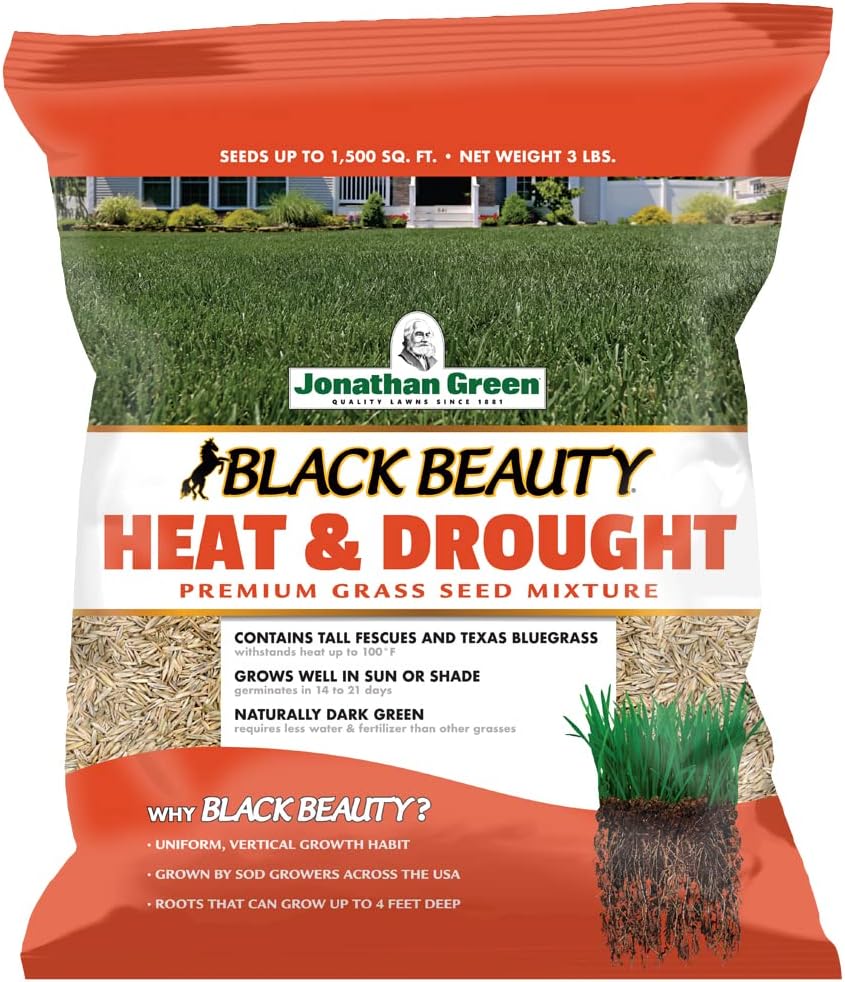
Jonathan Green Black Beauty Heat & Drought Resistant Grass Seed is a premium cool-season blend of turf-type tall fescues and Texas bluegrass, designed for homeowners in the northern U.S. and transition zones who want a tough lawn that handles heat and dry weather. It's especially great for sunny backyards, south-facing slopes, or any spot getting 6-8 hours of sun daily, helping you maintain a vibrant green space without constant watering.
In real-world gardening, this seed shines with its waxy leaf coating that minimizes evaporation and deep roots reaching 4 feet to pull moisture from the soil. You'll get a dense, dark green turf that's naturally attractive and holds up under summer stress, reducing the need for extra fertilizer or irrigation compared to ordinary grasses.
The seed quality ensures good germination in 14-21 days when planted correctly, leading to a durable lawn that blends well with existing cool-season turf. It's built for longevity outdoors, with varieties selected for heat tolerance up to 100°F.
Limitations include its preference for sunnier spots and cooler climates; heavy shade or extreme southern heat might call for a different mix. Still, for most northern gardeners, it's a solid choice.
Overall, if you're reseeding a sun-drenched lawn or starting fresh, this seed delivers practical results for a healthier, greener yard with less hassle. Plant in early fall or spring for best success.
Follow these steps for successful seeding with Black Beauty Heat & Drought Grass Seed.
- Rake vigorously to remove thatch and debris, ensuring good seed-to-soil contact.
- Spread evenly using a hand spreader for small areas or rotary spreader for larger lawns.
- Water consistently for five minutes, 2-3 times a day during the first 4 weeks to support germination.
After establishment, water deeply but infrequently to encourage those deep roots, and mow at 3-4 inches for best drought resistance.
Prime seeding windows are mid-August to mid-October for fall establishment, or mid-March through mid-May in spring. This timing leverages cooler temps for strong root growth before summer heat.
- New lawns: 3 lb covers up to 750 sq ft.
- Overseeding: Up to 1,500 sq ft for thicker turf.
Adjust rates for your yard size, and test soil pH (aim for 6.0-7.0) for optimal results in northern climates.
Keep your Black Beauty lawn thriving with these gardener-approved practices.
- Fertilize lightly in spring and fall; its drought tolerance means less is more.
- Mow high at 3.5-4 inches to shade soil and retain moisture.
- Aerate annually to improve root penetration in clay-heavy soils.
- Watch for weeds early and hand-pull to maintain that dark green uniformity.

Pros
- Versatile for sun/shade mix, solving patchy yard problems
- Root-building nutrition jumpstarts strong growth from day one
- Generous coverage for cost-effective overseeding
- Medium drought resistance eases summer care
- Combines seed, fertilizer, and improver in one bag
Cons
- Requires consistent daily watering until seedlings hit 2 inches
- Best results in specific 60-80°F temps, limiting hot summer use
- Weeds may sprout faster, needing hand-pulling during early weeks
Scotts Turf Builder Grass Seed Sun & Shade Mix is an all-in-one solution for homeowners tackling new lawns or refreshing thin spots in yards with varying light. Whether your backyard has sunny patches and shady tree areas, this 5.6 lb bag delivers reliable coverage up to 745 sq ft for new seeding or 2,240 sq ft for overseeding, making it a go-to for beginner and experienced gardeners alike.
Key features like root-building nutrition promote deep roots for thick, resilient turf that handles medium drought and foot traffic. In real-world use, it fills in bare areas nicely when applied in spring or fall, with sprouts appearing in 1-2 weeks and full coverage by weeks 5-7. Pair it with a Scotts spreader for even distribution, and you'll see stronger lawns that stay green longer.
Build quality shines in its expert blend of seed, fertilizer, and soil improver, holding up outdoors without clumping or losing viability if stored cool and dry. It's durable for medium to high wear, but shines best in smaller yards rather than vast expanses.
Limitations include the need for moist soil daily during germination and hand-weeding early on, as some weeds beat grass to sprouting. Overall, this mix earns high marks for versatility; grab it if you want a low-fuss path to a lush lawn that enhances your outdoor space.
Prep your lawn by mowing short to 2 inches for overseeding or loosening topsoil for new areas. Use a Scotts spreader at label settings, walking steadily for even coverage.
- Apply in spring or fall when air temps are 60-80°F.
- Lightly rake seed into soil after spreading.
- Water daily to keep surface moist until 2-inch growth.
Measure your yard first: one bag suits up to 745 sq ft new or 2,240 sq ft overseed.
Expect visible progress with consistent care:
- Weeks 1-2: Sprouts emerge; water to stay moist.
- Weeks 3-4: Seedlings grow; maintain hydration.
- Weeks 5-7: Thick fill-in for mow-ready turf.
Overseed yearly and apply at ideal temps for best thick, green results year after year.
Common issues and fixes for smoother success:
- Weeds appearing first? Pull by hand; wait until grass is mowed 4 times before weed control.
- Slow growth? Check soil temps (55-70°F) and water consistently.
- Thin spots? Overseed with this mix and keep moist.
Store leftovers in the original bag, cool and dry, for future use.

Pros
- Grows grass noticeably faster, giving quick results on new or patchy lawns
- All-in-one formula simplifies seeding and reduces the need for separate fertilizer
- Strong performance in moderate climates, leading to dense, green tall fescue coverage
- Easy to spread evenly with compatible Scotts spreaders for uniform growth
Cons
- Best suited only for tall fescue lawns, not ideal for mixing with other grass types
- Requires consistent watering and proper temperatures for optimal results
- Smaller bag size limits use on very large yards without buying multiples
Scotts Turf Builder Rapid Grass Tall Fescue Mix is an all-in-one solution blending high-quality tall fescue seed with fertilizer, designed for homeowners wanting quick, lush lawns. It suits beginner and experienced gardeners tackling new lawn installations or overseeding worn tall fescue areas in backyards up to about 1,800 sq. ft.
In real-world use, this mix shines by growing grass up to 2X faster than plain seed, thanks to the extended-release fertilizer that feeds roots as they sprout. Gardeners report visible green-up in weeks when applied correctly, making it great for patching bare spots after winter or summer stress. Pair it with a Scotts spreader for even coverage and best results.
Build quality is solid for a seed product, with viable seeds that hold up during storage and application. The formula performs well outdoors in typical U.S. conditions but needs soil prep and watering to thrive. Limitations include its focus on tall fescue only and no built-in weed control, so wait until the lawn is mowed four times before adding herbicides.
Overall, this is a reliable choice for faster lawn revival. If you're aiming for a thick, green tall fescue yard, apply in spring or fall and follow up with regular Scotts lawn food for lasting beauty.
Prep your soil by mowing low, removing debris, and lightly raking for good seed-to-soil contact. Use a Scotts spreader at recommended settings for even application.
- Apply in spring or fall when temps are 60°F to 80°F.
- Water daily to keep soil moist for the first 2 weeks.
- Avoid weed killers until mowed 4 times.
- Feed every 8 weeks with Scotts Lawn Food for thick growth.
Maintain by mowing high and watering deeply but infrequently once established.
Plant when air temperatures stay between 60°F and 80°F for fastest germination, typically early spring or fall in most U.S. regions.
- Spring: After last frost, for summer-ready lawns.
- Fall: Ideal for root development before winter.
- Check local forecasts to avoid heat or frost extremes.
Pro tip: Test soil pH (aim for 6.0-7.0) and amend if needed for better results.
This 5.6 lb. bag covers 615 sq. ft. for new lawns or 1,845 sq. ft. for overseeding, fitting small to medium backyards perfectly.
- Small yards (under 600 sq. ft.): One bag handles full new seeding.
- Medium yards (up to 1,800 sq. ft.): Great for overseeding thin areas.
- Large yards: Buy multiple bags and use a broadcast spreader.
Scale up for bigger spaces to keep costs efficient.

Pros
- Excellent shade tolerance for tough, low-light areas
- Quick germination in 14-21 days with strong establishment
- Durable deep roots and endophytes for long-term resilience
- Dark green, dense turf that blends with existing cool-season lawns
- Covers well for both new seeding and overseeding projects
Cons
- Germination takes longer at 14-21 days compared to sunnier mixes
- Best suited for northern U.S. cool-season climates, not extreme heat
- Requires consistent watering for the first 4 weeks to ensure success
Jonathan Green Black Beauty Dense Shade Grass Seed is a specialized cool-season blend perfect for gardeners battling shady lawns under large trees, shrubs, or building shadows. If your yard gets just 4-6 hours of sun and other seeds have struggled, this mix of tall fescue, perennial rye, Kentucky bluegrass, and fine fescue steps up to create a thick, vibrant turf.
In real-world use, it shines in northern U.S. yards, producing a dark green lawn with roots that dive deep for drought resistance. Homeowners love how it fills in patchy shade spots, staying lush even in damp or dry conditions. The endophytic grasses add natural insect resistance, cutting down on treatments.
Build quality is top-notch with coated seeds for better germination and establishment. It holds up outdoors through seasons, needing less water and fertilizer once rooted. Durability comes from the diverse grass types that adapt to varying shade levels.
Limitations include a 14-21 day germination window, so patience is key, and it thrives best in cool climates. Overwatering or poor soil prep can lead to uneven growth.
Overall, this is a reliable choice for shady lawn revival. Rake thoroughly, spread evenly, and water diligently for weeks 1-4, and you'll enjoy a thriving, low-care green space that boosts your backyard oasis.
Start with vigorous raking to clear thatch and debris for solid seed-to-soil contact. Use a hand or rotary spreader to apply evenly, targeting mid-August to mid-October or mid-March to mid-May for best results.
- New lawns: 1 lb covers up to 300 sq ft.
- Overseeding: Up to 600 sq ft.
Water seedlings 2-3 times daily for 5 minutes each over the first 4 weeks. Once established, it needs less frequent watering thanks to deep roots. Mow at 3-4 inches to promote density.
Ideal for north-facing lawns, under mature trees, or beside houses and fences where sun is scarce. It outperforms standard mixes in persistent shade, creating playable or relaxing green areas.
- Tree-shaded backyards for family play.
- Shrub borders needing turf fill-in.
- Partial sun transitions blending with sunnier lawn sections.
Avoid full sun dominance or southern hot climates; pair with mulch in extreme dry shade for extra success.
Black Beauty Dense Shade excels in heavy shade versus Sun and Shade for mixed light or Sunny for full exposure. All share dark green color and deep roots, but this one's fine fescues boost low-light performance.
- Dense Shade: 4-6 hours sun, wet/dry shade.
- Shady Nooks: Similar but faster germ (10-14 days).
- Sun and Shade: Broader light tolerance.
Choose based on your yard's sun patterns for the best match.
Pros
- Exceptional drought and disease tolerance for reliable growth
- Pollinator-friendly design supports bees and beneficial insects
- Low ongoing maintenance saves time and effort for busy gardeners
- Establishes well on hillsides, preventing erosion
- Naturally self-sustaining for years of healthy lawn
Cons
- Best suited for northern U.S. regions, may underperform in southern climates
- Requires consistent initial watering until established
- Clover component gives a different look than pure grass lawns
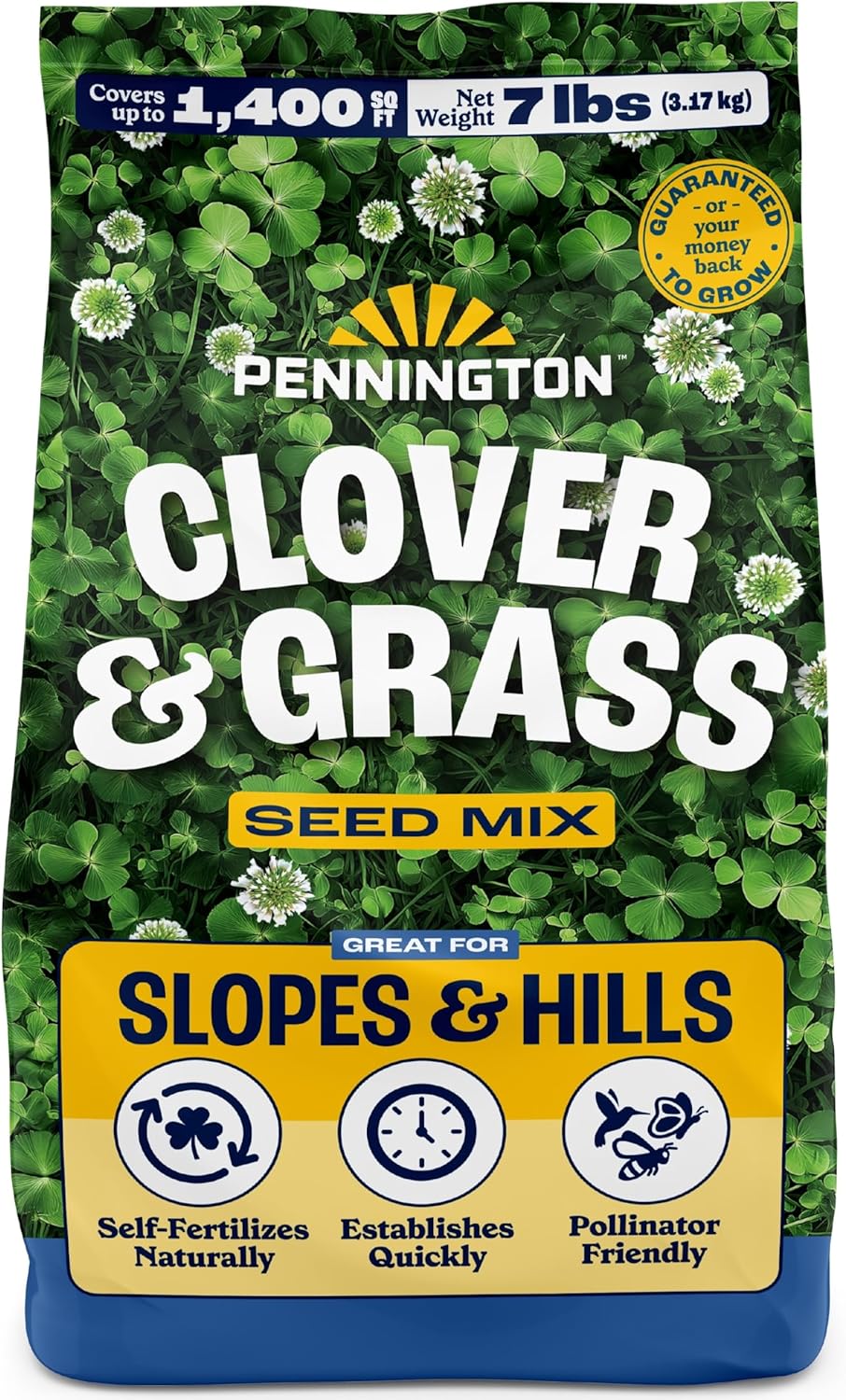
Pennington Smart Seed Clover and Grass Mix is a smart choice for gardeners wanting a low-maintenance lawn that works with nature. This 7 lb blend of Durana white clover and water-smart grasses suits homeowners in northern U.S. areas with slopes, hills, or water-conscious yards. It's perfect for beginners tired of high-upkeep turf or experienced folks aiming for pollinator support.
In real-world use, it shines by establishing quickly in 7-21 days, even on challenging terrain. The self-fertilizing clover fixes nitrogen naturally, cutting fertilizer use, while the grasses conserve water year after year. You'll get an attractive, green lawn that needs less mowing and stays resilient through dry periods or light foot traffic.
Durability comes from its disease tolerance and longevity; once rooted, it persists for years with minimal intervention. Just ensure 4-6 hours of sun and proper seeding. Limitations include its northern preference and the need for daily watering at first, plus the clover's subtle presence might not match formal lawn aesthetics.
Overall, this mix earns high marks for practical, sustainable lawn care. Recommend it for backyard refreshers where ease and ecology matter most.
Follow these simple steps for success with Pennington Smart Seed Clover and Grass Mix.
- Prepare the soil: Clear debris and rake for a firm seedbed to prevent washout from rain.
- Apply evenly: Use a spreader at recommended settings; gently rake seeds in. On steep slopes, add erosion blankets or straw.
- Water daily: Keep soil moist until sprouts hit 2 inches, then ease back.
Plant in spring or early fall for best germination in northern climates. See green growth in 7-21 days.
Maximize your clover grass mix with these gardener-approved practices:
- Mow at 3 inches to encourage thick growth and clover health.
- Water deeply but infrequently once established to build drought resistance.
- Skip heavy fertilizers; the self-fertilizing clover handles nitrogen.
- Overseed thin spots annually for lasting coverage.
- Embrace pollinators by adding nearby flowers for a thriving ecosystem.
This approach keeps your lawn looking sharp with half the effort of traditional seed.
One 7 lb bag covers up to 1,400 sq ft for new lawns or overseeding.
- Small yards (under 1,000 sq ft): Perfect for full coverage with seed to spare.
- Medium backyards (1,000-1,400 sq ft): Ideal for slopes or patchy areas.
- Larger lawns: Buy multiple bags and scale up for uniform results.
Adjust rates for overseeding at half strength to refresh existing turf without waste.
Buying Guide for Best Grass Seed For Low Water Use
Drought Tolerance and Root Depth
When selecting Best Grass Seed for Low Water Use, prioritize varieties with deep root systems that reach up to four feet underground. These roots access water from deeper soil layers, reducing your need for frequent watering. For instance, tall fescue blends like those in Jonathan Green Black Beauty series develop extensive roots, making them ideal for dry conditions common in many U.S. backyards.
Look for seeds with waxy leaf coatings that minimize evaporation, preserving moisture during hot spells. Cool-season grasses such as perennial rye and Kentucky bluegrass in these mixes also contribute to resilience. Test your soil’s drainage first; amend heavy clay with organic matter to enhance root penetration and boost overall drought resistance in your garden.
In practice, gardeners in transition zones report success by watering deeply but infrequently, training roots to grow downward. This approach not only conserves water but also strengthens your lawn against weeds and foot traffic.
Shade and Sun Tolerance
Not all lawns bask in full sun, so choose Best Grass Seed for Low Water Use that balance shade and light exposure. Dense shade mixes with fine fescues excel under trees or near structures, needing just 4-6 hours of sun. Scotts Turf Builder Sun & Shade Mix, for example, handles full sun to dense shade, offering versatility for mixed yard conditions.
Assess your yard’s light patterns throughout the day before buying. Partial shade tolerant seeds prevent thin growth in tricky spots. Pairing these with proper mowing heights, around 3 inches, promotes thicker turf that shades out weeds naturally.
Pro tip: In shadier areas, reduce fertilizer to avoid lush growth that demands more water. This keeps your low-water lawn healthy without excess maintenance.
Germination Speed and Establishment
Fast germination means quicker coverage and less erosion risk. Many Best Grass Seed for Low Water Use germinate in 14-21 days, with built-in fertilizers speeding the process. Scotts Turf Builder Rapid Grass Tall Fescue Mix grows lush turf in weeks, perfect for impatient gardeners overseeding in fall or spring.
Prepare your soil by raking out debris and loosening the top inch for seed-soil contact. Apply when soil temps hit 60-80°F for optimal sprouting. Endophyte-enhanced varieties resist insects naturally, supporting strong early growth without extra chemicals.
Monitor new seedlings with light, consistent moisture until established, then taper off to build drought hardiness from the start.
Coverage Area and Bag Size
| Usage Type | Typical Coverage |
|---|---|
| New Lawn | 300-745 sq. ft. per bag |
| Overseeding | 600-2,240 sq. ft. per bag |
Match bag size to your project’s scale; smaller 1 lb bags suit spot treatments, while 5-7 lb options cover larger areas efficiently. This ensures even distribution without waste, key for budget-conscious low-water seeding.
Calculate your square footage and divide by coverage rates listed on seed bags. For overseeding, use half the new lawn rate. Broadcast evenly with a spreader for uniform stands that require less water long-term.
Grass Type Composition
Cool-season mixes dominate Best Grass Seed for Low Water Use, featuring tall fescue for drought resistance, perennial rye for quick cover, and bluegrasses for density. Jonathan Green Black Beauty Heat & Drought includes Texas bluegrass for heat up to 100°F tolerance.
Diverse blends outperform single varieties, adapting to microclimates in your yard. Clover-grass mixes like Pennington Smart Seed add nitrogen naturally, further reducing water and fertilizer needs. Avoid warm-season types unless in southern zones.
Choose based on your USDA zone; northern gardeners thrive with these cool-season options applied in early fall or spring. Explore more varieties in our Grass Seed collection.
Application Timing and Soil Prep
Timing is everything: Sow Best Grass Seed for Low Water Use mid-August to mid-October or mid-March to mid-May for cool-season success. Cooler temps and moist soil promote germination without summer stress.
Rake vigorously to dethatch, test pH (aim for 6.0-7.0), and add lime if needed. Water lightly post-seeding until sprouts appear, then deeply weekly. This prep maximizes low-water performance from day one.
For best results, combine with mulch or straw to retain moisture. See our parent category on Plants, Seeds & Bulbs for complementary products.
Why You Should Trust Us
At New York Garden, we specialize in practical advice for U.S. homeowners and gardeners tackling real backyard challenges. Our reviews draw from extensive analysis of product specs, user experiences, and performance data tailored to lawn care. We focus on what works for everyday use, like water efficiency in diverse climates, without hype.
We transparently evaluate Best Grass Seed for Low Water Use based on key metrics such as root depth, shade tolerance, and coverage, ensuring our picks help you build sustainable lawns. Our goal is your success, backed by years of curating Patio, Lawn & Garden essentials.
Final Thoughts
After diving deep into these options, Jonathan Green Black Beauty Heat & Drought Resistant Grass Seed stands out as our best overall pick for Best Grass Seed for Low Water Use. Its tall fescue and Texas bluegrass combo delivers dark green turf with roots up to four feet deep, tolerating heat and drought effortlessly. Gardeners love how it maintains color and density with sparse watering, making it ideal for busy yards nationwide.
For best value, go with Scotts Turf Builder Rapid Grass Tall Fescue Mix. The seed-fertilizer combo greens up fast, covering large areas quickly while building drought resilience. It’s a smart choice for overseeding worn lawns without breaking the bank or your water usage.
If shade dominates your space, Jonathan Green Black Beauty Dense Shade Grass Seed is best for specific use under trees. With four cool-season grasses including endophyte protection, it thrives where others fail, needing minimal upkeep. Whichever you choose, start with soil prep for lasting results that keep your lawn vibrant and eco-friendly.
FAQs
What makes Best Grass Seed For Low Water Use different from regular grass seed?
Best Grass Seed For Low Water Use feature deep-rooted varieties like tall fescue and drought-resistant coatings that reduce watering needs by up to half compared to standard mixes. They establish quickly and maintain green color longer in dry conditions, perfect for conservation-minded gardeners in 2026.
When is the best time to plant Best Grass Seed for Low Water Use in 2026?
Plant in early fall (mid-August to mid-October) or spring (mid-March to mid-May) when soil is cool and moist. These windows align with cool-season grass growth cycles, promoting strong roots before summer heat or winter dormancy.
How much water do Best Grass Seed for Low Water Use really need after establishment?
Once rooted, water deeply once a week during dry periods, aiming for 1 inch total including rain. Deep, infrequent watering encourages drought tolerance, unlike shallow daily sprinkles that weaken lawns over time.
Can Best Grass Seed for Low Water Use handle shade as well as sun?
Many blends like Sun & Shade mixes tolerate 4-8 hours of sun, with dense shade options succeeding in less light. Match to your yard’s conditions for optimal low-water performance without patchy growth.
Are clover-grass mixes good for low water use?
Yes, options like Pennington Smart Seed Clover and Grass Mix naturally fix nitrogen and stay green with minimal irrigation, enhancing drought-prone lawns. They’re forgiving for beginners aiming for sustainable turf in 2026.


Write Your Review
No reviews yet. Be the first to share your experience!