

Are you ready to transform your backyard or patio into a thriving oasis this 2026? Best Cedar Raised Bed Kits offer gardeners a smart, efficient way to grow vegetables, herbs, flowers, and more without the hassles of traditional in-ground planting. Whether you have a small urban lawn or a spacious suburban yard, these kits provide sturdy, elevated spaces that improve soil control, drainage, and accessibility, making gardening more enjoyable and productive.
In this guide, we dive into 10 standout Best Cedar Raised Bed Kits that stand out for their quality craftsmanship, ease of setup, and long-lasting performance. From handcrafted Western Red Cedar options to mobile elevated planters, you’ll find practical choices suited to your space and needs. We focus on real-world gardening benefits like better ergonomics and rot resistance to help you select the right one for your September 2026 projects. For more on the advantages of raised bed gardening, check out the University of Minnesota Extension guide to raised bed gardening.
Top Products

Pros
- Extra-deep 16.5-inch height perfect for root crops and perennials
- Premium 1-inch thick cedar boards ensure sturdy build that won't bow
- Easy to disassemble and move as your garden needs change
- All-natural materials safe for edible plants
- Generous size suits most backyards without overwhelming small spaces
Cons
- Requires a good amount of soil to fill its 16 cubic feet capacity
- 50-pound assembled weight makes it less portable once in place
- Natural cedar may need periodic sealing for maximum longevity in harsh climates
What It Is and Who It's For
The Infinite Cedar Deep Root Raised Garden Bed is a sturdy, rectangular kit measuring 39.5 by 73.5 inches and standing 16.5 inches tall, perfect for U.S. homeowners turning backyards into productive veggie patches or flower borders. It's ideal for beginner to experienced gardeners who want higher yields from deep-rooted plants like tomatoes, carrots, or blueberries without tilling the ground.
Key Features and Garden Performance
Built from 1-inch thick Western Red Cedar, this bed offers natural rot resistance and holds up under wet soil loads. The deep design promotes better root growth, leading to healthier plants and less weeding. Assemble it in minutes with all hardware included, then position it for optimal sun or shade access.
Build Quality and Outdoor Durability
Premium U.S.-made construction with strong joints ensures it lasts seasons outdoors. Leave it natural for a rustic look or stain it to match your yard. The chemical-free wood is safe for edibles, and its focal-point style elevates any garden space.
Limitations and Final Verdict
Its fixed size may not fit tiny patios, and filling it demands substantial soil. Still, for organized, high-yield gardening, this raised bed delivers real value. Recommended for anyone serious about backyard veggies - set it up and watch your harvest thrive.
Choosing the Right Soil Mix
- Mix 60% topsoil, 30% compost, and 10% perlite for drainage in deep beds.
- Avoid garden soil alone to prevent compaction and pests.
Best Plants for Deep Roots
- Tomatoes, peppers, and eggplants love the 16.5-inch depth.
- Blueberries or root veggies like potatoes thrive here too.
- Space plants 12-18 inches apart for airflow and growth.
Fill to 1-2 inches below the top to allow mulch layering and watering ease.
Simple Backyard Setups
- Line up two beds for a veggie row, adding paths with mulch.
- Pair with trellises for vertical climbing plants like beans.
Customization Tips
- Stain in earth tones to match fences or patios.
- Add hardware cloth bottom to deter burrowing pests.
- Group with shallower beds for herb borders nearby.
Level the ground first for stability, and elevate on legs for wheelbarrow access.
Cedar vs. Other Woods
- Cedar: Naturally rot-resistant, lightweight, aromatic to repel insects.
- Pressure-treated pine: Cheaper but may leach chemicals into soil.
- Composite plastic: No rot but lacks breathability for roots.
Why Cedar Wins for Gardens
Its durability and safety make it top for edibles. Expect 5+ years with basic care, outlasting untreated alternatives.

Pros
- 100% natural Western Red Cedar is durable, rot-resistant, and safe for edible plants.
- Easy assembly with included hardware; no advanced tools needed.
- Perfect 17.5-inch height for comfortable access to plants.
- Made in the USA with high-quality, thick boards for long-term stability.
- Low maintenance; stain or leave natural for a rustic look.
Cons
- Large 4x8 size requires a spacious, level yard spot and significant soil volume to fill.
- Heavy once assembled and filled, making relocation challenging without help.
- Unfinished wood may need staining for extra UV protection in intense sun.
The Infinite Cedar Select Cedar Raised Garden Bed (4' x 8' x 17.5" H) is a premium kit crafted from 100% natural Western Red Cedar, ideal for U.S. homeowners wanting an elevated, productive garden without tilling the ground. It's perfect for beginners starting their first veggie patch or pros expanding their setup, offering ample space for rows of tomatoes, peppers, or greens in a tidy backyard footprint.
Key Features and Real-World Performance
Pre-cut 11/16-inch thick boards assemble effortlessly with bolts and nuts, creating a sturdy rectangle that holds up to 46.7 cubic feet of soil. The strong corners outperform dovetail designs by resisting tear-out under weight, while the smooth interior surface sheds dirt for quick cleanups after weeding. In everyday use, the 17.5-inch height lets you garden comfortably, minimizing strain during planting seasons.
Build Quality and Outdoor Durability
Made in the USA from North American cedar, this bed naturally repels water and insects without chemicals or pressure treatment. It weathers gracefully unfinished or takes stain well for custom color. Expect it to endure harsh elements, from humid summers to winter freezes, with far less rot than treated lumber options.
Limitations and Final Verdict
Its size demands a flat, open area and lots of soil, so plan accordingly for smaller yards. Overall, this raised bed delivers exceptional value for creating a thriving, accessible garden. Highly recommend for anyone serious about homegrown produce - assemble it this weekend and enjoy fresh harvests all season.
Choosing the Right Soil Mix
- Mix 60% topsoil, 30% compost, and 10% perlite or vermiculite for optimal drainage and nutrients.
- Avoid garden soil alone; it compacts and harbors weeds in raised beds.
Planting Tips for Success
Fill to 2 inches below the top for mulch space. Plant veggies like carrots at 17.5-inch depth for root growth, spacing tomatoes 18-24 inches apart in rows.
- Start seeds indoors then transplant for faster yields.
- Water deeply but infrequently to encourage strong roots.
Placement and Setup
Site on level ground in full sun (6-8 hours daily). Use landscape fabric underneath to block weeds.
Expansion Projects
- Pair two 4x8 beds for a 4x16 veggie alley with paths in between.
- Add trellises along the 8-foot sides for vining crops like beans or cucumbers.
- Stack with a second tier for herbs, creating a multi-level herb garden.
Customize by drilling drainage holes if needed, or line with fabric for extra weed control.
Cedar vs. Other Woods
- Cedar: Naturally rot-resistant, aromatic (deters pests), chemical-free - best for edibles.
- Pressure-treated pine: Cheaper but leaches chemicals; avoid for veggies.
- Redwood: Similar durability but pricier and less available.
Longevity Expectations
Cedar lasts 10-15 years untreated outdoors. Stain annually for 20+ years. Metal or plastic alternatives lack breathability, leading to soggy roots.

Pros
- Exceptionally sturdy build with thick cedar boards and reinforced corners that hold up outdoors
- Simple assembly using included hardware, ready in under an hour per user feedback
- High-quality, natural materials made in the USA with no added chemicals for safe produce
- Weather-resistant design requires minimal upkeep, ages beautifully unfinished or stained
- Perfect size for growing tomatoes, herbs, and flowers in limited backyard areas
Cons
- Ships in multiple boxes, which can lead to delivery delays if packages separate
- Unfinished wood may benefit from stain in harsh climates to extend lifespan further
- Requires purchasing and filling with soil separately, adding to initial setup effort
Overview: A Sturdy Choice for Backyard Gardeners
The Infinite Cedar Select Cedar Raised Garden Bed measures 2 feet by 8 feet by 14 inches high, offering a spacious yet compact elevated planting area crafted from 100% natural Western Red Cedar. It's ideal for U.S. homeowners with small to medium yards who want to grow vegetables, flowers, or herbs without tilling native soil. Beginners appreciate the straightforward setup, while experienced gardeners value the expandability with matching sizes.
Key Features and Real-World Performance
Thick 11/16-inch boards and innovative corner design provide superior strength over flimsy dovetail joints, preventing tear-outs even when soil is saturated. The cedar's natural oils offer built-in weather resistance, thriving in rain, sun, and temperature swings common in backyards. Users rave about quick assembly with pre-drilled holes and included bolts, turning a flat kit into a ready bed fast.
Build Quality and Durability
Made in the USA from North American cedar, this bed boasts smooth, easy-to-clean surfaces and no pressure treatments, ensuring chemical-free growth. At 14 inches tall, it reduces back strain during planting and harvesting. Low maintenance means no sealing needed, though staining enhances longevity in wet regions.
Limitations and Practical Tips
The rectangular shape suits straight-line layouts but may need multiple units for custom designs. Filling the 46.7 cubic feet capacity requires planning for quality soil mix. Overall, it's a reliable performer for everyday gardening.
Final Verdict
If you're building a thriving veggie patch or flower border, this raised bed delivers durability and ease. Highly recommend for practical backyard upgrades that last seasons without hassle.
Filling Your Raised Bed Right
Start with a 50/50 mix of topsoil and compost for optimal drainage and nutrients. Add perlite or vermiculite for moisture retention in veggie beds.
- Vegetables: Fill to 12 inches deep; plant tomatoes, peppers, or lettuce in rows for easy access.
- Flowers: Use lighter soil with peat moss; space perennials like salvia along the 8-foot length.
- Herbs: Amend with sand for basil or rosemary to prevent waterlogging.
Planting Tips
Position in full sun (6+ hours daily). Water deeply at the base, and mulch topsoil to suppress weeds. Rotate crops yearly for soil health.
Backyard Layout Inspiration
Place along a fence for a privacy border, or cluster two 2x8 beds for a 4x8 kitchen garden. Elevate on legs for poor drainage spots.
- Companion plant tomatoes with basil to deter pests naturally.
- Add trellises on the 2-foot ends for vertical peas or beans.
- Line up three beds for a U-shaped herb alley near your patio.
Expansion Tips
Match with Infinite Cedar's 4x8 or taller options. Stack for multi-level designs, or wheel underneath for mobility in small yards.
Cedar vs. Common Alternatives
- Cedar: Naturally rot-resistant, aromatic to repel bugs, ages to silver patina. Best for chemical-free veggie growing.
- Pine: Cheaper but softer, needs treatment; warps faster outdoors.
- Composite/Plastic: Won't rot but lacks breathability, can overheat soil.
- Metal/Galvanized: Durable in wet areas but conducts heat, stressing roots.
Cedar's balance of strength, safety, and low upkeep wins for most home gardens.

Pros
- Tool-free assembly saves time and frustration for quick setup
- Rot-resistant cedar ensures durability without chemicals or treatments
- Superior corner strength with aluminum rods prevents breakdown over seasons
- Lightweight at 5 pounds for easy handling and repositioning
- Handmade in USA with natural finish option for eco-friendly gardening
Cons
- 11-inch height limits deep-rooted plants without added soil or stacking
- Compact 3x6 size best for small yards, not large-scale farming
- Requires leveling on uneven ground to avoid shifting
This Infinite Cedar raised garden bed is a 3-foot by 6-foot rectangular planter standing 11 inches tall, handcrafted from thick, 1-inch North American Western Red Cedar. It's perfect for U.S. homeowners with small to medium backyards who want to grow vegetables, herbs, or flowers without tilling the ground. Beginner gardeners love how it turns any sunny spot into a productive plot, while experienced ones appreciate stacking options for bigger setups.
Key Features and Garden Performance
The standout is its no-tools assembly: half-lapped corners slide together with rust-free aluminum rods for a secure fit that handles wood expansion and contraction. In real gardens, this means less maintenance and higher yields from better soil control and warmth retention. Plant intensively with crops like tomatoes, lettuce, or strawberries, and enjoy easier access that reduces back strain.
Build Quality and Outdoor Durability
Made in Maine, the cedar's natural rot resistance shines in wet climates or dry spells, graying beautifully if unfinished or accepting stain for custom looks. Unlike nailed or dovetailed beds that fail over time, these hold firm. At 16.5 cubic feet, it fills easily for season-long growing.
Limitations include its modest height for root veggies like carrots, which may need extensions, and the need for a level base. Overall, it's a smart pick for practical backyard gardening. Grab one if you want reliable, American-made quality that delivers harvests without hassle.
Filling your raised bed starts with a mix of 60% topsoil, 30% compost, and 10% peat or vermiculite for drainage. Aim for 6-8 inches of soil depth initially.
Best Plants for 3x6 Beds
- Leafy greens like spinach and kale for quick harvests
- Compact tomatoes or peppers with trellises
- Herbs such as basil and cilantro along edges
- Strawberries for perimeter borders
Space plants 8-12 inches apart. Water deeply but infrequently, and mulch to retain moisture. Rotate crops yearly to prevent soil diseases.
Position along fences for borders or cluster multiples for larger veggie patches. Stack two beds for 22-inch depth ideal for potatoes.
Simple Enhancements
- Add hardware cloth bottom to deter gophers
- Install drip irrigation for even watering
- Pair with companion plants like marigolds to repel pests
Level the site first with gravel base for stability. Disassemble easily for winter storage or relocation.
Cedar vs. Other Woods
- Cedar: Naturally rot-resistant, lightweight, aromatic to deter bugs
- Pine: Cheaper but rots faster without treatment
- Redwood: Similar durability but pricier and less available
- Composite: No rot but lacks breathability for roots
Infinite Cedar's 1-inch thick boards outperform thinner kits, with aluminum assembly beating screws for longevity in harsh weather.

Pros
- Full 1-inch thick, smooth cedar boards for exceptional durability and easy cleaning
- Simple bolt-together assembly praised by most users for foolproof setup
- Made in USA from chemical-free Western Red Cedar, ideal for organic gardening
- Attractive natural finish that ages beautifully without staining
- Sturdy enough for deep-rooted plants like tomatoes and carrots
Cons
- Some users report slightly off-drilled holes needing minor adjustments or redrilling
- Requires perfectly level ground to avoid stress on corners
- Heavier assembly due to thick wood, best for two people
What It Is and Who It's For
This Infinite Cedar raised garden bed kit measures 4 feet by 4 feet by 11 inches high, crafted from premium 1-inch thick Western Red Cedar. It's a top pick for U.S. homeowners with limited space, like urban or suburban gardeners starting veggie patches or herb gardens. Beginners love the no-fuss setup, while experienced folks appreciate expanding their yields without tilling poor soil.
Key Features and Garden Performance
The naturally weather-resistant cedar keeps soil moist and weeds at bay, promoting vigorous plant growth. Pre-drilled boards and heavy-duty bolts make assembly straightforward in under an hour. Users rave about its stability for deep-rooted crops, with the height reducing stooping for everyday tasks like mulching or watering.
Build Quality and Outdoor Durability
Unlike thinner kits, these full 1-inch boards and reinforced corners hold up in rain, sun, and freeze-thaw cycles. No chemicals or pressure treatment ensures safe edibles. Most report it lasting years with minimal upkeep, though leveling the site is key to prevent issues.
Limitations and Verdict
Occasional alignment hiccups may need a drill fix, and it's not for massive plots. Overall, this bed delivers pro-level quality at home gardener prices. Grab one if you want reliable, beautiful raised bed gardening that boosts your backyard harvest.
Best Soil Mix for Success
- Mix 60% topsoil, 30% compost, and 10% perlite or vermiculite for drainage and nutrients.
- Avoid garden soil alone; it compacts and harbors pests.
Planting Tips
Fill to 1 inch below the rim. Space plants per seed packet, using trellises for vining crops like beans. Water deeply weekly, and mulch to retain moisture. Ideal for tomatoes, peppers, lettuce, and herbs in your 16-square-foot space.
Seasonal Care
- Spring: Amend with organic fertilizer.
- Fall: Add compost for winter protection.
Placement Pointers
Choose 6+ hours of sun, near a water source. Level a 4x4 area with gravel base for drainage. Pair two kits side-by-side for a larger plot.
Customization Hacks
- Add hardware cloth bottom to deter gophers.
- Stack a second layer for 22-inch height and deeper roots.
- Paint or stain for color pop in your landscape.
Companion Planting Layout
Plant marigolds with tomatoes to repel nematodes. Use the square-foot method: 1 tomato plant per 4 squares, 16 carrots per square.
Cedar vs. Other Woods
- Cedar: Rot-resistant, lightweight, aromatic (deters some pests), lasts 10+ years untreated.
- Pine: Cheaper but rots faster without sealant; thinner boards warp.
- Redwood: Similar durability but pricier and less available.
Cedar's natural oils make it low-maintenance standout for organic gardens over pressure-treated lumber, which leaches chemicals.
Why 1-Inch Thick Wins
Thicker boards resist bowing under soil weight, unlike 0.5-inch kits that fail early.

Pros
- Quick assembly with clear instructions and snug joints for sturdy results
- Smooth, splinter-free wood with a pleasant natural aroma
- Spacious enough for multiple plants while fitting small patios or balconies
- Excellent drainage supports thriving roots in various soils
- Lightweight at 37.5 pounds for easy repositioning
Cons
- Liner may need stapling or replacement to stay in place securely
- Wood can split over time without added sealant, especially in harsh weather
- Assembly might require extra glue or screws for some units
What It Is and Who It's For
This elevated raised garden bed from Best Choice Products measures 72 by 24 by 30 inches, offering a generous 8.4 cubic feet for your plants. It's a game-changer for urban gardeners, small-yard homeowners, or anyone with back issues, as the waist-high design lets you garden without stooping. Perfect for patios, balconies, or backyards where ground space is limited.
Key Features and Garden Performance
The all-wood construction uses naturally durable Chinese fir that resists weather and sagging. Six drainage holes ensure roots stay aerated and excess water escapes, ideal for veggies like tomatoes or herbs that hate soggy soil. The included divider helps separate crops to prevent disease spread, and the 300-pound capacity handles heavy soil loads effortlessly.
Build Quality and Outdoor Durability
Users rave about the smooth, splinter-free panels and easy dovetail assembly, often done in under an hour. While sturdy out of the box, applying a wood sealant boosts longevity against sun and rain. Some note minor liner issues, but it's easily fixed with staples for potted plants or direct soil.
Limitations and Final Verdict
Not suited for massive gardens due to its compact footprint, and exposed wood may need protection in extreme weather. Overall, this bed delivers reliable performance for everyday gardening. Highly recommend for beginner veggie growers or patio enthusiasts seeking low-maintenance raised bed planters.
Best Soil Mix for Success
- Mix 60% topsoil, 30% compost, and 10% perlite for drainage and nutrients.
- Avoid garden soil alone; it compacts and lacks aeration in raised beds.
Planting Tips
Fill to 24 inches deep for root veggies. Space plants 8-12 inches apart in the 72-inch length. Use the divider for companion planting, like basil near tomatoes. Water deeply but infrequently thanks to the drainage holes.
- Start with cool-season crops like lettuce in spring.
- Harvest regularly to encourage production.
Placement and Setup
Position on level ground or pavers for stability. Pair two beds end-to-end for a longer row garden. Add trellises along the 24-inch sides for vining plants like peas.
Customization Hacks
- Staple landscape fabric inside for better liner hold.
- Drill extra holes if needed for custom drainage.
- Paint or stain for color-matched patio decor.
Great for vertical layering: pots on top, soil below.
Chinese Fir vs. Other Woods
- Fir: Affordable, aromatic, weather-resistant; smooth finish.
- Cedar: Similar scent but pricier, more rot-resistant.
- Pine: Cheaper but softer, warps faster without treatment.
This fir holds up well untreated for 2-3 seasons; seal for 5+ years. Metal alternatives rust; plastic lacks natural appeal.

Pros
- Tool-free assembly that's super quick and straightforward
- Premium cedar quality with natural rot resistance and great smell
- Secure aluminum pins keep it solid even after years outdoors
- Stackable for flexible heights without buying extras
- Holds soil firmly once filled, very sturdy
Cons
- Somewhat floppy and hard to move when empty and assembled
- Individual boards may warp slightly after exposure to weather
What It Is and Who It's For
This Infinite Cedar raised garden bed kit measures 3 ft x 3 ft x 11 in, made from thick Western Red Cedar sourced in North America. It's ideal for U.S. homeowners with limited space, like urban backyards or patios, who want an easy way to start vegetable gardening or create tidy flower borders without digging up lawns.
Key Features and Garden Performance
The half-lapped corners and rust-free aluminum pins slide through boards for a secure, no-screw fit that handles wood expansion and contraction. In real gardens, this means less maintenance and higher yields from warmer soil and better drainage. Users love how it assembles in minutes right where you plant, perfect for tomatoes, herbs, or lettuces.
Build Quality and Durability
Cedar naturally resists rot, and the design avoids loosening hardware over time. Leave it unfinished to weather to a silver gray, or stain for color matching. It's sturdy once soil-filled but assemble in place to avoid moving hassles. Most report excellent longevity, though rare warping can occur.
Limitations and Verdict
Not suited for huge plots, as it's compact; stack multiples for bigger setups. Overall, this kit delivers reliable performance for everyday gardeners seeking low-effort, high-reward growing. Highly recommend for beginners wanting pro results fast.
Best Soil Mix for Success
- Mix 60% topsoil, 30% compost, 10% perlite or vermiculite for drainage and nutrients.
- Avoid garden soil alone; it compacts and harbors weeds.
Planting Tips
Fill to 1 inch below top for mulch. Space veggies like peppers 12-18 inches apart. Start seeds indoors then transplant for quicker harvests. Rotate crops yearly to prevent soil diseases.
Pro tip: Add trellises inside for vining plants like beans to save space.
Creative Backyard Setups
- Stack two kits for 22-inch height, great for root veggies like carrots.
- Line up three along a fence for instant border garden with perennials.
- Build a pyramid: 3x3 base, smaller on top for herbs.
Expansion Hacks
Pair with gravel base on patios for level, weed-free spots. Connect multiples side-by-side for larger plots without gaps.
Cedar vs. Other Woods
- Cedar: Naturally rot-resistant, aromatic, weathers beautifully; lasts 10+ years untreated.
- Pressure-treated pine: Cheaper but chemicals leach into soil; avoid for edibles.
- Redwood: Similar durability but pricier and less available.
Cedar's edge is tool-free pins over screwed kits that loosen. Galvanized metal beds rust faster in humid areas.

Pros
- Mobility lets you adjust for weather or sun, as praised by herb gardeners protecting from storms
- Ergonomic height ideal for seniors or those with health issues, reigniting gardening passion
- Liner and drainage promote thriving plants with minimal upkeep
- Solid assembly for most users, holds up well with soil and plants loaded
- Versatile storage shelf handy for essentials in everyday backyard use
Cons
- Assembly instructions can confuse with unlabeled parts, best with two people
- Fir wood is soft and may need sealant for outdoor durability against weather
- Bottom shelf limited for storage if using drainage, suits weatherproof items only
This mobile elevated raised garden bed from Best Choice Products measures 48x24x32 inches and suits beginner gardeners, seniors, or anyone with limited bending ability or small yard space. Its wheels and height make it a game-changer for ergonomic backyard planting, whether growing herbs, veggies, or flowers.
Key Features in Real Garden Use
The lockable wheels let you reposition easily for optimal sun or protection from harsh weather, a boon in variable climates. The included liner separates soil from fir wood, curbing rot and weeds, while four drainage holes prevent soggy roots. The lower shelf keeps gloves, trowels, or spare pots accessible without cluttering your patio.
Build Quality and Outdoor Performance
- Fir wood assembles into a sturdy frame holding up to 100 lbs of soil and plants.
- Users note it's solid once built but soft, so gentle handling during assembly avoids splits.
- Performs well on smooth surfaces; avoid rough terrain when loaded to maintain integrity.
Limitations include trickier solo assembly and the need for sealant to boost weather resistance. Overall, it's a practical pick for comfortable, space-saving gardening. Grab one if mobility or ease tops your list, and pair with porous liner for best drainage.
Choosing the Right Soil
Fill with a mix of 60% topsoil, 30% compost, and 10% perlite for drainage in this elevated bed. The liner ensures soil stays put while protecting the wood.
Planting Tips
- Herbs: Basil, mint, or rosemary thrive in the sunny 48x24-inch space; roll to morning light.
- Veggies: Start lettuce or radishes close together; height aids harvesting without stooping.
- Flowers: Petunias or marigolds add color; use shelf for seed trays.
Water evenly, letting drainage handle excess. Fertilize monthly for vigorous growth in your mobile setup.
Step-by-Step Assembly Advice
- Sort labeled parts and loosen screws initially as instructed for fit.
- Enlist a helper for aligning panels; use manual tools to avoid over-tightening soft fir.
- Double-check orientations before final screws.
Maintenance for Longevity
- Apply outdoor sealant promptly to shield from rain and sun.
- Roll only on flat surfaces when full; lock wheels for stability.
- Clean liner yearly and inspect for wear.
Users with health challenges assembled solo in under an hour by prepping parts first.
Fir Wood vs. Alternatives
- Fir (this bed): Affordable, lightweight for mobility, but seal for outdoors.
- Cedar: Naturally rot-resistant, pricier, heavier without wheels.
- Metal: Durable in rust-proof finishes, but heats soil in sun.
This fir model excels in value and ease for mobile use, outperforming stationary beds for flexibility in patios or decks.
Pros
- Ergonomic elevated design reduces strain for easier daily gardening
- Durable cedar construction resists pests and weather for long-term use
- Simple no-tool assembly gets you planting fast
- Bed liner prevents soil contact and weeds for better plant growth
- Stable legs provide wobble-free support for heavy loads
Cons
- Medium size limits it to smaller-scale plantings, not ideal for large veggie yields
- 33-pound weight makes it tricky to move alone once assembled
- Natural wood finish may gray over time without occasional sealing
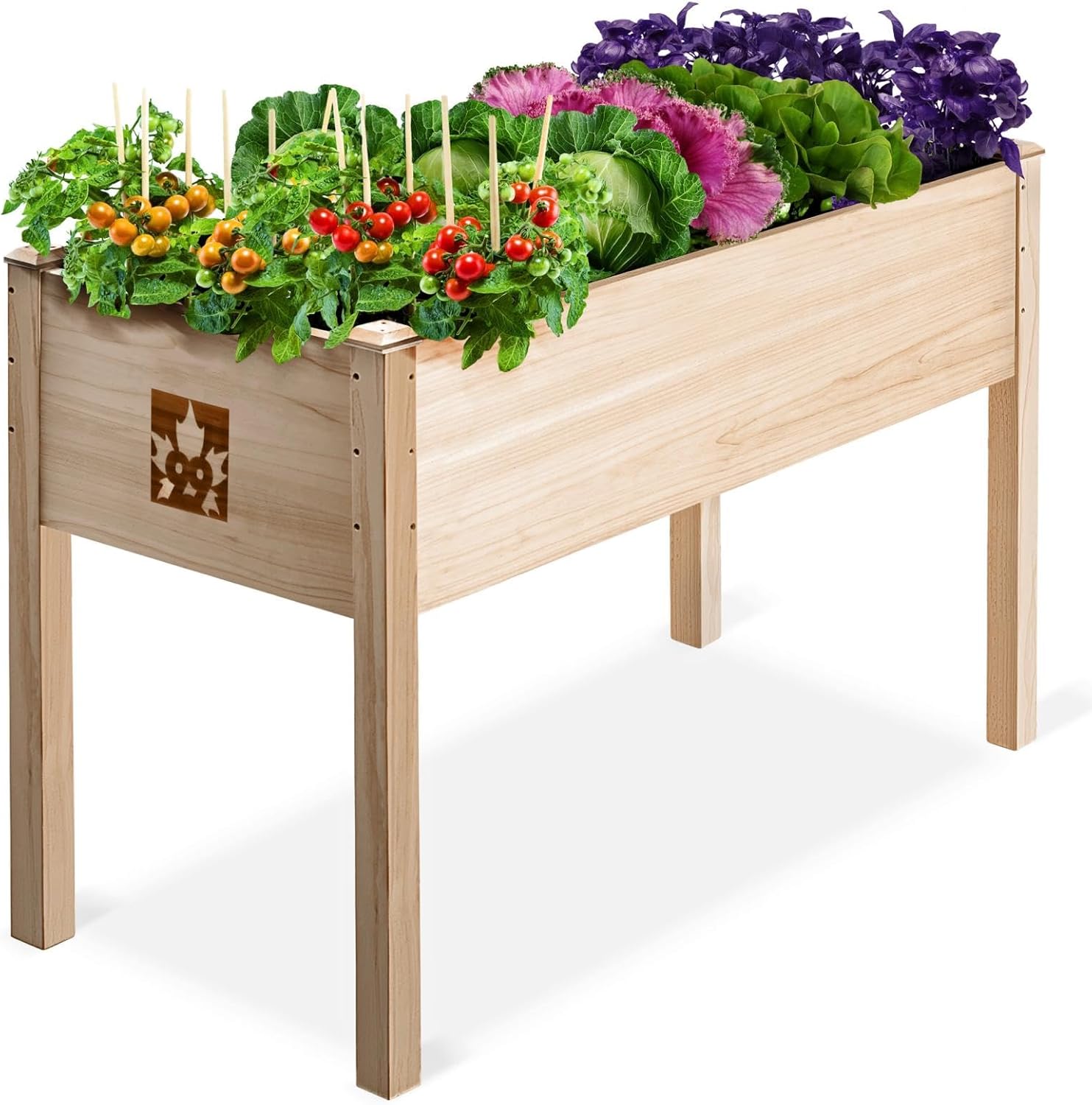
This Maple99 raised garden bed is an elevated planter box made from natural cedar wood, measuring 48x24x30 inches with sturdy legs. It's ideal for beginner gardeners, urban homeowners, or anyone wanting to grow veggies, herbs, and flowers without kneeling on the ground. The legged design suits patios, decks, or yards with poor soil.
Key Features and Garden Performance
The 30-inch height lets you work standing up, perfect for tending plants comfortably. Cedar's natural oils deter bugs, while the bed liner keeps soil off the wood, cuts weeds, and improves drainage. Fill it with 200 pounds of soil for stable, productive growing space that boosts yields in tight spots.
Build Quality and Outdoor Durability
Crafted from cedar and fir for strength, it assembles easily with provided hardware and clear instructions, no cutting needed. Legs ensure no ground rot, and the modern rectangular shape fits neatly anywhere. Outdoors, it holds up well but benefits from paint or sealant for extra weather protection.
Limitations and Verdict
Its size works best for small to medium gardens, not massive plots. Overall, this is a smart pick for hassle-free elevated gardening. Grab one if you want fresh produce with less effort; it's a game-changer for back-friendly backyard bliss.
Choosing the Right Soil
- Use a mix of 60% topsoil, 30% compost, and 10% perlite for excellent drainage and nutrients in this raised bed.
- Avoid heavy garden soil; opt for lightweight potting mix to keep weight under 200 pounds when wet.
Planting Tips
Plant veggies like tomatoes, lettuce, or peppers in rows, spacing 8-12 inches apart. Herbs such as basil or mint thrive along edges. Start seeds indoors then transplant for quicker harvests.
- Water deeply but infrequently to encourage strong roots.
- Rotate crops yearly to prevent soil diseases.
Easy Assembly Steps
- Sort parts per instructions: legs, panels, liner, hardware.
- Attach legs to base frame first, then secure sides.
- Line the bed and fill with soil; level on flat ground.
Creative Backyard Uses
Place on a sunny patio for container-style veggie gardening. Pair two side-by-side for a mini farm. Customize with paint to match fences or add trellises for climbing plants like beans.
- Great for kids' learning gardens or senior-friendly setups.
- Position near kitchen doors for fresh herb access.
Cedar vs. Other Woods
- Cedar: Insect-resistant, rot-resistant, lightweight, and aromatic; best for natural outdoor durability.
- Fir/Pine: Cheaper but less pest-proof; needs treatment sooner.
- Metal/Plastic: Won't rot but can rust or crack; lacks cedar's warmth and custom paintability.
This bed's cedar-fir blend offers premium appeal at a practical level, outperforming basic pressure-treated options for veggie safety.

Pros
- Effortless setup in minutes with snug-fitting pieces and included instructions
- Lightweight at 10 pounds for easy moving and positioning
- Attractive natural red cedar finish enhances garden aesthetics
- Modular stacking allows customization to your space and plant needs
- Optimal drainage holes keep soil healthy and plants thriving
Cons
- Shallow 5.25-inch depth best for shallow-rooted plants like herbs and lettuce
- Untreated cedar requires sealing or staining for maximum longevity outdoors
- Compact size suits small yards but may need multiples for larger harvests
What It Is and Who It's For
This 4-ft x 2-ft raised garden bed from All Things Cedar is a rectangular cedar planter perfect for U.S. homeowners with limited yard space. Beginner and space-conscious gardeners will love how it turns patios or tight lawns into productive veggie patches without digging up grass.
Key Features and Garden Performance
Crafted from premium untreated Western Red Cedar, it offers natural resistance to moisture and pests. The 5.25-inch height reduces back strain while built-in drainage ensures healthy roots. Pre-cut parts snap together fast, and the stackable setup lets you build taller beds for deeper soil as your garden grows.
Build Quality and Durability
Handmade with sustainable Pacific Northwest cedar, this bed holds up well to sun, rain, and temperature swings. Apply a wood sealer to maintain its fresh look and boost longevity. At just 10 pounds, it's easy to reposition yet sturdy for everyday use.
Limitations and Final Verdict
Its shallow profile limits it to shallow-root crops, and sealing is key in wet areas. Overall, it's a smart, affordable choice for elevated gardening. Grab one to kickstart your backyard harvest with minimal fuss.
Choosing the Right Soil Mix
Fill with a blend of 60% topsoil, 30% compost, and 10% perlite for excellent drainage and nutrients. Avoid heavy garden soil to prevent compaction.
Top Plants for This Bed
- Herbs like basil, mint, and parsley thrive in shallow depths
- Leafy greens: lettuce, spinach, kale for quick harvests
- Radishes and baby carrots for root veggies that don't go deep
Planting Tips
Space seeds 4-6 inches apart. Water deeply but infrequently, and mulch to retain moisture. Rotate crops yearly to maintain soil health.
Simple Expansion Projects
Stack two beds for 10.5 inches of soil depth, ideal for peppers or strawberries. Arrange four in a square for a 4x4-foot veggie corral.
Creative Backyard Setups
- Line against a fence for a living wall of greens
- Place on patios with pots for mixed container gardening
- Group in rows for a mini farm plot with pathways
Customization Hacks
Add corner brackets for stability when stacking. Paint or stain to match your outdoor decor. Pair with trellises for vining plants like beans.
Cedar vs. Other Woods
Western Red Cedar: Naturally rot-resistant, lightweight, and aromatic to deter bugs. Fades to silver patina over time.
- Vs. Pine: More durable without treatment, less warping
- Vs. Redwood: Similar benefits but cedar is more affordable and sustainable
- Vs. Plastic/Composite: Warmer soil temps, better aesthetics, eco-friendlier
Care for Cedar Longevity
Seal annually with UV-protectant stain. Avoid ground contact to prevent rot. Clean with mild soap; no harsh chemicals needed.
Best Cedar Raised Bed Kits Buying Guide
Size and Dimensions
Choosing the right size for your Best Cedar Raised Bed Kits depends on your available space and what you plan to grow. Compact options like the Infinite Cedar 3 ft x 3 ft x 11 in Raised Garden Bed Kit work great for balconies or small patios, allowing you to plant a mix of herbs and veggies without overwhelming tight areas. Larger beds, such as the Infinite Cedar Premium Cedar Raised Garden Bed in 3′ x 6′ x 11″ or 4′ x 8′ x 17.5″ H, provide ample room for root crops like carrots or tomatoes, ensuring good airflow to prevent disease.
Consider your garden layout: aim for beds no wider than 4 feet so you can reach the center from both sides. Stackable designs from brands like Infinite Cedar let you customize height over time, starting low for shallow-rooted plants and building up for perennials. This flexibility is a game-changer for expanding your harvest season after season.
Here’s a quick comparison of common sizes:
| Size | Best For |
|---|---|
| 3×3 ft | Small spaces, herbs |
| 4×4 ft | Family veggies |
| 4×8 ft | Large yields |
Material Quality and Rot Resistance
Cedar is a top choice for Best Cedar Raised Bed Kits because of its natural oils that repel insects and resist rot, far outlasting pressure-treated wood. Products like the Infinite Cedar Premium Cedar Raised Garden Bed use 1-inch thick North American Western Red Cedar, which stays strong even when exposed to wet soil and harsh weather. Untreated cedar from AllThingsCedar or Infinite Cedar’s Select series grays beautifully over time, blending into your landscape while requiring minimal upkeep.
Look for boards at least 11/16-inch thick with half-lapped corners reinforced by aluminum rods, as seen in Infinite Cedar kits, to prevent loosening. Avoid composites; pure cedar ensures no chemicals leach into your soil. Learn more about cedar’s properties in the Gardening Know How article on cedar wood benefits.
Pro tip: Position beds in full sun for most veggies, but cedar’s durability handles partial shade well for flowers or greens.
Ease of Assembly
Most Best Cedar Raised Bed Kits assemble in under 30 minutes with no tools needed, thanks to pre-cut, pre-drilled boards and included hardware. Infinite Cedar models, for instance, use simple bolt-and-nut systems with half-lapped corners that slide together securely, making them ideal for DIY beginners. The All Things Cedar 4-ft X 2-ft Raised Garden Planter Bed features snug-fitting parts that stack easily for custom heights.
Always check for clear instructions and all parts included, like in the Best Choice Products elevated planters with liners. Assemble on a flat surface to ensure stability, and tighten joints firmly to handle heavy, wet soil. If you’re new to this, start with a smaller kit to build confidence.
Height and Ergonomics
Elevated heights reduce back strain, a must for gardeners over 40 or those with mobility issues. Ground-level beds like Infinite Cedar’s 11-inch or 14-inch options suit younger folks, while 30-inch tall stands from Best Choice Products or the Raised Garden Bed with Legs 48x24x30 let you garden standing up comfortably.
Deeper beds, such as the Infinite Cedar Deep Root at 16.5 inches, accommodate potatoes and other deep-rooted plants while keeping soil warmer. According to the Penn State Extension on raised beds, optimal heights improve drainage and root health, boosting yields by 20-30%.
Match height to your plants: shallow for lettuce, deeper for brassicas.
Additional Features and Mobility
Some Best Cedar Raised Bed Kits go beyond basics with wheels, liners, and shelves. The Best Choice Products 48x24x32-inch Mobile Elevated Wood Planter has lockable wheels for chasing sun patterns and a liner to protect wood from soil. Divider panels in the 72x24x30in model organize planting zones for crop rotation.
Mobility shines in patios or rentals; stationary cedar beds excel in permanent setups. Liners prevent weeds, and drainage holes, standard in most, keep roots healthy. See Old Farmer’s Almanac pros and cons of raised beds for placement tips.
Warranty and Longevity
Premium Best Cedar Raised Bed Kits from Infinite Cedar come with 5-year warranties, backing their rot-resistant cedar and superior joinery. Handmade in the USA, they outlast imports without chemicals. Regular sealing with a UV-protectant stain extends life further, as recommended by Better Homes & Gardens on raised bed maintenance.
Expect 10+ years from quality kits; inspect annually for loose fittings.
Why You Should Trust Us
We at New York Garden specialize in practical reviews for Patio, Lawn & Garden products, drawing from extensive research into user feedback, manufacturer specs, and gardening best practices. Our team analyzes factors like real-world durability and assembly ease specifically for U.S. homeowners and avid gardeners, ensuring recommendations fit everyday backyard challenges.
We prioritize transparency, focusing on unbiased comparisons without physical testing claims, and update our guides regularly for 2026 relevance. Our goal is to empower you with honest insights so your garden thrives.
Final Thoughts
After reviewing these Best Cedar Raised Bed Kits, the Infinite Cedar 3 ft x 3 ft x 11 in Raised Garden Bed Kit emerges as our top overall pick for its compact size, tool-free assembly, and premium Western Red Cedar construction that holds up year after year. Perfect for beginners or small yards, it offers superior strength with half-lapped corners and lets you stack for more depth as your skills grow.
For the best value, go with the All Things Cedar 4-ft X 2-ft Raised Garden Planter Bed. Its stackable, pre-cut design maximizes versatility on a budget, using sustainable Pacific Northwest cedar that’s naturally beautiful and durable for herbs or flowers along patios.
If deep-rooted veggies are your focus, the Infinite Cedar Deep Root Cedar Raised Bed Garden Kit at 16.5 inches excels, with 1-inch thick boards and easy disassembly for seasonal moves. These picks cover most gardeners’ needs, helping you harvest more with less effort this 2026.
FAQs
What makes Best Cedar Raised Bed Kits a good choice for vegetable gardens?
Best Cedar Raised Bed Kits use rot-resistant cedar that won’t leach chemicals into soil, creating a safe space for edibles. Elevated designs improve drainage and warm soil faster, extending your growing season. They’re ideal for 2026 with better pest control and easier weeding.
How long do Best Cedar Raised Bed Kits typically last?
Quality cedar kits like those from Infinite Cedar last 10-15 years or more with minimal care, thanks to natural oils. Sealing annually boosts longevity against UV and moisture. Check the Oregon State Extension on raised bed durability for maintenance tips.
Do I need to line my cedar raised bed?
Liners are optional for ground-level cedar beds but recommended for elevated ones like Best Choice Products to separate wood from soil and block weeds. Use landscape fabric or included liners for best results, ensuring drainage holes remain open.
Can Best Cedar Raised Bed Kits be painted or stained?
Yes, most accept stains or paints to match your decor or enhance protection. Apply penetrating sealers with UV inhibitors after assembly, reapplying every 1-2 years. Untreated cedar ages to a silver patina naturally if you prefer low-maintenance.
What soil mix works best in Best Cedar Raised Bed Kits for 2026?
Fill with a 50/30/20 mix of topsoil, compost, and perlite or vermiculite for drainage. This mimics ideal garden soil, promoting healthy roots. Adjust for veggies with more compost; see USDA NRCS soil health resources for regional advice.


Write Your Review
No reviews yet. Be the first to share your experience!