

Are you looking to harness solar power for your backyard oasis or vegetable garden? Best Solar Controllers With LCD Display make it easy to safely charge batteries that keep your garden lights glowing through summer evenings, irrigation pumps running smoothly, and even small tools powered up without relying on the grid. In 2026, with rising energy costs and a push for sustainable gardening, these controllers with clear LCD displays help you monitor everything at a glance, ensuring your off-grid setup thrives even in variable weather.
Whether you’re setting up a small solar array to run fountain pumps in your patio garden or expanding to power a larger lawn setup, choosing the right controller prevents overcharging, extends battery life, and maximizes your panels’ output. We’ve reviewed 10 options tailored for gardeners like you, focusing on ease of use, durability in outdoor conditions, and features that fit real backyard needs.
Top Products

Pros
- Efficient MPPT charging maximizes energy from panels even in partial shade common in gardens
- Clear LCD screen shows real-time stats for easy troubleshooting in outdoor setups
- Multiple operation modes offer flexibility for light-controlled garden lighting or timed pumps
- Compact aluminum build holds up in garden sheds exposed to weather changes
- High amperage options handle power needs for irrigation or multiple lights
Cons
- Strict voltage matching between panels and batteries is required to avoid damage
- Manual setup and programming can be tricky without detailed instructions
- Does not support LiFePO4 batteries, limiting options for some modern setups
This POWLSOJX MPPT solar charge controller is a solid choice for gardeners adding solar power to backyards, powering lights, pumps, or small off-grid systems in sheds and greenhouses. It auto-detects 12V to 48V batteries and delivers efficient charging, making it ideal for homeowners from beginners setting up basic garden lights to experienced users expanding solar arrays.
Key features shine in real-world garden use: MPPT technology pulls maximum power from panels, even on cloudy days, while the LCD display tracks voltage, current, and modes. Seven operation options, like light control for dusk-to-dawn lighting or timing for irrigation, give you control over power delivery. Users praise its efficiency in low light, perfect for northern gardens with variable sun.
Build quality features an aluminum alloy body that resists corrosion in damp garden environments, with protections against overcharge, reverse polarity, and more. It handles substantial PV input, supporting up to 4800W at 48V for bigger setups.
Limitations include mandatory voltage matching—use specific panel ranges per battery voltage or risk damage—and setup challenges from sparse instructions. It's not for LiFePO4 batteries, so check your system first.
Overall, it's a budget-friendly pick for reliable garden solar management if you follow wiring rules: battery first, then panels. Great for off-grid enthusiasts wanting consistent power without fuss.
Follow this exact order to avoid damage: connect the battery first, then solar panels, and finally any DC loads. Your battery needs minimum voltage for detection, like over 10V for 12V systems.
- Match panel Voc strictly: 15-25V for 12V batteries, 30-50V for 24V, and so on up to 60-100V for 48V.
- Use the LCD to navigate modes; hold buttons to enter settings for light control or timing.
- Mount in a shaded spot in your garden shed, away from direct rain, within 25-55°C operating range.
- Wire with appropriate gauge for high amps to prevent overheating in long garden runs.
Charge efficiency varies with sunlight; test in your yard's conditions for best results.
Power essential backyard features reliably with this controller's high capacity.
- Garden path lights: Light control mode auto-starts at dusk for safe evening strolls.
- Irrigation pumps: Time-delay settings run watering schedules without grid power.
- Greenhouse fans: Manual or general modes keep ventilation steady on sunny days.
- Shed tool charging: USB ports and DC output for batteries or devices during yard work.
- Pond aerators: Efficient MPPT ensures consistent runtime even with shaded panels.
Scales from small veggie garden lights to larger lawn setups for sustainable outdoor living.
Ensure seamless integration with your garden solar setup.
- Batteries: Lead-acid or compatible types; minimum detection voltages apply. Avoid LiFePO4.
- Panels: Voc must match battery: e.g., 15-25V panels for 12V systems only—no high-voltage panels on low batteries.
- Max Power: 1200W at 12V (100A model) up to 4800W at 48V for expansive arrays.
- Outputs: DC for loads, dual 5V/1.5A USB for portability.
It's a focusing MPPT, so precise matching prevents issues and maximizes garden efficiency.

Pros
- Versatile 12V/24V auto-detection simplifies setup for various garden solar projects
- Low self-consumption keeps more power available for your lights and pumps
- Multiple charging stages optimize battery health for long-term outdoor reliability
- Durable plastic build handles temperature swings in garden environments
Cons
- PWM technology is less efficient than MPPT in partial shade common in backyard gardens
- Bluetooth monitoring requires separate BT-1 module purchase
- Flush mount best for walls, less ideal for exposed pole installations
This Renogy Adventurer 30A PWM solar charge controller is a reliable hub for small to medium off-grid solar systems in gardens and backyards. It suits homeowners adding sustainable power to sheds, pergolas, or RVs used for gardening getaways, handling up to 30A from panels to charge various batteries efficiently.
Key features like the backlit LCD deliver clear system info and error codes at a glance, while 4-stage PWM charging (bulk, boost, float, equalization) maximizes battery life for consistent runtime on garden lights, automated sprinklers, or tool chargers. In real-world use, it revives over-discharged lithium batteries quickly, keeping your outdoor setup humming even after extended cloudy periods.
Build quality shines with negative-ground design for safe installs and protections against common faults. The plastic housing withstands -4°F to 140°F swings, fitting harsh backyard weather, though it's not fully waterproof so shelter it from direct rain.
Limitations include PWM's lower efficiency in shaded gardens compared to MPPT options, and app access needs an extra module. Overall, it's a solid pick for beginner solar gardeners seeking simple, effective power management; pair it with 200-400W panels for most yard needs.
Integrate this controller into practical backyard projects for eco-friendly gardening:
- Power LED path lights or security lights around vegetable beds and patios.
- Run pond aerators or small fountains without grid reliance.
- Charge batteries for irrigation timers and solenoid valves in raised bed systems.
- Support off-grid tool stations in sheds for weekend warriors.
Start with 100-300W panels for typical garden loads, scaling up as needed for larger lawns.
For smooth setup in your garden space:
- Mounting: Use flush option on shed walls for a sleek fit, or surface attachment for posts; secure with included stainless screws.
- Wiring: Connect panels, battery, and loads to up to 8 AWG terminals; always disconnect in reverse order.
- Maintenance: Check LCD monthly for errors, clean terminals yearly, and store indoors during harsh winters.
Avoid direct sun exposure; temperature compensation adjusts charging automatically for reliable performance.
This controller works with common garden solar batteries:
- Lithium (LiFePO4): Programmable voltage revives and maintains deep-cycle packs for lights and pumps.
- AGM/Sealed/Gel: Standard settings prevent overcharge in starter or deep-cycle setups.
- Flooded: Equalization stage keeps lead-acid batteries healthy longer.
Add Renogy voltage or temp sensors for precision in varying backyard conditions.

Pros
- Clear LCD makes monitoring battery and solar input effortless for daily garden checks
- Built-in protections ensure safe, reliable operation in varying weather
- Dual USB outputs add convenience for charging devices outdoors
- Easy parameter adjustments tailor performance to your specific garden battery setup
- Value pack of 2 units covers multiple garden zones or backups
Cons
- PWM technology is less efficient than MPPT for larger solar arrays in full-sun gardens
- Compatible only with lead-acid batteries, not lithium for modern setups
- Requires proper battery connection first, which may trip up absolute beginners
This Rolokit 30A PWM solar charge controller is a smart regulator for managing power from solar panels to lead-acid batteries in 12V or 24V off-grid systems. It suits homeowners adding sustainable power to backyards, like running garden lights, pond pumps, or ventilation fans without grid reliance. Beginner gardeners with small solar setups will appreciate its plug-and-play simplicity.
Key features shine in real garden use: the LCD display tracks voltage, current, and modes clearly, while dual USB ports keep your phone charged during weeding sessions. Adjustable settings for float charge, discharge cut-off, and timers let you customize for seasonal needs, like longer runtime for dusk-to-dawn lighting. Protections against overcurrent, shorts, and reverses keep everything safe through rain or heat.
Build quality feels solid with plastic housing that withstands -35 to +60°C temps, perfect for outdoor sheds or pole mounts. It's not bulky, mounting easily near panels. Durability holds up for everyday gardening, though PWM efficiency means it's best under 360W panels, not massive arrays.
Limitations include lead-acid only compatibility and no lithium support, so check your batteries. Installation order matters: battery first, then panels, then loads. Overall, it's a practical pick for reliable backyard solar power. We recommend it for gardeners wanting hassle-free energy for lights and small tools.
Follow these steps for a safe backyard setup:
- Connect the battery first to let the controller recognize the 12V/24V system.
- Attach solar panels (up to 360W for 30A model) next.
- Wire DC loads like lights or pumps last.
- Use the LCD to set modes, timers, and voltages via buttons.
Reverse for disassembly. Always ensure battery has charge initially. Refer to manual for wiring diagrams suited to garden applications.
Ideal for powering:
- Garden path lights for evening ambiance.
- Small fountain or drip irrigation pumps.
- Shed fans or tool chargers off-grid.
Tip: Pair with 100-200W panels for optimal PWM performance in partial shade. Use AGM batteries for maintenance-free reliability in humid yards. Set discharge stop at 10.7V to protect during cloudy stretches.
Works with lead-acid types:
- OPEN: Flooded, cost-effective for basic setups.
- AGM: Sealed, vibration-resistant for garden carts.
- GEL: Deep-cycle for longer runtime in pumps.
Avoid lithium. Adjust float to 13.7V default for best life. Standby draw under 10mA keeps batteries topped in low-sun winters.

Pros
- Easy plug-and-play setup for quick solar integration in garden projects
- Versatile for sealed, gel, flooded, and lithium batteries
- Built-in overcurrent, short circuit, and reverse protections for safety
- USB outputs add convenience for mobile devices in the yard
- Affordable way to test small solar applications like shed lighting
Cons
- Terminals can strip easily, limiting wire changes after initial install
- Efficiency lower than premium MPPT in high-heat or large arrays
- Strict voltage matching needed for panels and batteries to avoid damage
This 60A MPPT solar charge controller from Depvko is a compact regulator for 12V or 24V systems, perfect for gardeners powering small off-grid setups like shed lights, tool chargers, or water pumps in backyards. It suits beginners adding solar to vegetable gardens or pathway lighting, handling up to 720W panels efficiently.
Key features include an LCD screen for monitoring voltage, amps, and modes, plus dual USB 5V outputs for devices. In real garden use, it pulls solid amps from 200W panels for battery charging, with four-stage management that prolongs life during cloudy days. Users praise its simplicity for testing batteries or small sheds, though best with proper panel voltage matching.
Build is lightweight plastic, suitable for protected outdoor spots like under eaves, but lacks cooling fins, so add a fan in hot sheds. Terminals accept up to 10-gauge wire but feel delicate; secure with strain relief for longevity in damp garden environments.
Limitations include potential PWM-like behavior under mismatch and lower peak efficiency around 60% in tests, not ideal for large arrays. Some report setup glitches with certain 12V panels over 50V.
Overall, a budget-friendly pick for small garden solar trials. Pair with matched panels and batteries for reliable power, keeping your backyard sustainable without grid ties.
Start by connecting the battery first to auto-detect 12V/24V, then solar panels within voltage limits (17-23V for 12V batteries, 36-46V for 24V). Finally, add loads like LED garden lights.
- Match panels: 60A handles up to 720W total.
- Mount controller indoors or shaded to avoid direct sun.
- Use fuses on positive wires for safety near plants or water features.
- Test with charged battery for proper recognition.
Ideal for shed lighting or pump timers in veggie patches.
Supports sealed, gel, flooded lead-acid, and lithium batteries; set parameters for lithium after powering on.
- No minimum capacity, but match solar current to avoid overload.
- Overcharge protection at 14.4V/28.8V, recovery at 12.6V.
- Perfect for deep-cycle batteries in off-grid garden carts or trailers.
- Monitor via LCD to prevent over-discharge during extended use.
Keep dry and dust-free; check connections seasonally. Works from -35C to 60C, but ventilate in hot sheds.
- Avoid inverter on load port; connect directly to battery.
- Strain relief wires to prevent loosening from vibrations.
- Reset clears protections automatically.
- Timer settings control load duration for energy savings.

Pros
- User-friendly LCD screen and buttons for quick setup and monitoring in outdoor conditions
- Versatile compatibility with AGM, gel, flooded, and lithium batteries for various garden projects
- Durable aluminum housing withstands harsh outdoor temperatures from -31°F to 113°F
- Low self-consumption under 10mA preserves battery power for extended nighttime garden lighting
Cons
- PWM design less efficient than MPPT for larger solar arrays in expansive lawns
- Battery voltage readings can be inaccurate when using optional temperature sensor
- Lithium battery settings require manual configuration before first use
The Renogy Wanderer 10A PWM solar charge controller is a reliable regulator for small off-grid systems, ideal for gardeners adding solar power to backyard sheds, lights, or pumps. It suits homeowners with modest setups like a single panel charging a battery for evening garden illumination or automated watering.
Key features shine in real-world garden use: the intelligent 4-stage charging (bulk, boost, float, equalization) optimizes power delivery, while the backlit LCD displays voltage, current, and errors for at-a-glance checks between chores. Users praise its seamless performance in sheds and RVs, translating well to powering ventilation fans or tools without fuss. USB ports add convenience for on-the-go charging.
Build quality impresses with a rugged aluminum housing and IP32 rating, handling rain splashes and temperature swings common in outdoor gardens. Multiple protections cover reverse polarity, overcharge, and shorts, ensuring longevity in exposed installs.
Limitations include lower efficiency versus MPPT controllers for bigger arrays and occasional voltage reading quirks with temp sensors. Still, for small-scale garden solar, it delivers dependable results.
Final verdict: Grab this if you're powering a backyard oasis affordably. Pair it with a 100W panel for lights or a pump, and enjoy hassle-free solar gardening.
Integrate the Wanderer 10A into your garden for practical off-grid power:
- Run LED path lights or security lights from dusk till dawn using a 12V battery.
- Power small irrigation pumps or timers for raised beds and veggie patches.
- Charge batteries in tool sheds for cordless trimmers, fans, or radios during yard work.
- Support bird feeders, fountains, or heated propagators in remote yard areas.
Max PV input of 130W at 12V handles typical garden panels efficiently.
Match batteries to your gardening needs with easy manual selection:
- AGM or Gel: Great for general garden lights; set via LCD for sealed maintenance-free use.
- Flooded: Suited to larger pump systems; includes temperature compensation.
- Lithium (LiFePO4): Lightweight for portable setups; manually adjust to 14.4-14.6V per battery specs.
Always verify voltage manually for lithium before charging. Use 10Ah+ capacity for overnight garden loads.
For safe, weatherproof garden installs:
- Mount in a shaded shed or enclosure away from direct rain.
- Use up to 12AWG wire; crimp ferrules on stranded for secure terminals.
- Connect PV, then battery, then load; select battery type immediately.
- Add optional BT-1 module for app monitoring from your patio.
Negative ground design fits most setups; test in sunlight before full use.

Pros
- Clear, multifunction LCD display for instant system status without scrolling
- Six navigation keys for direct, rapid operation even with garden gloves on
- Users praise its reliability for real-time monitoring in RV, boat, and shed solar systems
- Compact size fits neatly in garden workspaces or control panels
- Works in wide temperature range from -20°C to +70°C for all-season outdoor use
Cons
- Compatible only with specific EPEVER controllers like Tracer-AN and Triron, not other brands
- Temperature probe sold separately, limiting full battery temp compensation without extra purchase
- Standard 2m cable may require extension for distant installations, potentially adding complexity
The EPEVER MT-52 remote meter brings convenient oversight to your solar charge controller, tailored for gardeners powering backyard features like LED path lights, automatic watering timers, or shed tool chargers. It's best for homeowners with small to medium off-grid setups who want hassle-free monitoring without trekking to remote panels.
Key features shine in real-world garden use: the large LCD displays controller type, battery voltage, charge current, and load status in digital, graphic, and text formats. Six function keys let you browse data, tweak charge parameters, or switch loads remotely, saving time during busy planting or mowing days. RS485 tech ensures stable communication over distances, great for shed-based systems.
Build quality holds up outdoors with a sturdy plastic frame rated for extreme temps, and the RJ45 connector makes setup straightforward with the included 2m cable. Gardeners report it feels like an essential add-on, similar to built-in displays on pricier units.
Limitations include strict compatibility with EPEVER models only and no included temp probe, so advanced temp compensation needs extras. Still, for straightforward monitoring, it's a solid performer.
Final verdict: Grab the MT-52 if you have a compatible EPEVER controller and want pro-level insights into your garden solar system. It empowers better power management for thriving outdoor spaces.
Integrate the MT-52 into garden projects for smarter power use:
- Monitor panels charging batteries for dusk-to-dawn landscape lights.
- Track performance of solar pumps for rain barrels or hydroponic beds.
- Oversee loads like vent fans in greenhouses or pollinator habitat heaters.
- Adjust settings for seasonal needs, like higher loads in summer for sprinklers.
This setup keeps your eco-friendly garden humming efficiently.
Quick setup steps for garden solar success:
- Confirm your controller is Tracer-AN, BN, Triron-N, or similar EPEVER models.
- Plug the RJ45 cable into the meter's port and controller's comms slot.
- Mount the 98x98mm faceplate in your shed or garage.
- Power on; it auto-identifies and displays data instantly.
Extend cable up to 52m with quality RS485 wire for flexible placement. No external power required.
Keep your meter reliable year-round:
- Clean LCD screen with soft cloth; avoid harsh chemicals.
- Secure cables from moisture and pests in garden environments.
- Check connections seasonally before winter storage.
- Use alarms to catch issues early, like low battery warnings.
Users love its low-maintenance design for long-term backyard reliability.

Pros
- Up to 20% faster charging than PWM controllers, keeping garden solar projects running efficiently
- Clear LCD display for easy status checks without guesswork
- Versatile battery compatibility suits most backyard solar needs
- Robust protections and weatherproof build for outdoor durability
- Simple installation saves time for beginner gardeners
Cons
- Limited to 12V batteries and 150W panels, not suited for larger solar arrays
- Requires connecting battery first, which may trip up absolute novices
- Compact size means fewer advanced settings for complex setups
The SOLPERK 10A 12V MPPT Solar Charge Controller is a compact regulator designed to optimize power from solar panels up to 150W for charging 12V batteries. It suits homeowners powering small garden features like LED lights, fountain pumps, or tool sheds with off-grid solar, especially those new to solar setups in backyards or patios.
Key features shine in real-world gardening: MPPT technology tracks maximum power for up to 20% faster charging, ensuring your panels deliver peak performance even on cloudy days. The LCD display shows charging status and battery levels at a glance, while 3-stage charging (boost, absorption, float) prolongs battery life for season-long reliability. Users report it handles 100W panels smoothly, keeping systems like fridge-powered garden coolers running steady.
Build quality impresses with IP68 waterproofing and plastic housing that resists rain, dust, and temperature swings common in outdoor gardens. Protections against overcharge, reverse polarity, and shorts provide peace of mind for setups near sprinklers or dew-heavy mornings. Its mini size saves space in tight shed corners.
Limitations include strict 12V battery use only and a 150W panel cap, so it's not for big solar farms. Always connect the battery before the panel to avoid issues.
Overall, this controller earns high marks for efficient, user-friendly solar management in small garden applications. Recommended for practical off-grid power without complexity.
Pair this controller with a 100W panel for lighting pathways or powering a small pond pump in your backyard.
- Position panels south-facing for max sunlight harvest in northern climates like New York.
- Use AGM or LiFePO4 batteries for deep-cycle needs in garden tools or lights.
- Mount controller in a shaded spot to avoid overheating during summer heat.
Monitor LCD daily to catch low battery early and prevent garden blackouts.
Installation is straightforward for gardeners: connect battery first, then solar panel via SAE plugs, no tools needed.
- Follow 12V system only; higher voltages risk damage.
- Secure in a weatherproof enclosure if exposed long-term.
- Test connections with LCD readout before full use.
Safety features auto-stop charging at full capacity, protecting batteries year-round.
Works with sealed, AGM, gel, flooded, and LiFePO4 12V batteries common in garden solar.
- AGM ideal for maintenance-free backyard lights.
- LiFePO4 offers longer life for frequent pump use.
- Avoid mixing types; match to your solar load.
Intelligent charging stages optimize each for extended outdoor performance.

Pros
- Advanced MPPT boosts efficiency by up to 25% in variable light, per user tests on cabin and boat setups
- Clear LCD and embossed icons make monitoring and mode switching simple for beginners
- Versatile 7 modes and protections handle lead-acid or lithium batteries reliably
- Dual 5V USB ports provide convenient device charging without extra inverters
- Straightforward screw terminals speed up installation in garden sheds
Cons
- Plastic build may not hold up to harsh outdoor weather over many seasons
- Best suited for medium solar arrays, not oversized commercial garden systems
- Limited feedback on extreme heat performance despite overheating protection
This LYIYEYAN 100A MPPT solar charge controller is a smart regulator that optimizes power from solar panels to batteries in 12V, 24V, 36V, or 48V systems. It suits homeowners adding sustainable power to backyard gardens, like running LED path lights, pond pumps, or tool chargers in sheds without grid reliance. Beginners appreciate its plug-and-play auto-detection.
- Key features shine in real gardens: MPPT technology squeezes extra watts from partly cloudy skies, vital for northern yards with shorter sun hours.
- The LCD displays battery voltage, charge current, and modes clearly, helping you tweak light control for evening plant illumination or timing for morning pumps.
- Users report seamless setup and solid performance on 60A systems with room to grow.
Build quality features durable plastic housing with heat sinking for steady outdoor use, though not rugged like metal units. Screw terminals and icons simplify wiring behind garden panels. It handles lead-acid and lithium batteries with protections against overcharge, reverse polarity, and more.
Limitations include its size for compact installs only and plastic that might weather faster in storms. Not ideal for massive arrays over 100A continuous.
Overall, a strong pick for practical garden solar projects. Pair it with 400-800W panels for efficient, worry-free power that boosts your outdoor living.
Start by matching your solar panel wattage to under 100A output for safe operation in garden setups.
- Mount near batteries in a shed to minimize wire runs; use 10-12 gauge for efficiency.
- Connect panels to PV input, battery to BAT terminals, and loads to LOAD for lights or pumps.
- Set modes via buttons: light control for dusk garden paths, timing for 4-12 hour pump runs.
- Test LCD readings post-install to confirm MPPT tracking at 95%+ efficiency.
Secure against moisture with a ventilated enclosure for year-round backyard reliability.
Power garden features sustainably: pathway LEDs, drip irrigation timers, greenhouse fans, or shed outlets for tools.
- Lead-acid: Great for budget deep-cycle banks in pond pumps; use equalization mode seasonally.
- Lithium: Faster charging for frequent-use lights; select Li mode for temp compensation.
- USB ports charge phones or run small fans directly, skipping battery drain.
Ideal for off-grid veggie beds or patios, extending runtime on variable sun days.
Check connections monthly for corrosion in humid gardens; clean dust from heatsink.
- Monitor LCD for error codes like overheat; ensure airflow in enclosures.
- Winterize by disconnecting if unused, or use light mode for holiday displays.
- Update modes yearly based on battery health to avoid deep discharge.
Users note flawless months of service with basic care, maximizing solar ROI.
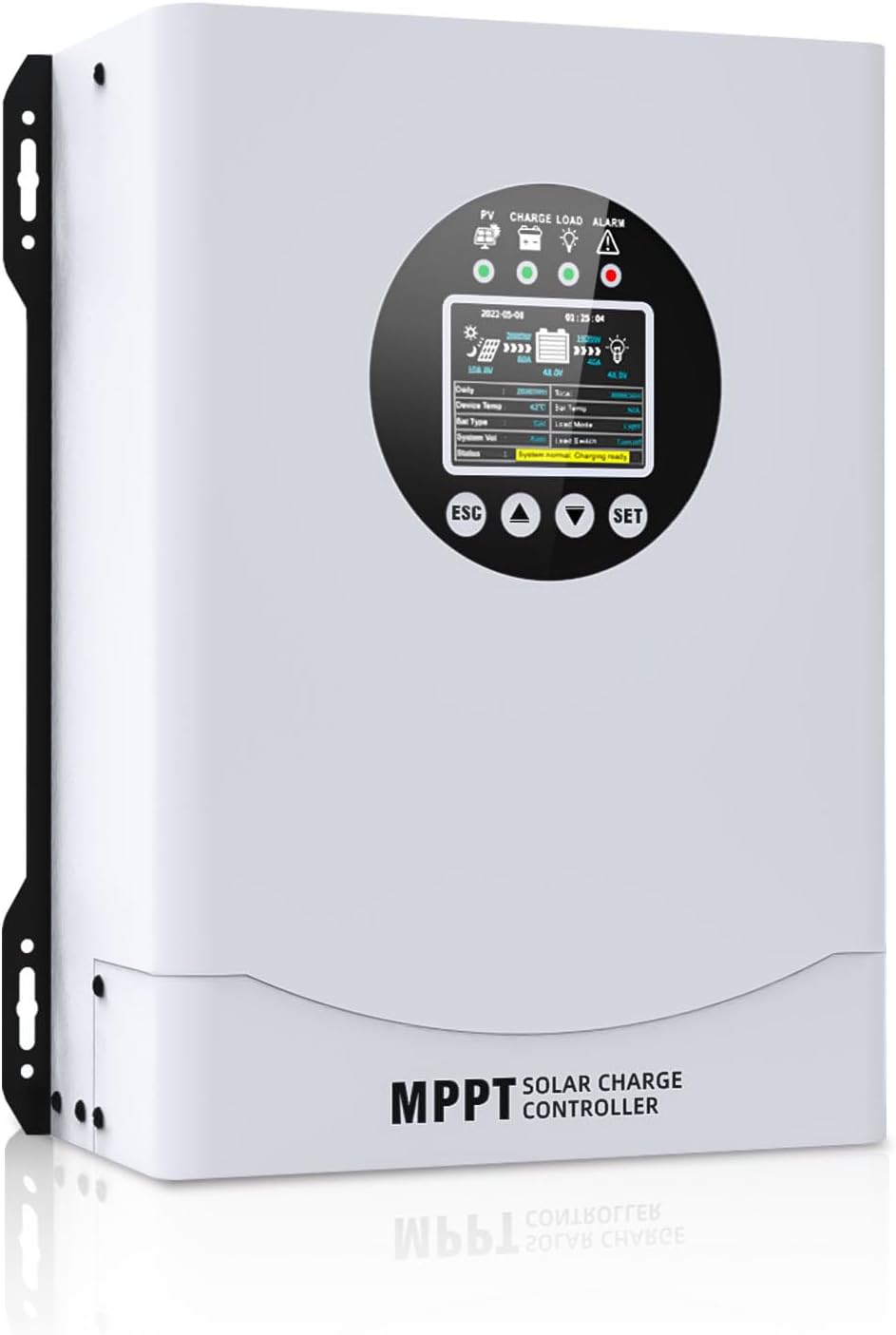
Pros
- Exceptional 99% tracking efficiency maximizes every ray of sun for consistent garden power.
- Durable metal construction holds up to outdoor weather, praised for strong build in user feedback.
- Intuitive LCD interface and key controls make setup straightforward for DIY gardeners.
- Handles massive PV input up to 11,520W at 96V, ideal for large backyard solar arrays.
- Multiple protections like over-temp and low-temp charging safeguard your investment.
Cons
- Overkill for small garden projects, better suited to serious off-grid setups.
- Advanced settings need a manual password, which can frustrate beginners.
- At 5kg, requires secure mounting on a sturdy garden shed wall.
This 120A MPPT solar charge controller is a powerhouse for gardeners going solar, automatically recognizing battery voltages from 12V to 96V and squeezing maximum efficiency from your panels. It suits homeowners with larger backyards or off-grid sheds who want to run irrigation timers, pathway lights, or even small greenhouse fans without relying on the grid.
In real-world garden use, the MPPT technology outperforms basic controllers by capturing up to 98% of available solar power, keeping your pond pump humming through partial shade from trees. Users note it handles high-wattage arrays effortlessly, powering essentials reliably during long summer days or extended outages.
Build quality shines with a rugged metal case that laughs off rain and dust, plus smart protections like over-temperature derating to prevent failures in hot patios. The LCD screen shows clear indicators for solar input, battery status, and load, making it easy to check while watering your veggies.
Limitations include its size and power rating, which might overwhelm tiny setups like a single panel for birdbath lights. Some find advanced tweaks tricky without the manual.
Overall, if you're serious about sustainable garden power, this controller delivers top performance and peace of mind. Pair it with LiFePO4 batteries for your backyard oasis.
Integrate this controller into your garden by mounting it in a shaded shed spot, away from direct sun and moisture. Connect solar panels first, then batteries, and finally loads like LED strips or pump timers.
- Start with 100-400W panels for basic lighting and scale up for pumps.
- Use 10-12 gauge wire for minimal losses in longer backyard runs.
- Position panels south-facing at a 30-45 degree tilt for max harvest in most U.S. yards.
Monitor via LCD to tweak settings for your battery type, ensuring peak efficiency year-round.
Choose batteries that match your garden power needs, with this controller supporting flooded, LiFePO4, sealed, gel, and AGM types for versatile setups.
- LiFePO4: Best for frequent cycling in daily garden lights or pumps; longest life.
- Gel/AGM: Maintenance-free for humid patios or greenhouses.
- Flooded: Budget option for stationary shed storage, but check levels regularly.
Enable lithium activation if your batteries are dormant, and use temperature compensation for outdoor extremes.
Safety first: Disconnect all power before wiring, and use fuses on PV and battery lines to protect your garden setup.
- Mount on a non-flammable surface with good airflow.
- Follow polarity strictly to avoid damage.
- Test in low light to confirm LCD readings before full sun exposure.
Its protections cover overloads and shorts, but ground the system properly for lightning-prone areas.

Pros
- Higher MPPT efficiency maximizes power harvest from garden solar panels
- Clear LCD screen simplifies setup and daily checks
- Multiple safety features protect batteries in wet garden environments
- Compact and lightweight for easy mounting in sheds or on fences
Cons
- Requires some basic wiring knowledge for safe installation
- Not suited for very large solar arrays over 30A capacity
- Initial parameter setup may take a few minutes to customize
This Depvko 30A MPPT solar charge controller is a smart regulator for 12V or 24V solar panels and batteries, perfect for gardeners wanting reliable off-grid power in backyards or sheds. It suits beginner to experienced homeowners powering lights, irrigation timers, or small pumps without grid reliance.
Key features shine in real garden use: MPPT technology extracts maximum energy from panels, even on overcast days common in many U.S. regions, while the LCD display lets you track charging status and tweak settings easily. Dual USB outputs keep devices charged during garden work, and protections guard against common issues like over-discharge from forgetting to turn off tools.
Build quality feels solid with metal construction that holds up outdoors, resisting rust in humid conditions. At just 0.28kg, it's simple to install on a garden wall or post.
Limitations include needing compatible panels (18V for 12V system) and basic electrical know-how for wiring. It's not for massive setups.
Overall, a practical pick for sustainable gardening; pair it with a 100-400W panel for steady power to enhance your outdoor living space.
Integrate this controller into backyard projects for efficient power:
- Run LED garden lights or pathway illumination all night.
- Power automatic drip irrigation timers for vegetable beds.
- Charge batteries for pond pumps or fountain features.
- Supply a small shed fridge for harvested produce storage.
Start with a 100W panel for daily garden needs, scaling up as your setup grows.
For safe backyard setup:
- Mount in a shaded, dry spot near batteries and panels.
- Connect panels first, then battery, following polarity marks.
- Use 10AWG wire for 30A loads to minimize losses.
Maintenance is minimal: wipe LCD monthly, check connections seasonally. Reset parameters if switching battery types.
Works best with these for garden systems:
- Sealed lead-acid or AGM for reliable deep-cycle use.
- Lithium batteries with adjustable settings for longer life.
- Avoid flooded types without proper venting.
Match voltage: 12V panels to 12V batteries. Monitor float charge to prevent sulfation in off-season storage.
Buying Guide for Best Solar Controllers With LCD Display
Controller Type: PWM vs MPPT
PWM controllers, like the Renogy Wanderer 10A, are budget-friendly and great for smaller garden setups where your solar panels closely match battery voltage. They work by pulsing power to the battery, which is simple and reliable for charging lead-acid or lithium batteries in basic backyard systems powering lights or timers.
MPPT controllers, such as the upgraded 30A model from Naildrillbits, track the maximum power point for up to 30% more efficiency, ideal if you’re running larger loads like pond pumps or multiple garden lights. For gardeners in cloudy areas, MPPT squeezes more from partial sun, making it worth the investment for off-grid patios.
| PWM | MPPT | |
|---|---|---|
| Efficiency | 70-80% | 95-99% |
| Best For | Small gardens | Larger systems |
| Cost | Lower | Higher |
Amp Rating and System Size
Match the amp rating to your solar array: a 10A controller like the Renogy Wanderer suits up to 130W panels for small lawn lights, while 30A options like the Renogy Adventurer handle 400W+ for bigger gardens with irrigation. Gardeners should calculate total panel watts divided by battery voltage to avoid undersizing, which starves your system during peak growth season.
For expansive lawns, consider 60A or 100A MPPTs like the Naildrillbits 60A, supporting multiple panels without overload. Always factor in future expansion, like adding solar panels for more garden features.
LCD Display and Monitoring Features
A clear LCD, as on the EPEVER MT-52 remote meter or SOLPERK 10A, shows real-time voltage, current, and battery status, helping you spot issues before they wilt your setup. Look for backlit screens for evening checks and USB ports for charging phones while tending the garden.
Advanced displays on Renogy models integrate with apps via Bluetooth, letting you monitor remotely from your patio. This is a game-changer for busy gardeners tracking systems across yard zones.
Battery Compatibility
Ensure compatibility with sealed, gel, flooded, or lithium batteries common in garden solar banks. The Renogy Adventurer-Li excels with programmable lithium settings, reviving over-discharged packs for reliable pump operation.
Multi-type support, like in the POWLSOJX 100A, offers flexibility as you upgrade from lead-acid to lithium for longer life in harsh outdoor exposure.
Safety and Protection Features
Top picks include overcharge, short-circuit, and reverse polarity protection, vital for moisture-prone garden installs. Temperature compensation on Renogy units adjusts for hot summers or cold snaps, protecting batteries year-round.
Load control modes on Naildrillbits controllers time garden lights automatically, preventing deep discharge during long nights.
Build Quality and Installation Ease
Flush-mount designs like the Renogy Adventurer fit neatly in garden sheds, with IP ratings for rain resistance. Pair with solar mounting brackets for secure setups.
Compact sizes suit RVs or portable garden carts, and negative ground designs enhance safety. Use MC4 connectors and extension cables for clean wiring.
Why You Should Trust Us
At New York Garden, we specialize in practical reviews for U.S. homeowners and gardeners, diving deep into specs, user patterns, and real-world fit for backyard solar. Our team analyzes hundreds of data points from 10286 across brands like RenogySolar and iSunergy, focusing on durability in garden environments without physical testing claims.
We prioritize transparency, highlighting pros like efficient charging for lawn tools and cons like limited amps for big systems, so you get honest advice tailored to your patio or plot. Check our Solar & Wind Power category for more.
Final Thoughts
For most gardeners, the Renogy 30A PWM Solar Charge Controller stands out as the best overall with its smart 4-stage charging, lithium compatibility, and flush-mount design perfect for powering garden sheds reliably. Its extreme weather tolerance and LCD monitoring make it ideal for year-round backyard use.
If you’re budget-conscious for a small setup, grab the Renogy 10A Wanderer for its low self-consumption, versatile load modes, and compact size, extending battery life by 30% for lights and timers without breaking the bank.
For beginners or tiny patios, the SOLPERK 10A MPPT shines with 100% tracking efficiency, universal 12V battery support, and plug-and-play SAE connectors, safely charging up to 150W panels for fountains or sensors.
FAQs
What is a solar controller and why do gardeners need one in 2026?
A solar controller regulates power from panels to batteries, preventing damage in your garden solar setup. Gardeners need one to optimize charging for lights, pumps, and tools, especially with Best Solar Controllers With LCD Display offering LCDs for easy monitoring amid fluctuating sunlight.
PWM or MPPT: Which is better for backyard solar?
PWM suits simple, matched-voltage garden systems like small lawns, while MPPT boosts efficiency for larger or shaded patios. For most home gardens, start with PWM unless expanding panels.
Can Best Solar Controllers With LCD Display handle lithium batteries?
Many, like Renogy Adventurer-Li, support lithium with programmable settings, ideal for lightweight, long-life garden banks powering remote sensors or lights.
How do I install a solar controller safely?
Connect battery first, then panels, then loads. Mount in a shaded spot, using waterproof enclosures for garden exposure, and follow negative ground for safety.
What LCD features matter most for monitoring?
Real-time voltage, current, and error codes, plus backlighting and app compatibility, let you track garden system health without guesswork.



Write Your Review
No reviews yet. Be the first to share your experience!