

Whether you are tending a lush vegetable garden or maintaining a pristine lawn, keeping tabs on local wind patterns and weather shifts is key to success. Solar wind monitoring kits give you real-time data on wind speed, direction, rainfall, temperature, and more, all powered by the sun for reliable performance without constant battery swaps. In this guide to the 10 Best Solar Wind Monitoring Kits of 2026, we highlight options perfect for your backyard setup, helping you decide on gear that withstands garden elements while delivering actionable insights for planting, pruning, and pest control.
Imagine knowing exactly when gusty winds might damage young saplings or how rainfall affects your irrigation needs. These kits, tailored for gardeners like you, integrate seamlessly into patio or lawn areas. With 10 top choices from trusted brands, updated for 2026, you will find solar-powered precision that fits your space and budget, ensuring your outdoor oasis thrives through every season.
Top Products

Pros
- All-in-one wireless sensor array covers essential garden metrics like rain and wind without multiple units
- Easy-to-read high-definition color TFT display with customizable backgrounds
- WiFi remote access and app alerts keep you informed even away from home
- Solar-powered with battery backup for reliable outdoor performance
- Compatible with major weather networks and voice assistants for seamless integration
Cons
- Sensor array batteries not included, requiring separate purchase for backup
- Wireless range limited to about 100 feet under typical backyard conditions
- Additional indoor or specialty sensors sold separately for expanded monitoring
The Ambient Weather WS-2000 is a smart weather station designed for backyard monitoring, combining a wireless sensor array with a full-color console for comprehensive data on temperature, humidity, wind, rain, UV, and solar radiation. It suits beginner to experienced gardeners who want precise, local weather insights to optimize planting, watering, and plant protection in home gardens and lawns.
In real-world garden use, the station excels at delivering actionable info like dew point for humidity-loving veggies or wind speed for staking tall flowers. The WiFi-enabled app provides remote views and customizable alerts, helping you avoid frost damage to perennials or overwatering during rainy spells. Its calculated metrics, such as feels-like temperature and sunrise/sunset times, inspire better outdoor living by aligning garden tasks with nature.
Build quality stands out with a durable, solar-charged sensor array that mounts easily on poles and withstands outdoor exposure. The console's bright TFT LCD is readable day or night, and calibration options ensure accuracy for serious yard enthusiasts. While the range works well for most home setups, thick foliage or structures can shorten it.
Limitations include the need for separate batteries and optional add-ons for extras like air quality. Overall, this station earns high marks for reliability and garden utility; we recommend it for homeowners serious about data-driven gardening success.
Use WS-2000 data to enhance your garden routine:
- Rainfall tracking prevents soggy roots in raised beds or containers.
- UV and solar readings guide sun exposure for flowers and veggies.
- Wind alerts protect young trees and trellised crops.
- Humidity and dew point signal ideal times for fungal-prone plants like tomatoes.
- Temperature forecasts help cover plants before cold snaps.
Perfect for vegetable gardeners timing harvests or lawn owners adjusting mowing schedules.
Installation is straightforward: mount the sensor array on a 1.25-2 inch pole in an open spot, away from buildings. Connect WiFi via the console's buttons for app access. Power the console with the included adapter; add AA batteries to the sensor for cloudy days.
- Calibrate sensors for precision using built-in tools.
- Check solar panel occasionally for debris.
- Update firmware via optional SD card.
- Position for max line-of-sight to console, ideally under 100 feet.
Low-maintenance design means more time gardening, less tinkering.
Link the WS-2000 to Alexa, Google Assistant, or networks like Weather Underground for voice updates on garden weather. Set IFTTT triggers for automated alerts or device control, like turning on grow lights at sunset. The app's interactive map and timeline make tracking trends simple for proactive yard care.
- Custom dashboards prioritize key metrics like soil moisture proxies.
- Email/text alerts for extremes protect your outdoor spaces.
- Export data for Excel analysis of seasonal garden performance.

Pros
- Quick setup in minutes with solar power and no moving parts for reliable, low-maintenance outdoor use.
- Exceptional accuracy improves via machine learning, matching or exceeding traditional gauges per user feedback.
- Seamless app and smart home integrations like Alexa and IFTTT for hands-free garden management.
- Durable design handles harsh weather, backed by responsive customer support for replacements.
- Real-time updates every 3 seconds with long-range wireless connectivity up to 1000 feet.
Cons
- Rain gauge accuracy starts approximate and refines over weeks via AI learning from local data.
- Performs best with a fixed mount as it calibrates to specific GPS location for optimal forecasts.
- Requires a separate hub indoors for WiFi connectivity, adding a minor setup step.
The WeatherFlow Tempest Weather Station is a compact, all-in-one outdoor sensor perfect for U.S. homeowners who want precise backyard weather data to enhance their gardening routines. It suits beginner to experienced gardeners managing lawns, raised beds, or veggie patches, especially those with smart home setups.
Key features shine in real-world garden use: it tracks temperature from -40°F to 140°F, wind speeds up to 100 mph with direction, haptic rain detection, UV index, lightning up to 25 miles away, and more. The app delivers hyper-local forecasts using patented Nearcast technology that learns from your data, helping you decide when to water, mulch for frost, or stake tall plants against gusts. Users praise its consistency compared to analog tools after initial calibration.
Build quality stands out with no moving parts, solar power, and weather-resistant plastic, promising years of near-zero maintenance even in rain or snow. Long-term reviews confirm durability, with excellent support for any issues like power glitches.
Limitations include rain data that fine-tunes over time and a need for good sun exposure and clear mounting. Overall, it's a smart pick for practical gardeners seeking actionable insights to thrive outdoors; install one to transform how you care for your lawn and garden.
Use Tempest data to make smarter gardening decisions every day:
- Adjust irrigation based on exact rain totals and forecasts to save water on your lawn.
- Get dew point and humidity alerts to prevent fungal issues on roses or tomatoes.
- Monitor wind chill and gusts to protect young trees or potted plants.
- Track solar radiation for optimal seeding times in shady backyards.
- Set lightning warnings to bring in tools or cover sensitive beds quickly.
Ideal for vegetable gardeners timing harvests or lawn enthusiasts mowing at peak conditions.
Connect Tempest to automate your outdoor living:
- Link with Rachio sprinklers to pause watering during detected rain.
- Use Alexa or IFTTT for voice alerts on high winds affecting your patio plants.
- Trigger fans or shades via Home Assistant based on temperature and UV levels.
- Adjust thermostat or lights with real-time outdoor humidity and brightness data.
Free APIs let developers build custom garden automations, like engine heaters for cold snaps.
Mount on a 3/4-inch pole or screw 8-10 feet high in an open yard spot with southern exposure for solar charging.
- Place away from buildings for accurate wind and rain readings.
- Hub indoors near WiFi; station connects up to 1000 feet.
- Clean sensors gently if dusty; no other upkeep needed.
- App guides setup in under 5 minutes; auto-calibrates over time.
Users note structural pipe fits best over threaded plumbing types.

Pros
- Reliable real-time data on key garden factors like temp, humidity, rain, and wind
- Wi-Fi connectivity shares hyperlocal info with Weather Underground effortlessly
- Vibrant color LCD display is easy to read indoors, with auto-dimming for any light
- Solar-compatible sensors reduce battery changes in sunny gardens
- Strong customer support for quick fixes like sensor replacements
Cons
- Wi-Fi setup can be tricky and requires following detailed steps closely
- No dedicated mobile app; relies on Weather Underground website or browser
- Occasional need for temperature calibration to match local conditions accurately
The AcuRite Iris 5-in-1 weather station is a game-changer for gardeners who want precise, backyard-specific weather data. It suits beginner to experienced homeowners managing lawns, veggie patches, or flower beds, especially in variable climates where national forecasts fall short.
Key features shine in real-world gardening: the outdoor sensor array captures wind, rain, temp, and humidity every 18-36 seconds, feeding a colorful indoor display with 12-hour forecasts, heat index, and dew point. Use it to schedule deep watering on dry days, stake plants before high winds, or cover crops at frost warnings. Wi-Fi links to Weather Underground for remote checks via web, perfect for monitoring while away.
Build quality holds up outdoors with weather-resistant plastic, 330-foot wireless range, and a sturdy anemometer with no moving parts prone to wear. Users praise its reliability in wind and rain, though rare sensor glitches are fixed fast by support. Battery-powered with optional solar add-on keeps it running year-round.
Limitations include fiddly initial Wi-Fi pairing and no app, plus potential calibration for pinpoint temp accuracy. Still, for everyday garden planning, it's a solid pick over basic thermometers.
Verdict: Grab this if you hate guessing weather impacts on your yard. Mount it high for best readings, and you'll garden smarter every season.
Use your AcuRite Iris data to optimize backyard care:
- Low humidity + high temps: Water deeply in mornings to prevent lawn stress.
- Wind over 20 mph: Secure trellises and young trees to avoid damage.
- Accumulated rain data: Skip irrigation to prevent root rot in raised beds.
- Dew point alerts: Ideal for fungal watch on roses or tomatoes.
- Frost forecast: Cover perennials when temps dip near freezing.
Track trends over weeks for seasonal planting guides tailored to your microclimate.
Quick steps for hassle-free install:
- Assemble sensor on pole with included bracket; add batteries (lithium for cold).
- Power display indoors; set time, location, and thresholds.
- For Wi-Fi: Press gear icon, connect device to AcuRite network (192.168.4.1), enter home SSID/password + Weather Underground ID/Key.
Calibrate temp: Hold up/down + gear 8-10 seconds, adjust with arrows. Check sensor fan spins in sunlight. Reset via battery compartment if needed. Pro tip: Test range before permanent mount.
Keep it accurate outdoors:
- Clean rain gauge and anemometer monthly; clear debris from fan.
- Replace batteries yearly or add solar pack for sensor.
- Secure mount against high winds; check 330-ft signal strength on display.
- Winterize: Lithium batteries, shelter from ice buildup.
With care, expect years of reliable garden weather intel.

Pros
- Easy setup and self-calibrating for accurate local forecasts after a short learning period
- Comprehensive data including heat index and dew point supports precise plant care decisions
- Reliable lightning strike counter and alerts praised by users in stormy areas
- Durable outdoor sensor withstands harsh weather for long-term backyard use
- Strong customer service for quick resolutions on display issues
Cons
- Lightning sensor prone to interference from rain or electrical noise, reducing reliability
- Requires multiple AA batteries across components, adding to ongoing costs
- No Wi-Fi connectivity, so data stays local without app integration
The AcuRite Iris 5-in-1 Weather Station is a wireless all-in-one unit that combines a rain gauge, anemometer, wind vane, thermometer, and hygrometer, plus lightning detection up to 25 miles. It suits beginner to experienced gardeners who want hyperlocal weather data to protect lawns, gardens, and outdoor spaces from sudden changes, especially in regions with frequent thunderstorms.
Key features shine in real-world gardening: wind readings help brace plants before gales, rainfall totals prevent soggy roots, and barometric trends predict rain for timely mulching. The color LCD shows over 50 data points like dew point and heat index, with a scrolling ticker for quick glances while tending beds. Users note it matches professional forecasts after 14 days of self-calibration.
Build quality holds up outdoors with weather-resistant sensors rated from -40°F to 158°F, though the lightning detector needs a sheltered spot. The display has tabletop or wall options and battery backup for power outages. Durability is solid, but some report sensor resets from electrical noise.
Limitations include no Wi-Fi for remote access and occasional lightning false alarms from interference. Overall, it's a practical tool for proactive garden care; we recommend it for homeowners prioritizing storm safety and precise weather tracking over smart features.
Proper setup maximizes accuracy for your backyard weather monitoring.
- Mount the 5-in-1 sensor at least 5 feet high, ideally 33 feet per weather service guidelines, away from buildings to catch true wind over lawns.
- Place lightning detector in a sheltered, quiet spot 50+ feet from the display, suspended or hung to avoid rain interference.
- Ensure 330-foot clear line-of-sight; test signal strength before permanent install.
- Use lithium batteries in cold climates for reliable performance below -4°F.
Higher placement improves wind data for protecting garden structures like trellises.
Leverage readings to keep your garden thriving through any conditions.
- Monitor humidity and dew point to prevent fungal issues on veggies; ventilate when above 80% RH.
- Use wind chill and heat index to cover sensitive plants during extremes.
- Track barometric drops for incoming rain, adjusting watering schedules accordingly.
- Lightning alerts signal time to secure pots, stakes, and harvest ripe produce before storms.
Historical rain and wind logs help plan resilient landscapes year-round.
Keep your station running smoothly for seasons of reliable data.
- Check batteries monthly; use alkalines or lithiums, and consider optional solar pack.
- Clean rain gauge funnel and sensor masts gently to avoid debris buildup.
- Reset display if glitching by removing power and batteries briefly.
- Update time/date after power loss for accurate records.
Minimal upkeep ensures consistent monitoring for your outdoor oasis.

Pros
- Easy setup with included mounting hardware, ready in minutes for backyard use
- Reliable 330-foot wireless range covers most home gardens
- Vibrant color LCD display with dimmer, readable day or night indoors
- Battery backup keeps data safe during power outages
- Comprehensive sensors in one unit for full weather picture without extras
Cons
- No Wi-Fi or app connectivity, so data stays on the display only
- Requires 10 AA batteries (not included) for sensors and display
- Range may shorten with thick walls or interference in larger properties
The AcuRite Iris 5-in-1 Wireless Weather Station is a all-in-one backyard monitor that delivers precise, local weather data right to your home display. It's ideal for U.S. homeowners and gardeners who want to stay ahead of conditions affecting their lawn, raised beds, and patio plants.
Key features shine in real garden scenarios: the outdoor sensor array captures temperature, humidity, wind, and rain every 18-36 seconds, feeding into self-calibrating forecasts that get sharper after two weeks. Use it to decide perfect planting days, avoid overwatering during humid spells, or brace for wind that could topple stakes.
Build quality holds up outdoors with weather-resistant plastic and a two-year battery life option using lithium cells. The indoor display is sturdy with a large, adjustable LCD that's easy on the eyes.
Limitations include no remote app access and battery dependence, but for most home setups, it's a solid performer without frills.
Strong recommendation for beginner to experienced gardeners seeking practical weather insights to boost backyard success.
Installing the AcuRite Iris is straightforward for any gardener. Insert batteries into the outdoor sensor and indoor display, then mount the sensor on a pole or post 3-5 feet off the ground, away from buildings for accurate wind readings.
- Secure with included bracket for stability in breezy yards.
- Place display indoors near a window for quick glances while planning garden tasks.
- Test wireless signal; optimal range is 330 feet line-of-sight.
Add the optional solar pack for battery-free sensor power in sunny spots.
Leverage Iris data for smarter gardening: track dew point to prevent fungal issues on roses, use rainfall totals for irrigation adjustments in dry spells, and monitor wind for safe pruning days.
- Frost alerts: Watch temperature drops to cover tender seedlings.
- Humidity guide: High levels signal better times for seeding cool-weather crops.
- Storm prep: Wind direction helps position windbreaks for veggies.
Perfect for lawn enthusiasts timing fertilizer apps around rain forecasts.
Keep your weather station accurate with simple upkeep. Clean rain gauge funnel monthly to avoid debris buildup, and check sensor mountings after storms.
- Replace batteries annually or use lithium for cold weather reliability.
- Avoid direct sun on display to prevent fading.
- Self-calibration handles most adjustments; reset only if moved.
Store indoors during harsh winters if not using solar power.

Pros
- High-precision sensors provide reliable data for everyday garden planning
- Easy wireless installation with adjustable bracket for backyard mounting
- Comprehensive 10-in-1 features including atomic clock and moon phase for full weather insights
- Adjustable brightness large LCD screen readable in any light
- US-based support adds peace of mind for long-term use
Cons
- No WiFi or app connectivity limits remote monitoring options
- 328-foot range may not suit very large properties with obstructions
- Requires AAA batteries alongside solar power for consistent operation
This 10-in-1 wireless weather station from AIRAINTECH is perfect for gardeners who want precise, backyard-specific weather data without complex setups. It suits beginner to experienced homeowners monitoring small to medium yards, helping you time plantings, avoid overwatering, and prep for incoming storms.
Key features shine in real-world gardening: the outdoor sensor array captures rain, wind speed and direction, temperature from -40°F to 140°F, humidity, barometer trends, and more, transmitting wirelessly up to 328 feet to a vibrant 6.5-inch color LCD console. Use it to check dew point for ideal harvest days or wind chill for protecting tender seedlings, making your outdoor chores safer and more efficient.
Build quality feels solid with professional-grade sensors in durable plastic housing, holding up to outdoor exposure. The adjustable mounting pole and bracket make installation straightforward, even on fences or poles.
Limitations include no WiFi for app alerts, so it's best for those checking the console directly, and signal strength can dip with heavy obstacles. Overall, it's a trustworthy tool for proactive garden care; we recommend it for anyone serious about weather-informed landscaping.
- Best for: Backyard veggie growers and lawn enthusiasts.
- Skip if: You need smartphone integration.
Leverage this weather station to boost your garden's health with data-driven decisions.
- Rain gauge data: Skip irrigation on rainy days to prevent root rot in raised beds.
- Wind alerts: Secure trellises and stakes before gusts hit young trees or vines.
- Humidity tracking: Spot high levels early to combat fungal issues on roses or tomatoes.
- Barometer trends: Falling pressure signals storms, so harvest ripe produce ahead.
- Temperature forecasts: Cover perennials at frost warnings for winter protection.
Combine readings for custom alerts, like pausing lawn mowing in high winds.
Setting up takes minutes with no wiring needed. Mount the outdoor sensor 3-6 feet high, away from walls or trees for accurate readings.
- Attach the bracket to a pole or fence using included bolts and nuts.
- Insert batteries and power the console with the adapter.
- Sync sensors via radio frequency; test signal by walking around your yard.
- Position for 328-foot clear line-of-sight to console indoors.
Ideal spots: Near garden beds but sheltered from direct rain on electronics. Adjust console brightness for porch viewing.
Keep your station accurate and reliable with simple upkeep suited to gardeners' routines.
- Clean sensors monthly with a soft cloth to remove pollen or dirt.
- Check batteries seasonally, especially in cold months.
- Secure mountings after storms to maintain positioning.
- Calibrate rain gauge by emptying after heavy downpours.
- Store indoors during extreme winters if not solar-reliable.
This ensures years of data for your lawn and garden planning.

Pros
- Easy WiFi setup and app integration for real-time data sharing across devices
- Comprehensive 7-in-1 sensor covers all key garden metrics like rain, UV, and wind direction
- Generous 2-year data storage and Excel export for tracking long-term weather trends
- Solar energy reduces maintenance, ideal for outdoor reliability
- Large, readable display organizes info clearly for everyday use
Cons
- Requires 2.4G WiFi only, which may limit compatibility in some modern home networks
- Batteries not included, so you'll need to supply AA and AAA for full setup
- Outdoor sensor range best for smaller yards; signal may weaken over very large properties
The Sainlogic SA9 Smart WiFi Weather Station is a game-changer for gardeners who want precise, local weather data right in their backyard. With its 7-in-1 outdoor sensor and large 8.5-inch indoor display, it suits homeowners from beginners planting flowers to experienced folks managing vegetable patches or lawns. Connect it to the Weatherseed app for AI-driven forecasts that go beyond basic apps, helping you decide when to water or cover plants.
Key features shine in real-world gardening: the sensor tracks temperature, humidity, rainfall, wind speed and direction, UV, and sunlight, updating every 5 minutes. Use this to avoid overwatering during rainy spells, position sun-loving plants optimally, or prep for gusty winds that could snap young branches. The app sends alerts for sudden changes, so you never miss a frost warning for tender seedlings.
Build quality feels solid with weather-resistant ABS plastic and solar power plus battery backup for round-the-clock operation. It's durable enough for rooftops, gardens, or farms, and the wireless setup takes minutes with an adjustable bracket. Data exports up to 2 years in Excel let you spot trends, like humid summers affecting lawn growth.
Limitations include the need for 2.4G WiFi and separate batteries, plus potential signal issues in extra-large yards. Still, for most U.S. backyards, it's reliable. Final verdict: Grab this if you want pro-level insights to make your garden thrive; it's like having a personal meteorologist for better outdoor living.
Use your Sainlogic SA9 data to boost garden success:
- Rain gauge: Skip irrigation when totals hit 0.5 inches to prevent root rot in veggies.
- UV index: Shade sensitive plants above level 6 and plan pruning for low-UV mornings.
- Wind speed: Secure tall perennials if gusts exceed 15 mph to avoid breakage.
- Humidity trends: Mist flowers during dry spells under 40% to fight spider mites.
- Forecasts: Delay mowing wet grass predictions for healthier lawns.
Review historical charts monthly to refine planting schedules based on your microclimate.
Installation is beginner-friendly in three steps:
- Mount the solar sensor outdoors in a sunny, open spot away from walls for accurate wind and rain readings.
- Plug in the indoor display and connect both to 2.4G WiFi via the Weatherseed app.
- Insert batteries (3 AA for sensor, 3 AAA for display) and customize alerts for your garden needs.
For maintenance, wipe the sensor monthly, check solar panel for debris, and replace batteries yearly. Store indoors during harsh winters to extend life. U.S. support is quick via phone or email.
Leverage 2-year storage for smarter decisions:
- Export dew point data to time fertilizer apps during cool, moist periods.
- Graph pressure changes to predict storm fronts affecting pollinators.
- Track feels-like temps for heat-stressed lawns, adjusting shade cloth use.
- Wind direction logs help position windbreaks for frost pockets.
Ideal for experimenting with microclimates in raised beds or orchards.

Pros
- High-accuracy Swiss sensors deliver reliable temp/humidity readings for garden decisions
- Easy wireless installation with included brackets and pole for quick backyard setup
- Comprehensive 14-in-1 monitoring including barometer and UV for full outdoor insights
- Adjustable brightness on 8.5-inch color screen readable in any light
- Durable ABS plastic build withstands outdoor exposure
Cons
- No WiFi connectivity limits remote app access or data sharing
- Outdoor sensor relies on batteries alongside solar, needing occasional checks
- 328-foot range may fall short for extra-large properties
This 14-in-1 wireless weather station from AIRAINTECH is a game-changer for home gardeners wanting their own hyper-local weather hub. Paired with an outdoor sensor, it tracks everything from rain and wind to dew point and moon phase, displayed on an 8.5-inch color LCD. It's perfect for U.S. homeowners with backyards, small farms, or veggie patches who need data beyond basic apps to protect plants and plan tasks.
In real garden use, the high-precision sensors shine: temperature from -40°F to 140°F helps predict frosts for tender seedlings, while the rain gauge and anemometer guide watering during dry spells or gusts. Wind chill alerts keep you safe mulching or pruning, and UV index info prevents scorching sensitive flowers. The radio-controlled clock and weather forecast add everyday convenience.
Build quality feels solid with weather-resistant ABS plastic on the sensor and console. The 328-foot wireless range suits most yards, and setup takes minutes using the included pole and brackets. It's solar-powered with backup batteries for reliability.
Limitations include no WiFi for smartphone integration, so data stays on the display, and battery checks are needed outdoors. Range might not cover vast estates.
Overall, this station earns a strong recommendation for practical gardeners seeking accurate, actionable weather intel to boost yard success without complexity.
Setting up your weather station is straightforward for any gardener. Start by inserting 3 AAA batteries into the outdoor sensor and plugging in the indoor console's adapter.
- Mount the sensor high on a pole (included) in an open yard spot, away from trees or buildings for accurate wind and rain readings.
- Secure with brackets, nuts, and bolts provided; aim for 3-6 feet off ground.
- Sync wirelessly by powering on both units within 328 feet; signal shows on the LCD.
- Adjust screen brightness and alerts for your garden needs.
Full sync takes under 5 minutes, letting you monitor your backyard weather right away.
Use this station's data to supercharge your gardening routine.
- Watering: Check rainfall totals and humidity to skip irrigation on wet days, saving water and preventing root rot.
- Frost Protection: Watch outdoor temps and dew point to cover plants or bring pots inside early.
- Wind Watch: High wind speeds? Stake tall plants or delay transplanting.
- UV and Heat: UV index guides safe weeding times; wind chill for winter prep.
Forecast icons predict rain for timely harvesting or mowing your lawn.
Keep your weather station accurate and lasting with simple care.
- Clean rain gauge and anemometer monthly with soft brush to remove debris.
- Check outdoor sensor batteries quarterly, especially in winter.
- Secure mountings after storms to maintain 328-foot signal strength.
- Wipe LCD screen gently; avoid direct sun on console.
Store indoors during extreme weather if needed; Florida-based support helps with issues.

Pros
- Exceptional accuracy matches professional stations, as confirmed by users comparing to nearby Pro2 models
- Easy setup and maintenance, with self-emptying rain collector and simple cleaning
- Rugged construction survives extreme conditions, backed by strong warranty support
- Fast update rates for wind and other data keep you informed during changing weather
- Solar and lithium backup minimizes downtime for consistent garden monitoring
Cons
- Console or display unit sold separately, requiring additional purchase for data viewing
- All-in-one sensor design limits individual placement, potentially affecting wind accuracy near structures
- Bird droppings can accumulate on rain collector, needing occasional cleaning or DIY protection
The Davis Instruments Vantage Vue Wireless Sensor Suite is an all-in-one weather monitoring powerhouse designed for homeowners and gardeners seeking precise backyard conditions. It suits beginner to experienced gardeners who want to make smarter decisions on watering, fertilizing, and protecting plants from local weather extremes.
Key features shine in real-world gardening: the radiation-shielded temperature and humidity sensors update every 10 seconds for spotting dew points that signal ideal spraying times, while the tipping rain collector measures down to 0.01 inches to track exact precipitation for your lawn or raised beds. Wind sensors handle speeds up to 200 mph with 2.5-second updates, helping you gauge safe days for tasks like staking tall perennials. Solar power and a supercapacitor keep it running reliably through nights and dull days.
Build quality stands out with UV-resistant, corrosion-proof housing and potted electronics that endure freezing winters, summer scorch, and storms far better than cheaper alternatives. Users praise its longevity, often lasting years with minimal upkeep, though proper mounting on a stable pole away from buildings is key for top accuracy.
Limitations include the need for a separate console and some mounting compromises in suburban yards that can skew wind data. Overall, it's a solid investment for any gardener valuing data over guesswork; pair it with a WeatherLink console for app access and elevate your outdoor living.
Proper installation maximizes data reliability for your garden planning. Use a 1.5-inch threaded pole anchored in concrete, leveled with the built-in bubble, and positioned 30-33 feet above ground in an open area away from trees or buildings.
- Mount temperature sensors over grass at 4-6 feet for true backyard readings.
- Avoid rooftops near chimneys to prevent wind distortion.
- Secure with stainless clamps and add bird spikes to the rain collector for clean operation.
- Test signal strength up to 1,000 feet line-of-sight to your console location.
Follow these for readings that truly reflect your vegetable patch or lawn microclimate.
Leverage Vantage Vue readings to boost your garden's health and efficiency.
- Monitor rainfall and humidity to schedule deep watering only when needed, conserving water.
- Use wind chill and heat index for protecting seedlings from stress.
- Track barometric trends and dew points to predict frost or optimal harvest windows.
- Review historical graphs via app for patterns, like summer dry spells affecting your lawn.
Turn raw data into action for thriving plants and less guesswork.
Keep your station performing like new with simple routines. Clean the rain collector monthly, especially in bird-prone areas, and check solar panel for debris.
- Inspect connections yearly; lithium battery lasts 2+ years with sun exposure.
- If signal drops, reposition for clear line-of-sight or check for interference.
- Contact support for rare capacitor issues; warranty covers quick replacements.
Regular care ensures decades of service, as many users report 7-10 years per unit.
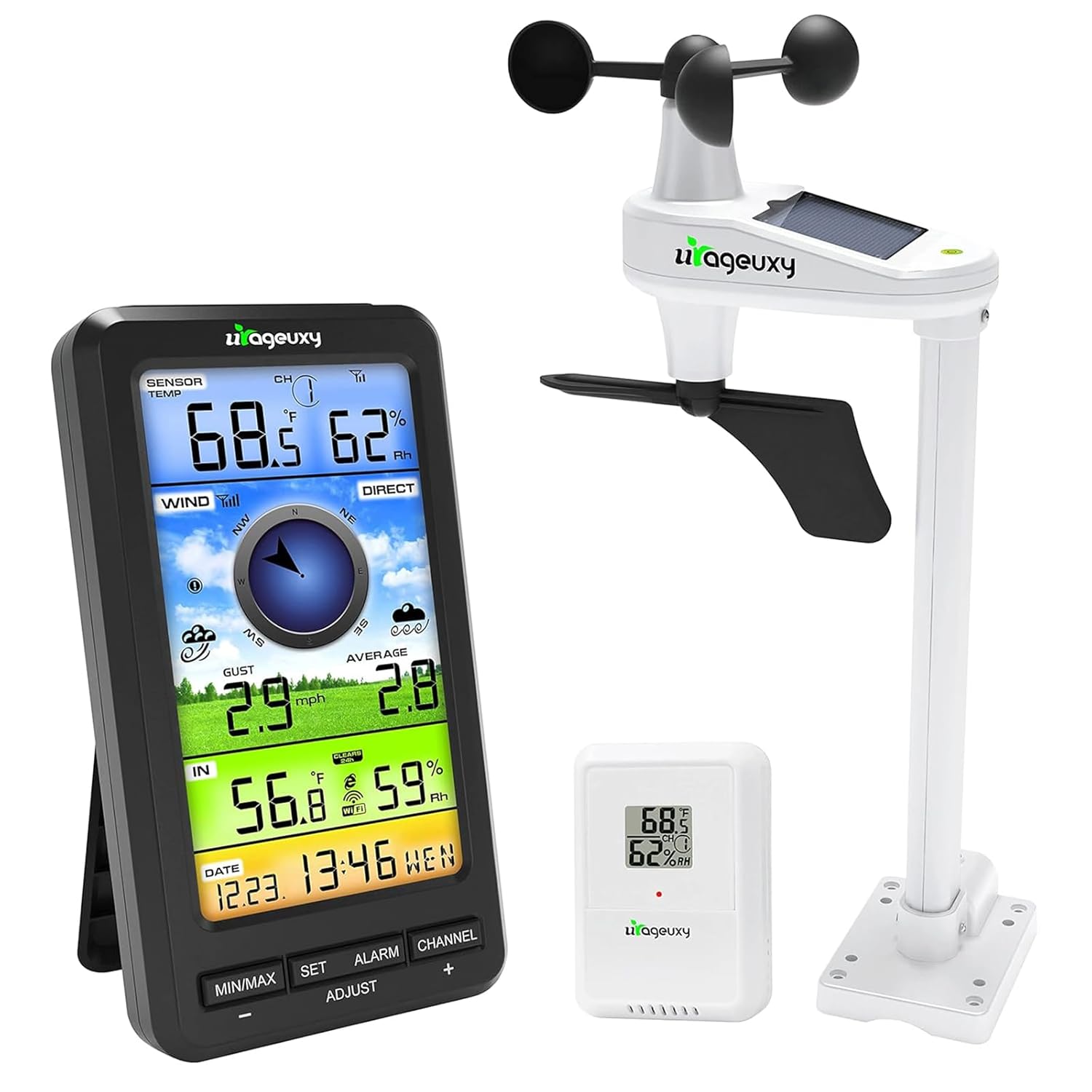
Pros
- Easy mounting on poles, fences, or roofs with included hardware
- Quick data updates and good 150-foot range for backyard use
- Helpful support for WiFi setup issues
- Accurate temperature and wind readings per user tests
- Versatile for gardens, lawns, or greenhouses
Cons
- WiFi setup requires 2.4GHz network and power adapter initially
- Some units show sensor failures after a few months
- Display hard to read from angles or with background lighting
This Urageuxy WiFi weather station suits beginner to experienced gardeners who want precise backyard weather data without complexity. It includes a solar anemometer for wind speed and direction, plus indoor/outdoor temp and humidity sensors, perfect for monitoring how conditions affect your lawn, raised beds, or potted plants.
Key features shine in real garden scenarios: the anemometer mounts flexibly on a fence or pole to catch gusts that could damage young trees, while WiFi uploads let you share and analyze data online. Users praise the large 5-inch color LCD for easy reads during morning yard checks, and transmission is fast even at 150 feet. Expandability supports up to eight sensors for bigger properties.
Build quality is solid with waterproof wind gear and plastic components that hold up outdoors, though it's corded electric for the console with battery backup. Solar assist on the anemometer helps longevity in sunny spots.
Limitations include tricky initial WiFi pairing on non-2.4GHz networks and rare dropouts after months. Some find the display finicky off-angle.
Overall, it's a practical pick for U.S. homeowners optimizing garden care through local weather insights; pair it with your routine for healthier lawns and timely protection.
Mount the anemometer high and clear of trees or buildings for true wind readings in your garden.
- Choose a sunny spot for solar charging.
- Use included brackets for pole, roof, or fence.
- Place thermo-hygro sensor in shade near plants.
- Console indoors near 2.4GHz WiFi router.
- Test range before finalizing; up to 150 feet works well.
Follow the manual's DIP switches for multiple sensors to avoid interference.
Use this station's insights to boost your yard's success.
- Wind alerts protect veggies from storm damage.
- Humidity trends guide watering for lawns and beds.
- Temp min/max helps time frost-sensitive planting.
- Compare online data to tweak microclimates.
Alarms notify for extremes, keeping your outdoor space thriving.
Quick steps for smooth start:
- Insert AAA batteries (not included) in sensors.
- Plug console with adapter for WiFi setup.
- Connect to 2.4GHz network via PC or app.
- Link to Weather Underground account.
Common fixes: reset sensors, check batteries, ensure clear signal paths. Support helps with persistent WiFi issues.
Buying Guide for Best Solar Wind Monitoring Kits
Sensor Accuracy and Types
Accuracy forms the foundation of any reliable solar wind monitoring kit, especially for gardeners tracking microclimates in their yard. Look for kits with high-precision sensors for wind speed up to 200 mph, direction via 16-point roses, rainfall in 0.01-inch increments, plus temperature, humidity, UV, and barometric pressure. Models like the Davis Instruments 6357 Vantage Vue offer wind-tunnel-tested anemometers and self-emptying rain collectors, delivering data you can trust for decisions on frost protection or windbreak placement.
For garden use, prioritize kits measuring dew point and heat index, as these help predict plant stress. The AcuRite Iris series excels here with over 50 data points, including lightning detection in some variants. Tip: Calibrate sensors seasonally against local weather reports to fine-tune readings, ensuring your lawn mowing or harvesting aligns perfectly with conditions.
Compare key metrics in this table to see how top kits stack up:
| Sensor Type | Davis Vantage Vue | AcuRite Iris 5-in-1 | Ambient WS-2000 |
|---|---|---|---|
| Wind Speed Range | 2-200 mph | 0-100 mph | Full range |
| Rain Precision | 0.01 inch | 0.01 inch | 0.01 inch |
| Additional | UV, Solar Rad | Lightning | UV, Solar |
Power Source and Reliability
Solar power is a game-changer for outdoor setups, keeping your kit running day and night without grid ties. Seek supercapacitors for nighttime operation and lithium backups for cloudy stretches, as in the Davis Instruments suite. Gardeners appreciate this for remote lawn spots where outlets are scarce.
Tempest by WeatherFlow uses no moving parts and solar efficiency for near-zero maintenance, ideal for patios exposed to elements. Check battery life claims and solar panel size; larger ones handle shade better. Pro tip: Position sensors south-facing for max sunlight, boosting reliability during July overcast days.
Pair with solar panels from our collection if expanding to power garden lights or pumps.
Wireless Range and Connectivity
Strong signal range ensures data flows from yard edges to your console or app. Aim for 1,000 feet line-of-sight, like Davis models with frequency-hopping tech. WiFi options, such as Ambient Weather WS-2000 or Sainlogic, upload to Weather Underground for remote garden monitoring via phone.
For gardeners, app alerts on wind gusts prevent fence or trellis damage. Urageuxy and AcuRite connect easily to 2.4G routers. Test range during setup by walking your property; extenders help in large yards. Explore more in our Solar & Wind Power category.
Durability and Weather Resistance
Garden gear faces rain, frost, and UV, so rugged housing matters. Davis pots electronics for moisture protection, surviving 180 mph winds. AIRAINTECH stations use Swiss sensors for -40F to 140F tolerance, perfect for variable climates.
Choose corrosion-proof anemometers and over-molded parts. Garden tip: Mount 6-10 feet high on poles away from trees to avoid false wind readings, extending sensor life. These kits outlast basic models in harsh backyard conditions.
Ease of Installation and Setup
Quick setup lets you focus on gardening, not tech. Most include brackets for pole mounting; AcuRite needs just batteries and a post. Tempest installs in minutes with app guidance, no wiring.
Follow manuals for anemometer height (33 inches ideal for lawns). Sainlogic syncs in three steps. User-friendly for beginners, saving time for soil prep or weeding.
Display and Additional Features
Clear LCDs with dimmers, like 8.5-inch on AIRAINTECH, show forecasts, moon phases, and trends. App integration in Tempest or Ambient provides historical data for seasonal planning.
Gardeners love wind chill alerts for outdoor work safety. Check for customizable alarms on high winds or low humidity. These extras turn data into daily garden advantages.
For off-grid garden power ideas, see our guide on solar panels for off-grid use.
Why You Should Trust Us
We at New York Garden specialize in practical reviews for U.S. homeowners and gardeners, analyzing 10 solar wind monitoring kits based on specs, user patterns, and real-world garden applications. Our team dives into features like sensor precision and solar reliability, cross-referencing manufacturer data with gardener feedback to highlight what truly performs in backyards.
Transparency drives us: we focus on durable, easy-to-use options without hype. Updated for 2026, our guides help you select gear that enhances lawn health and patio enjoyment, backed by our commitment to honest, gardener-centric advice.
Final Thoughts
After reviewing these 10 Best Solar Wind Monitoring Kits, the Davis Instruments 6357 Vantage Vue stands out as best overall for serious gardeners. Its solar-powered suite, 1,000-foot range, and extreme weather durability provide unmatched accuracy for monitoring wind impacts on large lawns or orchards, with fast 2.5-second updates keeping you ahead of gusts.
For best value, go with the AcuRite Iris (5-in-1) models like 01512M or 01022M. They offer comprehensive data including lightning detection at a friendly price, ideal for everyday patio and garden tracking without skimping on features like weather forecasts or easy setup.
Best for small backyards is the Urageuxy Wireless WiFi Weather Station. Compact, solar-equipped with WiFi sync to weather sites, it delivers wind speed, direction, and humidity data perfectly scaled for urban gardens or tight lawns, plus app access for quick checks.
FAQs
What makes Best Solar Wind Monitoring Kits ideal for gardeners?
Best Solar Wind Monitoring Kits use solar power for off-grid reliability, tracking wind, rain, and microclimates crucial for plant health. They help time watering, protect against storms, and plan harvests with precise backyard data updated in 2026 models.
Do solar wind monitoring kits work on cloudy days?
Yes, most include supercapacitors and battery backups, like Davis or Tempest, ensuring 24/7 operation. Position for optimal light, and they perform well even in low-sun July conditions common in gardens.
How do I install a solar wind monitoring kit in my garden?
Mount the sensor array on a 6-10 foot pole in an open area, away from buildings. Power up the console indoors, sync wirelessly, and calibrate via app or display. Takes under 30 minutes for most, with brackets included.
Can these kits integrate with smart home systems?
Many do, like Tempest with Alexa or AcuRite linking to Weather Underground. Use for automating sprinklers based on wind data or alerts for high humidity in greenhouses during 2026.
What range do Best Solar Wind Monitoring Kits typically offer?
Most provide 300-1,000 feet wirelessly, sufficient for average yards. Premium ones like Davis use advanced radio for reliable transmission through garden obstacles.



Write Your Review
No reviews yet. Be the first to share your experience!