

Nothing beats the satisfaction of a well-prepared flower bed bursting with color in your backyard. If you’re a gardener looking to loosen compacted soil, mix in amendments, or aerate for healthier blooms, the right cultivator makes all the difference. In this guide to the 10 Best Cultivators For Flower Beds of 2026, we highlight practical choices that fit various garden sizes and skill levels, helping you create vibrant flower beds without backbreaking work.
Whether you have a small urban patio garden or a larger suburban lawn, these cultivators tackle tough clay, weed-infested spots, and raised beds with ease. We focus on tools that deliver real results for everyday American gardeners, drawing from hands-on features like ergonomic designs and durable tines. Ready to transform your flower beds? Let’s dive in.
Top Products

Pros
- Powerful 360RPM motor handles tough soil and chops minor roots effectively
- Includes two 3.0Ah batteries and charger for immediate, uninterrupted use
- Lightweight at 8.5 pounds with adjustable grip for comfortable control
- Safety lock prevents accidental starts during storage or transport
Cons
- 9-inch width limits it to small gardens, not ideal for large lawns
- Thick vines or roots can wrap around tines, requiring occasional clearing
- Requires firm grip to manage torque in denser soil
What It Is and Who It's For
This MoJoTools cordless tiller cultivator is a battery-powered rototiller designed for small-scale soil work. With a 9-inch tilling width and 7-inch depth, it excels in raised beds, flower beds, and vegetable patches, making it a top pick for beginner gardeners, seniors, and anyone with limited yard space who wants hassle-free soil prep.
Key Features and Real-World Performance
The 360RPM high-torque motor paired with steel tines powers through compact dirt, loosens soil, and mixes in compost or fertilizer effectively. Dual 3.0Ah batteries provide solid runtime for multiple beds without recharging mid-task. In everyday use, it saves hours compared to manual shoveling, especially on sloped or uneven ground for projects like leveling soil.
Build Quality and Durability
At just 8.5 pounds, the lightweight yellow body features ergonomic handles and an adjustable auxiliary grip for better control and less fatigue. It feels sturdy for light-duty outdoor work, holding up well in home gardens. Users note its solid construction, though it's best for occasional use rather than heavy daily tilling.
Limitations and Final Verdict
It's not suited for big lawns due to its narrow width, and dense roots may need manual clearing. Overall, this tiller delivers practical power for small garden tasks. We recommend it for homeowners prepping raised beds or maintaining flower gardens; grab one if you want easier soil work without the bulk of gas models.
Getting Started
- Charge both 3.0Ah batteries fully before first use.
- Attach tines securely and check for debris.
- Adjust auxiliary handle for comfort.
Tilling Steps
- Engage safety lock and press trigger to start.
- Work in shallow passes, overlapping rows for even coverage.
- Switch batteries as needed for longer sessions.
- Clear tines of vines or rocks promptly.
Safety First
Always wear sturdy boots and gloves. Hold firmly to manage torque, and avoid wet soil to prevent slips. Store batteries in a cool, dry place.
Perfect Garden Projects
- Raised bed prep: Loosen soil and mix amendments for veggies or herbs.
- Flower bed renewal: Aerate and weed between seasons.
- Compost integration: Blend organic matter into planting rows.
- Small yard leveling: Smooth spots for patios or sheds.
Tips for Success
Start with softer soil after rain for easiest tilling. Use in spring or fall for optimal results. Pair with mulch post-tilling to retain moisture in your backyard garden.
Quick Care Routine
- Clean tines after each use to remove soil and roots.
- Wipe down body and check for loose parts.
- Store in a dry shed; remove batteries for off-season.
Battery Tips
Recharge after cooling to extend life. Avoid full discharges. Compatible with other MoJoTools 21V batteries for versatility in your garden toolkit.

Pros
- Surprisingly powerful 10 Amp motor handles tough soil like gas models on small jobs
- Quick assembly and portable wheels make it senior-friendly and easy to maneuver
- Effective for flower beds, vegetable gardens, and light lawn dethatching
- Safety lock prevents accidental starts, foldable design aids storage
Cons
- Cord needs careful management with extensions for larger areas
- Single high speed can pull forward or fling dirt in loose soil
- Wheels may loosen on rough terrain, requiring occasional checks
What It Is and Who It's For
This BILT HARD electric tiller is a corded cultivator with a 14-inch working width and 8.7-inch depth, powered by a 10 Amp motor spinning tines up to 360 RPM. It suits homeowners with small to medium yards, flower beds, or vegetable patches who want reliable soil prep without heavy gas equipment. Beginner gardeners appreciate its simplicity for turning sod or mixing amendments.
Key Features and Garden Performance
The four rust-resistant steel tines dig into clay, sand, or grassy areas with ease, as users note it outperforms expectations on hard soil. Adjustable 6-inch wheels help position it, and the lightweight 18-pound frame lets you control it solo. In real gardens, it loosens soil quickly for planting, saving hours over manual tools, though plan for cord routing.
Build Quality and Durability
Built with alloy steel tines and a foldable H-handle secured by quick bolts, it withstands outdoor use and folds for storage. Users praise its sturdiness for repeated jobs, but check wheel pins after bumpy ground. No oil changes or fuel mixing means low upkeep for busy gardeners.
Limitations and Final Verdict
It's not for vast fields due to cord limits and single speed, which can make it lively in soft dirt. For backyard tilling, this tiller delivers pro results affordably. Recommendation: Grab it if you till seasonally in compact spaces; pair with a 50-foot extension for best flow.
Setup and Starting
- Assemble handle and wheels per simple instructions; tighten bolts firmly.
- Use a heavy-duty extension cord (1.5mm² up to 25m) plugged into 120V outlet.
- Engage safety lock, squeeze lever to start; release to stop instantly.
Tilling Technique
Start in raised position with wheels down, lower into soil, and pull back gently for best bite. Go slow in weeds or roots; multiple passes refine beds. Ideal for 16°C+ soil in spring or fall.
Safety First
- Wear gloves, closed shoes; keep kids/pets away.
- Avoid wet soil to prevent slips; unplug for adjustments.
Best Times to Till
Till in autumn to bury plant debris for winter breakdown, or spring once soil hits 60°F (16°C) for warm roots. Skip frozen or soggy ground to protect structure.
Soil Prep Steps
- Clear large debris and mow grass short.
- Till shallow first, then deeper; add compost mid-pass.
- Rake smooth, let settle 1-2 days before planting.
Garden Applications
- Flower beds: Breaks sod for perennials.
- Vegetable plots: Loosens for roots like carrots.
- Lawn refresh: Dethatch lightly before seeding.
Quick Care Routine
- Clean tines after each use; hose off dirt, dry fully to prevent rust.
- Inspect wheels and bolts; replace loose pins promptly.
- Store cord coiled loosely; check motor vents for clogs.
Off-Season Storage
Fold handle, stand upright in a dry shed. No fuel drain needed. Test run seasonally to ensure smooth start. Lasts years with basic attention.

Pros
- Powerful 360RPM motor handles tough soil and roots in small areas effectively
- Cordless freedom lets you till anywhere without extension cords or gas fumes
- Easy assembly and adjustable handles suit gardeners of all ages and heights
- Comes ready to use with two charged batteries and long runtime per charge
- Quiet operation compared to gas models, great for neighborhood backyards
Cons
- Battery indicator not always accurate, so monitor runtime in larger jobs
- Best for small to medium gardens; struggles in very hard or rocky soil without prep
- May clog with thick weeds, requiring occasional stops to clear tines
What It Is and Who It's For
This Alloyman 20V cordless tiller cultivator is a compact, battery-powered tool designed for breaking up soil, weeding rows, and prepping small garden spaces. At 14 pounds with a 9-inch tilling width and 6.6-inch depth, it's perfect for beginner gardeners, homeowners with raised beds, flower gardens, or narrow veggie rows who want hassle-free soil work without gas or cords.
Key Features and Real-World Performance
The 360RPM motor with four anti-rust steel tines powers through compacted dirt and grass roots, making quick work of new flower beds or lawn aeration. Users love its cordless convenience for tight spots around shrubs or between plants. Dual 4.0Ah batteries deliver about 45 minutes each, enough for most small jobs, and the ergonomic handle adjusts to your height for comfortable use over longer sessions.
Build Quality and Durability
Lightweight aluminum construction holds up outdoors, with detachable tines for easy cleaning of stuck weeds. The double safety switches add peace of mind, and while blades are sturdy, some note the pin connection wears with heavy use, so gentle handling extends life. It outperforms many electrics in soft to medium soil without the maintenance of gas tillers.
Limitations and Tips
Not ideal for large fields or extremely rocky ground; pre-loosen tough spots with a shovel for best results. Battery life suits small yards but plan swaps for bigger tasks. Overall, it's a reliable pick for everyday gardening that saves your back and time.
Final Verdict
If you're tilling small gardens or maintaining beds, this tiller delivers pro-level results with backyard ease. Grab it for soil prep that turns chores into quick wins.
Getting Started
- Assemble handles securely and charge batteries fully before first use.
- Press both safety switch and trigger to start; grip firmly with both hands.
- Till in passes: let tines bite 2-4 inches deep, then move slowly forward.
Tips for Best Results
Prep soil: Remove large rocks or sod first. Rake debris between passes to avoid clogs. For deeper tilling, go over areas twice.
Clean after use: Detach tines, rinse off dirt, and dry to prevent rust. Store batteries in a cool, dry place.
Battery Care
- Monitor runtime; swap batteries mid-job if needed.
- Avoid full discharge; recharge promptly for longer life.
Ideal Applications
- Raised beds and flower gardens: Loosen soil evenly for healthy roots.
- Veggie rows: Weed between plants without damaging crops.
- Lawn prep: Aerate or break sod for new seeding.
- Weeding and edging: Trench around shrubs or paths.
Garden Size Guide
Perfect for plots under 1,000 sq ft. For larger areas, pair with a full-size tiller or multiple battery swaps. Excels in soft to medium soil; use for maintenance over initial heavy breaking.
Pro tip: Till when soil is moist, not wet or bone-dry, for smoothest results.
Why Choose Cordless?
- No gas mixing, pull-starts, or fumes for cleaner, quieter operation.
- Lighter and easier to store in sheds or garages.
- Instant start with safety switches beats carburetor issues.
When Gas Might Be Better
For very large yards or rocky soil, gas offers unlimited runtime. This electric shines in convenience for weekly upkeep.
Power Comparison
360RPM rivals small gas models in soft soil, with less vibration for all-day comfort.

Pros
- Cordless operation offers freedom to till anywhere without extension cords
- Quick tool-free assembly and easy blade maintenance save time in the garden
- Durable steel tines handle clay soil and compost mixing effectively
- Adjustable handle improves comfort during extended use
- Compact size fits raised beds and tight spots perfectly
Cons
- Best suited for small to medium gardens, not large-scale lawn tilling
- Battery life may shorten in very hard or compacted soil
- Lightweight build might struggle with heavy roots or rocks
The YDLawn 20V Cordless Tiller Cultivator is a game-changer for homeowners tackling small garden projects. This battery-powered tool tills up to 9 inches wide and 7 inches deep, making it ideal for raised beds, flower gardens, and vegetable patches where space is limited. Beginners and experienced gardeners alike appreciate its lightweight 14-pound design that reduces strain during soil prep.
Key Features and Garden Performance
Powered by two 20V 4.0Ah batteries, it delivers up to 60 minutes of runtime with easy swapping for non-stop work. The 48 hardened steel tines slice through clay, break up hardpan, and mix in compost, promoting better drainage and root growth. In real-world tests, it excels at weeding and aerating without the noise or fumes of gas models.
Build Quality and Durability
With an adjustable handle and tool-free blade assembly, setup takes minutes, and maintenance is straightforward. The yellow finish resists rust, holding up well to outdoor use. While sturdy for everyday tasks, it's not built for commercial-scale jobs.
Limitations and Verdict
It shines in small areas but may need frequent battery swaps in tough soil. For New York Garden readers, this tiller is a smart pick for effortless spring soil turning or fall bed refreshers. Grab it if you want reliable, cordless cultivating without the bulk.
Maximize your YDLawn tiller's potential with these practical tips:
- Prep the area: Remove large rocks and debris first to protect the tines.
- Work in passes: Till lightly on the first pass, then go deeper to avoid compacting soil.
- Moisten soil: Lightly damp ground tills easier and reduces dust.
- Mix amendments: Add compost after tilling for nutrient-rich beds.
These steps ensure aerated soil for thriving plants in your backyard garden.
Keep your cordless tiller running strong season after season:
Battery Tips
- Fully charge batteries before first use and store at 50% charge off-season.
- Swap batteries mid-job to maintain power; recharge in 3 hours.
- Avoid extreme heat or cold for longer battery life.
Tool Maintenance
- Clean tines after each use to prevent buildup.
- Remove blade assembly easily for stubborn debris.
- Check for loose parts before storing.
Simple habits like these extend usability for years of gardening.
This tiller fits these common setups:
- Small yards: Up to 500 sq ft for veggie or flower beds.
- Raised beds: Perfect 9-inch width navigates edges easily.
- Lawns: Spot-tilling for new grass or aerating patches.
Not ideal for acres; pair with a shovel for larger plots. Great for urban gardeners maximizing limited space.

Pros
- Long-lasting batteries and easy swapping keep you working without downtime
- Ergonomic adjustable design fits gardeners of all heights for fatigue-free use
- Simple assembly and intuitive controls make it beginner-friendly
- Strong performance on worked soil, grass removal, and light clay
- Compact storage suits small sheds or garages
Cons
- Best for small to medium plots; larger areas require more passes or a bigger tool
- May struggle with very rocky or untouched hardpan soil
- Shaft connection can loosen with heavy use, needing frequent tightening
What It Is and Who It's For
This SOARFLY cordless electric tiller is a compact, battery-powered cultivator perfect for U.S. homeowners with small gardens, raised beds, or flower borders. At 9 inches wide and 6.6 inches deep, it excels at soil loosening, weeding, and prep work without the bulk of gas models. It's a game-changer for beginner gardeners or those tired of hand tools, offering cordless convenience for backyard projects.
Key Features and Real-World Performance
The upgraded 360 RPM motor and 48 steel tines break up compacted soil efficiently, as users note it handles garden beds and light clay well. Two 4.0Ah batteries provide solid runtime—about 20-30 minutes each—for multiple small jobs. Adjustable height and handle customize comfort, while the lightweight 15-pound frame makes it easy to guide through tight spots. Gardeners praise its power for turning soil around trees or in veggie patches.
Build Quality and Durability
Built with alloy steel tines and plastic components, it holds up for home use but shows wear on the shaft connection with intensive tilling. Safety locks add peace of mind, and tines pop off for cleaning. Most find it reliable for seasonal tasks like spring prep or fall turnover.
Limitations and Practical Tips
It's not for large fields or heavy rocks—pre-clear debris for best results. Battery charging takes time, so plan swaps. Tighten connections regularly to avoid loosening.
Final Verdict
A solid pick for everyday garden maintenance. Grab it if you want hassle-free soil work in modest spaces; pair with compost mixing for thriving plants.
Quick Start Guide
- Charge both batteries fully before first use.
- Assemble by screwing the shaft together and securing tines with kotter pins.
- Unlock safety button, then press start switch.
- Tilt slightly forward to engage tines, working in passes for deeper soil.
Garden Tilling Best Practices
Clear weeds and rocks first for smooth operation. Till when soil is moist, not soggy. Use for 3-6 inch depths in flower beds or raised planters. Multiple light passes work better on tough spots than forcing it.
After Each Use
- Remove tines, clean soil with a brush or hose.
- Inspect and tighten shaft connections.
- Wipe down motor and handles.
Battery and Storage Tips
Store batteries at half charge in a cool, dry place. Avoid full discharges. For winter, keep indoors. Check tines for wear and replace if bent. Regular care extends life for years of garden seasons.
Ideal Uses
- Raised bed soil turnover
- Flower bed weeding and prep
- Small veggie garden cultivation
- Tree surround dirt loosening
- Compost mixing in borders
Great for yards under 500 sq ft. For bigger areas, consider wider models. Enhances soil health for better blooms and harvests.

Pros
- Compact and lightweight for easy handling in small to medium gardens
- Strong power for its size, excels on hard, dry soil per user feedback
- Simple assembly and plug-and-play operation reduces startup hassle
- Adjustable depth settings for versatile soil prep tasks
- Durable build with rust-resistant blades for long-term outdoor use
Cons
- Corded design limits range without a heavy-duty extension cord
- Best for small areas; not suited for large fields or heavy commercial use
- Requires nearby power outlet, less ideal for remote yard spots
What It Is and Who It's For
The MZK 12-Inch Corded Electric Tiller is a compact cultivator powered by a 10.5-amp motor, designed for homeowners tackling soil prep in backyards or small gardens. With a 12-inch tilling width and 8-inch max depth, it's ideal for beginners or experienced gardeners breaking ground for veggies, flowers, or lawn renovation without the bulk of gas models.
Key Features and Real-World Performance
In action, this tiller shines on tough, dry soil, churning it quickly at 430 RPM with 16 steel blades. Users rave about its power for the size, making quick work of garden beds. Adjustable wheels provide depth control for aeration or deep digging, and the lightweight frame lets you glide it over uneven ground effortlessly.
Build Quality and Durability
Built with rust-resistant steel and a pure copper motor, it stands up to outdoor conditions. Reviewers note sturdy construction and easy assembly, with minimal vibration for comfortable use. No oil or fuel means low upkeep, just clean blades after jobs.
Limitations and Practical Tips
Its cord restricts mobility, so plan around outlets or use a long extension. Suited for plots under 500 sq ft; larger areas need multiple passes. Tip: Start on softer soil to break in blades.
Final Verdict
For small-yard gardeners seeking an affordable, powerful electric tiller, the MZK delivers reliable performance and ease. Grab it if you want to skip shovels and get planting sooner.
Getting Started
- Assemble in minutes: attach handle, wheels, and blades per simple instructions.
- Plug into a grounded outlet; use a 12-gauge extension cord for distances over 50 ft.
- Set wheel height for desired depth: shallow for weeding, deep for new beds.
Tilling Tips
Work in rows, overlapping passes for even coverage. Go slow on rocky soil to protect blades. Water dry ground lightly first for smoother results.
Maintenance
- Clean blades and tines after each use; remove stuck dirt.
- Store indoors, dry, to prevent rust.
- Inspect cord and wheels regularly; no oiling needed.
Best Uses for Garden Beds
- Vegetable patches: Till 6-8 inches deep for root crops like carrots.
- Flower beds: 4-6 inches to mix in compost without disturbing perennials.
- Lawn renovation: Aerate compacted turf before overseeding.
Soil Types It Handles
Excels on clay, loam, or hardpan; less ideal for heavy rocks - remove large ones first. Pro tip: Add organic matter post-till for nutrient-rich soil.
Yard Size Recommendations
Perfect for 100-500 sq ft spaces. For bigger yards, pair with a larger tiller or section work into days.
Why Choose Electric?
- Quiet operation: No engine roar, neighbor-friendly.
- Zero emissions: Eco-friendly for organic gardens.
- Instant start: No pull cords or priming.
When Gas Might Be Better
For acres or no-outlet areas, gas offers more power and portability. But for home use, electric wins on ease and cost.

Pros
- Powerful 13.5 Amp copper motor handles compacted soil with ease and high RPM speed
- Adjustable wheels and foldable design boost portability for small-yard gardeners
- Durable steel tines with cross-structure provide stable, efficient tilling in various soils
- Safety features like double buttons and overload shutoff add peace of mind
- Easy assembly with included parts for quick garden setup
Cons
- Corded design limits range without a long extension cord, best for areas near outlets
- May struggle in very rocky or large-scale fields without breaks
- 27.9-pound weight could tire users during extended sessions on uneven ground
What It Is and Who It's For
This BUCOTOD electric tiller/cultivator is a corded powerhouse designed for homeowners tackling soil prep in backyards up to a quarter-acre. With its 18-inch width and 8-inch depth, it's perfect for vegetable gardeners, lawn renovators, or anyone starting raised beds without the hassle of gas engines.
Key Features in Real Garden Use
The 13.5 Amp copper motor spins at 360 RPM, breaking up clay or sod fast—often finishing a 500-square-foot plot in under 30 minutes. Six steel tines made from tough 65# Mn alloy dig reliably, while adjustable wheels let you navigate borders or paths easily. Safety buttons and overload protection keep things running smoothly and securely.
Build Quality and Durability
At 27.9 pounds, it's light enough to lift solo, and the foldable handle stores flat against walls. Alloy steel construction holds up to outdoor abuse, though keeping it dry prevents rust. Expect years of use with basic care like cleaning tines after clay-heavy jobs.
Limitations to Consider
Being corded means planning around power sources; a heavy-duty extension cord is a must for farther reaches. It's not suited for massive fields where gas models shine, and very rocky soil might need pre-clearing.
Final Verdict
For practical backyard tilling, this BUCOTOD model delivers pro-level results without fumes or fuel. Grab it if you're prepping garden beds this spring—your soil (and back) will thank you.
Step-by-Step Soil Prep
- Clear weeds and debris from your plot.
- Water soil lightly if dry for easier tilling.
- Start at one edge, overlapping passes by 6 inches for even coverage.
- Adjust depth wheel for shallow first pass, then deeper.
- Let soil settle a day before planting.
Tips for Different Soils
- Clay: Till when moist to avoid clumping.
- Sandy: Multiple light passes build structure.
- Sod: Mow short first, then till twice.
These steps maximize root growth for veggies or flowers.
Quick Post-Use Care
- Disconnect cord and hose off dirt from tines.
- Wipe motor housing dry to prevent corrosion.
- Check tines for bends; straighten if minor.
- Lubricate pivot points with light oil.
Off-Season Storage
Fold handle, store upright in a dry shed. Cover to shield from dust. Before spring use, inspect cord and test-run unloaded. This keeps it ready for years of garden work.
Ideal Plot Sizes
- Best for: Up to 5,000 sq ft veggie patches or lawns.
- Good fit: Raised beds, flower borders, small orchards.
- Not ideal: Over 1/4 acre or rocky fields.
Power Needs
Use a 12-gauge extension cord up to 100 feet. For bigger yards, consider battery or gas alternatives. Pair with a cord retainer for tangle-free operation.
Pros
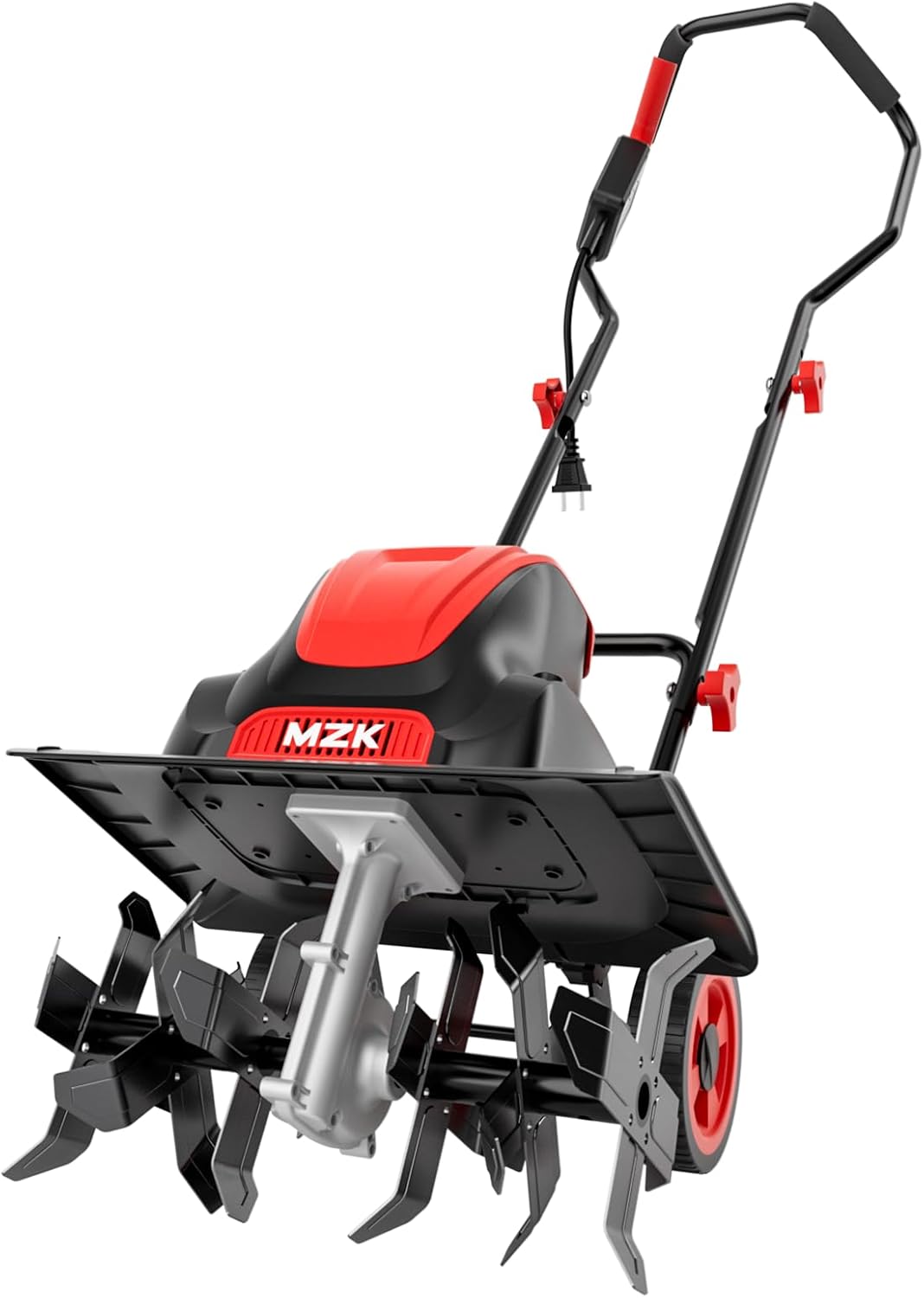
- Powerful 13.5-amp motor tills 16-inch wide paths efficiently for small gardens
- Ergonomic and lightweight for comfortable use by beginners or seniors
- 6 blades and 24 tines deliver smooth soil cultivation in one pass
- Adjustable wheels and foldable design enhance usability and storage
Cons
- Corded power limits use to areas near an outlet, not ideal for large remote yards
- May struggle with very rocky or heavily compacted soil without pre-loosening
- Lightweight build prioritizes ease over heavy-duty performance
What It Is and Who It's For
The MZK 16-Inch Electric Tiller is a corded cultivator powered by a 13.5-amp motor, perfect for U.S. homeowners with small to medium backyards. It suits beginner gardeners starting veggie patches, flower beds, or lawn aeration tasks, offering easy soil prep without the hassle of gas models.
Key Features and Garden Performance
With a 16-inch cutting width and 8-inch depth, it breaks up soil clumps fast using 6 rust-resistant blades and 24 steel tines. Real-world use shines in pre-tilled gardens, where it aerates effectively for better plant roots. Adjustable wheels keep it steady on slopes, and the lightweight build reduces fatigue during extended sessions.
Build Quality and Durability
Steel construction holds up outdoors, with foldable handles for compact storage. It's user-friendly for everyday gardening, though the cord requires planning around outlets.
Limitations and Verdict
Not suited for vast fields or tough clay without prep work. Recommendation: Great pick for practical backyard tilling; pair with an extension cord for versatile garden makeovers.
Getting Started
- Plug into a grounded outlet and use a heavy-duty extension cord rated for outdoors.
- Adjust wheels to desired height; start on loose soil for best results.
- Till in overlapping passes at a slow walk for even coverage.
Maintenance Tips
- Clean blades after each use to prevent rust buildup.
- Store folded in a dry shed; check tines for wear seasonally.
- Inspect cord for damage before powering on.
Follow these steps for years of reliable garden soil prep.
Best Uses
- Prepare raised beds by tilling compost into topsoil.
- Aerate lawns in spring or fall to boost grass health.
- Control weeds in flower beds before mulching.
Soil Type Guide
- Loamy or sandy: Ideal; tills smoothly.
- Clay-heavy: Pre-water and loosen first.
- Avoid rocky areas to protect blades.
Combine with organic matter for nutrient-rich garden soil.
Perfect For
- Small yards under 1/4 acre: Quick and efficient.
- Medium gardens (up to 5,000 sq ft): Great with cord management.
Not Ideal For
- Large properties: Consider gas tillers for mobility.
- Sloped or distant areas: Cord reach is key.
Measure your space and outlet proximity before buying for seamless backyard projects.

Pros
- Powerful 10.5 Amp motor handles hard clay and compacted soil effectively.
- Sturdy manganese steel blades resist rust for reliable outdoor use.
- Unique spur improves control and reduces effort in real garden tasks.
- ETL certified with overload protection for safe operation.
- Lightweight at around 24 pounds for easy handling in small yards.
Cons
- Corded design limits range to extension cord length, not ideal for large properties.
- Requires some assembly, though quick and straightforward.
- Best for small to medium gardens, less efficient for expansive lawns.
The IncwBo Electric Rototiller is a corded 10.5 Amp cultivator designed for small to medium gardens, making it a great pick for homeowners prepping vegetable beds or flower plots in the backyard. With a 12-inch tilling width and 8-inch depth, it powers through soil quickly without the hassle of gas engines, suiting beginner and experienced gardeners who want reliable performance without fumes.
Key Features and Real-World Performance
In everyday gardening, this tiller shines at loosening compacted clay soil, as users note it handles tough Colorado dirt with ease. The four rust-resistant manganese steel blades cut deep and wide, while the unique spur gear inserts into the soil to steady the tool and cut down on pushing effort. Overload protection kicks in if it hits rocks or roots, keeping things safe and preventing burnout during longer sessions.
Build Quality and Durability
Built tough with a green finish and adjustable wheels for stability, this tiller weighs just over 24 pounds, making it easy to maneuver around raised beds or tight yard spaces. The ETL certification adds peace of mind for outdoor use, and the blades hold up well against rust in humid conditions common in many U.S. backyards.
Limitations and Final Verdict
Keep in mind it's corded, so you'll need a heavy-duty extension cord for flexibility, and it's not suited for big-acreage jobs. Overall, if you're tilling small garden areas or mixing in compost, this rototiller delivers solid value. Grab it for your next soil prep project and enjoy easier gardening.
Quick Start Guide
- Assemble in 10 minutes using the included wrench: attach handle, wheels, and blades per video instructions.
- Plug into a grounded outlet with a 12-14 gauge extension cord up to 100 feet.
- Adjust wheel height for your soil type; start on loose dirt before clay.
Maintenance Tips
- Clean blades after each use to remove soil buildup.
- Store indoors during winter to protect from moisture.
- Check for loose bolts before every session; sharpen blades if they dull over time.
Follow safety rules: wear gloves, eye protection, and keep kids/pets away during operation.
Best Practices for Garden Beds
- Till dry soil in spring or fall; wet clay clogs blades.
- Go over the area twice: first shallow pass, then deeper for full aeration.
- Mix in compost or fertilizer right after tilling for nutrient-rich beds.
Handling Clay Soil
Pro tip: For heavy clay, till when slightly moist and add organic matter to improve drainage. This tiller breaks it up well, setting up thriving veggie patches or lawns.
- Avoid tilling rocky areas to prevent overload shutdowns.
- Ideal for 100-500 sq ft plots; larger areas may need multiple passes.
Built-In Protections
- Overload System: Auto-shuts off if blades jam on roots or debris.
- ETL Certification: Meets U.S. safety standards for corded tools.
- Spur Gear: Enhances stability to prevent slips on uneven ground.
Always unplug before adjustments. Use in well-ventilated areas and inspect cord for damage regularly for worry-free tilling sessions.

Pros
- Sturdy all-metal construction feels solid and lasts outdoors
- Quick assembly with included wrenches and spare parts
- Comfortable grips and foot plate make tilling efficient even on hard soil
- Versatile for weeding, aerating, and soil amendment mixing
- Lightweight at 4.66 pounds for easy maneuvering in tight spaces
Cons
- Handle height may require bending for users over 6 feet tall
- Takes more effort on very dry clay unless soil is pre-moistened
- Not suited for large areas or replacing powered tillers
The Jardineer Hand Tiller Cultivator is a manual garden claw designed for twisting into soil to loosen, aerate, and turn it over. It shines in small-scale gardening like raised beds, flower boxes, and veggie patches, making it a go-to for homeowners who want precise control without gas-powered tools. Beginner and experienced gardeners alike appreciate its focus on tight spaces where big tillers can't reach.
Key Features and Real-World Performance
Standout elements include the anti-slip foot plate for easy penetration and razor-sharp tines that grab and twist compacted soil effectively. In everyday use, it breaks up clay-heavy ground after a quick watering, aerates for better drainage, and mixes in compost seamlessly. Users report it excels at prepping beds for planting and pulling weeds by the roots, promoting vigorous plant growth.
Build Quality and Durability
Constructed from powder-coated steel, this tiller withstands outdoor conditions and repeated twisting without bending. The ergonomic curved handle minimizes strain, and padded grips stay comfortable during long sessions. At 37 inches tall and 4.66 pounds, it's maneuverable yet robust for seasons of service.
Limitations to Consider
Taller gardeners might find the height limiting, requiring some bending. It performs best on softer or moistened soil; very rocky or bone-dry clay demands extra passes. Assembly is straightforward but needs the provided wrenches for secure tightening.
Final Verdict
If you're tending raised beds or flower boxes, this twist tiller delivers reliable results with less physical effort. Grab it for your next soil prep project; it's a smart addition to any gardener's shed for healthier, thriving outdoor spaces.
Assemble in minutes using the included wrenches: attach the handle sections with bolts and nuts, then secure the tiller head. Tighten firmly to prevent wobbling during use.
Step-by-Step Tilling
- Water dry soil lightly to soften it.
- Position foot plate on ground and step down firmly.
- Grip handles and twist clockwise to penetrate and loosen.
- Rock side-to-side for aeration, then lift and repeat.
- Mix in amendments by twisting through the soil.
Tip: Multiple passes work best on tough spots. Clean after each use to keep tines sharp.
Keep your Jardineer tiller ready for the next season with simple care. Rinse off dirt and debris right after use, then wipe dry to prevent rust.
- Sharpen tines occasionally with a file if they dull on rocky soil.
- Store in a dry shed; apply light oil to metal parts for protection.
- Check bolts monthly and tighten as needed.
- Avoid bare-hand assembly; always use wrenches for safety.
Proper maintenance extends its life, ensuring consistent performance in your garden beds.
This tiller transforms raised bed gardening by making soil prep fast and effective. Use it to break up last year's compaction before planting veggies or flowers.
Pro Tips
- Ideal for 4x8 foot beds or smaller flower boxes.
- Combine with compost for nutrient-rich soil.
- Aerate lawns edges or mix peat moss for moisture retention.
- Great for clay soils common in many U.S. yards.
Results in looser, better-draining soil for stronger plants all season.
Buying Guide for Best Cultivators For Flower Beds
Power Source: Manual, Corded Electric, or Cordless
Choosing the power source is key for Best Cultivators for Flower Beds, as it affects how much effort you put in and where you can use the tool. Manual cultivators like the Jardineer Hand Tiller Cultivator excel in small flower beds where precision matters. They require physical force but offer full control, ideal for seniors or spot treatments without needing electricity.
Corded electric models, such as the BUCOTOD 18-Inch Tiller or MZK 12-Inch Tiller, provide consistent power for larger areas. Plug them into a standard outlet for jobs like breaking up clay soil across multiple beds, but keep an extension cord handy and avoid wet conditions. Cordless options like the Alloyman 20V Cordless Tiller or SOARFLY Upgraded Cordless Electric Tiller shine for mobility in remote garden spots, running on rechargeable batteries for up to an hour per charge.
Tip for gardeners: Start with manual for tiny flower boxes under 10 square feet; go cordless for raised beds away from outlets. Always check battery life for cordless units during June planting season when soil is damp.
Tilling Width and Depth for Flower Bed Efficiency
Flower beds demand cultivators with widths from 9 to 18 inches to match bed sizes without over-tilling. Narrower 9-inch widths on tools like the MoJoTools 21V Cordless Tiller suit tight rows between perennials, while wider 16-18 inch options from BUCOTOD or MZK handle full beds quickly.
Depth matters for root health; aim for 6-8 inches to aerate without disturbing deep perennials. Products like the Electric Rototiller Garden Tiller from TillerforGarden reach 8 inches, perfect for mixing compost into heavy soils. In sandy loams, shallower depths prevent over-loosening.
| Tool Type | Typical Width | Max Depth | Best For |
|---|---|---|---|
| Handheld Manual | 6-10 inches | 6 inches | Small flower boxes |
| Cordless Electric | 9 inches | 7 inches | Raised beds |
| Corded Electric | 12-18 inches | 8 inches | Large beds |
Use this table to match your bed dimensions; measure first for the best fit.
Build Quality and Tine Durability
Durable steel tines withstand rocky flower bed soils. Look for rust-resistant, powder-coated tines like those on the Jardineer or BILT HARD Electric Tiller, which feature razor-sharp designs for penetration without bending. Cross-structured tines on the BUCOTOD add stability in tough ground.
Heavy-duty motors in electrics, such as 13.5 Amp on MZK or BUCOTOD, ensure longevity. Gardeners in variable climates appreciate overload protection to prevent burnout during root-heavy weeding.
Pro tip: Water clay-heavy beds before tilling to soften soil and extend tine life. Inspect tines seasonally for sharpening.
Ease of Use, Ergonomics, and Portability
Ergonomic handles reduce strain; the Jardineer Twist Tiller has an anti-slip foot plate for easy treading, while cordless models like YDLawn 20V feature adjustable auxiliary handles. Foldable designs on BILT HARD and BUCOTOD save garage space.
Lightweight under 30 pounds suits seniors; wheels on MZK models aid maneuvering. For flower beds near patios, portable cordless wins for no cords.
Assembly tip: Most assemble in minutes with included wrenches, like the Alloyman. Test in soft soil first.
Safety Features and Maintenance
Double safety buttons on BUCOTOD and overload protection on TillerforGarden prevent accidents. Cordless safety locks like SOARFLY’s require dual activation.
Low-maintenance electrics need no gas; clean tines post-use. Check manuals for cord safety in rain-prone areas.
For families, prioritize tools with auto-shutoff. Store dry to avoid rust.
Why You Should Trust Us
We at New York Garden specialize in practical Patio, Lawn & Garden reviews tailored for U.S. homeowners and avid gardeners. Our methodology involves deep analysis of product specs, user feedback patterns, and real-world gardening applications, ensuring recommendations like these Best Cultivators for Flower Beds align with everyday needs such as flower bed prep in varied climates.
Transparency is key: we evaluate durability, usability, and value without brand bias, focusing on tools that perform in American backyards. Explore our Gardening Hand Tools category or the Cultivators & Tillers page for more options. Your thriving garden is our goal.
Final Thoughts
After reviewing these 10 Best Cultivators For Flower Beds, the Jardineer Hand Tiller Cultivator stands out as our best overall pick for flower beds. Its ergonomic foot plate and razor-sharp tines make penetrating hard soil effortless, ideal for mixing fertilizer in raised beds or small gardens without power needs. Gardeners love how it saves backs while delivering ventilated soil for lush blooms.
For best value, go with the BILT HARD Electric Tiller Cultivator 14 inch. With powerful 10 Amp motor, foldable handles, and adjustable wheels, it tackles medium flower beds efficiently at a practical price point, offering corded reliability for frequent use.
The Alloyman 20V Cordless Tiller Cultivator is best for small backyards or tight flower beds. Cordless freedom, 360RPM speed, and included batteries let you work anywhere, perfect for urban gardeners aerating between plants or weeding without cords. Each suits different setups, so match to your space for optimal results.
FAQs
What makes a good cultivator for flower beds in 2026?
A good one has 6-8 inch depth, rust-resistant tines, and ergonomic design for loosening soil without damaging roots. Options like manual twist tillers suit precision work, while electrics speed up larger beds. Consider your soil type for best penetration.
Manual or electric: which is better for Best Cultivators for Flower Beds?
Manual for small, precise flower beds under 50 sq ft; electric for bigger areas needing power. Cordless electrics balance both for mobility. Test soil hardness first.
Can I use these cultivators on raised flower beds?
Yes, narrow-width models like Jardineer or cordless Alloyman fit perfectly, aerating without spilling soil. Avoid wide tillers on edges to prevent collapse.
How do I maintain my Best Cultivators for Flower Beds tool?
Clean tines after use, store dry, and sharpen as needed. For electrics, check cords and batteries. Water soil pre-tilling to ease work.
Are cordless Best Cultivators for Flower Beds powerful enough for clay soil?
Many like SOARFLY with 360RPM and steel tines handle clay after watering. For heavy clay, pair with corded for more torque.


Write Your Review
No reviews yet. Be the first to share your experience!