

How big of a generator I need is one of the most frequent questions customers have before purchasing. What size generator is necessary for my home? What size generator is required to power a freezer and refrigerator? What size generator will my 30 Amp RV need? How many watts will my MIG welder, sump pump, and air compressor require?
Generators come in various sizes, from portable models that may run one appliance to standby generators, sometimes known as whole-house or home standby generators, which can run the entire house.
How do you choose which size or type of generator is best for your requirements? Read our analysis and recommendations below.
How do I calculate how big of a generator I need?
Watts are a unit of measurement for generator output. When purchasing a generator, you need to be aware of two power output figures:
- Continuous power rating (running watts): The amount of electricity required to maintain the operation of an electronic equipment or appliance is known as the running wattage. Many appliances indicate the running wattage to make it easier to determine how much electricity is required to run everything.
- Maximum or surge power (starting watts): Starting wattage is required for an appliance to start. This wattage is often two to three times greater than the wattage needed to keep the appliance running. Many electrical gadgets and equipment demand greater energy to start up and less wattage to maintain operation. When the power goes out, a generator will have to handle a surge caused by all the constantly running equipment, including the water heater, refrigerator, freezer, HVAC system, and others. The generator will also need to turn on any appliances that are currently operating, such as the washing machine, dishwasher, or microwave, during the power outage.
To determine how big of the generator you require, you can add up the wattages of all appliances you want to be powered during an outage. That will provide you with an approximate estimate.
You can use the below table to help identify the number of watts your generator will need.
Label Stats | Find Watts |
| Volt-Amps or VA | Volt-Amps = Watts |
| Volt and Amps given separately | Volt x Amps = Watts |
| Kilowatts or KW | Kilowatts / 1000 = Watts |
| Watts or Watt-Hours | Watt-Hours — Watts |
How Big of a Generator Do I Need to Run the Whole House?
We should know the main types of generators. They are portable inverters and standby generators.
Portable Generators
Installing portable generators outside is the greatest option for anyone who enjoys being outside and wants to utilize a portable, safe to operate, dependable, and soundproof generator.

These portable generators for homes are fueled by diesel and offer short-term electricity.
We use them to power cabin appliances, tools needed for tasks, and our vital house power needs during power outages.
Inverter Generators
Installing an inverter generator would be your first choice if you choose the output on low energy emissions and a tiny, silent operating equipment.
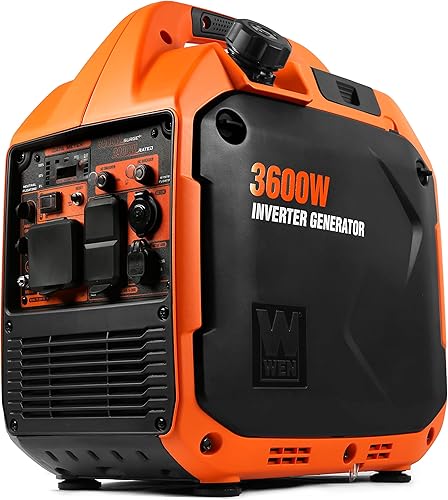
Instead of running at full throttle all the time to supply energy demand, an inverter generator electronically regulates the engine’s motion.
The benefit of employing such a device is that you won’t need to fill the gas tank constantly.
Standby Generators
When there is a power outage, a standby generator acts as a backup power source, supplying electricity to buildings, commercial and industrial applications, and business operations. Typically stationary, standby generators need a concrete pad for a foundation outside the premises.

Other Factors to Consider Before Purchasing A Generator
Fuel Types
By far, gas generators are the most popular because it is simple to come by.
If you’re ready to pay for the change, diesel generators offer superior fuel efficiency. Additionally, you get to get rid of the carburetor, which always seems to be blocked when it’s least convenient. Diesel will come up if you’re thinking about a whole-house generator. Just be aware that diesel might not be as accessible as gasoline.
Searching for a propane generator or a gas generator that can be converted to use propane is an additional choice. It’s another option if you want to use a more environmentally friendly fuel source and don’t mind that it’s a little more difficult.
Noise level
A silent design is a possibility for smaller generators. Some are quieter than the average conversation volume. Your neighbors will appreciate the consideration if you’re tailgating or camping in a place that permits generators.
There isn’t much available in the “quiet” class if you choose generators with the 4000-watt and higher range. Fuel source is one factor to take into account. Typically, a diesel vehicle creates more noise than an equivalent gas vehicle.
FAQs
1. How big of a generator do I need to power my entire house?
Even the most essential household appliances, including the refrigerator, freezer, well pump, and lighting circuits, can be run with a generator rated at 5,000 to 7,500 watts. A 7,500-watt generator can operate all these devices simultaneously.
2. Can a refrigerator be powered on a 2500 watt generator?
The refrigerator and freezer in most homes require a 3,000W generator to operate.
3. What can be powered by a 3500 watt generator?
Almost all domestic appliances, power tools, RV and camping equipment, even the 1,200 watt small window air conditioner, can be powered by a 3,500 watt generator.
- Fridge with a freezer – 700 watts.
- Small well pump (1/2 HP) – 1,000 watts.
- Washing machine – 1,150 watts.
- Coffee maker – 1,000 watts.
4. When the power is restored, what happens to a generator?
The building is connected to the generator and disconnected from the utility lines via the automatic transfer switch. Just a few seconds after the electricity goes off, everything happens. The system disconnects the generator before reconnecting the utility lines when the utility restores power.






Write Your Review
No reviews yet. Be the first to share your experience!