

Maintaining a large lawn or expansive backyard can feel overwhelming, especially when push mowers just do not cut it for acres of grass. That is where Best Tow-Behind Lawn Mowers come in, transforming your riding lawn mower or tractor into a powerhouse for mowing, aerating, dethatching, spreading seed or fertilizer, and even hauling materials. In this guide, we highlight the 10 Best Tow-Behind Lawn Mowers of 2026, selected for their reliability, ease of use, and value for gardeners across America who want professional results without the hassle.
Whether you are tackling overgrown fields, preparing for spring seeding, or keeping your lawn healthy year-round, these tow-behind tools save time and effort. We have focused on practical picks that fit most standard hitches, handle tough terrain, and deliver consistent performance. Stick with us to find the right Best Tow-Behind Lawn Mowers for your garden setup.
Top Products
Pros
- Powerful engine with debris management system stays clean and runs longer in dusty conditions
- Pivoting blades swing away from obstacles, preventing damage during tough cuts
- Versatile offset and height controls reach spots standard mowers can't
- Heavy-duty build with steel wheel bumpers navigates trees and uneven ground easily
- Keyed electric start eliminates frustrating pull cords
Cons
- Requires a tow vehicle with 2-inch ball hitch and adequate towing capacity
- Bulky size and weight demand ample storage space and special shipping arrangements
- Not suited for finely manicured lawns due to rough cut design
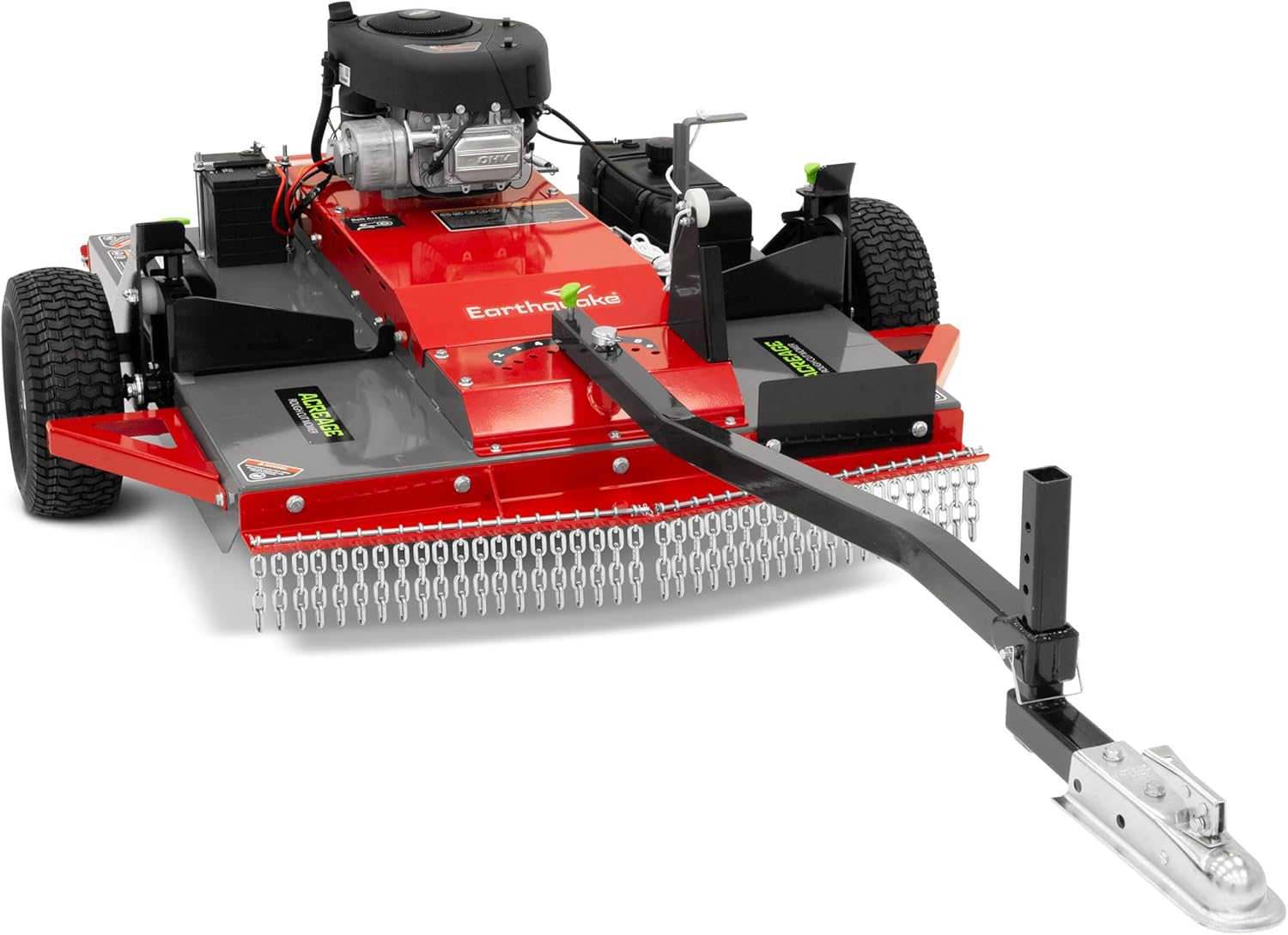
The Earthquake Acreage tow-behind mower is a beast for gardeners facing overgrown properties, with its 44-inch steel deck and 17.5HP Briggs & Stratton engine powering through tall grass, thick brush, and even saplings up to 3 inches thick. It's ideal for rural homeowners, acreage owners, or anyone with trails, ditches, and wooded edges that need regular taming, rather than small, tidy suburban lawns.
In real-world use, the adjustable offset lets you swing the mower 4 feet left or right behind your ATV or tractor, perfect for ditch banks or under tree limbs without scraping your vehicle. Tool-less height changes from 3.5 to 7.5 inches handle everything from light meadow maintenance to heavy brush clearing, while break-away blades pivot safely around rocks and stumps.
Build quality shines with an extra-thick 11-gauge steel deck, chain guards for debris control, and steel wheel bumpers that keep it from snagging on obstacles. The electric start and simple pull-lever blade engagement make operation straightforward from your seat, and the adjustable hitch provides smooth towing.
Limitations include the need for a capable tow vehicle and its large footprint, which isn't great for tight storage or precision edging. Overall, if you're battling overgrowth on larger lots, this mower delivers serious value for restoring usable yard space; pair it with follow-up finishing mowers for a polished look.
To get started, hitch the 2-inch ball coupler to your ATV, UTV, or tractor, adjusting the tongue height for level towing. Engage blades with the manual lever before moving, and use the included rope to disengage from your seat. Offset as needed for trails or slopes, and tweak cutting height on the fly for best results.
- Check oil and fuel before each use; the Advanced Debris Management System helps, but clean air filter regularly in dusty areas.
- Inspect blades for wear after rocky jobs, and grease fittings per manual.
- Store with tongue removed in a dry shed; winterize engine with stabilizer.
- Avoid wet grass to prevent clogs; mow in dry conditions for clean cuts.
Follow rough cuts with a finish mower for smooth lawns. Mow overgrown areas in stages, starting high to avoid bogging down. For trails and ditches, offset mowing prevents soil compaction near edges.
- Schedule cuts every 2-4 weeks in growing season to prevent re-overgrowth.
- Combine with weed control for brushy spots; this mower handles post-treatment debris well.
- Alternate directions each mow to promote even grass health and reduce ruts.
- Reseed cleared areas promptly for thicker turf recovery.
This 44-inch mower shines on 1+ acre properties with rough or neglected areas, covering large swaths quickly. Ideal for 2-10 acres of mixed terrain including fields, trails, and perimeter fencing.
- Small yards (<1 acre): Overkill; opt for walk-behinds.
- Medium lots (1-5 acres): Perfect for occasional heavy clearing.
- Large estates (5+ acres): Essential for efficient maintenance without daily tractor use.
- Not for: Flat, manicured turf; use riding mowers instead.

Pros
- Versatile 2-in-1 handle works for manual use or towing with tractors and mowers
- 13-inch all-terrain wheels provide excellent shock absorption on uneven ground
- Quick-release dump mechanism makes unloading heavy loads effortless
- Mesh sides prevent spills of dirt, gravel, or plants
- Durable build handles tough outdoor conditions season after season
Cons
- Large size requires ample storage space in sheds or garages
- Assembly takes time and basic tools upon arrival
- Heavy when fully loaded, so plan paths carefully on soft grass
This VEVOR garden dump cart is a robust 4-wheel utility wagon designed for serious gardeners and homeowners tackling heavy yard work. With a 1200 lbs capacity and 7 cu. ft. volume, it's perfect for those with medium to large properties who need to move bulk materials like compost, rocks, or firewood without multiple trips.
In real-world garden use, the 2-in-1 convertible handle shines: pull it by hand for close-up tasks like filling raised beds, or hitch it to a lawn mower or ATV for hauling across expansive lawns. The 13-inch rubber wheels roll smoothly over grass, gravel, and mild slopes, absorbing bumps so you arrive with your load intact. The quick-release dump frame lets you tip out contents with minimal effort, ideal for spreading mulch evenly.
Build quality stands out with a 1.2-inch thick metal frame coated for rust resistance, paired with puncture-resistant tires. Mesh sides keep debris from spilling on paths, and the ergonomic design makes it comfortable for repeated use during spring cleanups or fall leaf collection.
Limitations include its overall size, which might overwhelm tiny urban yards, and the need for initial assembly. It's not suited for super steep hills without towing.
Overall, this dump cart is a game-changer for efficient backyard labor. If you hate lugging heavy wheelbarrows, grab this for your next garden project; it's built to last and work hard.
Maximize this dump cart for everyday gardening by loading evenly to avoid tipping on turns. Use it for:
- Transporting bags of topsoil to raised bed planters
- Collecting fallen leaves or branches from lawns
- Hauling firewood or potted plants around patios
- Spreading gravel on garden paths
Secure loose items with the mesh cover, and always stay under the 1200 lbs limit for safety on slopes.
Assembly is straightforward with included instructions: attach wheels, handle, and mesh in under an hour using basic tools. For longevity:
- Clean after use to remove dirt and sap
- Store in a dry shed to protect the frame
- Check tire pressure before heavy loads
- Lubricate dump hinge seasonally
Avoid dragging on pavement to preserve wheels.
This cart handles lawns, dirt paths, and light gravel best. For towing:
- Compatible with most lawn tractors and ATVs via hitch pin
- Adjust handle to 180 degrees for straight-line stability
- Test empty first on your terrain
Not ideal for deep mud or rocky farms; pair with a winch for steep inclines.

Pros
- Wide 48-inch span reduces passes needed on big yards
- Heavy-duty build with flexing tines for effective dethatching
- Simple adjustments and stable hitch for easy handling
- Quick assembly with included instructions and video
Cons
- Requires a riding mower or tractor, not suitable for push mowers
- Ballast tray needs filling for optimal tine penetration on thick thatch
- Assembly may take 30-45 minutes without power tools
This AugFir tow behind dethatcher is a game-changer for anyone with a large lawn who wants to remove thatch buildup without endless manual work. Designed as a pull-behind attachment for riding lawn mowers, tractors, ATVs, or UTVs, it's perfect for U.S. homeowners tackling expansive backyards or even small farms. The 48-inch working width with two rows of 20 flexing spring steel tines covers ground fast, making it a top pick for efficient lawn care.
In real-world use, the heavy-duty carbon steel frame and 150 lb capacity tray let you add ballast like sandbags or bricks, driving tines deeper into compacted thatch for better aeration and grass health. The adjustable height handle with anti-slip stopper keeps things secure during sharp turns, while 8-inch semi-pneumatic wheels roll smoothly over typical lawn terrain. Gardeners report noticeable improvement in lawn thickness after one season of use.
Build quality stands out with its robust construction that holds up to outdoor abuse, from wet springs to dry summers. Cleaning tines after each use keeps it performing like new. Limitations include the need for a towing vehicle and some assembly time, but the included video makes setup straightforward.
Overall, if you have over half an acre of lawn, this dethatcher delivers pro-level results at home. Pair it with regular mowing and fertilizing for a lush, thriving yard year-round.
Setup and Usage: Attach the universal hitch to your riding mower or tractor, adjust height to skim the surface initially, then add up to 150 lb ballast for deeper dethatching. Tow at a slow speed (2-4 mph) in overlapping passes, lifting tines at turns.
- Mow lawn short first for best access to thatch.
- Dethatch in spring or fall when grass is actively growing.
- Empty collected debris frequently from the tray.
Maintenance Tips: Rinse tines and frame after use to prevent rust. Store in a dry shed during winter. Inspect hitch and wheels seasonally for wear.
Dethatching improves water and nutrient absorption, preventing brown patches and weak roots. Test soil by pulling up a small grass section; if thatch exceeds 1/2 inch, it's time to act.
- Combine with core aeration for compacted clay soils common in many U.S. regions.
- Overseed immediately after to fill bare spots.
- Avoid dethatching in drought or extreme heat to reduce grass stress.
For best results on cool-season grasses like fescue or Kentucky bluegrass, dethatch every 1-2 years. Warm-season varieties like Bermuda may need it annually.
This 48-inch dethatcher shines on lawns from 1/2 acre to 5+ acres, saving hours compared to manual rakes. Smaller yards under 1/4 acre might prefer a powered walk-behind model.
- Ideal for: Suburban lots, rural properties, golf course-style lawns.
- Not recommended for: Tiny urban patches or highly uneven, rocky terrain without adjustments.
Factor in your towing vehicle's power; most standard riding mowers handle it loaded with ease.

Pros
- Durable full steel frame and replaceable tines handle tough jobs on large properties
- Effortless towing reduces physical strain compared to manual raking
- Flexing tines adapt to lawn contours for even thatch removal
- Easy assembly with included instructions and video support
- Promotes healthier lawns by allowing better water and nutrient absorption
Cons
- Requires a riding lawn mower or ATV, not suitable for walk-behind use
- 48-inch width best for medium to large yards, overkill for small lots
- Initial assembly takes about 30-45 minutes despite clear instructions
This Suchtale 48-inch tow behind dethatcher is a game-changer for homeowners with riding lawn mowers tackling larger yards. It hooks up easily to pull behind your tractor, using 24 spring steel tines to slice through thatch buildup that chokes grass roots. Perfect for U.S. gardeners wanting lush lawns without backbreaking manual work.
In real-world use, the independently flexing tines loosen matted dead grass effectively, even on hard-packed soil, promoting better airflow and root health. The wheels track smoothly to avoid snags, and the transport handle lets you raise tines for easy crossing driveways or flower beds. Fall application is ideal, setting up your lawn for vibrant spring regrowth.
Build quality shines with a full steel frame, rust-proof tines, and bearing-equipped wheels for longevity outdoors. The 70 lb ballast platform ensures solid contact without slipping. While assembly is straightforward, it suits those comfortable with basic tools.
Limitations include needing a compatible tractor and its size making it less ideal for tiny yards. Overall, it's a reliable choice for proactive lawn care, delivering fresh, healthy turf with minimal hassle. Grab one if your mower pulls attachments and you've got thatch issues.
Setup: Use the hitch pin to connect to your riding mower or ATV. Add weight to the ballast platform for better performance on dense thatch.
- Mow lawn short first.
- Engage tines in low gear, overlapping passes for full coverage.
- Raise tines via transport handle when crossing hard surfaces.
Maintenance: Clean soil from tines after each use to prevent rust. Check and replace worn tines as needed. Store in a dry shed over winter.
- Best time: Early fall or spring on dry grass.
- Avoid wet conditions to prevent clumping.
Dethatching fits into a solid lawn routine for thriving yards. Pair with core aeration and overseeding for maximum results.
- Fall Prep: Dethatch after final mow, then fertilize roots.
- Spring Boost: Light dethatch before new growth, follow with topdressing.
- Water deeply post-dethatch to settle soil.
Regular mowing at proper height prevents heavy thatch buildup. For healthier grass, test soil pH yearly and adjust as needed.
This 48-inch dethatcher excels on lawns over 1/2 acre where riding mowers shine. Coverage speed makes quick work of big spaces.
- Ideal: 0.5+ acres with tractor access.
- Okay: 1/4 acre if you have hills or obstacles.
- Not Recommended: Under 5,000 sq ft; manual tools work better.
Measure your yard and ensure flat towing paths for best results.
Pros
- Generous 130 lb capacity minimizes downtime for bigger properties
- Easy tractor-seat controls simplify operation during routine lawn care
- Rugged construction with steel frame and pneumatic tires handles rough ground well
- Universal hitch compatibility works with popular brands like Craftsman and Husqvarna
- Made in the USA with a 3-year warranty for reliable long-term performance
Cons
- Requires some assembly, which may take time for beginners without the video guide
- Best suited for users with riding mowers; not ideal for walk-behind or very small yards
- Pneumatic tires can be prone to punctures on rocky terrain
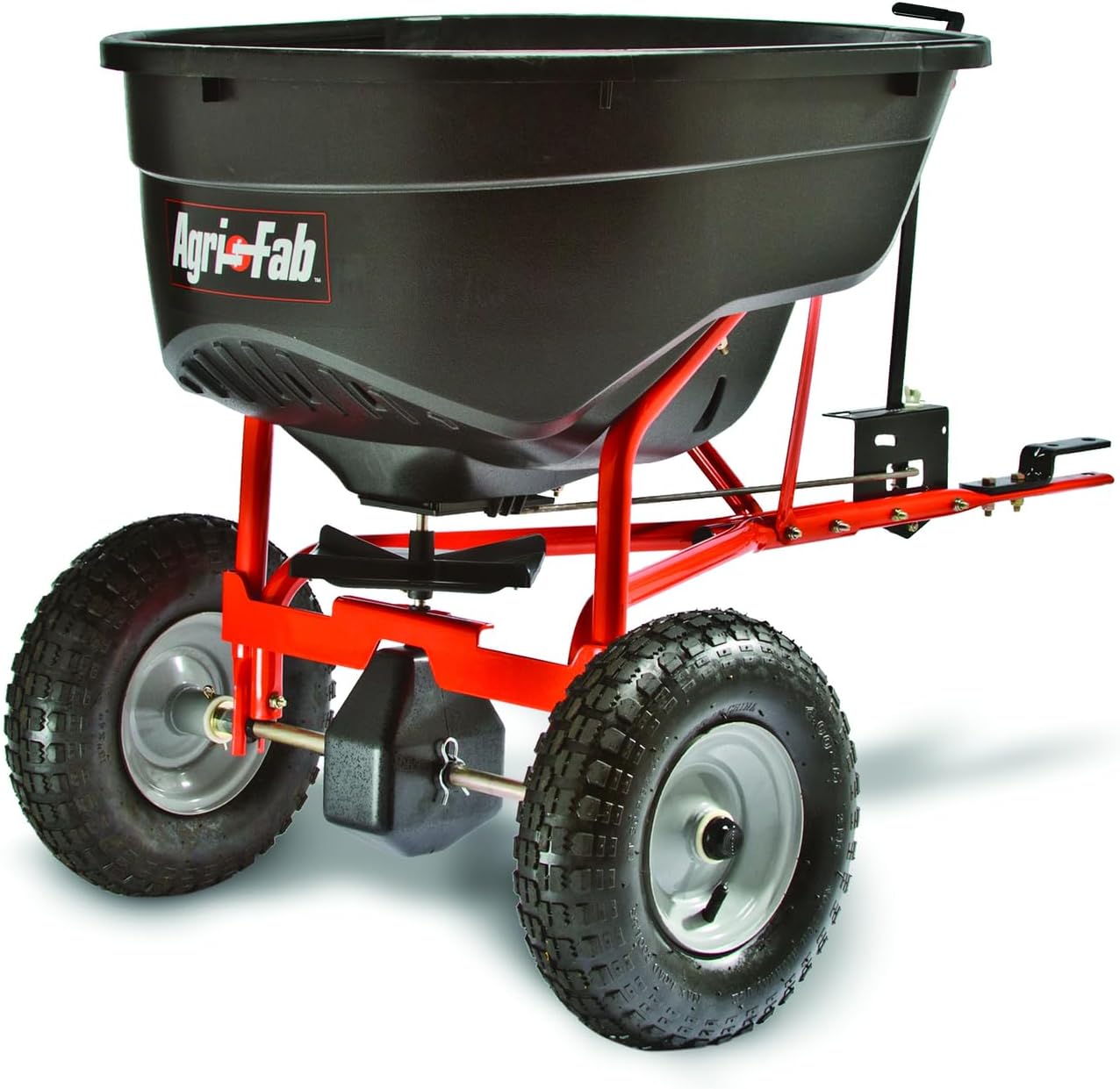
The Agri-Fab 45-0463 tow-behind broadcast spreader is a workhorse for gardeners with riding lawn mowers who want to tackle medium to large yards efficiently. With its 130 lb hopper, it spreads seed, fertilizer, or ice melt across up to 25,000 sq. ft. per fill, perfect for homeowners maintaining expansive lawns without the hassle of frequent stops.
Key features shine in real-world use: the 10-12 ft spread width delivers even coverage to foster thick, healthy grass, while the universal hitch connects quickly to most tractors. Pneumatic tires roll smoothly over bumps, and the tractor-seat rod control lets you adjust flow on the go, making lawn treatments straightforward even for busy weekend warriors.
Build quality impresses with a poly hopper, enclosed gearbox for protection from debris, and heavy-duty steel tubing that withstands years of outdoor exposure. It's versatile for spring seeding, summer feeding, or winter ice melt, helping you keep your yard thriving.
Limitations include assembly needs and its size, which suits properties with tractors but not tiny lots. Overall, if you have the equipment, this spreader delivers pro-level results for vibrant lawns; pair it with your mower for the easiest yard upgrades.
Setup: Attach the universal hitch to your riding mower or tractor, following the video guide for quick assembly. Fill the hopper with your material and set the flow rate using the steel rod control from the seat.
- Start with low settings for seed or fine fertilizer to avoid clumping.
- Drive in straight, overlapping passes for uniform spread.
- Turn off before sharp turns to prevent uneven piles.
Maintenance: Empty and clean after each use to prevent corrosion. Check gears in the enclosed box regularly and inflate tires as needed. Store in a dry shed during off-seasons for longevity.
For best results, spread in early morning or evening when wind is calm. Calibrate flow for your material: finer for seed, coarser for granular fertilizer.
- Seeding: Use in spring over prepared soil for thick turf.
- Fertilizing: Apply every 6-8 weeks in growing season for lush green lawns.
- Ice Melt: Winter prep keeps walkways safe without over-application.
Combine with aeration beforehand for deeper nutrient penetration and healthier roots.
This 130 lb spreader excels on 1/4 to 1/2 acre lawns where riding mowers are common. For smaller yards under 5,000 sq. ft., opt for lighter push models to avoid overkill.
- Ideal for suburban properties with open turf areas.
- Great for seeding new lawns or maintaining established ones.
- Scales well up to 25,000 sq. ft. before refilling.
Test on a small section first to dial in your settings perfectly.

Pros
- Powerful sweeping action with durable brushes that handle dry debris effectively.
- Spacious hopper reduces dumping frequency on bigger properties.
- Tool-free height adjustment for easy adaptation to different surfaces.
- Foldable design saves storage space in typical garages.
- Easy tractor attachment for straightforward setup.
Cons
- Requires a compatible lawn tractor; not suitable for push mowers or walking.
- Best for dry debris; struggles with wet, heavy leaves or thick wet grass.
- Bulky when unfolded, so small yards may find it overkill.
This VEVOR tow behind lawn sweeper is a game-changer for gardeners with lawn tractors and yards bigger than a quarter-acre. It attaches easily to the back of your mower, using spinning brushes to gather leaves, grass clippings, twigs, and debris as you drive. Perfect for fall cleanup or post-mowing tidying, it suits homeowners tired of manual raking who want a cleaner lawn fast.
In real-world use, the 44-inch sweep width covers ground quickly, picking up most dry debris in one pass thanks to the widened brush interface. The adjustable height lever lets you dial in the perfect setting for lawns, driveways, or gardens without tools, adapting to grass height or surface changes. The 25 cu. ft. non-woven bag holds a lot, and the dumping rope lets you empty it right from the tractor seat.
Build quality feels solid with a steel frame that resists everyday outdoor wear, and the brushes hold up well against deformation. It's not flimsy like cheaper models. Storage is a breeze since it folds down compactly.
Limitations include needing a tractor with a hitch, and it works best on dry materials; wet leaves might clog it. For large properties, it's a time-saver, but tiny lots might not need the capacity.
Overall, if you have the tractor setup, this sweeper earns its spot in your shed. It transforms yard work into a quick drive, leaving your lawn spotless and you with more time to enjoy it.
Setup: Attach the sweeper to your lawn tractor's hitch using the universal connector. Adjust brush height with the front lever to skim just above the grass or pavement.
- Drive at 3-5 mph for best pickup.
- Empty the hopper using the rope when full to avoid overflow.
- After use, fold and store in a dry area.
Maintenance: Rinse brushes and bag after each use to prevent buildup. Check for loose bolts monthly and tighten as needed. Store brushes off the ground to extend life.
Pair this sweeper with regular mowing for pristine turf. Use it after leaf drop or clippings to prevent thatch buildup, promoting healthier grass growth.
- Sweep weekly in fall to control leaves.
- Combine with aeration for better lawn health.
- Avoid overwatering before sweeping to keep debris dry.
Regular use keeps your yard looking manicured, reducing weed seeds from fallen debris.
Ideal for 1/4-acre to 2-acre lots where raking takes too long. The 44-inch width shines on medium-large lawns.
- Small yards (<1/4 acre): Skip it; manual raking is faster.
- Medium yards (1/4-1 acre): Perfect balance of power and ease.
- Large yards (>1 acre): Excellent for efficient coverage.
Ensure your tractor has enough power for towing when full.

Pros
- Wide 40-inch path speeds up work on big lawns compared to manual dethatchers
- Easy assembly with instructions and sturdy build holds up to repeated use
- Ballast option allows customization for different soil and thatch conditions
- Universal compatibility works with common riding equipment
Cons
- Requires a riding mower, tractor, ATV, or UTV; not suitable for walk-behind or small push mowers
- Heavy when loaded with ballast, which may challenge lighter towing vehicles on uneven terrain
- Best for medium to large yards; overkill for small urban lawns
The BlumeTrec 40-inch tow behind dethatcher is a pull-behind attachment designed for riding lawn tractors, ATVs, or UTVs, perfect for homeowners with large yards who want to banish thatch buildup without backbreaking manual labor. It suits beginner to experienced gardeners tackling expansive lawns, where dead grass layers choke roots and stunt growth.
Key features shine in real-world use: 20 heat-treated spring tines in two rows flex independently to yank out thatch, twigs, and leaves, while the 40-inch width covers ground fast. The universal pin hitch connects effortlessly, and the ballast tray lets you add up to 100 lbs of sand or weights for deeper dethatching on compacted soil. In spring or fall passes, it aerates effectively, inviting better water and nutrient penetration for lush, resilient turf.
Build quality impresses with a heavy-duty carbon steel frame and rust-proof tines that withstand outdoor exposure. Wheels with bearings handle the load smoothly, and adjustable height keeps tines safe over paths. It's durable for years with basic cleaning after use.
Limitations include needing powered towing equipment and potential bulkiness for tight spaces. For small lots, a manual rake might suffice.
Overall, this dethatcher earns high marks for transforming neglected large lawns into vibrant green spaces. Pair it with overseeding for standout results, and your yard will thrive season after season.
Setup: Assemble following included instructions or video; attach via universal hitch to your riding mower or ATV. Adjust tine height for terrain.
- Add sand or weights to ballast tray for tough thatch.
- Mow lawn short first, then dethatch in overlapping passes at moderate speed.
- Use in spring (pre-growth) or fall (post-dormancy) for best recovery.
Care Tips: Clean tines and frame of debris after each use to prevent rust. Store in a dry shed. Inspect and replace bent tines as needed.
- Grease wheel bearings yearly for smooth rolling.
- Avoid concrete surfaces without raising tines.
Incorporate dethatching into your routine to keep grass healthy. Thatch over 0.5 inches blocks air and water, leading to weak spots and pests.
- Timing: Early spring or late fall, when grass grows actively but heat stress is low.
- Follow-up: Rake debris, aerate if needed, fertilize, and overseed bare areas.
- Prevention: Mow high (3 inches), avoid overwatering, and leave clippings on lawn.
For large yards, combine with a plug aerator for pro-level lawn revival and weed reduction.
This 40-inch dethatcher excels on lawns from 1/2 acre and up, where manual tools take too long.
- Ideal: 0.5-5 acres with riding equipment; finishes jobs in under an hour.
- Too Big: Estates over 10 acres may need commercial gear.
- Not For: Small urban yards under 5,000 sq ft; opt for powered walk-behinds.
Matches well with 42-54 inch mower decks for efficient one-day maintenance.

Pros
- Deep 2-inch penetration improves lawn health and reduces thatch buildup effectively
- Durable all-steel build with reinforced plates handles heavy use on uneven terrain
- Independent rotating tines provide consistent performance without dragging
- Easy assembly with clear instructions and versatile hitch for multiple machines
- Weight tray allows adjustment for different soil types and conditions
Cons
- Requires a riding mower, ATV, or tractor, not suitable for push-only use on small yards
- Initial assembly takes about 30-45 minutes, though instructions are detailed
- Heavier when loaded with weights, so best for users comfortable towing equipment
The Suchtale 40-Inch Tow Behind Spike Aerator is a robust tool designed for gardeners towing behind riding mowers, ATVs, or small tractors to revive compacted lawns. It suits homeowners with medium to large yards who notice thin grass, poor drainage, or hard soil after heavy foot traffic or drought.
In real-world use, the 10 star-shaped tines, each 8 inches in diameter with uneven spikes, pierce up to 2 inches deep while rotating freely. This allows better water and fertilizer absorption, leading to lusher lawns with fewer bare patches. The wide 40-inch span means fewer passes, perfect for efficient backyard maintenance.
Build quality stands out with galvanized steel tines, a solid axle, reinforced side plates, and a thick 6mm adjust handle that resists bending. The powder-coated finish fights rust, and bearings in the wheels support heavy loads, making it durable for repeated outdoor seasons.
Limitations include the need for a towing vehicle and some assembly time, plus it's less ideal for tiny urban lots where manual aerators work better. Safety note: wear gloves during setup to avoid sharp edges.
Overall, this aerator delivers serious value for lawn enthusiasts ready to invest in soil health. Pair it with overseeding for transformative results in your garden space.
Assembly: Follow the included pictorial manual. Attach the tines to the axle, secure the side plates, and install the hitch and handle. It takes under an hour with basic tools.
- Hitch to your riding mower or ATV using the pin-style connector.
- Add 50-110 pounds of weight (like concrete blocks) to the tray for deeper spikes in hard soil.
- Mow first, then aerate at a slow, steady pace over dry lawn.
Maintenance: Clean dirt off tines after each use. Lubricate bearings annually. Store in a dry shed to preserve the rust-resistant finish. Inspect for wear before spring startup.
Aerate once or twice yearly in spring or fall when soil is moist but not soggy. This timing maximizes root growth before summer heat or winter dormancy.
- Combine with core or plug aeration for severely compacted areas.
- Follow up by topdressing with compost and overseeding bare spots.
- Avoid aerating during extreme heat or right after heavy rain to prevent ruts.
- For clay soils, add weight; for sandy yards, go lighter to avoid over-puncturing.
Regular aeration cuts watering needs and fights weeds naturally by strengthening grass.
This 40-inch aerator shines on lawns from 1/4 acre to 2 acres, covering ground efficiently without excessive towing time.
- Small yards (under 5,000 sq ft): Consider manual spike tools instead.
- Medium yards (1/4-1 acre): Perfect match; quick sessions keep soil healthy.
- Large properties (over 1 acre): Great for farms or big backyards, but multiple passes may be needed.
Measure your lawn and test soil compaction with a screwdriver; if it won't penetrate easily, aeration is key.

Pros
- Wide 48-inch path reduces passes needed for efficient large-lawn care
- Flexible, replaceable tines handle tough thatch without frequent breakage
- Ballast platform adds weight for deeper penetration on compacted soil
- Easy attachment to common lawn equipment like riding tractors
- Durable steel construction built to last through repeated yard use
Cons
- Requires a riding lawn mower, ATV, or UTV, not suitable for push mowers or small yards
- Assembly takes some time despite instructions, best for those comfortable with tools
- Heavy when loaded with ballast, may need two people for maneuvering
This BlumeTrec tow behind dethatcher is a game-changer for gardeners with expansive lawns who own a riding mower or tractor. At 48 inches wide, it pulls behind your equipment to slice through thatch, dead grass, and debris, aerating soil for better grass growth. It's perfect for U.S. homeowners tackling 1/2-acre yards or larger, especially in spring or fall when prepping for peak season.
- Key features include 24 heat-treated spring tines that flex independently for even removal across the width.
- The universal hitch connects easily to most riding lawn tractors, ATVs, or UTVs.
- A 100 lb ballast tray lets you add weight for aggressive dethatching on tough spots.
Build quality shines with a carbon steel frame that's rust-resistant and sturdy enough for heavy use. In real-world gardening, it loosens compacted soil, allowing air, water, and fertilizer to reach roots, leading to lusher lawns without manual raking. The adjustable handle protects tines on driveways while dialing in depth for optimal performance outdoors.
Limitations include the need for powered towing equipment, so it's not for tiny lots or walk-behind use. Empty weight is manageable, but full ballast makes it hefty. Overall, this dethatcher delivers reliable results for large-yard care; pair it with overseeding for a revitalized lawn that thrives all season.
Attach the dethatcher to your riding mower using the universal pin hitch, following the included instructions. Mow your lawn short first, then tow at a slow speed in overlapping passes. Add sandbags to the ballast tray for deeper tine action on thick thatch.
- Spring use: Remove winter debris before fertilizing.
- Fall use: Prep soil ahead of overseeding.
- Adjust height higher over hard surfaces to avoid tine damage.
For maintenance, clean tines after each use to remove soil buildup. Check for loose bolts and store in a dry shed during winter. Replace bent tines individually as needed for ongoing performance.
Dethatch when thatch exceeds 1/2 inch thick, typically spring or early fall to avoid summer heat stress. Test soil moisture; dry ground works best to prevent clumping.
- Combine with core aeration for maximum root health.
- Follow up by raking debris and top-dressing with compost.
- Water deeply after to settle soil and encourage growth.
Avoid dethatching during drought or extreme heat, as it stresses grass. For cool-season lawns like fescue, aim for fall; warm-season like Bermuda, spring. This keeps your yard vibrant and weed-free.
Best for lawns over 1/2 acre where towing saves hours versus manual tools. The 48-inch width shines on 1+ acre properties, cutting dethatching time in half.
- Small yards (<1/4 acre): Skip for hand rakes.
- Medium (1/4-1 acre): Good starter tow-behind.
- Large (1+ acres): Ideal for farms or estates.
Ensure your tractor has enough power (15+ HP recommended) for smooth pulling. Matches well with New York-area properties needing seasonal lawn revival.

Pros
- Massive 500lbs capacity and 20 cu ft volume reduce multiple trips for heavy garden loads
- Two quick-release dump options make unloading effortless and clean up a breeze
- Universal hitch ensures compatibility with common lawn equipment like riding mowers and ATVs
- Removable sides allow versatile loading for various yard materials
- Rugged steel build and weather-resistant finish hold up to outdoor abuse
Cons
- Requires some assembly upon arrival, which may take an hour or two with basic tools
- Heavy when fully loaded, so best for powered towing rather than manual pushing
- Larger size suits medium to large yards, not ideal for very tight spaces
The YITAMOTOR 500lbs Heavy Duty Dump Cart is a tow-behind steel utility trailer designed for garden and yard work, perfect for homeowners with riding lawn mowers, tractors, ATVs, or UTVs. It shines for those regular hauls of soil, mulch, leaves, or debris, especially if you maintain a bigger backyard or tackle seasonal cleanups.
Key features like the universal hitch make hookup a snap, while removable sides let you load wide items without hassle. The standout quick-dump system, operated by manual pull or foot pedal, empties loads in seconds right where you need, whether dumping compost at the garden edge or leaves at the curb. In real-world use, it handles rough lawn paths smoothly thanks to its sturdy, noise-reducing wheels.
Build quality impresses with powder-coated steel that resists rust and dents from heavy use or weather exposure. It's tough enough for all-season gardening, from spring planting to fall cleanup. Wheels provide good traction on grass or gravel, though very muddy spots might require caution.
Limitations include its size, which fills smaller sheds, and the need for a towing vehicle, so it's not for hand-pushing. Assembly takes basic tools and time, but instructions are clear.
Overall, this dump cart is a game-changer for efficient yard hauling. If you tow with lawn equipment and hate multiple trips, grab it for smarter, less sweaty gardening.
Maximize your dump cart for garden tasks with these practical pointers:
- Load evenly to avoid tipping on slopes; distribute weight across the bed for stability.
- Use removable sides for oversized loads like pruned branches or bags of fertilizer.
- Dump in stages for precision, like spreading mulch directly around plants.
- Pair with a riding mower for quick laps around the yard during leaf season.
- Secure loose items with bungee cords to prevent spills on the go.
These habits keep your hauls safe and your garden thriving.
Keep your dump cart running smoothly year-round:
- After each use, quick-dump leftovers and hose down the bed to prevent buildup.
- Inspect wheels and hitch for wear; lubricate moving parts seasonally.
- Store in a dry shed or under cover to protect the powder coat from harsh winters.
- Tighten bolts periodically, especially after heavy loads.
- For off-season, remove sides to save space and check for rust spots early.
Simple care ensures it lasts through many gardening seasons.
This cart's universal hitch works with most setups:
- Riding lawn mowers with standard ball hitches.
- ATVs and UTVs for versatile towing.
- Garden tractors from major brands.
- Quick-connect adapters if your machine needs them.
Measure your hitch pin size first for seamless attachment. Avoid overload on smaller mowers.
Buying Guide for Best Tow-Behind Lawn Mowers
Compatibility and Hitch Type
One of the first things to check when selecting Best Tow-Behind Lawn Mowers is how well it pairs with your existing equipment. Most models feature universal hitches that connect to riding lawn mowers, lawn tractors, ATVs, or UTVs, but double-check the pin-style or ball coupler specifics. For instance, the Earthquake Acreage Tow-Behind Mower uses a 2-inch ball coupler with adjustable height positions, making it versatile for different tow vehicles.
Look for adjustable tongues or hitches that allow offset mowing or easy attachment without tools. Gardeners with smaller tractors should prioritize lightweight options like the Agri-Fab 45-0463 Pull Behind Broadcast Spreader, which fits popular brands such as Craftsman, Husqvarna, and Cub Cadet. Always test the connection on flat ground first to ensure smooth towing and avoid strain on your mower’s hitch.
A quick tip: Measure your tractor’s hitch height and compare it to the product’s specs. This prevents wobbling during turns, which can lead to uneven coverage or safety issues on slopes.
Capacity and Coverage Area
Best Tow-Behind Lawn Mowers shine on larger properties, so capacity matters for fewer refills and passes. Spreaders like the Agri-Fab 45-0463 hold up to 130 pounds, covering about half an acre per load, while dump carts such as the YITAMOTOR 500lbs Heavy Duty ATV Trailer offer 20 cubic feet for hauling mulch or debris.
Dethatchers and aerators, like the Suchtale 48inch Tow Behind Dethatcher with 24 spring tines, provide wide 48-inch working widths to handle big lawns quickly. For mowing tough brush, the Earthquake model’s 44-inch steel deck clears tall grass and saplings up to 3 inches thick in one pass.
Consider your yard size: For 1-2 acres, opt for high-capacity units to minimize downtime. Pro gardener advice: Factor in terrain – pneumatic tires on models like the VEVOR 1200lbs Garden Dump Cart excel on uneven ground, ensuring steady coverage.
| Product Type | Typical Capacity | Spread/Mow Width |
|---|---|---|
| Broadcast Spreader | 130 lb | 10-12 ft |
| Dethatcher | N/A | 40-48 in |
| Dump Cart | 500-1200 lb | N/A |
| Mower | N/A | 44 in |
Build Quality and Durability
Durable construction is key for Best Tow-Behind Lawn Mowers that face rocks, roots, and weather exposure. Steel frames with powder-coated finishes, like on the BlumeTrec 48 Inch Tow Behind Dethatcher, resist rust and impacts. Pneumatic tires and enclosed gearboxes, as in the Agri-Fab spreader, handle rough lawns season after season.
Heavy-duty features include heat-treated spring tines on dethatchers that stay flexible, and 11-gauge steel decks on mowers for longevity. The VEVOR Tow Behind Lawn Sweeper’s widened metal-brush interface boosts sweeping power without deformation.
Gardener tip: Add ballast weights to aerators or dethatchers for deeper penetration on compacted soil, but choose models with trays like the AugFir 48-Inch Tow Behind Dethatcher that hold up to 150 pounds securely.
Ease of Use and Assembly
Look for Best Tow-Behind Lawn Mowers that assemble quickly with included instructions and videos, like the Suchtale 40-Inch Tow Behind Spike Aerator. Features such as quick-release dumps, lever blade engagement, and adjustable heights make operation from the tractor seat simple.
Electric start engines on premium mowers eliminate pull cords, and foldable designs aid storage. The YITAMOTOR dump cart’s removable sides and foot pedal dump simplify unloading heavy loads without leaving your seat.
Practical advice: Practice assembly in your driveway. Models with bearing wheels, like BlumeTrec dethatchers, roll smoothly even when empty, reducing setup frustration.
Versatility and All-Season Use
Top Best Tow-Behind Lawn Mowers handle multiple tasks: Spread seed or ice melt with the Agri-Fab, dethatch in spring/fall, aerate for better root growth, or sweep leaves with the VEVOR 44 in model. Offset mowing on the Earthquake reaches ditches or under trees.
Universal compatibility extends use across equipment. Gardeners love carts for year-round hauling of garden supplies.
Maintenance and Warranty
Easy-clean designs and warranties add peace of mind. Agri-Fab offers 3 years, Earthquake up to 5 years. Grease fittings and replaceable tines keep units running smoothly.
Tip: Rinse after salty applications and store covered. Regular checks prevent wear.
Why You Should Trust Us
At New York Garden, we specialize in practical reviews for Patio, Lawn, and Garden products, drawing from extensive analysis of specifications, user experiences, and performance data. Our team focuses on what matters to U.S. homeowners and gardeners: real-world usability on American lawns, from suburban yards to rural properties. We prioritize transparency, highlighting pros and cons without bias.
We evaluate factors like durability in varied climates, compatibility with common tractors, and efficiency for everyday tasks. While we do not conduct hands-on testing, our methodology cross-references manufacturer details, customer feedback patterns, and expert gardening insights to deliver reliable recommendations. Check our Lawn Mowers & Tractors category for more tailored advice.
Final Thoughts
After reviewing these 10 Best Tow-Behind Lawn Mowers, our best overall pick is the Earthquake Acreage Tow-Behind Mower. Its 17.5HP Briggs & Stratton engine, electric start, and 44-inch deck tackle thick brush and rough terrain effortlessly, with adjustable offset for tricky spots. Gardeners with overgrown lots will appreciate its break-away blades and heavy-duty build for years of reliable mowing.
For best value, go with the BlumeTrec 40 Inch Tow Behind Dethatcher. At an affordable entry point, its 20 spring steel tines, 100 lb ballast tray, and universal hitch deliver maximum thatch removal on mid-sized lawns without breaking the bank. It is perfect for seasonal maintenance to promote healthier grass growth.
Best for hauling and all-purpose yard work is the VEVOR 1200lbs 7Cu.Ft. Garden Dump Cart. With 13-inch all-terrain wheels, 2-in-1 handle, and quick-release dump, it hauls heavy loads over any surface, making it a gardener’s multitool for mulch, tools, or debris. Pair it with your tractor for efficient large-property chores. Explore more in our best lawn tractors guide or the best riding lawn mowers review.
FAQs
What are Best Tow-Behind Lawn Mowers used for?
Best Tow-Behind Lawn Mowers are attachments pulled by tractors or riding mowers for tasks like mowing rough areas, spreading seed and fertilizer, dethatching, aerating, sweeping, and hauling. They expand your equipment’s capabilities for larger properties, saving time compared to manual tools. Models like dump carts handle garden materials year-round.
Do I need a powerful tractor for Best Tow-Behind Lawn Mowers in 2026?
Most Best Tow-Behind Lawn Mowers work with standard riding mowers or lawn tractors rated for towing 500+ pounds. Heavier mowers like the Earthquake require more horsepower for thick brush, but lighter spreaders or dethatchers suit entry-level models. Check your tractor’s manual for towing capacity to match safely.
How do I maintain my tow-behind lawn tools?
Clean tines, hoppers, and wheels after each use to prevent buildup. Lubricate moving parts, inspect for wear, and store in a dry place. Replaceable parts like spring tines make upkeep simple, ensuring longevity through multiple seasons.
Can Best Tow-Behind Lawn Mowers handle slopes or uneven terrain?
Yes, many feature pneumatic tires, adjustable heights, and stable frames for moderate slopes. Avoid steep inclines with heavy loads, and use offset options for ditches. All-terrain wheels on carts like VEVOR provide excellent traction.
Are these attachments easy to store?
Foldable designs and removable tongues make storage compact. Hang sweepers on walls or disassemble carts. Most fit in standard sheds, with quick hitch removal for off-season.
For more on compatible equipment, see our Riding Lawn Mowers & Tractors page and best riding mowers for large yards.



Write Your Review
No reviews yet. Be the first to share your experience!