

Struggling with bare patches on your sloped yard? Best Grass Seed For Slopes can transform those tricky hills into lush, stable lawns. Whether you’re dealing with erosion, poor soil retention, or uneven sunlight, selecting the right grass seed makes all the difference for homeowners tackling backyard challenges. In 2026, we’ve curated 5 standout options that prioritize strong root systems, quick establishment, and slope-friendly growth to help you achieve a vibrant garden without constant upkeep.
Slopes pose unique issues like water runoff and soil displacement, but with the right Best Grass Seed for Slopes, you can create a durable turf that thrives. Our guide draws from real gardener experiences and product specs to recommend seeds that hold soil in place while delivering thick, green coverage. Ready to level up your lawn? Let’s dive into these top performers perfect for American backyards.

Pros
- Grows grass noticeably faster, giving quick results on new or patchy lawns
- All-in-one formula simplifies seeding and reduces the need for separate fertilizer
- Strong performance in moderate climates, leading to dense, green tall fescue coverage
- Easy to spread evenly with compatible Scotts spreaders for uniform growth
Cons
- Best suited only for tall fescue lawns, not ideal for mixing with other grass types
- Requires consistent watering and proper temperatures for optimal results
- Smaller bag size limits use on very large yards without buying multiples
Scotts Turf Builder Rapid Grass Tall Fescue Mix is an all-in-one solution blending high-quality tall fescue seed with fertilizer, designed for homeowners wanting quick, lush lawns. It suits beginner and experienced gardeners tackling new lawn installations or overseeding worn tall fescue areas in backyards up to about 1,800 sq. ft.
In real-world use, this mix shines by growing grass up to 2X faster than plain seed, thanks to the extended-release fertilizer that feeds roots as they sprout. Gardeners report visible green-up in weeks when applied correctly, making it great for patching bare spots after winter or summer stress. Pair it with a Scotts spreader for even coverage and best results.
Build quality is solid for a seed product, with viable seeds that hold up during storage and application. The formula performs well outdoors in typical U.S. conditions but needs soil prep and watering to thrive. Limitations include its focus on tall fescue only and no built-in weed control, so wait until the lawn is mowed four times before adding herbicides.
Overall, this is a reliable choice for faster lawn revival. If you're aiming for a thick, green tall fescue yard, apply in spring or fall and follow up with regular Scotts lawn food for lasting beauty.
Prep your soil by mowing low, removing debris, and lightly raking for good seed-to-soil contact. Use a Scotts spreader at recommended settings for even application.
- Apply in spring or fall when temps are 60°F to 80°F.
- Water daily to keep soil moist for the first 2 weeks.
- Avoid weed killers until mowed 4 times.
- Feed every 8 weeks with Scotts Lawn Food for thick growth.
Maintain by mowing high and watering deeply but infrequently once established.
Plant when air temperatures stay between 60°F and 80°F for fastest germination, typically early spring or fall in most U.S. regions.
- Spring: After last frost, for summer-ready lawns.
- Fall: Ideal for root development before winter.
- Check local forecasts to avoid heat or frost extremes.
Pro tip: Test soil pH (aim for 6.0-7.0) and amend if needed for better results.
This 5.6 lb. bag covers 615 sq. ft. for new lawns or 1,845 sq. ft. for overseeding, fitting small to medium backyards perfectly.
- Small yards (under 600 sq. ft.): One bag handles full new seeding.
- Medium yards (up to 1,800 sq. ft.): Great for overseeding thin areas.
- Large yards: Buy multiple bags and use a broadcast spreader.
Scale up for bigger spaces to keep costs efficient.
Pros
- Exceptional drought and disease tolerance for reliable growth
- Pollinator-friendly design supports bees and beneficial insects
- Low ongoing maintenance saves time and effort for busy gardeners
- Establishes well on hillsides, preventing erosion
- Naturally self-sustaining for years of healthy lawn
Cons
- Best suited for northern U.S. regions, may underperform in southern climates
- Requires consistent initial watering until established
- Clover component gives a different look than pure grass lawns
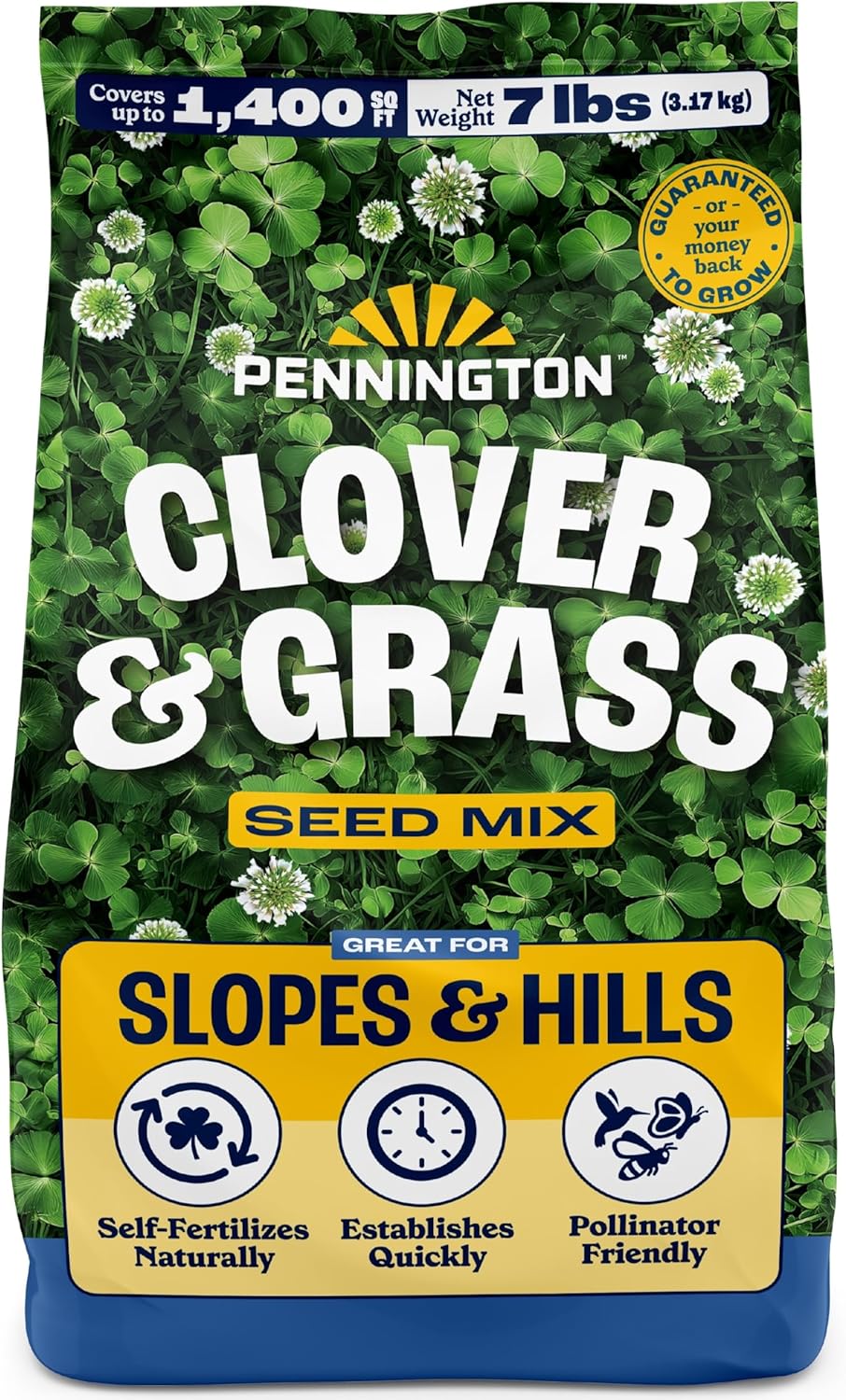
Pennington Smart Seed Clover and Grass Mix is a smart choice for gardeners wanting a low-maintenance lawn that works with nature. This 7 lb blend of Durana white clover and water-smart grasses suits homeowners in northern U.S. areas with slopes, hills, or water-conscious yards. It's perfect for beginners tired of high-upkeep turf or experienced folks aiming for pollinator support.
In real-world use, it shines by establishing quickly in 7-21 days, even on challenging terrain. The self-fertilizing clover fixes nitrogen naturally, cutting fertilizer use, while the grasses conserve water year after year. You'll get an attractive, green lawn that needs less mowing and stays resilient through dry periods or light foot traffic.
Durability comes from its disease tolerance and longevity; once rooted, it persists for years with minimal intervention. Just ensure 4-6 hours of sun and proper seeding. Limitations include its northern preference and the need for daily watering at first, plus the clover's subtle presence might not match formal lawn aesthetics.
Overall, this mix earns high marks for practical, sustainable lawn care. Recommend it for backyard refreshers where ease and ecology matter most.
Follow these simple steps for success with Pennington Smart Seed Clover and Grass Mix.
- Prepare the soil: Clear debris and rake for a firm seedbed to prevent washout from rain.
- Apply evenly: Use a spreader at recommended settings; gently rake seeds in. On steep slopes, add erosion blankets or straw.
- Water daily: Keep soil moist until sprouts hit 2 inches, then ease back.
Plant in spring or early fall for best germination in northern climates. See green growth in 7-21 days.
Maximize your clover grass mix with these gardener-approved practices:
- Mow at 3 inches to encourage thick growth and clover health.
- Water deeply but infrequently once established to build drought resistance.
- Skip heavy fertilizers; the self-fertilizing clover handles nitrogen.
- Overseed thin spots annually for lasting coverage.
- Embrace pollinators by adding nearby flowers for a thriving ecosystem.
This approach keeps your lawn looking sharp with half the effort of traditional seed.
One 7 lb bag covers up to 1,400 sq ft for new lawns or overseeding.
- Small yards (under 1,000 sq ft): Perfect for full coverage with seed to spare.
- Medium backyards (1,000-1,400 sq ft): Ideal for slopes or patchy areas.
- Larger lawns: Buy multiple bags and scale up for uniform results.
Adjust rates for overseeding at half strength to refresh existing turf without waste.

Pros
- Versatile for sun/shade mix, solving patchy yard problems
- Root-building nutrition jumpstarts strong growth from day one
- Generous coverage for cost-effective overseeding
- Medium drought resistance eases summer care
- Combines seed, fertilizer, and improver in one bag
Cons
- Requires consistent daily watering until seedlings hit 2 inches
- Best results in specific 60-80°F temps, limiting hot summer use
- Weeds may sprout faster, needing hand-pulling during early weeks
Scotts Turf Builder Grass Seed Sun & Shade Mix is an all-in-one solution for homeowners tackling new lawns or refreshing thin spots in yards with varying light. Whether your backyard has sunny patches and shady tree areas, this 5.6 lb bag delivers reliable coverage up to 745 sq ft for new seeding or 2,240 sq ft for overseeding, making it a go-to for beginner and experienced gardeners alike.
Key features like root-building nutrition promote deep roots for thick, resilient turf that handles medium drought and foot traffic. In real-world use, it fills in bare areas nicely when applied in spring or fall, with sprouts appearing in 1-2 weeks and full coverage by weeks 5-7. Pair it with a Scotts spreader for even distribution, and you'll see stronger lawns that stay green longer.
Build quality shines in its expert blend of seed, fertilizer, and soil improver, holding up outdoors without clumping or losing viability if stored cool and dry. It's durable for medium to high wear, but shines best in smaller yards rather than vast expanses.
Limitations include the need for moist soil daily during germination and hand-weeding early on, as some weeds beat grass to sprouting. Overall, this mix earns high marks for versatility; grab it if you want a low-fuss path to a lush lawn that enhances your outdoor space.
Prep your lawn by mowing short to 2 inches for overseeding or loosening topsoil for new areas. Use a Scotts spreader at label settings, walking steadily for even coverage.
- Apply in spring or fall when air temps are 60-80°F.
- Lightly rake seed into soil after spreading.
- Water daily to keep surface moist until 2-inch growth.
Measure your yard first: one bag suits up to 745 sq ft new or 2,240 sq ft overseed.
Expect visible progress with consistent care:
- Weeks 1-2: Sprouts emerge; water to stay moist.
- Weeks 3-4: Seedlings grow; maintain hydration.
- Weeks 5-7: Thick fill-in for mow-ready turf.
Overseed yearly and apply at ideal temps for best thick, green results year after year.
Common issues and fixes for smoother success:
- Weeds appearing first? Pull by hand; wait until grass is mowed 4 times before weed control.
- Slow growth? Check soil temps (55-70°F) and water consistently.
- Thin spots? Overseed with this mix and keep moist.
Store leftovers in the original bag, cool and dry, for future use.
Pros
- Excellent heat and drought tolerance for reliable performance in sunny conditions
- Produces a naturally dark green, dense turf that enhances curb appeal
- Fast germination and strong root system for quick establishment
- Versatile for new lawns, overseeding, or tough spots like slopes
Cons
- Requires 6-8 hours of full sun daily, not suited for shady areas
- Needs frequent watering 2-3 times daily for first 4 weeks to ensure germination
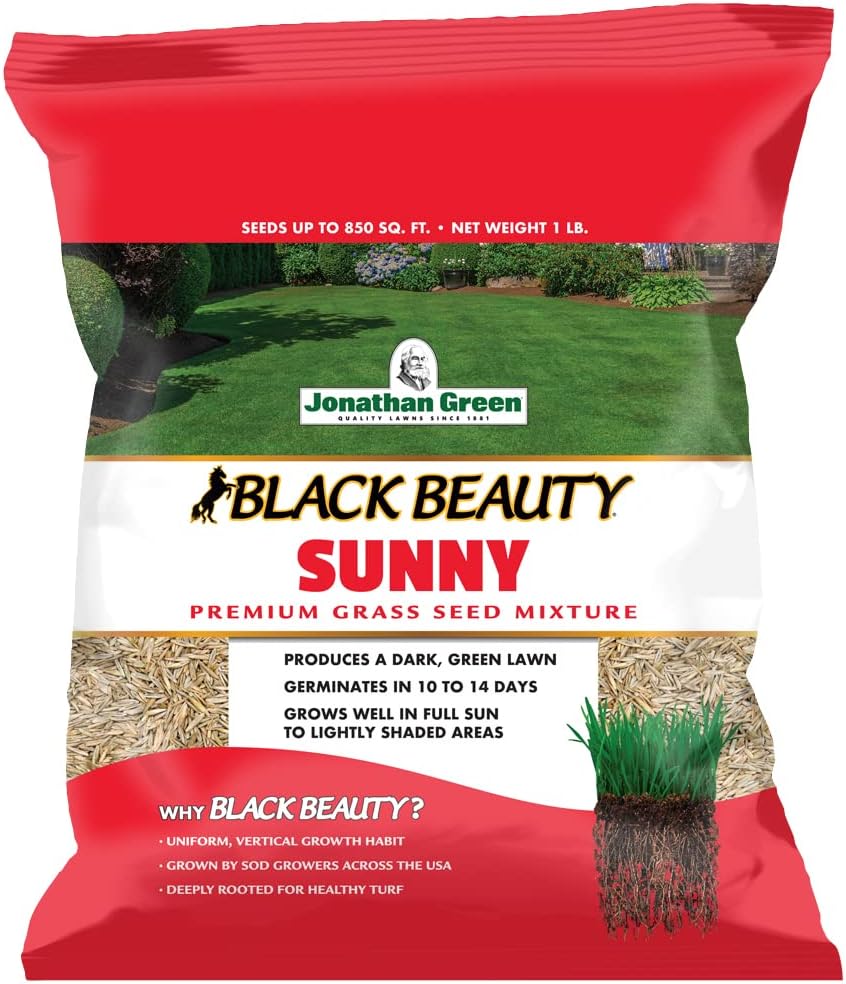
Jonathan Green Black Beauty Sunny Grass Seed is a premium cool-season blend of perennial rye, Kentucky bluegrass, and tall fescue designed for lawns in full sun. It suits homeowners in the northern U.S. with sunny backyards, slopes, or southern exposures where drought and heat challenge typical grasses.
In real-world gardening, this seed shines with its heat tolerance and deep roots that reach up to 4 feet, helping it survive dry periods better than standard mixes. The waxy leaf coating preserves moisture like an apple's skin, cutting down on evaporation and keeping your lawn greener longer. Expect germination in 7-14 days, leading to a dense, dark green turf that's attractive and low-maintenance once established.
Durability outdoors is strong due to the robust grass varieties that handle northern climates well. It's not a quick fix for shaded spots, though, and initial care demands consistent watering. For small to medium yards up to 425 sq ft, it's a solid choice that delivers lasting results.
Overall, if your lawn bakes in the sun, Black Beauty Sunny is a practical pick for a resilient, beautiful yard. Sow in early fall or spring for best success and enjoy a tougher lawn with less worry.
Start by raking your soil vigorously to remove thatch and debris for good seed-to-soil contact.
- Use a hand or rotary spreader to evenly distribute the seed.
- Water lightly for 5 minutes, 2-3 times a day for the first 4 weeks to keep soil moist.
- Best sowing times: mid-August to mid-October or mid-March to mid-May.
- One 1 lb bag covers 425 sq ft for new lawns or 850 sq ft for overseeding.
Avoid heavy foot traffic until grass is established.
After germination, water deeply but infrequently to encourage those deep roots.
- Mow at 3-4 inches height to promote drought resistance.
- Fertilize lightly in spring and fall with a balanced lawn food.
- Aerate annually to improve soil health in sunny, compacted areas.
- Overseed thin spots yearly to maintain density.
This routine keeps your Black Beauty Sunny lawn thick and vibrant year after year.
Choose Black Beauty Sunny for full sun lawns needing max heat tolerance.
- Sun and Shade: Better for mixed light with fine fescue.
- Tall Fescue: Pure heat resistance without bluegrass.
- Dense Shade: For heavy tree cover, slower germination.
- Heavy Traffic: Tougher for kids and pets in high-use yards.
Match your yard's sun and needs for the best Black Beauty fit.

Pros
- Highly effective at erosion control on hills and slopes based on user experiences
- Superior moisture retention boosts seed success rates in challenging areas
- Fully biodegradable with durable jute net that holds up during establishment
- Made in the USA and compliant with stormwater regulations for peace of mind
- Quick setup unfolds flat and secures easily for DIY gardeners
Cons
- Seeds, fertilizer, and stakes sold separately, requiring extra purchases
- Coverage limited to 200 square feet, better for smaller yards than large-scale projects
- Requires thorough soil preparation for optimal results on uneven terrain
The QuickGRASS Pro from American Excelsior is a biodegradable erosion control blanket perfect for gardeners tackling slopes, new lawn seeding, or bare soil patches. Measuring 4 feet by 50 feet to cover 200 square feet, it suits homeowners with hilly backyards or those establishing grass in erosion-prone areas.
Key features like the all-natural jute netting and excelsior wood wool fibers cling tightly to soil, holding seeds secure against rain and wind. In real-world use, it excels at water retention, promoting quicker germination even on sun-baked slopes. The green tint helps it blend into your landscape while protecting tender sprouts from birds and heat.
Build quality stands out with durable, USA-made materials that withstand outdoor elements until grass takes root, then biodegrade harmlessly. It's weed-seed free, complying with regulations for responsible landscaping.
Limitations include the need for separate seeds, stakes, and soil prep, plus it's not suited for flat, low-erosion areas where simpler mulches suffice. For best results, rake in seeds first and water consistently.
Overall, this is a reliable choice for slope stabilization and lawn renewal. If you're seeding a hillside or ditch, grab this blanket for thriving grass with minimal hassle.
Follow these simple steps for pro-level results with your erosion control blanket.
- Prepare the soil: Loosen topsoil, spread grass seeds and fertilizer, then lightly rake them in. Level the area as needed.
- Unroll the blanket: Remove packaging, position netting side up, and unroll downhill on slopes. Overlap edges by 6 inches if piecing sections.
- Secure it: Anchor with landscaping stakes every 2-4 feet along edges and center. Overlap seams securely.
- Water thoroughly: Soak the blanket immediately and keep moist until grass sprouts. Mow over it once established.
No removal needed as it biodegrades naturally.
Prevent backyard washouts and build lasting landscapes with these gardener-tested strategies.
- Choose the right grass seed mix for your slope's sun exposure and soil type, like tall fescue for shade or Bermuda for full sun.
- Combine blankets with contouring: Create small terraces or swales to slow water flow.
- Monitor watering: Aim for consistent moisture without pooling to avoid displacing the mat.
- Follow up with mulch around mature grass edges for ongoing soil protection.
- For steeper grades over 3:1, layer blankets or add check dams from logs or rocks.
Regular checks after storms ensure long-term stability.
Maximize this blanket's potential in these common gardening scenarios.
- Hilly yards: Ideal for seeding hard-to-mow slopes where erosion steals topsoil.
- New sod alternatives: Cost-effective way to establish grass without sod's high price tag.
- Ditch banks and paths: Stabilizes edges prone to runoff, creating safer walkways.
- Post-construction sites: Quickly greens up disturbed soil for curb appeal.
- Vegetable garden borders: Prevents soil loss around raised beds on inclines.
Best Grass Seed For Slopes Buying Guide
Grass Type Suitability for Slopes
Choosing grass varieties with deep, fibrous roots is crucial for Best Grass Seed for Slopes. Tall fescue and perennial ryegrass excel on slopes because their root systems anchor soil effectively against erosion. For instance, mixes like Scotts Turf Builder Rapid Grass Tall Fescue Mix develop strong roots quickly, preventing washouts during heavy rains common in many U.S. regions.
Consider your local climate too. Cool-season grasses such as those in Jonathan Green Black Beauty Sunny Grass Seed perform best in northern areas, while warm-season options might suit southern slopes. Always match the seed to your USDA zone for optimal grip and longevity on inclines.
Pro tip for gardeners: Test a small area first. Broadcast seeds evenly and lightly rake them in to ensure good seed-to-soil contact, which is harder on slopes but essential for germination.
Erosion Control Features
Best Grass Seed For Slopes often includes built-in erosion fighters like mulch or netting. Products such as American Excelsior QuickGRASS Pro use biodegradable jute netting that stabilizes soil while allowing grass to grow through. This is ideal for steep grades where bare soil would otherwise slide away.
Look for seeds with high germination rates and rapid tillering, where new shoots fill in gaps fast. Scotts Turf Builder Grass Seed Sun & Shade Mix incorporates soil improvers that enhance root penetration, reducing runoff by up to 50% in early growth stages according to manufacturer data.
| Feature | Benefit for Slopes |
|---|---|
| Biodegradable Netting | Holds soil until roots establish |
| Root-Building Nutrition | Deep anchors prevent erosion |
| Fast Germination | Quick coverage minimizes bare spots |
Growth Rate and Coverage
Fast-growing seeds save time on slopes where erosion waits for no one. Scotts Turf Builder Rapid Grass Tall Fescue Mix grows grass in weeks, thanks to its seed-and-fertilizer combo, covering new lawns up to 615 square feet per bag. This speed is a game-changer for overseeding worn hillside areas.
Calculate coverage based on your slope’s square footage. For steeper inclines, opt for denser seeding rates to combat wind and water displacement. Pennington Smart Seed Clover and Grass Mix offers efficient spread, blending clover for natural nitrogen fixation that boosts overall lawn health.
Gardener hack: Apply in spring or fall when soil temps hit 60-80°F for best results. Use a spreader with a slope adjustment to avoid uneven application downhill.
Sun and Shade Tolerance
Slopes often have microclimates with varying light. Versatile mixes like Scotts Turf Builder Grass Seed Sun & Shade Mix thrive from full sun to dense shade, making them forgiving for hilly yards with trees or structures casting shadows.
Assess your slope’s exposure: South-facing gets intense sun, needing drought-tolerant varieties, while north-facing shady spots require shade-adapted fescues. Jonathan Green Black Beauty Sunny Grass Seed shines in sunny, sloped spots with its cool-season resilience.
Tip: Thin out competing vegetation before seeding to let your new grass dominate the light and nutrients it needs to establish firmly.
Soil and Climate Adaptability
Sloped soils drain quickly, so drought-resistant seeds are key. Many Best Grass Seed for Slopes include fertilizers that improve soil structure, like the root-building nutrition in Scotts blends, helping grasses adapt to lean hillside dirt.
Check pH levels; most grasses prefer 6.0-7.0. Amend with lime if acidic, especially on eroded slopes. Clover-grass mixes like Pennington’s add self-fertilizing benefits, thriving in varied soils without extra inputs.
For wet climates, choose water-tolerant types. In dry areas, prioritize low-water varieties to keep your slope green year-round.
Ease of Application
Seeds that are pre-mixed with fertilizer simplify slope seeding. No-measure convenience in Scotts Turf Builder Rapid Grass means less handling on uneven terrain, reducing spill risks.
Use hydroseeding for very steep slopes or erosion blankets like those in QuickGRASS Pro for hands-off establishment. Water gently post-planting to settle seeds without washing them away.
Practical advice: Mow existing grass short, remove debris, and consider straw mulch for moisture retention during the vulnerable germination phase.
Why You Should Trust Us
We at New York Garden specialize in practical reviews for everyday gardeners, focusing on Patio, Lawn & Garden products that deliver real results. Our methodology involves deep dives into product specifications, user feedback patterns, and performance data from field reports, ensuring recommendations suit U.S. homeowners facing common challenges like sloped yards.
Transparency is our promise: We analyze features like root depth and coverage without bias toward any brand. Our gardener-friendly insights come from years of evaluating how products perform in diverse conditions, helping you shop confidently for your backyard oasis. Check out our full Grass Seed selection for more options.
Final Thoughts
After reviewing these 5 Best Grass Seed for Slopes, our best overall pick is Scotts Turf Builder Grass Seed Sun & Shade Mix. Its root-building nutrition and versatility make it ideal for slopes with mixed light, establishing deep roots that combat erosion while covering up to 745 square feet on new lawns. Gardeners love how it builds stronger turf from the ground up.
For best value, go with Pennington Smart Seed Clover and Grass Mix. The clover component naturally enriches soil, providing a budget-friendly way to fill slopes with dense, low-maintenance coverage that withstands foot traffic and drought.
Best for severe erosion control is American Excelsior QuickGRASS Pro with its jute netting roll. Perfect for steep inclines, it secures soil instantly while promoting grass growth through the biodegradable mesh. Pair any of these with tips from our Plants, Seeds & Bulbs category for a thriving hillside lawn.
FAQs
What makes Best Grass Seed For Slopes different from regular grass seed?
Best Grass Seed For Slopes focuses on varieties with superior root strength and erosion resistance tailored for inclines. They often include fertilizers or netting for faster establishment on slopes where standard seeds struggle with runoff.
When is the best time to plant Best Grass Seed for Slopes in 2026?
Plant in spring or fall when soil temperatures are 60-80°F. This timing in 2026 ensures cool nights for germination without summer heat stress, giving roots time to anchor before harsh weather.
How do I prepare a slope for seeding?
Clear debris, loosen soil, and grade gently to reduce runoff paths. Apply a starter fertilizer and use erosion blankets if steep, then seed and mulch lightly for protection.
Can I use Best Grass Seed for Slopes on very steep slopes?
Yes, especially with netting products like QuickGRASS Pro. For angles over 30 degrees, hydroseeding or professional help ensures even coverage and soil stability.
How much Best Grass Seed for Slopes do I need for my slope?
Measure the area and follow bag coverage rates, doubling for overseeding slopes. A 5-7 lb bag typically covers 1,000-2,000 square feet, adjusted for your specific incline.
Explore more in our Grass Seed category and Plants, Seeds & Bulbs parent page for complementary products.




Write Your Review
No reviews yet. Be the first to share your experience!