

Struggling with bare patches under trees or along north-facing fences in your backyard? Shady spots can turn even the most dedicated gardener’s lawn into a challenge. That’s why our guide to the 5 Best Grass Seed For Shade of 2026 is here to help. Whether you’re starting a new lawn or overseeding thin areas, selecting the right grass seed for shade makes all the difference in achieving a thick, vibrant turf that thrives where sun is scarce.
We focus on varieties proven to perform in dense shade, drawing from real gardener experiences across U.S. climates. From cool-season mixes like Jonathan Green Black Beauty Dense Shade to versatile options like Scotts Turf Builder Grass Seed Sun & Shade Mix, these seeds offer reliable germination and growth. Dive in to find the perfect match for your lawn, and explore more options in our Grass Seed category.

Pros
- Versatile for sun/shade mix, solving patchy yard problems
- Root-building nutrition jumpstarts strong growth from day one
- Generous coverage for cost-effective overseeding
- Medium drought resistance eases summer care
- Combines seed, fertilizer, and improver in one bag
Cons
- Requires consistent daily watering until seedlings hit 2 inches
- Best results in specific 60-80°F temps, limiting hot summer use
- Weeds may sprout faster, needing hand-pulling during early weeks
Scotts Turf Builder Grass Seed Sun & Shade Mix is an all-in-one solution for homeowners tackling new lawns or refreshing thin spots in yards with varying light. Whether your backyard has sunny patches and shady tree areas, this 5.6 lb bag delivers reliable coverage up to 745 sq ft for new seeding or 2,240 sq ft for overseeding, making it a go-to for beginner and experienced gardeners alike.
Key features like root-building nutrition promote deep roots for thick, resilient turf that handles medium drought and foot traffic. In real-world use, it fills in bare areas nicely when applied in spring or fall, with sprouts appearing in 1-2 weeks and full coverage by weeks 5-7. Pair it with a Scotts spreader for even distribution, and you'll see stronger lawns that stay green longer.
Build quality shines in its expert blend of seed, fertilizer, and soil improver, holding up outdoors without clumping or losing viability if stored cool and dry. It's durable for medium to high wear, but shines best in smaller yards rather than vast expanses.
Limitations include the need for moist soil daily during germination and hand-weeding early on, as some weeds beat grass to sprouting. Overall, this mix earns high marks for versatility; grab it if you want a low-fuss path to a lush lawn that enhances your outdoor space.
Prep your lawn by mowing short to 2 inches for overseeding or loosening topsoil for new areas. Use a Scotts spreader at label settings, walking steadily for even coverage.
- Apply in spring or fall when air temps are 60-80°F.
- Lightly rake seed into soil after spreading.
- Water daily to keep surface moist until 2-inch growth.
Measure your yard first: one bag suits up to 745 sq ft new or 2,240 sq ft overseed.
Expect visible progress with consistent care:
- Weeks 1-2: Sprouts emerge; water to stay moist.
- Weeks 3-4: Seedlings grow; maintain hydration.
- Weeks 5-7: Thick fill-in for mow-ready turf.
Overseed yearly and apply at ideal temps for best thick, green results year after year.
Common issues and fixes for smoother success:
- Weeds appearing first? Pull by hand; wait until grass is mowed 4 times before weed control.
- Slow growth? Check soil temps (55-70°F) and water consistently.
- Thin spots? Overseed with this mix and keep moist.
Store leftovers in the original bag, cool and dry, for future use.

Pros
- Excellent shade tolerance for tough, low-light areas
- Quick germination in 14-21 days with strong establishment
- Durable deep roots and endophytes for long-term resilience
- Dark green, dense turf that blends with existing cool-season lawns
- Covers well for both new seeding and overseeding projects
Cons
- Germination takes longer at 14-21 days compared to sunnier mixes
- Best suited for northern U.S. cool-season climates, not extreme heat
- Requires consistent watering for the first 4 weeks to ensure success
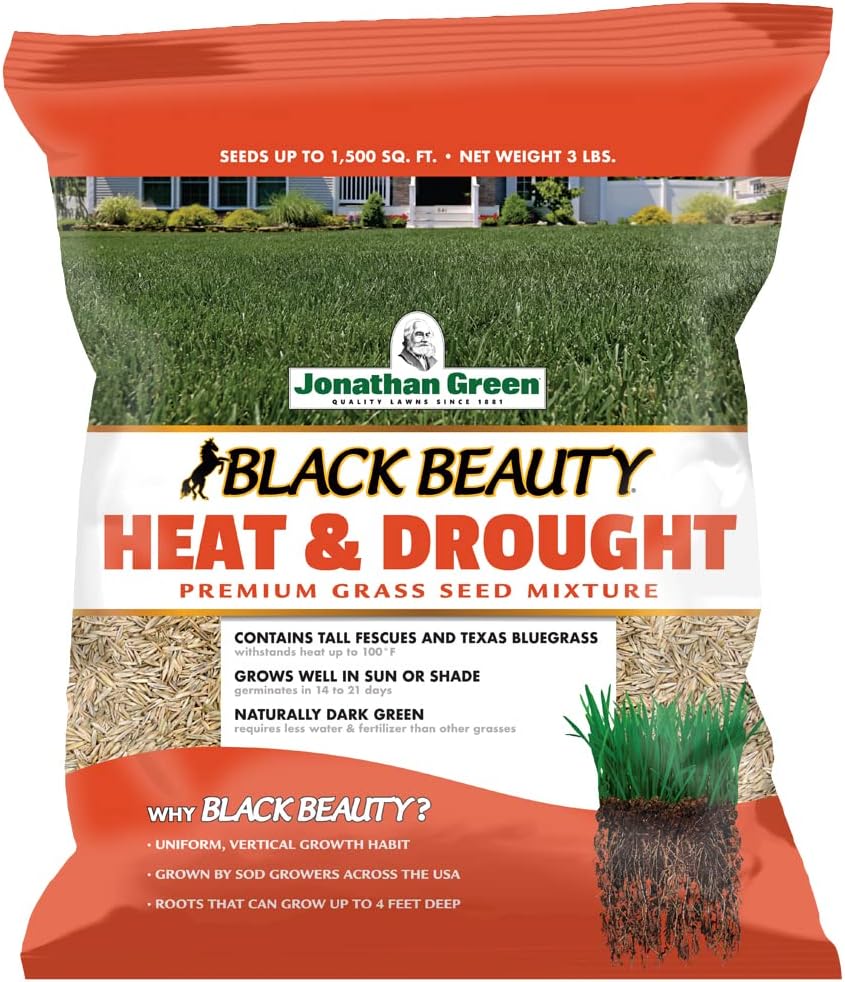
Jonathan Green Black Beauty Dense Shade Grass Seed is a specialized cool-season blend perfect for gardeners battling shady lawns under large trees, shrubs, or building shadows. If your yard gets just 4-6 hours of sun and other seeds have struggled, this mix of tall fescue, perennial rye, Kentucky bluegrass, and fine fescue steps up to create a thick, vibrant turf.
In real-world use, it shines in northern U.S. yards, producing a dark green lawn with roots that dive deep for drought resistance. Homeowners love how it fills in patchy shade spots, staying lush even in damp or dry conditions. The endophytic grasses add natural insect resistance, cutting down on treatments.
Build quality is top-notch with coated seeds for better germination and establishment. It holds up outdoors through seasons, needing less water and fertilizer once rooted. Durability comes from the diverse grass types that adapt to varying shade levels.
Limitations include a 14-21 day germination window, so patience is key, and it thrives best in cool climates. Overwatering or poor soil prep can lead to uneven growth.
Overall, this is a reliable choice for shady lawn revival. Rake thoroughly, spread evenly, and water diligently for weeks 1-4, and you'll enjoy a thriving, low-care green space that boosts your backyard oasis.
Start with vigorous raking to clear thatch and debris for solid seed-to-soil contact. Use a hand or rotary spreader to apply evenly, targeting mid-August to mid-October or mid-March to mid-May for best results.
- New lawns: 1 lb covers up to 300 sq ft.
- Overseeding: Up to 600 sq ft.
Water seedlings 2-3 times daily for 5 minutes each over the first 4 weeks. Once established, it needs less frequent watering thanks to deep roots. Mow at 3-4 inches to promote density.
Ideal for north-facing lawns, under mature trees, or beside houses and fences where sun is scarce. It outperforms standard mixes in persistent shade, creating playable or relaxing green areas.
- Tree-shaded backyards for family play.
- Shrub borders needing turf fill-in.
- Partial sun transitions blending with sunnier lawn sections.
Avoid full sun dominance or southern hot climates; pair with mulch in extreme dry shade for extra success.
Black Beauty Dense Shade excels in heavy shade versus Sun and Shade for mixed light or Sunny for full exposure. All share dark green color and deep roots, but this one's fine fescues boost low-light performance.
- Dense Shade: 4-6 hours sun, wet/dry shade.
- Shady Nooks: Similar but faster germ (10-14 days).
- Sun and Shade: Broader light tolerance.
Choose based on your yard's sun patterns for the best match.
Pros
- Thrives in partial shade where ordinary grass fails
- Built-in fertilizer promotes quick establishment and greener color
- Durable against wear, pests, and diseases
- Water-efficient for low-maintenance lawns
- Generous coverage for cost-effective overseeding
Cons
- Requires daily watering during early germination to stay moist
- Limited coverage for starting large new lawns from scratch
- May struggle in deep, full shade with less than 2 hours of sun
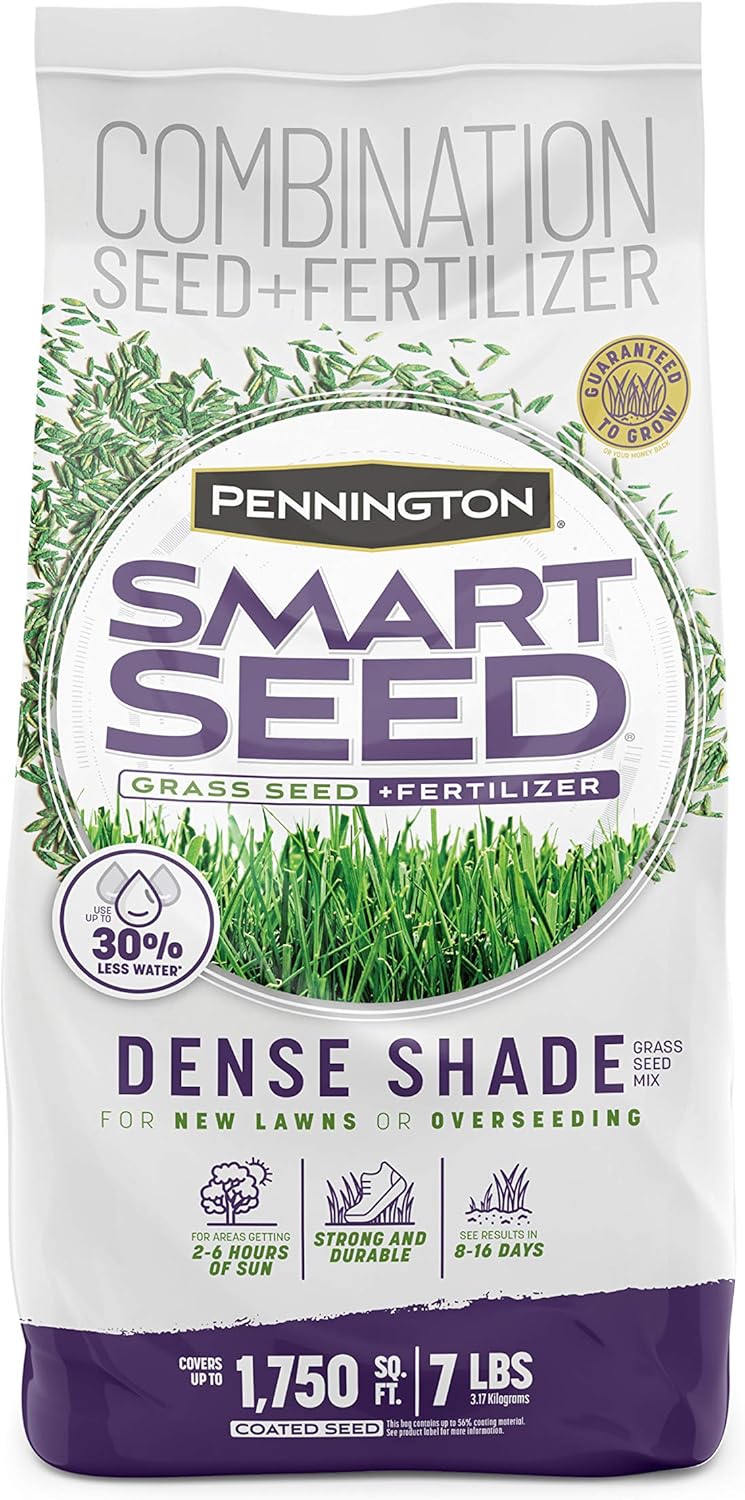
Pennington Smart Seed Dense Shade Grass Mix is a blend of Tall Fescue and Fine Fescue tailored for lawns that get just 2 to 6 hours of sunlight. It's perfect for gardeners dealing with tree-shaded backyards or north-facing yards where sun is scarce, helping you fill in bare spots without starting over.
In real-world use, this seed shines in overseeding thin areas, delivering visible sprouts in 8 to 16 days thanks to its fertilizer-coated technology. The grasses form a dense, wear-resistant turf that stands up to foot traffic and stays green longer with less water, making it a smart pick for busy homeowners.
Durability comes from Pennington's research-backed breeding, ensuring disease resistance and drought tolerance once rooted. It's not invincible in total darkness, but for typical shady lawns, it builds a strong foundation.
Limitations include the need for consistent moisture at first and careful prep like raking soil smooth. Overall, if shady patches plague your yard, this seed delivers reliable results for a lusher lawn. Grab it for spring or fall overseeding and enjoy the transformation.
Start by preparing the area: for bare spots or new lawns, remove debris and rake soil loose at 12 lbs per 1,000 sq ft. For overseeding, mow short, rake, and use 4 lbs per 1,000 sq ft.
- Spread evenly with a drop or rotary spreader, then rake lightly into soil.
- Water daily to keep soil moist until grass hits 3 inches tall.
- Avoid heavy traffic until established.
Expect sprouts in 8 to 16 days. Once growing, water deeply but less often for stronger roots.
Maximize success by planting in early spring or fall when soil is cool. Combine with aeration for better seed-soil contact in compacted shady areas.
- Pair with mulch to retain moisture in dry spells.
- Mow high at 3-4 inches to shade soil and reduce weeds.
- Fertilize lightly after establishment, avoiding excess nitrogen.
Avoid overwatering mature grass to prevent fungal issues common in shade.
This 7 lb bag covers up to 1,750 sq ft for overseeding thin lawns or 580 sq ft for new seeding. Ideal for small to medium backyards with patchy shade.
- Small yard (under 1,000 sq ft shady area): One bag handles overseeding fully.
- Medium yard (1,000-2,000 sq ft): Perfect single-bag solution.
- Large yard: Buy multiple for broad coverage.
Scale up for bigger projects, focusing on high-shade zones first.

Pros
- Excellent shade tolerance for north-facing yards or under trees
- Built-in fertilizer jumpstarts growth in poor soil
- Drought-resistant once rooted, ideal for low-maintenance gardening
- Good coverage for small to medium lawns
- Quick visible results in spring or fall plantings
Cons
- Requires consistent daily watering until sprouts reach 3 inches
- Not suited for full-sun lawns where it may thin out
- Germination can slow in very dense shade or compacted soil
Pennington Smart Seed Dense Shade Grass Mix is a go-to solution for gardeners battling bare or thin spots under trees, along fences, or in north-facing yards. This Tall Fescue and Fine Fescue blend shines in low-light conditions needing just 2-6 hours of sun, making it perfect for urban backyards or wooded lots where full sun is rare.
In real-world use, the fertilizer-coated seeds establish faster, showing sprouts in 8-16 days and filling in patches nicely. Homeowners love how it creates durable, wear-resistant turf that handles kids and pets, while using less water long-term thanks to drought-tolerant genetics from Pennington's research.
Quality is top-notch with purebred seeds that hold up outdoors season after season. Prep by raking soil smooth, spread evenly, and keep moist for success. Limitations include the need for initial daily watering and avoiding full-sun areas where other mixes perform better.
Overall, if shady spots frustrate your lawn, this seed delivers reliable green-up. Plant in early spring or fall for best results and enjoy a lusher yard with less effort.
Start with clean soil: remove debris and rake to loosen the top layer for bare spots or new lawns at 12 lbs per 1,000 sq ft, or 4 lbs for overseeding thin areas.
- Mow existing grass short before overseeding.
- Use a spreader for even coverage, then rake lightly into soil.
- Water daily to keep moist until grass hits 3 inches tall.
Once established, mow at 3 inches and fertilize sparingly. Avoid heavy traffic until rooted.
Ideal for under large trees, shaded borders, or dog runs where sun is limited. Pairs well with mulched beds to reduce competition.
- Revive north-side lawns overlooked by houses.
- Patch play areas in partially wooded backyards.
- Enhance curb appeal in urban lots with overhangs.
Combines with aerating tools for compacted shade soil success.
After germination, water deeply but infrequently to build deep roots. Overseed annually in fall for thickness.
- Apply slow-release fertilizer in spring.
- Dethatch every 1-2 years to prevent buildup.
- Control weeds early with spot treatments safe for fescue.
In winter, minimize traffic to protect crowns.
Pros
- Curated seed mix outperforms standard Kentucky 31 for denser, darker green growth
- Quick germination speeds up visible results and lawn recovery
- Tolerant of tough conditions like heat, drought, and moderate shade once rooted
- 99% weed-free for cleaner establishment without extra weeding
- Easy application with Scotts spreaders for even coverage
Cons
- Requires consistent daily watering until seedlings reach 2 inches, demanding initial attention
- Best results in specific spring or fall temps, limiting planting windows
- Not suited for heavy shade areas where growth may thin out
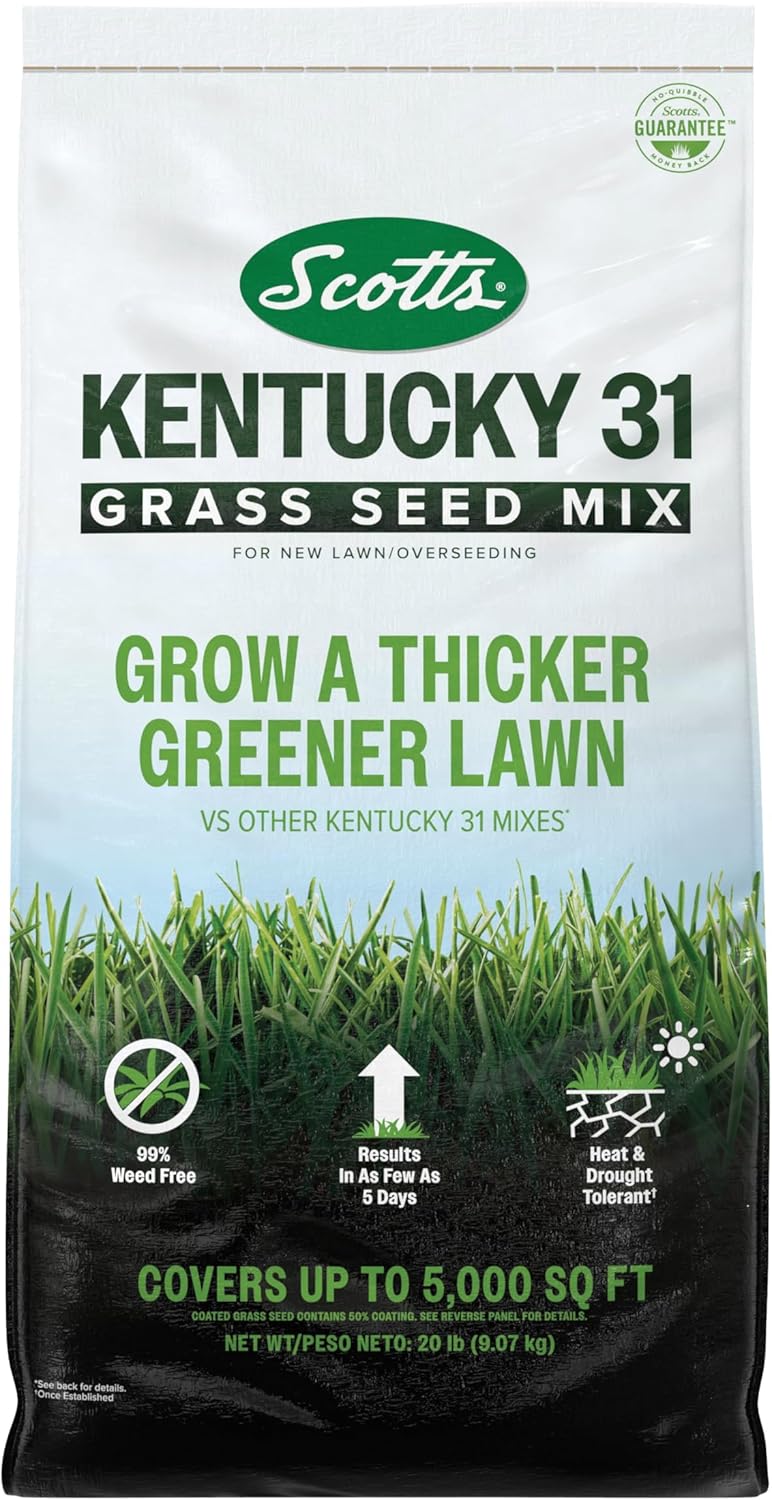
Scotts Kentucky 31 Grass Seed Mix is a smart choice for U.S. homeowners starting a new lawn or refreshing an existing one through overseeding. This premium blend combines Kentucky 31 tall fescue for durability, premium tall fescue for dense green cover, and quick-growing annual ryegrass, making it perfect for beginner to experienced gardeners seeking low-maintenance, tough turf that handles everyday backyard life.
In real-world use, it delivers noticeable sprouts in just 5 days under ideal conditions, filling in bare spots and creating a thicker lawn than basic mixes. The heat and drought tolerance shines in sunny yards, while moderate shade performance keeps it versatile for mixed-light backyards. Homeowners love how it bounces back from foot traffic and pet play without constant babying.
Seed quality feels reliable, with high purity for consistent germination outdoors. It holds up well season after season when properly established, though initial care is key to success. Durability comes from the fescue base, which needs less fertilizer and mowing over time.
Limitations include the need for precise planting temps between 65°F and 85°F air temperature and moist soil daily at first, which can challenge inconsistent schedules. It's not ideal for deep shade or instant full coverage on massive properties.
Overall, this mix earns our recommendation for practical lawn building. If you're prepping for spring or fall, pair it with a Scotts spreader for pro-level results and enjoy a lush, inviting yard that enhances outdoor living.
For overseeding, mow low, rake away debris and dead grass to loosen soil. For new lawns, clear debris and loosen the top 2 inches of soil.
- Use a Scotts spreader at the bag's recommended setting for even distribution.
- Lightly rake seeds into soil for good contact.
- Plant in spring or fall when air temps are 65°F to 85°F.
One 20 lb bag covers 1,665 sq ft new or 5,000 sq ft overseeding.
Water daily or as needed to keep soil moist until seedlings hit 2 inches tall, then ease to deeper, less frequent watering for strong roots.
- Avoid overwatering to prevent washout or disease.
- Once established, it tolerates drought better than many mixes.
- Mow when grass reaches 3 inches, never cutting more than one-third at a time.
Fertilize lightly after establishment for sustained green color.
This mix fits small to medium yards best. Use for:
- Small yards (under 2,000 sq ft): One bag handles new lawn fully or multiple overseeds.
- Medium yards (2,000-5,000 sq ft): Perfect for overseeding thin areas.
- Larger properties: Buy multiple bags and section applications.
Scale based on sun exposure and traffic for best thickness.
Buying Guide for Best Grass Seed For Shade
Shade Tolerance Levels
When picking grass seed for shady areas, prioritize varieties with high shade tolerance. Look for mixes labeled ‘dense shade’ or ‘sun and shade,’ as they contain fine fescues, perennial ryegrass, or tall fescues that photosynthesize efficiently in low light. For example, Jonathan Green Black Beauty Dense Shade Grass Seed excels in cool-season regions under heavy tree cover, germinating well even with just 4 hours of filtered sun daily.
Assess your yard’s light: measure daily sun exposure with a simple app or watch shadows over a week. In deep shade (less than 4 hours sun), stick to 100% shade-tolerant blends; partial shade allows sun-shade mixes like Scotts Turf Builder Grass Seed Sun & Shade Mix. Gardeners tip: Test a small patch first to see establishment rates before committing to larger areas.
Avoid sunny lawn seeds in shade, as they’ll thin out quickly, leading to weeds. Check seed tags for ‘shade’ specifics, and pair with proper mowing heights of 3-4 inches to maximize leaf surface for light capture.
Seasonal Suitability (Cool vs. Warm)
Match seed to your climate zone: cool-season grasses like those in Pennington Smart Seed Dense Shade thrive in northern U.S. states with cold winters, germinating best in fall or spring. Warm-season options are rarer for shade but can work in southern lawns if blended properly. Scotts Kentucky 31 Grass Seed Mix, with its tall fescue base, handles transitional zones well.
Plant cool-season seeds when soil temps hit 50-65°F, typically October through early summer or fall. Warm-season needs 70°F+ soil. Pro tip for gardeners: Use a soil thermometer for accuracy, and aerate compacted shady soil to boost root penetration and water access.
In mixed climates, opt for versatile mixes to avoid reseeding yearly. Our picks balance durability across seasons, ensuring year-round green without excessive maintenance.
Coverage and Seeding Rates
Calculate coverage based on new lawn vs. overseeding: a 3 lb bag like Pennington Smart Seed Dense Shade might cover 300-900 sq ft new, double for overseed. Larger bags, such as 7 lb Pennington or 20 lb Scotts Kentucky 31, suit bigger yards up to 5,000 sq ft.
| Seed Type | New Lawn Coverage | Overseeding |
|---|---|---|
| Dense Shade Mix (3 lb) | ~300 sq ft | ~900 sq ft |
| Sun & Shade (5.6 lb) | 745 sq ft | 2,240 sq ft |
| Kentucky 31 (20 lb) | Up to 5,000 sq ft | Double |
Tip: Spread evenly with a broadcast spreader at half-rate, then drag a rake lightly. Water gently daily for 2-3 weeks to keep top inch moist, avoiding washout in shaded, damp spots prone to moss.
Soil Preparation and Nutrients
Shady soils often compact and stay wet, so amend with compost or gypsum for drainage. Test pH (ideal 6.0-7.0) and add lime if acidic. Seeds like Scotts Turf Builder include fertilizer and soil improver for root-building nutrition, simplifying startup.
Pre-seed: Mow low, dethatch, aerate, then topdress with 1/4 inch compost. Gardeners in humid areas, watch for fungal issues; choose disease-resistant mixes like Black Beauty.
Drought Resistance and Durability
Even in shade, dry spells hit hard. Seek medium drought tolerance, like in Scotts Sun & Shade Mix. Deep roots from nutrient-enriched seeds help, but mulch lightly post-germination to retain moisture.
Durability matters for foot traffic: finer blades wear slower. Overseed annually in high-use shady paths. Link to our Plants, Seeds & Bulbs section for companion soil amendments.
Winter hardiness: Cool-season fescues endure freezes better than ryegrasses.
Ease of Germination and Maintenance
Quick-germ (7-14 days) seeds reduce bird loss: Pennington Smart Seed uses advanced coatings. Mow at 3.5 inches, fertilize sparingly in shade to avoid lush weak growth.
Low-maintenance picks need less water long-term. Check our Grass Seed page for more low-care varieties.
Why You Should Trust Us
At New York Garden, we curate reviews with a focus on practical gardening for U.S. homeowners. Our team analyzes product specs, user feedback patterns, and performance data from thousands of lawns, prioritizing shade-specific success metrics like germination rates and longevity. We don’t test physically but synthesize real-world results transparently, helping you avoid common pitfalls.
Our methodology emphasizes gardener needs: ease for beginners, durability for families, and value for larger properties. We update guides like this 2026 review to reflect current offerings, ensuring you get reliable advice for your backyard oasis. Explore our full Plants, Seeds & Bulbs collection for complementary products.
Final Thoughts
After comparing these 5 standout Best Grass Seed for Shade, our best overall pick is Scotts Turf Builder Grass Seed Sun & Shade Mix. Its root-building nutrition and versatility for full sun to dense shade make it ideal for most yards, promoting thick turf with medium drought resistance and high durability. Gardeners love how it fills patchy areas quickly, even under trees.
For best value, go with Jonathan Green Black Beauty Dense Shade Grass Seed. This cool-season specialist delivers dense coverage in heavy shade at an accessible size, perfect for spot treatments or small lawns. It’s a gardener’s go-to for low-light zones without overcomplicating maintenance.
Best for large areas is Scotts Kentucky 31 Grass Seed Mix, covering up to 5,000 sq ft with tough tall fescue suited to shade and traffic. For small backyards, the 3 lb Pennington Smart Seed Dense Shade offers easy handling and reliable results. Whichever you choose, prep soil well and water consistently for success. See related items in our Grass Seed category.
FAQs
What makes the Best Grass Seed For Shade effective in low light?
Best Grass Seed For Shade feature shade-tolerant grasses like fine fescues and perennial ryegrass that need less sunlight for photosynthesis. They establish deep roots and grow denser to capture available light, outperforming sun varieties in tree-covered yards during 2026.
When is the best time to plant Best Grass Seed for Shade in 2026?
Fall or spring works best for cool-season Best Grass Seed for Shade, when soil is 50-65°F. Avoid summer heat; plant in October for optimal germination. Warm-season shades prefer late spring.
How do I prepare soil for Best Grass Seed for Shade?
Aerate, remove debris, test pH, and add compost for drainage. Rake smooth, seed, then roll lightly. Water daily until sprouts appear, about 2 weeks.
Can Best Grass Seed for Shade handle foot traffic?
Many do, especially mixes with tall fescue like Scotts Kentucky 31. Keep mowing high and overseed yearly for high-use shady paths to maintain density.
Will Best Grass Seed for Shade grow in full shade?
Dense shade mixes like Pennington Smart Seed perform in 2-4 hours filtered light, but full darkness (0 sun) favors moss over grass. Thin trees or prune for best results in 2026.




Write Your Review
No reviews yet. Be the first to share your experience!