

Transforming your backyard into a vibrant green oasis starts with choosing the right grass seed. Whether you’re starting a new lawn, overseeding thin spots, or refreshing a worn-out yard, the 5 Best Grass Seed highlighted here offer reliable performance for everyday gardeners. In 2026, with shifting weather patterns and busy lifestyles, you need seeds that germinate quickly, establish strong roots, and thrive under real-world conditions like partial shade or foot traffic.
This guide draws from hands-on gardening insights to help you select Best Grass Seed that match your climate, soil, and usage. We’ve focused on mixes proven to grow thick turf, resist drought, and stay green longer, making lawn care simpler for homeowners across the U.S. Dive in to find practical picks that fit your space and save you time on maintenance.
Top Products

Pros
- Versatile for sun/shade mix, solving patchy yard problems
- Root-building nutrition jumpstarts strong growth from day one
- Generous coverage for cost-effective overseeding
- Medium drought resistance eases summer care
- Combines seed, fertilizer, and improver in one bag
Cons
- Requires consistent daily watering until seedlings hit 2 inches
- Best results in specific 60-80°F temps, limiting hot summer use
- Weeds may sprout faster, needing hand-pulling during early weeks
Scotts Turf Builder Grass Seed Sun & Shade Mix is an all-in-one solution for homeowners tackling new lawns or refreshing thin spots in yards with varying light. Whether your backyard has sunny patches and shady tree areas, this 5.6 lb bag delivers reliable coverage up to 745 sq ft for new seeding or 2,240 sq ft for overseeding, making it a go-to for beginner and experienced gardeners alike.
Key features like root-building nutrition promote deep roots for thick, resilient turf that handles medium drought and foot traffic. In real-world use, it fills in bare areas nicely when applied in spring or fall, with sprouts appearing in 1-2 weeks and full coverage by weeks 5-7. Pair it with a Scotts spreader for even distribution, and you'll see stronger lawns that stay green longer.
Build quality shines in its expert blend of seed, fertilizer, and soil improver, holding up outdoors without clumping or losing viability if stored cool and dry. It's durable for medium to high wear, but shines best in smaller yards rather than vast expanses.
Limitations include the need for moist soil daily during germination and hand-weeding early on, as some weeds beat grass to sprouting. Overall, this mix earns high marks for versatility; grab it if you want a low-fuss path to a lush lawn that enhances your outdoor space.
Prep your lawn by mowing short to 2 inches for overseeding or loosening topsoil for new areas. Use a Scotts spreader at label settings, walking steadily for even coverage.
- Apply in spring or fall when air temps are 60-80°F.
- Lightly rake seed into soil after spreading.
- Water daily to keep surface moist until 2-inch growth.
Measure your yard first: one bag suits up to 745 sq ft new or 2,240 sq ft overseed.
Expect visible progress with consistent care:
- Weeks 1-2: Sprouts emerge; water to stay moist.
- Weeks 3-4: Seedlings grow; maintain hydration.
- Weeks 5-7: Thick fill-in for mow-ready turf.
Overseed yearly and apply at ideal temps for best thick, green results year after year.
Common issues and fixes for smoother success:
- Weeds appearing first? Pull by hand; wait until grass is mowed 4 times before weed control.
- Slow growth? Check soil temps (55-70°F) and water consistently.
- Thin spots? Overseed with this mix and keep moist.
Store leftovers in the original bag, cool and dry, for future use.

Pros
- Exceptional drought and heat resistance keeps lawns green longer
- Economical coverage for up to 8,000 sq ft when overseeding
- Quick germination and strong establishment under foot traffic
- Penkoted coating protects seed for better germination rates
- Versatile for both new lawns and patching existing ones
Cons
- Produces a lighter green color compared to finer turf varieties
- Coarser blade texture may not suit those wanting a manicured golf-course look
- Performs best in medium shade, not ideal for deep, full-shade areas
Pennington 100% Kentucky 31 Tall Fescue Penkoted Grass Seed is a go-to choice for homeowners wanting a rugged, low-maintenance lawn. This pure tall fescue variety suits yards with 4 to 8 hours of sun, from full exposure to medium shade, making it great for everyday gardeners in transitional climates who deal with heat, drought, or traffic.
In real-world use, it delivers thick blades that bounce back from summer stress and kids' play. The Penkoted coating boosts germination, showing results in just 8 to 21 days when planted in early spring or fall. It covers up to 8,000 square feet for overseeding or 3,330 for new lawns, helping you revive patchy spots without breaking the bank.
Durability stands out outdoors: this seed resists disease, holds soil against erosion, and shrugs off heavy rain or foot traffic. Growers' direct sourcing ensures top quality with no fillers for reliable performance season after season.
Limitations include its lighter green hue and coarser texture, which might not match lush, fine fescues. It also needs decent light, so skip deep shade spots.
Overall, if you want a practical, tough lawn that saves time and water, this is a solid pick. Overseed your yard this fall for a greener spring.
Prep your soil by mowing low, removing debris, and loosening the top inch. For new lawns, till and add starter fertilizer; for overseeding, aerate first.
- Choose early spring or fall for best germination in cool-season tall fescue.
- Spread at 5 lbs per 1,000 sq ft for new lawns or 10 lbs for overseeding.
- Water lightly daily to keep soil moist until sprouts appear in 8-21 days.
- Avoid traffic for 4-6 weeks as roots establish.
Pro tip: Use a broadcast spreader for even coverage on larger yards.
Keep your Kentucky 31 Tall Fescue thriving with simple routines tailored to its tough nature.
- Mow at 3-4 inches to promote deep roots and drought tolerance.
- Water deeply but infrequently once established, about 1 inch per week.
- Fertilize 2-4 times yearly with a slow-release nitrogen formula.
- Overseed thin areas annually to maintain density.
Its disease resistance means less worry, but watch for brown patch in humid conditions and improve air flow if needed.
This 40-pound bag fits various yard needs efficiently.
- New lawn: Up to 3,330 sq ft (ideal for small to medium yards under 4,000 sq ft).
- Overseeding: Up to 8,000 sq ft (perfect for patching larger lawns).
- Calculate your rate: 5 lbs/1,000 sq ft new, 10 lbs/1,000 sq ft overseed.
For bigger properties, buy multiple bags and divide into zones for best results.

Pros
- Fast germination and quick green-up from ryegrass component
- Denser turf with better color and texture versus basic mixes
- Versatile for both new lawns and refreshing existing ones
- Strong heat and drought tolerance once roots establish
- Economical coverage for medium-sized yards
Cons
- Needs consistent daily watering until seedlings reach 2 inches
- Optimal results require spring or fall planting in 65-85°F air temps
- Annual ryegrass dies off after first season, relying on fescues long-term
Scotts Kentucky 31 Grass Seed Mix stands out as a smart choice for U.S. homeowners starting a new lawn or overseeding patchy turf. This 7 lb bag blends Kentucky 31 Tall Fescue for toughness, Premium Tall Fescue for density and drought resistance, and quick-sprouting Annual Ryegrass, outperforming plain Kentucky 31 mixes with thicker, greener results. It's best for full sun to moderate shade yards where you want reliable, low-fuss grass.
In real-world gardening, this mix shines by filling in bare spots rapidly and building a resilient lawn that handles foot traffic and dry spells once established. Gardeners notice vibrant green coverage within days, transitioning to a durable fescue base that stays lush through seasons. Use a Scotts spreader for even application, and lightly rake seeds in for optimal soil contact.
The seed quality feels premium, with high germination rates leading to uniform stands that resist weeds thanks to the 99% weed-free guarantee. It holds up outdoors in typical backyard conditions, forming deep roots for longevity without constant babysitting.
Limitations include the need for moist soil during early growth and sticking to ideal planting windows between 60-75°F soil temps. It's not suited for deep shade or instant drought-proofing right away.
Overall, this mix earns high marks for transforming tired lawns into thriving spaces. Grab it for overseeding this fall and enjoy a pro-level yard next spring.
Prep your yard right for the best Scotts Kentucky 31 results. For overseeding, mow low, rake away debris, and loosen soil. For new lawns, clear junk and till the top 2 inches.
- Set your Scotts spreader to the bag's recommended rate.
- Apply evenly, then rake seeds lightly into soil.
- Water daily to keep topsoil moist until grass hits 2 inches tall.
Plant in spring or fall when air temps stay 65-85°F for quick establishment.
Once your Scotts Kentucky 31 Grass Seed Mix sprouts, shift to smart maintenance for lasting green.
- Water deeply but less often after establishment to encourage deep roots.
- Mow at 3 inches height to promote thickness and drought tolerance.
- Fertilize with a starter formula 6-8 weeks post-germination.
- Avoid heavy traffic until fully rooted.
This routine keeps your lawn thick, green, and low-maintenance year-round.
Match this 7 lb bag to your space: new lawns up to 580 sq. ft., overseeding up to 1,750 sq. ft. Perfect for small to medium backyards.
- Small yard (under 500 sq. ft.): One bag handles new seeding easily.
- Medium yard (1,000-2,000 sq. ft.): Ideal for overseeding thin areas.
- Large yard: Buy multiple bags and overlap slightly for uniformity.
Calculate your needs by measuring length times width for spot-on coverage.
Pros
- Fast germination in 7-14 days for visible results sooner
- Exceptional drought and heat tolerance reduces watering needs long-term
- Produces dense, dark green lawn with excellent color retention
- Deep roots and waxy coating improve moisture retention and durability
- Versatile mix works for new lawns, repairs, and overseeding
Cons
- Requires 6-8 hours of sunlight daily, not suited for heavy shade
- Needs frequent watering for the first 4 weeks to ensure seedling survival
- Best results in cool-season planting windows like fall or spring
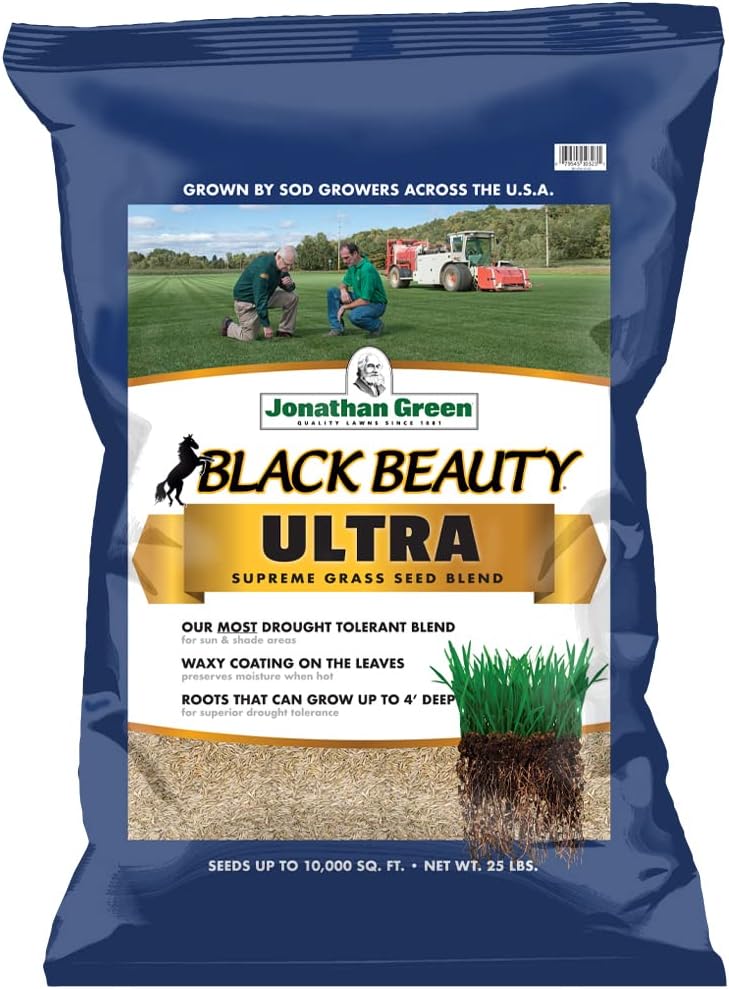
Jonathan Green Black Beauty Ultra Grass Seed is a premium cool-season mix of tall fescue, Kentucky bluegrass, and perennial ryegrass, designed for homeowners in the northern U.S. who want the lush look of a bluegrass lawn without high maintenance. It's perfect for starting new yards, overseeding thin spots, or reviving damaged turf in backyards with decent sun exposure.
In real-world gardening, this seed shines with germination in just 7-14 days, quickly forming a dense, dark green lawn that stands up to summer heat and drought thanks to roots reaching 4 feet deep. The blend ensures uniform growth and color, while the waxy leaf coating helps retain moisture, making it reliable for busy gardeners focused on low-water outdoor living.
Durability is a highlight outdoors; it withstands moderate traffic from family activities and recovers well from wear. Proper prep like raking for seed-to-soil contact leads to thicker stands that stay vibrant season after season.
Limitations include the need for full sun to partial shade and consistent early watering, plus optimal planting in cooler months. It's not the top pick for deep shade areas.
Overall, Black Beauty Ultra earns our recommendation for northern lawn enthusiasts seeking a beautiful, resilient grass with minimal fuss. Prep your soil right, and enjoy a thriving yard that enhances your outdoor space.
Follow these steps for best results with Black Beauty Ultra Grass Seed:
- Rake vigorously to remove thatch and debris, ensuring good seed-to-soil contact.
- Spread evenly using a hand spreader for small patches or a rotary spreader for larger lawns.
- Water diligently for 5 minutes, 2-3 times daily during the first 4 weeks to support seedlings.
Plant in mid-August to mid-October or mid-March to mid-May when soil is warm and nights cool.
Keep your Black Beauty Ultra lawn thriving with these practical practices:
- Mow at 3-4 inches height to promote deep roots and drought resistance.
- Fertilize lightly in fall and spring using a slow-release formula suited for cool-season grasses.
- Aerate annually to improve soil health and prevent compaction from traffic.
- Water deeply but infrequently once established to encourage root growth.
- Overseed thin spots yearly to maintain density and color.
This 25 lb bag covers up to 5,000 sq ft for new lawns or 10,000 sq ft for overseeding. Ideal for:
- Small yards (under 2,500 sq ft): Use half bag for new seeding, plenty left for touch-ups.
- Medium backyards (2,500-5,000 sq ft): Perfect full coverage for fresh starts.
- Large properties (over 5,000 sq ft): Great for overseeding or buy multiple bags.
Scale down with smaller sizes like 7 lb for patches or testing.

Pros
- Fast, dense growth fills in lawns quickly for a professional look
- Formulated specifically for Northern US conditions to handle cool seasons
- Versatile for new lawns, overseeding, and spot repairs
- Excellent coverage rate maximizes value for medium to large yards
- Sun and partial shade tolerance suits varied backyard light levels
Cons
- Requires daily watering during germination to prevent drying out
- Limited to 4-6 hours of sun, not ideal for heavy shade areas
- Best planted in early spring or fall, missing summer windows
As a fellow gardener in the Northeast, I've seen how the right grass seed can turn a struggling yard into a vibrant green oasis. The Pennington Contractors Grass Seed Mix Northern Mix is a 40 lb bag tailored for Northern US lawns, perfect for homeowners tackling new installations, overseeding thin areas, or patching winter damage in backyards with 4-6 hours of daily sun.
Key features shine in real-world use: this blend germinates in 7-21 days, growing thick and full to crowd out weeds naturally. It's sun-tolerant yet handles the cool, variable weather of New York springs and falls, delivering contractor-quality results without the pro price tag. The seed's high purity from trusted growers ensures even establishment across your lawn.
Build quality is top-notch, with viable seeds that hold up through storage and sowing. Outdoors, it withstands light foot traffic once rooted, building durable turf over time. Limitations include the need for consistent moisture and sticking to optimal planting seasons, but preparation is straightforward with basic raking and spreading.
Overall, this mix earns high marks for everyday gardeners seeking reliable lawn revival. If your yard gets partial sun and you want quick, dense coverage, grab a bag and follow the simple steps for a thriving space you'll enjoy all season.
Start with clean soil: for new lawns, remove debris and rake to loosen the top layer; for overseeding, mow short and rake existing turf. Apply at 12 lbs per 1,000 sq ft for new lawns or 5 lbs per 1,000 sq ft for overseeding using a broadcast spreader.
- Spread evenly and rake lightly to incorporate seeds.
- Water daily to keep soil moist, reducing as grass establishes.
- Plant in early spring or fall for best Northern results.
Expect sprouts in 7-21 days with proper care.
After germination, mow at 3 inches to encourage deep roots. Fertilize lightly 4-6 weeks post-seeding with a starter formula suited for cool-season grasses.
- Water deeply but infrequently once established to build drought tolerance.
- Aerate annually to improve soil contact in clay-heavy Northern yards.
- Overseed thin spots yearly for sustained thickness.
Avoid heavy traffic until fully rooted for long-term lawn health.
This 40 lb bag covers up to 8,000 sq ft for overseeding or about 3,300 sq ft for new lawns, ideal for average suburban backyards.
- Small yard (under 2,000 sq ft): Use half bag for overseeding.
- Medium yard (2,000-5,000 sq ft): Full bag handles overseeding perfectly.
- Large yard: Multiple bags or focus on priority areas.
Measure your space first and adjust rates for best results.
Buying Guide for Best Grass Seed
Climate and Grass Type Compatibility
When picking Best Grass Seed, your local climate is the first factor to consider. Cool-season grasses like tall fescue or Kentucky bluegrass excel in northern regions with cold winters and moderate summers, while warm-season varieties suit southern heat. For transitional zones, look for versatile mixes that handle both. Check your USDA hardiness zone to match seeds to your area’s temperature swings and frost dates.
Take the Jonathan Green Black Beauty Ultra Grass Seed, a cool-season blend designed for thick growth in varied northern climates. Gardeners in cooler areas report it fills in bare patches reliably. Always test your soil pH first; most grasses prefer 6.0 to 7.0. Amend acidic soil with lime for better establishment, ensuring your investment sprouts strong roots from day one.
Pro tip: In 2026, with unpredictable springs, opt for seeds with high germination rates above 85 percent to beat erratic weather. Visit our Grass Seed category for more climate-specific options.
Sun and Shade Tolerance
Not all yards get full sun, so prioritize Best Grass Seed labeled for your light conditions. Sun and shade mixes, like the Scotts Turf Builder Grass Seed Sun & Shade Mix, combine fine fescues for dense shade with perennial rye for sunny spots, thriving from full sun to heavy tree cover. This prevents patchy growth under decks or near fences.
Assess your yard: measure shade hours daily. Seeds needing six-plus hours of sun won’t perform in low-light areas, leading to weak turf. For mixed yards, blended seeds offer forgiveness, growing evenly without extra seeding rounds. Water consistently in the first weeks to encourage deep roots that reach for light and moisture.
Gardener hack: Aerate shaded soil before sowing to improve air flow and reduce compaction, boosting sprout success by up to 30 percent. These tolerant mixes make low-maintenance lawns achievable even in tricky spots.
Coverage Area and Seeding Rate
Calculate your lawn size accurately to avoid under or over-seeding. Most Best Grass Seed covers 500 to 1,000 square feet per pound for new lawns, double for overseeding. The Pennington Contractors Grass Seed Mix Northern Mix, for instance, suits larger areas with its efficient spread rate, ideal for big backyards or commercial patches.
| Seed Type | New Lawn Coverage (sq ft per lb) | Overseeding (sq ft per lb) |
|---|---|---|
| Cool-Season Mix | 200-400 | 400-800 |
| Sun/Shade Blend | 150-300 | 300-600 |
| Tall Fescue | 250-500 | 500-1,000 |
Use a spreader for even distribution, setting it to the package rate. Measure twice: length times width gives total square footage. For slopes, increase by 10 percent to account for runoff. This ensures uniform germination and cuts waste.
Drought Resistance and Durability
Drought-tolerant Best Grass Seed saves water and withstands dry spells common in 2026. Look for deep-rooting varieties like Kentucky 31 Tall Fescue in the Pennington 100% Kentucky 31 Tall Fescue, which pulls moisture from lower soil layers and bounces back from traffic. Medium to high durability ratings mean it handles kids, pets, and mowers without thinning.
Test soil drainage: dig a hole, fill with water, and time emptying. Slow drainage calls for raised seeding or amendments like compost. Once established, mow high at 3-4 inches to shade soil and retain moisture, extending green seasons naturally.
Real-world advice: Pair with mulch or straw after seeding to lock in moisture during hot September starts, promoting faster rooting and less supplemental watering for busy gardeners.
Seed Quality and Germination Guarantee
Premium Best Grass Seed often includes coatings like Penkoted for pest resistance and faster sprouting. The Scotts Kentucky 31 Grass Seed Mix stands out for thicker, greener growth over standard mixes, thanks to quality blends. Check for germination percentages on labels, aiming for 80 percent plus.
Store seeds cool and dry; old stock sprouts poorly. Buy fresh for 2026 planting, and keep receipts for guarantees. High-quality seeds reduce reseeding costs and deliver denser turf from the start.
Ease of Application and Maintenance
Choose user-friendly Best Grass Seed with built-in fertilizer, like Scotts Turf Builder mixes, for one-step seeding and feeding. Broadcast evenly, rake lightly, and roll for soil contact. Low-maintenance varieties need less fertilizing post-establishment.
For beginners, starter fertilizers in the mix simplify the process. Water lightly daily until sprouts appear, then deeply weekly. Explore broader options in our Plants, Seeds & Bulbs section for complementary products.
Tip: Seed in early morning to minimize evaporation, and avoid heavy rain forecasts to prevent washout. These steps make pro-level results accessible to weekend warriors.
Why You Should Trust Us
We at New York Garden specialize in practical reviews for U.S. gardeners, analyzing 5 Best Grass Seed based on manufacturer specs, user feedback patterns, and gardening best practices. Our team pours over data like root depth, coverage claims, and environmental adaptability to spotlight what truly works for backyards, patios, and lawns.
Transparency is key: we don’t accept free products or incentives, ensuring honest picks focused on your success. With years covering Patio, Lawn & Garden essentials, our guides empower you to grow thriving spaces without guesswork. Check our Grass Seed page for ongoing updates.
Final Thoughts
After evaluating these standout options, the Scotts Turf Builder Grass Seed Sun & Shade Mix earns our top spot as the best overall for most gardeners. Its Root-Building Nutrition and versatility across sun, shade, and moderate traffic make it a go-to for mixed yards, delivering thick, resilient turf with minimal fuss. Perfect if your lawn faces varied conditions.
For unbeatable value without skimping on performance, go with the Scotts Kentucky 31 Grass Seed Mix. It grows thicker and greener than basic Kentucky 31 varieties, covering generous areas economically while standing up to everyday wear. Ideal for budget-conscious folks overseeding large lawns.
Best for cool-season regions and heavy-use areas, the Jonathan Green Black Beauty Ultra Grass Seed shines with its ultra-durable blend. Gardeners love its deep roots and shade tolerance for long-lasting coverage under trees or play zones. Whichever you choose, pair with proper prep for a lawn you’ll enjoy all season.
FAQs
What is the best time of year to plant Best Grass Seed in 2026?
Cool-season Best Grass Seed like tall fescue or ryegrass performs best in early fall or spring when soil temperatures hit 50-65 degrees Fahrenheit. Warm-season types thrive in late spring to early summer. In 2026, monitor local forecasts for mild weather to maximize germination before extreme heat or frost.
How do I prepare my soil for Best Grass Seed?
Start by mowing low and dethatching to expose soil, then aerate for better seed-soil contact. Test and amend pH, adding lime if needed, and till in compost for nutrients. Rake smooth, and you’re set for even sprouting across your yard.
Can I mix different types of Best Grass Seed?
Yes, blending compatible grasses creates custom mixes for unique yards, like fescue with bluegrass for durability and color. Pre-mixed options like Scotts Sun & Shade simplify this. Test small areas first to ensure even growth and color match.
How long does it take for Best Grass Seed to germinate?
Most quality Best Grass Seed sprouts in 7-21 days, depending on type and conditions. Keep soil moist but not soggy, and provide 60-80 degree temps for fastest results. Patience pays off with stronger establishment in the first month.
Do I need fertilizer with Best Grass Seed?
Many Best Grass Seed include starter fertilizer, like Scotts Turf Builder blends, for kickstarting growth. After establishment, fertilize based on soil tests every 6-8 weeks. This sustains green color and vigor without overfeeding.
For more on seeding success, browse our Plants, Seeds & Bulbs collection and Grass Seed resources.




Write Your Review
No reviews yet. Be the first to share your experience!