

As the leaves pile up and fall cleanup approaches in October 2026, having the right tools makes all the difference for gardeners. Best Pitchforks For Garden Cleanup are essential for turning soil, moving mulch, compost, and debris without straining your back. Whether you have a small backyard garden or a larger lawn, this guide to the 10 Best Pitchforks For Garden Cleanup helps you find durable options that fit your needs.
We focus on pitchforks that excel in garden cleanup tasks like aerating compacted soil, flipping compost piles, and clearing fallen leaves. These selections from trusted brands ensure you get reliable performance season after season. Dive in to see why these stand out for everyday gardeners like you.

Pros
- Wide tine head grabs more debris per lift for efficient yard cleanup
- Durable fiberglass handle resists weather damage and feels comfortable
- Versatile for composting, mulching, and coop cleaning in one tool
- Easy assembly with secure joint that holds up under pressure
- Balanced weight and length reduce strain on back and arms
Cons
- 5-pound weight may tire smaller users during very long sessions
- Wide head less maneuverable in tight garden spaces or narrow coops
- Fiberglass handle might feel less premium than wood to traditionalists
The COSITA Wide Pitchfork is a sturdy garden tool with 10 carbon steel tines on a 44-inch fiberglass handle, perfect for homeowners tackling compost piles, mulch spreading, and chicken coop cleanup. It suits beginner to experienced gardeners who want a reliable fork for everyday backyard chores without constant tool replacement.
In real-world use, the wide tine head shines by grabbing larger volumes of leaves, straw, or manure, speeding up tasks like turning compost heaps or prepping garden beds. The D-grip and ergonomic handle make lifting and tossing effortless, even when wet, helping you maintain good posture during extended yard work.
Build quality stands out with tough carbon steel tines that resist bending under heavy loads and a weatherproof fiberglass shaft that won't warp or splinter like wood. The reinforced joint ensures no wobbling after assembly, making it a long-term addition to your garden shed.
Limitations include its width, which can be tricky in cramped areas, and the 5-pound weight that might fatigue lighter users over hours. Still, for most mulch, compost, and manure jobs, it performs reliably.
Overall, grab this pitchfork if you handle organic matter regularly; it's a practical upgrade for efficient, strain-free gardening that keeps your outdoor space thriving.
This pitchfork excels in several key gardening tasks:
- Composting: Easily turns piles, aerating for faster breakdown.
- Mulching: Spreads bark or straw evenly over beds to retain moisture.
- Manure handling: Scoops and moves coop waste to enrich soil.
- Leaf cleanup: Lifts piles for fall yard prep without raking.
- Soil turning: Loosens garden beds before planting.
Pair it with gloves for best results in messy jobs.
Keep your pitchfork in top shape for years:
- Clean tines after each use by hosing off dirt and manure to prevent rust.
- Store upright in a dry shed; hang by the handle to avoid tine damage.
- Inspect the joint periodically and tighten if needed.
- Sharpen tine tips occasionally with a file for easier soil penetration.
- Avoid extreme rocky ground to preserve tine integrity.
Fiberglass handle needs no special treatment beyond wiping down.
A 10-tine wide head beats narrower forks by:
- Holding 30-50% more material per scoop for fewer trips.
- Reducing strain on arms and back during bulk tasks.
- Speeding up jobs like coop mucking or large compost aerating.
Ideal if your yard produces lots of organic waste; narrower forks suit precision digging better.

Pros
- Sturdy carbon steel head with rust coating for long-term outdoor durability
- Ergonomic design with dual grips and optimal length for comfortable use
- Lightweight yet strong fiberglass handle won't splinter or break easily
- Wide tines carry more load, boosting productivity in garden chores
- Ideal size for adults handling everyday mulching and composting
Cons
- Wide head may not fit well in tight garden beds or narrow spaces
- Fiberglass handle could feel less traditional than wood for some users
- Tines might bend if used to pry rocks or very compacted soil
The Nohovu 5 Tine Pitchfork is a reliable heavy-duty garden fork designed for turning and moving compost, mulch, manure, hay, and leaves. With its 58-inch length and fiberglass handle, it suits homeowners and beginner to intermediate gardeners who want to tackle yard chores without back pain. It's especially handy for vegetable gardeners prepping beds or mulching flower areas.
In real-world use, the 8.26-inch wide head lets you scoop generous amounts, speeding up tasks like spreading mulch around trees or clearing fall leaves. The five sharp tines penetrate loose piles easily, making it a go-to for compost turning in backyard bins. Dual non-slip grips provide secure handling during long sessions, and the overall balance feels light yet powerful.
Build quality stands out with high-carbon steel tines coated for rust resistance, perfect for humid climates or wet soil. The thickened fiberglass handle resists breaking under load, outperforming cheaper metal ones that bend. It's built to last through seasons of regular use without deformation.
Limitations include the wide head, which can be awkward in cramped raised beds, and it's not suited for digging into hard, rocky ground. For those needs, pair it with a spade.
Overall, this pitchfork earns high marks for efficiency and comfort in everyday gardening. Grab one if you handle bulky organic matter regularly; it'll make your outdoor projects quicker and easier.
Pitchforks like the Nohovu model shine in specific garden tasks:
- Turning and aerating compost piles for faster breakdown
- Spreading mulch evenly around plants to retain moisture
- Moving manure or hay for natural fertilizer application
- Gathering and piling fall leaves for easy disposal
- Loosening straw or loose soil in veggie beds
Avoid using it for heavy digging to preserve tine sharpness.
Keep your heavy-duty pitchfork in top shape with simple routines:
- Clean after use: Rinse off dirt and debris, then dry to prevent rust
- Store properly: Hang in a dry shed or garage, tines up to avoid bending
- Inspect regularly: Check for loose grips or tine damage; tighten if needed
- Sharpen tines: File edges occasionally for easier penetration
Fiberglass handles need no special treatment beyond wiping down.
Compared to basic steel pitchforks, the Nohovu offers:
- Lightweight fiberglass over heavy metal for less fatigue
- Five tines vs. four for more capacity per load
- Rust coating superior to uncoated budget options
- 58-inch ergonomic length better than shorter 48-inch models
Choose metal-handled versions only if you prefer weight for leverage in very loose materials.

Pros
- Forged steel head is incredibly strong and rust-resistant
- Comfortable rubber grip provides secure hold even in wet conditions
- 43-inch length allows upright work to minimize back strain
- Versatile for soil turning, composting, and mulching tasks
- Balanced weight feels substantial yet maneuverable
Cons
- At 4.5 pounds, it may feel heavy for very light or prolonged use
- Wide tines less ideal for precise small-hole digging
- Fiberglass handle can become slick if not dried after use
As a fellow gardener, I appreciate a reliable pitchfork like the WIKER 4-Tine model for everyday backyard tasks. This 43-inch garden fork with fiberglass handle suits homeowners tackling vegetable patches, compost piles, or lawn prep, from beginners aerating soil to pros turning heavy beds.
The standout feature is the integrated forged fork head paired with sharp tines that slice through tough, sticky, or rocky soil without flexing. In real-world use, it excels at flipping compost, busting sod, or loosening dirt for planting, saving time on stubborn ground common in many U.S. yards.
Build quality shines with the high-strength fiberglass handle and 45-degree rubber Y-grip, offering ergonomic comfort and slip resistance for hours of work. It's durable enough for outdoor storage and handles roots or stones well, backed by a solid warranty.
Limitations include its weight, which might tire lighter users over large areas, and tines better for broad tasks than fine digging. Overall, this pitchfork earns high marks for sturdy performance; grab it if you need a workhorse for soil work and composting to boost your garden's health.
Use this pitchfork to aerate compacted soil before planting: insert tines fully, rock back and forth, then lift and turn. Perfect for mixing in compost or amendments evenly.
- For composting, layer greens and browns, then turn weekly to speed decomposition and kill weeds.
- In clay soils, wet slightly first for easier penetration without clumping.
- Harvest potatoes or garlic by gently lifting from below to avoid damage.
Always start at bed edges and work inward to maintain structure.
Keep your pitchfork sharp and ready: after each use, tap off dirt and rinse tines. Dry thoroughly to prevent rust on the forged head.
- Hang by the handle in a shed to avoid ground moisture.
- Inspect fiberglass for cracks annually; the warranty covers defects.
- Lightly oil tines seasonally for smooth soil entry.
Store upright in winter to protect the grip from flattening.
This WIKER pitchfork stands out for its forged head and ergonomic grip versus basic steel models that bend easily. It's lighter than full-metal competitors but stronger than plastic-handled budget options.
- Vs. wood handles: fiberglass resists weather better, no splintering.
- Vs. shorter forks: 43 inches reduces bending over.
- Ideal middle ground for home gardeners over heavy-duty farm tools.

Pros
- Reinforced steel construction holds up to heavy garden tasks
- Balanced 4-tines penetrate soil and lift materials with precision
- D-handle and length reduce fatigue for comfortable use
- Bright orange color easy to spot in the garden
- Multi-purpose for digging, spading, and compost work
Cons
- Steel build makes it heavier than lightweight plastic-handled forks
- Long handle may feel unwieldy in very tight garden spaces
- Tines could struggle in extremely rocky soil without prior loosening
This 45-inch 4-tine garden fork from FARMHOLYCOWKING is a sturdy spading and compost tool perfect for home gardeners tackling soil prep, raised beds, and backyard projects. It suits beginner to experienced users who want a reliable pitchfork for everyday tasks like turning compost or aerating lawns without fancy extras.
The 4-tines offer balanced spacing that slices into soil and lifts piles cleanly, making compost turning a breeze and soil loosening more efficient than wider forks. In real gardens, it excels at breaking up clumps in vegetable patches or mulching around perennials, saving time on routine maintenance.
Built with reinforced steel head and full steel handle, it stands tough against bending in compacted or wet ground, proving durable for seasons of outdoor use. The enhanced D-handle gives a firm, non-slip grip, and the overall length boosts leverage to ease strain on your back and arms.
While its weight provides stability, it might tire smaller users over long sessions, and tines may bind in rocky areas. Still, for most backyard setups, this fork delivers consistent performance.
Grab this if you need a workhorse for compost and soil work; pair it with gloves for best results in your thriving garden space.
Start with a well-built pile of greens and browns for optimal decomposition. Use the 4-tine fork to aerate weekly, flipping materials from outside in to speed breakdown.
- Pierce deeply to mix oxygen throughout, avoiding compaction.
- Lift and turn in layers for even heating.
- Check moisture like a wrung-out sponge; adjust as needed.
Regular turning with this fork yields rich compost for your garden beds in just months.
Loosen soil in fall or spring for healthy roots. Insert the fork straight down, rock gently to break clods, then lift and turn.
- Aerate lawns by angling tines shallowly to relieve compaction.
- Prep raised beds by double-digging for loose, fertile layers.
- Amend with compost post-forking for nutrient boost.
This method transforms tough dirt into plant-friendly ground effortlessly.
Clean after each use by hosing off dirt and wiping dry to prevent rust. Store upright in a shed, away from moisture.
- Sharpen tine tips annually with a file for easy penetration.
- Oil metal parts lightly before winter storage.
- Inspect handle for wear and tighten any loose connections.
Proper care keeps your garden fork ready for years of reliable service.

Pros
- Exceptional rust resistance and polished tines glide through soil smoothly
- Ergonomic D-grip and ash handle reduce hand fatigue during long sessions
- Seamless welding ensures strong, long-lasting connection between head and handle
- Ideal length prevents bending over, saving your back in raised beds or lawns
- Sharp 4 tines excel at aerating without damaging roots
Cons
- Heavier weight may tire beginners during extended use in large areas
- Not suited for very rocky soil where tines could bend under extreme force
- Long handle less ideal for tight spaces like container gardens
The Berry&Bird Digging Fork is a heavy-duty 4-tine stainless steel pitchfork designed for gardeners who need reliable soil preparation tools. At 43.9 inches long with a comfortable ash wood D-grip handle, it suits homeowners with backyard vegetable gardens, flower beds, or lawns, especially those dealing with compacted clay or tough turf.
In real-world use, the polished stainless steel tines slice through soil and aerate effectively, making it simple to turn beds before planting or loosen ground for new grass seed. The ergonomic handle provides excellent leverage, allowing you to work standing up and reducing strain on your back and knees compared to shorter tools.
Build quality stands out with heat-treated stainless steel that's corrosion-resistant and seamless welding for durability that holds up outdoors year after year. The FSC-certified ash wood is weatherproofed for a firm grip that improves with use.
Limitations include its weight, which might challenge lighter users in oversized yards, and it's best for looser soils rather than heavy rock. Overall, this fork earns high marks for everyday gardening tasks; grab one if you're prepping beds or aerating this season for thriving outdoor spaces.
Master soil prep with your digging fork for healthier plants and lawns. Start by inserting tines straight down into the ground, then rock back and forth to loosen compacted areas without slicing roots.
- Aerating lawns: Pierce soil every 4-6 inches in a grid pattern to improve water and nutrient flow.
- Turning beds: Lift and flip soil in layers, mixing in compost for nutrient-rich tilth.
- Compost handling: Sift through piles to aerate and break down materials faster.
Work in sections to avoid fatigue, and always clean tines after use for peak performance.
Keep your Berry&Bird fork sharp and ready with simple care routines tailored for outdoor gardeners.
- Wipe down tines and handle after each use with a damp cloth to remove soil and prevent rust buildup.
- Hang by the D-grip on a garden shed hook to avoid ground moisture.
- Sharpen tines annually with a mill file for smoother soil penetration.
- Store in a dry place during winter; apply linseed oil to the ash handle if it dries out.
These steps ensure your tool lasts over a decade, saving money on replacements.
Choose the right tool for your garden tasks by comparing a digging fork to a traditional spade.
- Fork advantages: Better for aerating and sifting loose soil; tines reduce clumping in compost or mulch.
- Spade strengths: Superior for edging beds or slicing turf; flat blade cuts cleanly.
- When to pick this fork: Soil turning, breaking clay, or moving organic matter in veggie gardens.
- Hybrid tip: Use both for full bed prep; fork first to loosen, spade to shape.
This fork shines where spades struggle with penetration in tough ground.
Pros
- Forged steel head is durable and resists bending in hard soil.
- 45-inch length reduces back strain for comfortable use.
- Versatile for digging, aerating, weeding, and compost turning.
- Lightweight design suits beginners, women, and elderly gardeners.
- Y-grip and wood handle offer firm, ergonomic hold.
Cons
- Wood handle may require occasional treatment to prevent weathering.
- Not ideal for very rocky soil where tines could bend under extreme force.
- Longer length might feel unwieldy in very tight garden spaces.
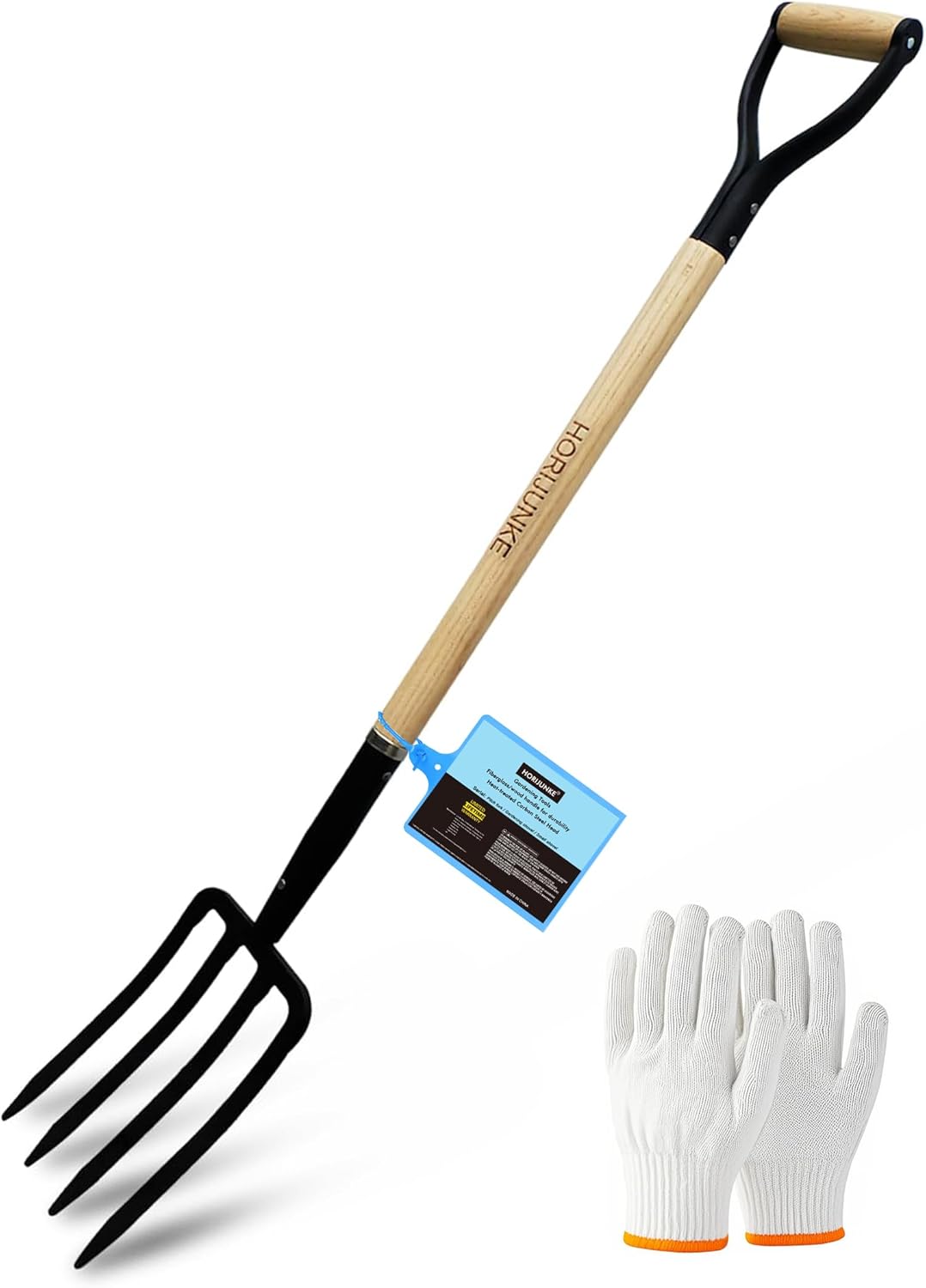
The HORIJUNKE 45-inch garden fork is a sturdy 4-tine digging tool designed for practical backyard tasks like soil loosening, weeding, and harvesting root vegetables. It suits beginner to experienced gardeners who want an affordable, reliable pitchfork for vegetable patches, raised beds, or small lawns without heavy lifting.
Key features include forged high-strength manganese steel tines that slice through compacted soil effortlessly, creating air pockets for healthier plant roots. The V-shaped tines excel at pulling potatoes whole and uprooting stubborn weeds, while the lightweight 4.4-pound build with a solid wood handle and Y-grip ensures control during long sessions. In real-world use, it aerates soil quickly, turns compost piles smoothly, and moves mulch without fatigue.
Build quality stands out with the one-piece forged head for durability against tough ground, and the ergonomic grip reduces hand strain outdoors. It's well-suited for everyday gardening but may not handle commercial-scale or extremely rocky jobs as robustly as heavier tools.
Limitations include potential wood handle wear over seasons in wet climates, so store it dry. Overall, this garden fork earns high marks for versatility and ease, making it a smart pick for homeowners aiming for thriving gardens with less effort.
Recommendation: Grab this if you garden regularly in average soil; pair it with gloves for best results in your next planting or cleanup.
Use this garden fork to break up clay-heavy or compacted soil before planting. Start at the edges of your bed and work inward with shallow thrusts to avoid damaging roots.
- Angle tines slightly for better penetration in dry ground.
- Aerate lawns by forking every 6 inches to improve drainage and grass health.
- Loosen soil 12 inches deep for tomatoes or peppers to encourage strong roots.
Ideal for prepping new garden beds or revitalizing old ones in spring.
Keep your fork sharp and rust-free for years of service. After each use, knock off dirt and wipe tines with an oiled rag.
- Apply linseed oil to the wood handle seasonally to prevent cracking.
- Hang it in a dry shed or garage, tines up, to avoid bending.
- Sharpen tine tips with a file if they dull on gravelly soil.
Winter storage: Clean thoroughly and store indoors to protect from moisture.
Garden forks like this one excel at loosening and aerating without slicing roots, unlike shovels which cut through soil solidly.
- Fork benefits: Better for compost turning, weeding, and harvesting; less soil disruption.
- Spade benefits: Superior for edging beds or moving heavy soil loads.
- Choose fork for veggie gardens, spade for flower beds or digging holes.
This model's tines make it a top pick over basic pitchforks for precise work.
Pros
- Exceptional build with forged steel tines that hold up to heavy impacts
- Ergonomic non-slip Y-grip stays secure in mud or rain
- Lightweight fiberglass handle balances strength without added weight
- Multi-use design handles digging, weeding, and material moving
- Easy to maneuver for beginners and seniors alike
Cons
- Requires simple assembly, which takes a few minutes
- 45-inch length may feel awkward for very short users in tight spaces
- Fiberglass handle lacks the traditional wood feel some gardeners prefer
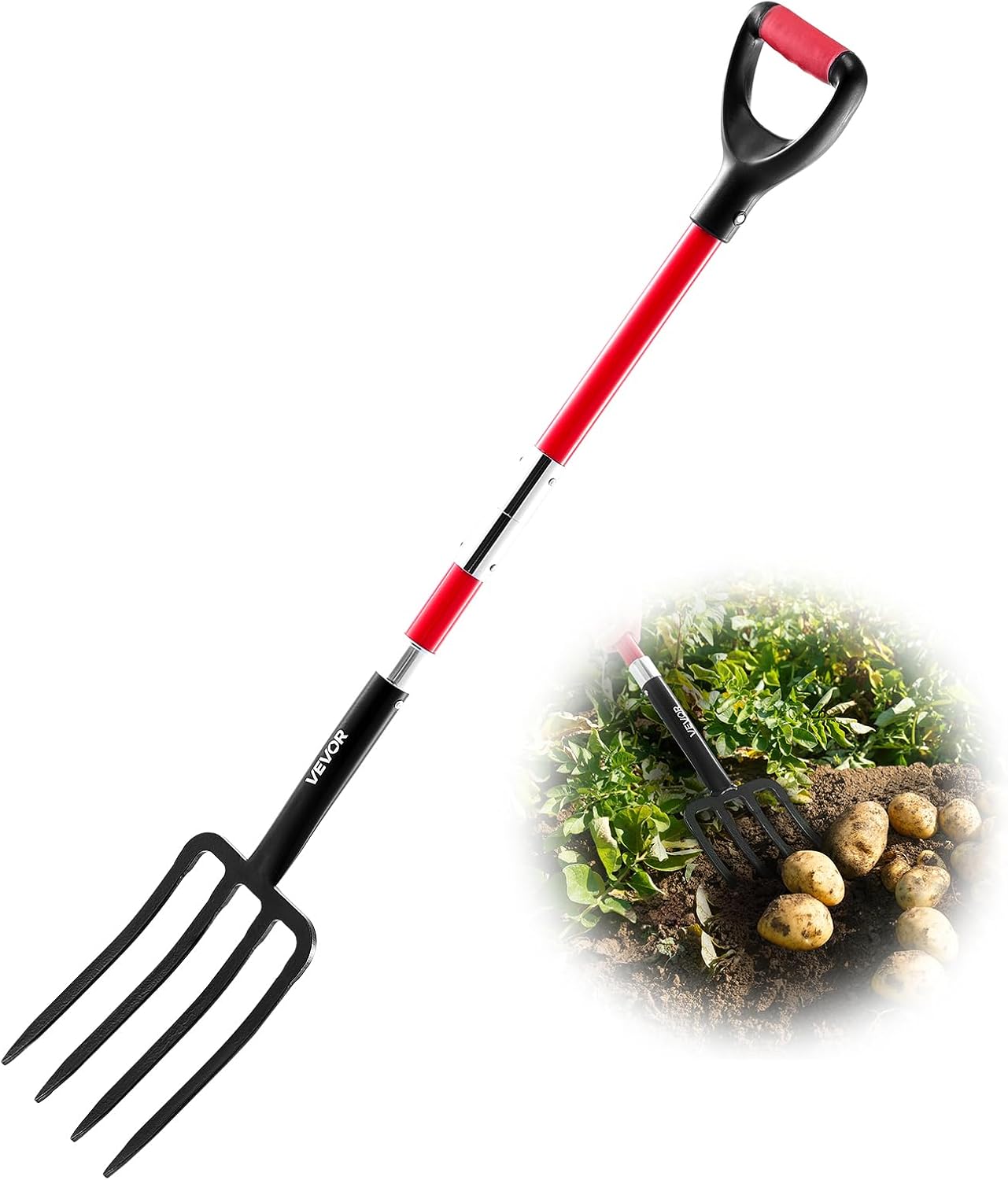
The VEVOR 4-Tine Garden Fork is a robust digging tool perfect for U.S. homeowners tackling backyard soil prep, aeration, and composting. With its 45-inch fiberglass handle and forged steel tines, it suits beginner vegetable gardeners to experienced lawn enthusiasts who need a reliable pitchfork for everyday tasks like loosening clay soil or turning compost piles.
In real-world use, the Y-grip provides a natural, comfortable hold that reduces hand strain during extended sessions, while the non-slip design keeps control even when muddy. The tines pierce tough ground effortlessly, making aeration for lawns or seedbed prep quicker and less exhausting than basic forks.
Build quality shines outdoors: the reinforced connection eliminates wobble, and fiberglass won't warp from moisture like wood. It's impact-resistant for frequent farm-like chores around the home garden.
Limitations include assembly time and its length, which might not suit tiny raised beds. Overall, this garden fork earns a strong recommendation for anyone serious about durable, versatile soil work; pair it with gloves for optimal backyard results.
Use this garden fork to aerate lawns in spring or fall by plunging tines 6-8 inches deep and twisting gently to loosen compacted soil, improving water and nutrient flow to grass roots.
- Start at lawn edges and work in rows to avoid overlap.
- For garden beds, dig in a grid pattern before planting veggies like potatoes or tomatoes.
- Avoid rocky areas to prevent tine damage; use a spade first if needed.
Combine with compost top-dressing for thriving backyard turf and beds.
Keep your VEVOR pitchfork performing like new with simple care: rinse mud off tines and handle after each use, then air dry to prevent corrosion.
- Sharpen tine tips occasionally with a file for easier soil penetration.
- Store upright in a dry shed; disassemble for compact garage space.
- Inspect the reinforced connection monthly for wear during heavy seasons.
Fiberglass needs no oiling, unlike metal tools, saving time on upkeep.
Beyond digging, this 4-tine fork excels at turning compost piles weekly for faster breakdown, lifting hay or mulch without clumping, and transplanting root veggies gently.
- Weeding: spear and lift deep-rooted weeds like dandelions.
- Seedbed prep: fluff soil finely for direct sowing.
- Barn chores: move bedding or feed efficiently.
Adapts from small patios to larger homestead plots seamlessly.

Pros
- Comfortable grip and height prevent fatigue during extended use
- Sturdy tines hold up to pressure without bending
- Quick soil loosening over large patches saves time
- Simple assembly gets you gardening right away
- Compact design for easy upright storage
Cons
- Tines may bend in extremely rocky or root-filled soil
- Requires cleaning after use to maintain sharpness
- Heavier than basic hand tools for very light tasks
The Walensee Broad Fork is a robust 9-tine garden tiller perfect for homeowners tackling soil prep in raised beds, veggie patches, or lawns. It suits beginner to experienced gardeners who want to avoid backaches while aerating, digging, or turning soil in small to medium yards.
Key features shine in real-world use: the 38-inch U-shaped handle lets you step and push without stooping, while the 9.1-inch tines slice through loose to moderately compacted soil efficiently. The wide foot area gives solid leverage, making it faster than shoveling for breaking up clay or sod.
Built from high-strength steel with hardened tines, it handles up to 165 lbs of pressure and resists deformation, outlasting flimsy forks in outdoor conditions. Spray-molded tines ensure smooth entry and durability over multiple seasons.
Limitations include shallower penetration in very hard or rocky ground, where caution is needed to avoid damage. It's not a full rototiller replacement for huge plots.
Overall, this broadfork earns high marks for practical soil work. Grab it if you garden regularly and value tools that make chores easier and your back happier.
Start by assembling the handle per simple instructions, then select your garden bed. For best results:
- Moisturize soil lightly to ease tine entry.
- Step firmly on the foot plate and rock back to loosen.
- Work in rows, overlapping for even aeration.
- Use 9-inch depth in loose soil, 6 inches in compacted areas.
- Harvest roots by gently lifting from below.
Avoid thick roots or rocks to protect tines.
Aerating improves drainage, oxygen flow, and nutrient uptake for thriving lawns and gardens. With the broadfork:
- Aerate in spring or fall when soil is workable.
- Space insertions 6-8 inches apart for veggie beds.
- Follow with compost to boost soil health.
- Combine with raised beds for no-till gardening success.
Regular aeration cuts weed pressure and enhances plant vigor.
Keep your broadfork ready for seasons ahead:
- Clean tines after each use to remove soil buildup.
- Wipe with oil to prevent rust.
- Store upright in a dry shed to avoid bending.
- Inspect tines yearly for wear and sharpen if needed.
Proper care ensures years of reliable performance.

Pros
- Durable heat-treated steel tines pierce and lift dense materials effortlessly
- Weatherproof fiberglass handle won't splinter or warp like wood
- Comfortable, secure grip for extended use in various weather
- Simple assembly with reinforced joint for reliable performance
- Balanced weight makes it easy to maneuver in tight garden spaces
Cons
- Not suited for breaking up compacted soil or heavy clay, where a spade works better
- Long 44-inch handle may feel unwieldy in very small or raised garden beds
- Fiberglass lacks the traditional feel some experienced gardeners prefer
This COSITA 44-inch pitchfork is a sturdy garden tool with four heavy-duty steel tines and a fiberglass handle, perfect for homeowners and hobby farmers who manage compost piles, mulch beds, or livestock bedding. It shines in backyard settings where you need to move loose, bulky materials like hay, straw, leaves, or manure without the tool failing under pressure.
In real-world use, the tines slice through dense piles effortlessly, making tasks like turning compost or spreading mulch quick and less labor-intensive. The ergonomic D-grip and shock-absorbing handle let you work longer without sore hands or backaches, ideal for aerating soil in flower beds or prepping veggie patches.
Build quality stands out with rust-resistant steel and a weatherproof shaft that withstands damp garages or garden sheds. The reinforced joint ensures no wobble during heavy lifting, proving reliable season after season.
Keep in mind it's best for loose materials and not compacted dirt or clay, where it might struggle. For everyday garden chores beyond digging, this pitchfork delivers solid performance.
Overall, grab this if you're tired of flimsy tools; it's a practical pick for efficient outdoor living and thriving gardens.
Pitchforks like this COSITA model excel at specific garden tasks that save time and effort:
- Turning and aerating compost piles to speed up decomposition for nutrient-rich soil.
- Spreading mulch around trees, shrubs, or flower beds to retain moisture and suppress weeds.
- Lifting and distributing manure or straw in veggie gardens or small livestock pens.
- Gathering and moving fallen leaves for clean lawns and tidy yards.
- Loosening loose topsoil before planting seeds or transplants.
Avoid using it as a primary digging tool in hard ground; pair it with a spade for best results.
Keep your pitchfork performing like new with simple care routines:
- Clean tines after each use by hosing off dirt, manure, or wet leaves to prevent buildup.
- Store in a dry shed or hang on a wall to avoid ground moisture and rust.
- Inspect the handle grip periodically; wipe with mild soap if slippery from oils or sap.
- Sharpen tine tips occasionally with a file for easier piercing into tough piles.
- Check the joint for tightness before heavy jobs, though assembly is secure.
These steps ensure years of reliable service in your backyard gardening routine.
Compare this 4-tine pitchfork to similar tools:
- Vs Spading Fork: Better for loose materials like compost; spades dig compacted soil.
- Vs 5-10 Tine Models: Lighter and more precise for small yards; wider ones suit large farms.
- Vs Wooden Handle Forks: Fiberglass is lighter and rot-proof for wet climates.
Choose based on your main tasks: this one's versatility wins for most home gardeners handling mulch and manure.

Pros
- Stronger steel construction than many budget forks, resists bending in rocky ground
- Ergonomic Y-grip and sturdy wooden handle offer better control and comfort
- Multi-purpose design works great for digging, spading, composting, and mulching
- 45-inch length provides good leverage without being unwieldy for most users
- Environmentally friendlier hardwood handle avoids fiberglass splintering
Cons
- At 4.5 lbs, it feels heavier than ultra-light plastic-handled alternatives for very light tasks
- Wooden handle may need occasional oiling to prevent drying out in harsh weather
- Square tines better for soil than piercing thick roots compared to pointed shovels
This VNIMTI garden fork is a 4-tine steel spading fork with a 45-inch hardwood handle and metal Y-grip, perfect for gardeners tackling soil prep, compost turning, and bed maintenance in backyards or raised gardens. It suits beginner to experienced homeowners who want a reliable tool for everyday digging without the hassle of flimsy alternatives.
In real-world use, the sharp tines slice through clay or loamy soil effortlessly, making double digging for new beds or loosening compacted areas a breeze. For compost piles, it flips and aerates material quickly, helping you maintain thriving heaps that feed your lawn and plants. The 45-inch length gives solid leverage while keeping you upright, ideal for small to medium yards.
Build quality stands out with heavy-duty steel that's tougher than standard market options, holding up in rocky conditions without bending. The Y-grip provides a secure hold even when wet, and the hardwood handle is splinter-free and eco-friendly. It's balanced at 4.5 lbs, easy for most adults to wield over long sessions.
Limitations include its weight for those preferring featherlight tools, and it's not optimized for chopping thick roots like a spade might be. Still, for versatile garden forking, it delivers.
Overall, grab this if you're serious about efficient soil work and composting. It's a workhorse that boosts your gardening productivity and outdoor enjoyment.
Use this fork for best results in garden soil preparation:
- Start at bed edges and work inward to avoid compacting soil.
- Angle tines slightly to break clods without excessive force.
- Pair with a spade for new beds: fork to loosen, spade to shape.
- Avoid sandy soils where tines may sink too deep; use in loamy or clay types.
Regular use promotes better drainage and root growth for veggies and perennials.
Maximize your compost with this fork:
- Turn piles every 1-2 weeks to introduce oxygen and speed breakdown.
- Fluff outer layers first, then dive into the center for even mixing.
- Layer greens and browns as you turn to balance moisture and carbon.
- Check temperature: hot center means it's working; cool it by turning.
Produces rich humus for lawn topdressing or potting mixes in no time.
Keep your garden fork performing like new:
- Clean tines after each use with a brush to remove soil buildup.
- Oil wooden handle yearly with linseed oil to prevent cracking.
- Store upright in a dry shed; avoid ground contact to prevent rust.
- Sharpen tine tips occasionally with a file for easier penetration.
Proper care ensures decades of reliable service in your backyard setup.
Buying Guide for Best Pitchforks For Garden Cleanup
Tine Material and Construction
The tines on your pitchfork are the workhorses, piercing soil, hay, or compost repeatedly. Look for forged steel or stainless steel tines that resist bending in rocky or hard ground. For example, models like the Berry&Bird Gardening Digging Fork use stainless steel for rust resistance and longevity, ideal for wet fall cleanups.
Avoid thin sheet metal tines that warp easily. Heat-treated carbon steel, as in the COSITA Pitch Fork, provides sharpness for clean penetration while holding up to heavy use. Test the tine spacing too; closer tines sift finer materials like soil without letting clumps through.
In practice, gardeners in clay-heavy soils swear by integrated forged heads that prevent loosening over time. Pair this with a rust-proof coating for tools stored outdoors.
Handle Material and Ergonomics
Handles come in wood, fiberglass, or steel, each with pros for comfort and durability. Ash wood handles, like on the Berry&Bird model, offer a natural grip that smooths with use and absorbs shock during digging. Fiberglass options, seen in WIKER and COSITA pitchforks, are lightweight and weather-resistant, perfect for humid climates.
Ergonomics matter for long sessions; D-grips or Y-grips reduce hand fatigue. The VNIMTI Garden Fork’s wooden handle with metal Y-grip provides two-handed control, mimicking pro tools. Steel handles add strength but can feel cold; choose powder-coated for comfort.
| Handle Type | Best For | Gardener Tip |
|---|---|---|
| Ash Wood | Shock absorption | Smooths over time |
| Fiberglass | Lightweight, rust-free | Non-slip in wet conditions |
| Steel | Heavy-duty strength | Check for coatings |
Number of Tines
Four tines suit digging and spading, like the HORIJUNKE Garden Fork for precise soil turning. Five or more, as in the Nohovu 5 Tine Pitchfork, handle bulkier loads of mulch or manure efficiently. Ten-tine wide heads on COSITA models excel at spreading large volumes quickly.
Choose based on tasks: fewer tines for compacted soil aeration, more for compost flipping. Gardeners with veggie beds prefer 4-tine for weed pulling without damaging roots.
Length and Weight
Lengths around 43-58 inches prevent back strain; 45 inches is versatile for most adults, as in VEVOR and FARMHOLYCOWKING models. Lighter weights under 5 pounds, like fiberglass-handled ones, ease use for seniors or smaller gardens.
Heavier broadforks like Walensee suit deep tilling but tire arms faster. Balance is key: test swing weight for your height. Shorter for raised beds, longer for lawns.
Grip Design and Versatility
Non-slip rubber or cushioned grips on Y or D-handles, featured in many like COSITA, secure holds in mud. Versatility shines in multi-use forks for digging, mulching, and composting.
Look for easy assembly and storage hooks. These Best Pitchforks for Garden Cleanup integrate well with other Gardening Hand Tools. For related digging, check The 10 Best Pitchforks For Garden Cleanup of 2026.
Why You Should Trust Us
At New York Garden, we specialize in practical reviews for U.S. homeowners and gardeners tackling real backyard challenges. Our team analyzes product specs, user feedback, and manufacturer data to highlight what works for soil turning, compost management, and seasonal cleanup. We prioritize transparency, focusing on features that deliver value without hype.
We draw from extensive gardening knowledge to recommend tools like these Best Pitchforks for Garden Cleanup, ensuring they suit lawns, patios, and veggie patches. Explore our Pitchforks category or siblings like Garden Hoes for complete setups.
Final Thoughts
After reviewing these 10 Best Pitchforks for Garden Cleanup, the Berry&Bird Gardening Digging Fork stands out as best overall. Its stainless steel tines and ergonomic ash wood D-grip handle make it perfect for digging, aerating, and long-term use in tough soils, saving your back during intensive cleanups.
For best value, go with the VNIMTI Garden Fork. This 4-tine spading fork with steel Y-grip and hardwood handle offers sturdy performance for composting and soil turning at a budget-friendly price, ideal for beginners or frequent tasks.
The COSITA Pitch Fork with 10 metal tines is best for mulching and large compost piles. Its wide head and fiberglass handle efficiently move hay, leaves, or manure, boosting productivity in bigger gardens or farms. Pair any with tools from our Cultivators & Tillers collection.
FAQs
What makes a good pitchfork for garden cleanup?
A good one has sharp, durable tines for piercing debris, an ergonomic handle to reduce strain, and balanced weight for control. In 2026, Best Pitchforks For Garden Cleanup like those with forged steel excel at turning compost and moving mulch without clogging.
How do I choose between 4-tine and multi-tine pitchforks?
4-tine forks suit precise digging and spading in gardens, while 5-10 tine versions handle bulk materials like hay or leaves better. Assess your main task: soil work or spreading.
Are fiberglass handles better than wood for pitchforks?
Fiberglass resists weather and splinters, staying light for all-day use. Wood absorbs vibration for comfort but needs maintenance. Both work well; choose fiberglass for storage outdoors.
Can Best Pitchforks for Garden Cleanup be used for composting?
Yes, many like the Nohovu 5 Tine or HORIJUNKE models flip piles easily with spaced tines that aerate without compacting. Look for rust-resistant heads for moist environments.
How do I maintain my garden pitchfork?
Clean after use, dry thoroughly, and oil metal parts. Store hanging to prevent tine bending. Regular checks ensure longevity through 2026 seasons.


Write Your Review
No reviews yet. Be the first to share your experience!